Google has really ventured into the hardware business. Aside from the Pixel phones, there’s the Google Home is trying to rival Amazon’s Echo, which is powered by Alexa. We shared with you our review last week and noted that it’s feeling right at home with the Google Assistant. The device was earlier spotted at a Walmart store before its market release. Google has been busy with marketing and preparation but it has already released an update for the Google Cast app, which is slowly moving to Google Home.
IFIXIT managed to do a teardown treatment of the Google Home and discovered that the device has high reparability. That means it’s easy to repair. The smart home device received a score of 8 on the repairability chart. That’s good news for those who want to “tinker” and “fix” stuff. The only challenge encountered was when the capacitive touch board was a bit difficult to remove.
Using the correct tools. IFixit was able to pry open the device and see its guts spread out on the table. The Amazon Echo scored 7 but Google Home exceeded it with 8. This is somehow expected because Google Home was designed with “modular” in mind. It was also discovered that some of the components of the new Google Home can be found inside the Chromecast
A small business marketing plan outlines your target audience, key messaging, marketing channels, and strategies to reach potential customers. A marketing plan is an essential marketing tool for every small business. Use this guide on the following pages to answer these 10 questions:
1. Answer 10 Questions to Create a Small Business Marketing Plan
1. Marketing Strategy: How will your marketing plan support your business goals?
2. Mission Statement: What are you trying to accomplish, and why?
3. Target Market: Who are you trying to reach with your marketing activities?
4. Competitive Analysis: Who are you up against and where do you rank?
5. Unique Selling Proposition: What makes your business unique?
6. Pricing Strategy: What will you charge and why?
7. Promotional Plan: How will you reach your target market?
8. Marketing Budget: How much money will you spend, and on what?
9. Action List: What tasks do you need to complete to reach your marketing goals?
10. Metrics: How are you implementing and where can you improve?
Once you have completed each step, you will have a marketing plan that you are ready to use as a blueprint for your marketing activities in your small business.
2. Marketing Strategy: How will your marketing plan support your business goals?
Before you start developing your marketing plan, you need to have a very clear idea of what you want to accomplish. This is your marketing strategy, and it is directly related to your business goals and objectives. Your marketing strategy outlines what you want to do, and the rest of this marketing plan will provide details on how you will do it.
For example, let’s say one of your business goals is to expand your brick-and-mortar retail store into an e-commerce website. Your marketing strategy for that goal could be to introduce your products to a new national market segment. You would then break down your strategy even further into short- and long-term objectives while defining what your specific marketing message would be. Read more about how a marketing strategy and a marketing plan work together.
If you don’t have specific business goals yet, walk through this business goal-setting guide to get started. Also, make sure you are attaching a specific timeline to your goals (i.e., a 90-day plan). This will help you create a more targeted and realistic marketing plan.
3. Mission Statement: What are you trying to accomplish, and why?
Your mission statement answers the questions: What you’re trying to do? Why are you doing it? You may have already created a mission statement as part of your business planning process. If so, you may want to add it to your marketing plan.
In your marketing plan, your mission statement is the foundation. Although it may not play a direct role in your marketing activities, your mission statement focuses on your business goals and helps you make sure that the marketing activities you conduct support the business’s overall objectives. It’s an effective tool to refer back to whenever you start to question if you are still on the right track.
If you haven’t finalized your mission statement yet, now is the time to do it. Use this Mission Statement tutorial to get started.
4. Target Market: Who are you trying to reach with your marketing activities?
Your target market is the specific audience you want to reach with your products and services; the group you will be attempting to sell to. The more details you include as you answer this question, the more targeted your marketing plan will be.
Take time to conduct market research so you can identify:
It’s helpful to create a sketch of the person or business that you would consider your “ideal customer.” Not only can this help you identify specifics about them, but it can also help you personalize your marketing messaging.
5. Competitive Analysis: Who are you up against and where do you rank?
One of the best ways to research your target market and prepare your own marketing activities is by looking at your competition. You should know who is out there selling something similar to what you are selling, especially if they are selling it to consumers that fit your ideal customer profile. Take a hard look at what they are doing right, and what they may be doing wrong.
One way to conduct a competitive analysis is with a SWOT analysis, which is a strategic tool that evaluates a company’s strengths, weaknesses, opportunities, and threats. Take time to measure the SWOT of your top competition as well as your own business to get a clear picture of your competition and how you measure up.
Conducting a thorough analysis of your competition will help you identify areas where you can beat the competition, fine-tune your niche market, and make sure you are prepared to address the challenge posed by your competition.
6. Unique Selling Proposition: What makes your business unique?
Once you know what you’re up against in the market, you need to identify the approach that will set you apart from everyone else. What makes your business, products and services unique and desirable to your target market?
A unique selling proposition (USP) is a statement that outlines how your business, products, or services are different from your competition. It identifies what makes your business the best choice, and why your target clients should choose you over the competition.
7. Pricing Strategy: What will you charge and why?
If you have a traditional business plan, then you have already spent a great deal of time researching the best price point for your products and services. Now, it’s time to relate that pricing information to your marketing activities.
One of the most important factors to evaluate is how you will work your pricing strategy into your marketing message. In most cases, you want to be able to support the price points you have chosen by providing your customers with a clear idea of the value and benefits they will get in return. A high-value proposition is often the factor that leads a customer to the decision to purchase.
If you haven’t identified your pricing perspective yet, review this pricing strategy primer to explore the different approaches and consider how they may relate to your business.
8. Promotional Plan: How will you reach your target market?
As a key element of the marketing mix, your promotional plan covers all of the communication that will take place with the consumer. Essentially, your promotional plan answers the question: How will you get the word out about your unique selling proposition to your target market?
Your promotional plan should combine a variety of marketing activities and may include:
• Advertising
• Packaging
• Public relations
• Direct sales
• Internet Marketing
• Sales promotions
• Marketing materials
• Other publicity efforts
While you don’t want to throw too many variations into your promotional plan in the beginning, you should start by selecting 3-5 specific activities that will help you execute the marketing strategy that you outlined in the first step.
For example, if one of your goals is to provide five free initial consultations within three months, then your promotional plan may include focusing on targeted leads through a cold calling campaign, a social media outreach plan, and a direct mail campaign. You can get some ideas on specific activities by browsing this list of 101 small business marketing ideas.
This step should be completed at the same time as the next step since your budget will impact what activities you can include in your plan.
9. Marketing Budget: How much money will you spend, and on what?
As you outline a promotional plan, you will need to have a budget in place so you can determine which activities you can afford while staying within your budget. Unfortunately, most new small businesses have a limited budget when it comes to marketing, so creating a promotional plan that works with the funds you have available is vital.
You may have an annual marketing budget, but it will also be necessary to break it down into separate monthly budgets so you can track results and modify the promotional plan to focus on the activities that provide you with the biggest return on investment.
To get you started, here is a marketing budget template from Entrepreneur.com and another template from Microsoft Office.
10. Action List: What tasks do you need to complete to reach your marketing goals?
Outlining exactly what you need to do and when you need to do it is an important part of your marketing plan. This will be your task list that guides you through every one of your promotional activities. Your action steps will help you stay on track so you can make consistent progress, without having to regroup and recreate the wheel every time you’re ready to take a step.
To create your marketing plan action list, you will follow the same process you use when you manage your regular daily tasks: You will take the end goal, and break it down into a series of single-step tasks that will lead you to achieving your goal.
For example, if one of the activities outlined in your promotional plan is to launch a direct email campaign, your first few action steps may look like this:
• Determine your budget for the campaign
• Clarify your objectives for the campaign
• Determine the type of direct email you will send
• Hire a designer or firm to create your collateral
• Write (or hire out) the copy for the direct mail piece
Your action list can take several different forms, as long as it is created in a way that supports progress. Each action item should also include a due date that works with the timeline you created for your marketing plan. Typically, the smaller the steps, the easier it will be for you to complete tasks and build momentum.
11. Metrics: What results have you achieved, and where can you improve?
All of the work you’ve put into creating a marketing plan for your small business will go out the window if you can’t track and measure the results of your activities. This step will allow you to take your marketing plan from a one-time, static document and turn it into a breathing blueprint that will grow and develop with your business.
The way you track and measure your results will depend on the type of marketing tactics you engage in. For example, online marketing can be tracked using analytics and other Internet-based metrics, while tracking offline marketing methods will require a more manual approach.
In general, the more standardized your system for tracking, the more relevant your results will be … and the more successful you will become at tailoring your marketing activities to focus on the areas where you will have the most success.
For some ideas on how to track your marketing results, read this article on marketing metrics, and this one on tracking offline marketing methods.
12. Additional Marketing Plan Tips
Here are a few more tips to help you create an effective marketing plan for your small business:
• Use your marketing plan regularly as you plan your marketing activities.
• Avoid thinking of your marketing plan as a concrete document. It should be flexible enough to accommodate changes in your business.
• Don’t ignore your current customer base. Creating repeat customers should also be one of your marketing goals.
• Don’t be distracted by what your competition may be doing (or not doing). What works for your competition will not necessarily work for you.
• Avoid adding too many tactics to your promotional plan. The fewer you have at once, the easier it will be to measure results and fine-tune activities.
• Give it time. You won’t know immediately if a particular marketing activity or strategy is going to be successful.
• Be open to learning from each success and failure, and apply it forward every time.
See the links below for more on marketing, including a small business marketing guide, a list of 20 small business marketing ideas, and 124 Small Business Ideas
Taking the nation by surprise, Prime Minister Narendra Modi on Tuesday night announced the demonetization of Rs. 1000 and Rs. 500 notes with effect from midnight, making these notes invalid in a major assault on black money, fake currency, and corruption. In his first televised address to the nation, PM Modi said people holding notes of Rs. 500 and Rs. 1000 can deposit the same in their bank and post office accounts from November 10 until December 30.
Live updates:
9:38 pm:
There is no restriction on depositing your legal Rs. 500, and Rs. 1000 notes for exchange. Any amount, as long as it is legal, can be exchanged.
9:37 pm:
No security breach has been reported. New notes will be Braille-compliant, says DEA secretary
9:36 pm:
Within this period, checks, debit cards, and e-transactions will continue. All electronic transactions on behalf of business firms, companies, and individuals will continue in the next two days. DEA secretary
9:36 pm:
The decision to withdraw existing 500/1000-dollar currency notes has surprised everyone, says the DEA secretary
9:35 pm:
Post offices and banks to open additional counters and extend working hours to accommodate the public.
9:34 pm:
Initially, there could be inconvenience. The supply of new notes will be increased. The first aspect to be considered is inflation. The RBI will monitor and regulate the printing and circulation of Rs. 2000 notes.
9:33 pm:
The notes that are being circulated on social media are true. I’m not sure how the notes got leaked, but I’m sure that people will cooperate with the government in this venture.
9:32 pm:
The FIU of India gets information about transactions from banks. During this period, banks will take extra precautions. Banks will share information with the Income Tax Department as deemed fit.
9:32 pm:
If it is declared as not legal tender, then any transactions are done at their own risk, says Shaktikanta Das
9:30 pm:
Measures necessary to maintain the economic integrity of the economy, says Shaktikanta Das. It will be positive for our economy and will contribute to its growth.
9:25 am:
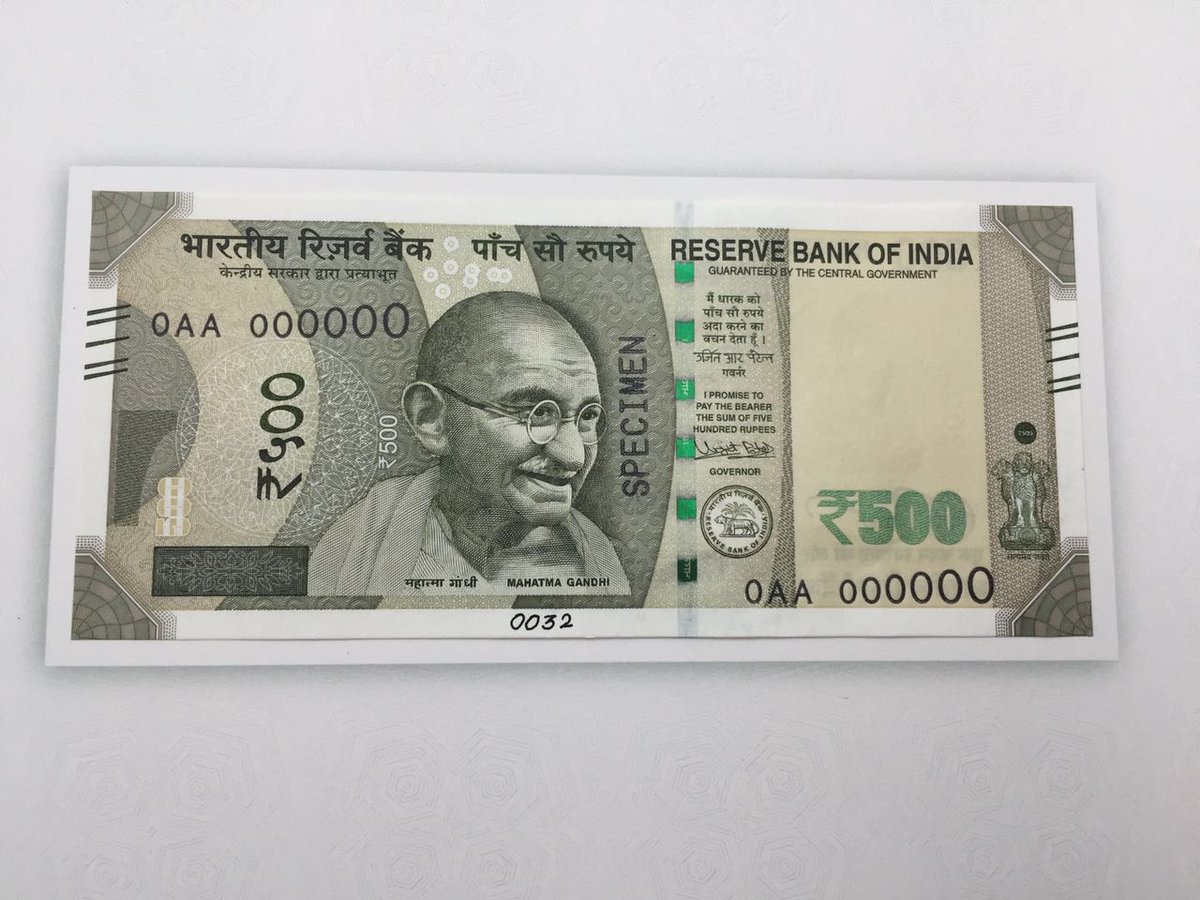
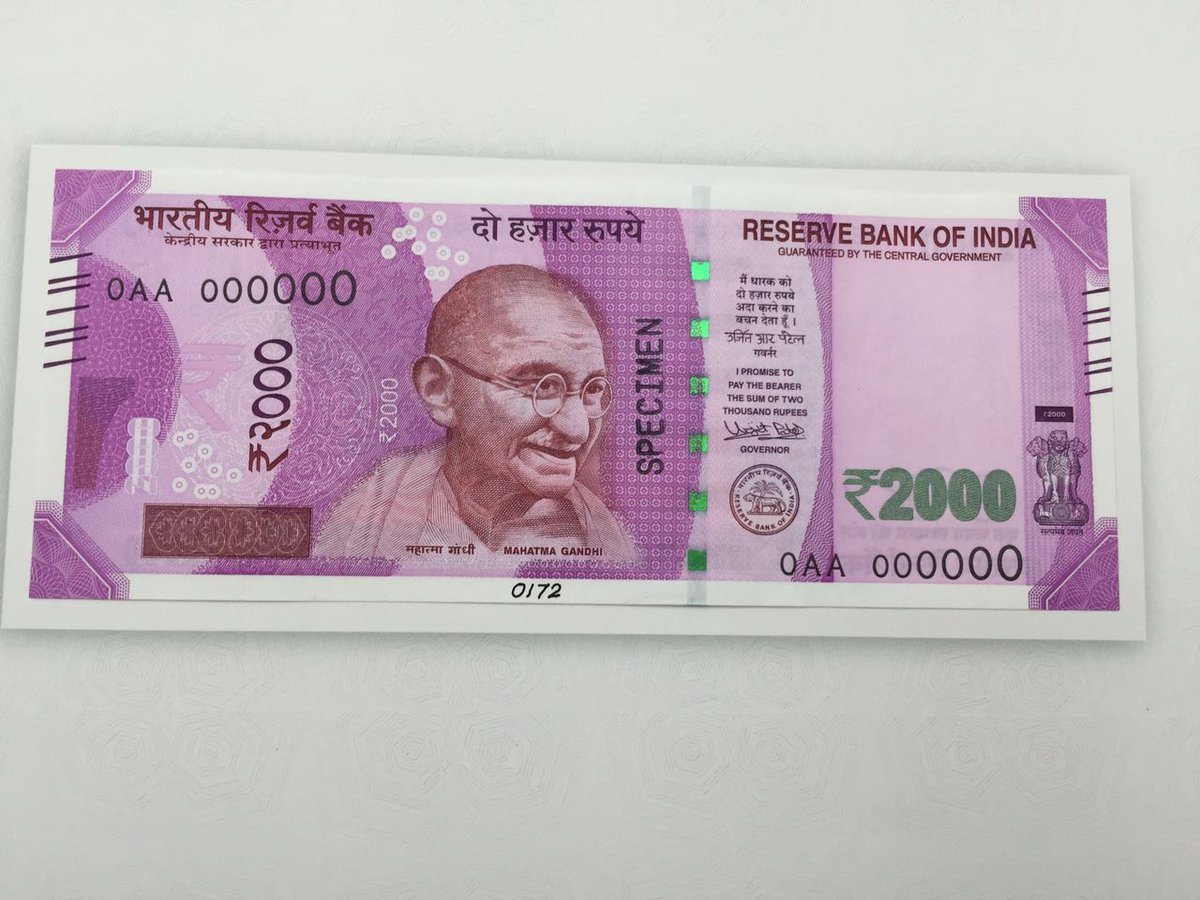
RBI shows the specimen notes of new Rs. 500 and Rs. 2000 notes.
9:22 pm:
Banks will have video cameras for all transactions; people must be careful while exchanging legal cash, says Shaktikanta Das
9:21 am:
Control rooms formed in RBI in Mumbai (022 22602201, 22602944) will be operable from tomorrow morning at 8 am, says Shaktikanta Das
9:20 pm:
Fake currency circulation has grown over the years. We are launching new currency tokens with new designs from November 10. Introducing 2k Rs. note with Mangalyan logo
9:15 pm:
It is a bold move. Counterfeit currencies are being used to finance terrorism. Our security measures have not been breached. This is a powerful measure to combat terrorism. Govt. has taken many measures in the last two years. This will go a long way. Fake currencies corrode economy, says Economic Affairs Secretary Shaktikanta Das
9:10 pm:
RBI has been concerned about the black money issue: Urijit Patel
8.53 pm:
Government hospitals and pharmacies at such hospitals will accept Rs. 500 and Rs. 1000 notes for 72 hours from November 8 at midnight.
8:34 pm:
This is a chance for every citizen to take part in the fight against black money and corruption, says the prime minister.
8:32 pm:
A new series of Rs. 500 currency notes and Rs. 2000 currency notes will be brought into circulation.
8:31 pm:
Banks will be closed on November 9.
8:30 pm:
There is no restrictions on internet banking, cash, or demand draft transactions.
There are, however, some exemptions. Government hospitals and international airports.
8:22 pm:
The ATMs will not function till November 9, and in some places till November 10.
8:21 pm:
People who possess Rs. 500 or Rs. 1000 currency notes after December 30 can exchange it at the Reserve Bank of India by providing a declaration. This is till March 31, 2017.
8:20 pm:
These notes should be exchanged in banks and head post offices and sub post office by December 30, 2016, by providing valid identity proof such as Aadhaar, PAN card or voter ID card.
8:15 pm:
From midnight of November 8, 2016, Rs. 500 and Rs.1000 will cease to be legal tender. “These notes are just papers from tomorrow,” says the prime minister.
8:11 pm:
Prime Minister says Rs. 500 and Rs. 1000 are notes that are mostly used in black money.
8:10 pm:
Corruption, black money, and terrorism can come in the way of a country’s robust economic growth, says the Prime Minister.
8:07 pm:
He moves on from corruption to terrorism. He says “terrorists from across the border” are spreading counterfeit currency notes.
8:06 pm:
We hear stories of how an autorickshaw driver returns gold left by a passenger in his vehicle. These stories show how common people are honest. Only a few people engage in corruption for selfish reasons, he says.
8:05 pm:
Corruption and black money are the biggest hindrances in the fight against poverty, he says, adding that it is everyone’s responsibility to eradicate poverty.
8:04 pm:
Mr. Modi lists out the various schemes launched by the NDA government in his address to the nation. He mentions the Jan Dhan Yojana.
8:03 pm:
This government is dedicated to the poor and will continue to do so, says the Prime Minister, who completes two and a half years of rule today.
8:02 pm:
India has registered itself as a bright spot, and it’s not that this is a claim made by us, but by IMF and World Bank
8:01 pm:
When we were elected in 2014, there was a discussion that among BRICS nations, the ‘I’ was wobbling, says the PM.
8:00 pm:
The Prime Minister’s address to the nation has begun.
As an entrepreneur, you are thirsty to become a successful entrepreneur. Sometimes the process will be slow, but sometimes it can be really quick. I know that you want to become successful entrepreneur as quickly as possible, but there are two different and, at the same time, important questions for you:
How can I become a successful entrepreneur?
How can I become a successful entrepreneur as quickly as possible?
Before we start with the rules of success for you as an entrepreneur, first ask yourself one important question: What does success mean for me?
Different entrepreneurs have different definitions of their own success. Because of that, we can’t make a clear road map that shows us the right path that leads to success. But, we can draw the basic rules that, if you follow them, you can find your own success.
Let’s start with these rules of success for entrepreneurs.
1. Rule #1: Define your vision.
Your vision is something that will clearly define what is success for you as an entrepreneur. You need to have a vision if you want to become successful. How can you expect to become a successful entrepreneur if you don’t know what success is for you?
2. Rule #2: Don’t do what you don’t like doing.
As an entrepreneur, you need to like what you are doing in your business. Sometimes that will not be the same as you plan it will be. You need to be passionate about your business because passion is one of the most important forces that will force you to succeed.
3. Rule #3: Build a strong community around your business.
The important thing about your business success is that you’ll need people. You need customers. You need employees. You need people with whom you will talk and communicate. You need to start building your community as soon as possible.
4. Rule #4: Communicate with your community.
You don’t need to build a community only to sell them. You need a community with which you will communicate and in some cases build partner relationships. They have very big power to make your business a successful business.
5. Rule #5: Listen to your community.
You need to listen to your community and at the same time learn from them. This knowledge that you will collect from listening is important to be used in your business through products and services that will satisfy the needs of your community.
6. Rule #6: Use mistakes as an improvement tool.
If you make a mistake and fail in something that you are doing, it doesn’t mean that you will not become a successful entrepreneur. You will become unsuccessful only if you don’t try something, make a mistake, learn from that mistake, and don’t improve yourself based on that mistake. You need to know that mistakes can improve you and your business.
7. Rule #7: Change.
If you don’t want to change your business, your market will change and will leave you isolated. It’s better to become the leader than the follower. If you don’t have a clear path to becoming successful, you will need different maneuvers. You need a change.
8. Rule #8: Find the ways to go beyond the limits.
If you are a person who doesn’t think about the limits you’l be reach everything that you want. If you see limits in everything around you instead of opportunities, you need to change your mindset and start to look beyond the limits.
9. Rule #9: Differentiate yourself.
You don’t need to look at what everyone else is doing. That’s not something that will make you successful. But, you will need to differentiate yourself and your business from everyone else. How do you differentiate yourself from your competition?
10. Rule #10: Celebrate and reward.
Your journey to become a successful entrepreneur will not be a straight line. You will have many targets between where you are now and where you want to be in the future. If you want your journey to continue with success you will need to celebrate and reward yourself and your team for all accomplished targets.
Do you have some additional rules that you are following to become a successful entrepreneur? You can leave a comment Below…
Qatar ranks number one on the list of the top 10 richest countries because of its high GDP per capita (PPP) of $140,649. Qatar has a well-developed oil exploration industry where the petroleum industry accounts for 70% of its government revenue, 60% of its GDP, and 85% of its export earnings. Because of its wealth and economic success, it has been chosen as the host of the 2022 FIFA World Cup, the first Arab nation to ever hold this role. However, Qatar is also the most controversial country on the list for its use of forced labor from nations throughout Asia and parts of Africa.
2: Luxembourg: $97,662 GDP (PPP) per capita
A symbol of wealth, number two on the list has a per capita GDP (PPP) of $97,662, which is nine times the world average. The backbone of this strong economy is its vibrant financial sector, prudent fiscal policies, and dynamic industrial and steel sectors. Banking in Luxembourg is the largest sector of its economy, with an asset base of over $1.24 trillion alone.
3: Singapore: $82,763 GDP (PPP) per capita
This tiny city-state has moved up from 5th position to take 3rd with per capita income (PPP) of $82,763, which is five times the average per capita income for an ordinary individual in the world. The basis of Singapore’s wealth is its financial services sector, a chemical export industry, and its liberal economic policies that encourage growth and innovation. Singapore has the second busiest port in the world, exporting $414 billion of goods in 2011 alone.
4: Kuwait: $73,246 GDP (PPP) per capita
Kuwait is a small, relatively open economy and its citizens enjoy a per capita GDP (PPP) of $73,246. The highest-valued currency unit in the world currently is the Kuwaiti dinar. With nearly 10% of the world’s oil reserves, petroleum accounts for nearly half of GDP and 95% of export revenues and government income. In recent years, Kuwait has done little to diversify its economy due to positive fiscal situation.
5: Brunei: $71,185 GDP (PPP) per capita
Brunei, a small country with a wealthy economy that is a mixture of foreign and domestic entrepreneurship, government regulation and welfare measures, and village tradition has led to GDP per capita (PPP) of 71,185. It is almost completely supported by exports of crude oil and natural gas. Like other oil countries in the list the government has shown progress in diversifying the economy away from just oil and gas.
6: The United Arab Emirates: $67,674 GDP (PPP) per capita
This Middle Eastern federation of emirates has a land area of about 32,278 sq. miles, which means it could easily fit within New York State (54,556 sq. miles). With a population of 9.2 million people, it’s a bit more populated than the state of New Jersey. A third of the $67,674 per capita economy comes from oil revenues, while the service sector and telecommunications also contribute significantly. The UAE is the second largest economy in the Arab world after Saudi Arabia.
7: Norway: $64,856 GDP (PPP) per capita
This Nordic nation’s per capita GDP of $64,856 allows its 4.97 million people to reap the benefits of a small yet robust economy. Driven by fishing, natural resources, and major petroleum exploration, Norway is the eighth-largest exporter of crude oil, 9th largest exporter of refined oil, and 3rd largest exporter of natural gas in the world.
8: Switzerland: $57,235 GDP (PPP) per capita
The GDP (PPP) per Swiss citizen is $57,235. Swiss banking and financial institutions keep this country and its economy afloat. It is important to note that some of the wealthiest people and companies in the world own Swiss bank accounts and therefore Switzerland has excess capital to use for investment purposes. Zurich and Geneva, Switzerland’s most well-known cities, have consistently ranked among the top ten highest-living-standard cities in the world.
9: The United States: $54,630 GDP (PPP) per capita
While most nations on the list have small populations (relatively), it is impressive that the world’s largest economy, the United States, can maintain a per capita GDP (PPP) of $54,630, considering its population of over 310 million people. Reasons behind its success include its large domestic automotive industry, technological sector that foster innovation, and a system of democracy that protects entrepreneurial and intellectual property rights.
10: Saudi Arabia: $51,924 GDP (PPP) per capita
Saudi Arabia is one of many oil-based economies with strong government control over major economic activities that enjoy high GDP. Its GDP (PPP) per capita is $51,924 as it possesses 18% of the world’s proven petroleum reserves, ranks as the largest exporter of petroleum, and played a leading role in OPEC for many years. The petroleum sector accounts for almost all of Saudi government revenues, and export earnings. Despite possessing the largest petroleum reserves in the world, its per capita income dropped is much smaller than of that of smaller Persian Gulf neighbors
There are plenty of marketing ideas for small businesses you can make use of that won’t blow your small marketing budget. Let’s see how far you can stretch those dollars! Here are 20 marketing ideas for small businesses working on a small budget.
1. Publish Great Content
I don’t think I even need to say this, but it’d be neglectful not to mention the importance of kick-ass content. If you can create it yourself, all the better (isn’t free always better?). Even if writing isn’t your strong point, you shouldn’t have too much trouble getting someone on your team to crank out some articles for your blog.
Try the top 10 lists, tip collections, best practices for your industry, etc. I shared a bunch of creative content marketing ideas for small businesses here, and Elisa recently rewrote the rules of content marketing ideas for small businesses.
2. Create Instructional Videos
Video content is one of the valuable marketing ideas for small businesses, and while it can cost big bucks to get professional YouTube videos produced, there’s nothing wrong with giving it a shot yourself or hiring a film student off Craigslist. Wistia offers a great video tutorial showing you how to shoot expert-looking footage on your regular old iPhone!
If video sounds like too much of a challenge, try making slide decks and sharing them on SlideShare.
3. Get Ad Promo Credits
While massive ad campaigns may be out of your budget, there are often discounts and coupons floating around for paid Facebook ads or Google ads. Some web hosting services offer advertising discount codes as part of their membership offerings. Check and see if yours does. This is one of the best marketing ideas.
4. Reddit
Reddit, a bare-bones social network self-titled as the “front page of the internet,” can be a powerful tool when used strategically. Reddit is composed of a very tech-savvy audience that bristles at any obvious marketing tactics.
Win at Reddit, share only truly awesome content, and post only to extreme niches. In Reddit, there are subcategories (known as subreddits) that deal with some of the narrowest, most specific interests in existence.
There’s a subreddit for lockpicking (/r/lockpicking ), a subreddit for unicycles (/r/unicycling), and there’s even a subreddit for admiring beautiful handwriting (r/PenmanshipPorn). (And of course, there’s one for SEO.) Find your niche and dominate.
5. Be a Savvy Social Networker
Create business accounts and participate in the big social media sites – Facebook, Twitter, LinkedIn, Google+, and Pinterest. Add Instagram in there too if your business is image-oriented. Also, check out this list of easy Facebook marketing ideas for any type of business.
6. DIY Infographics
Infographics are insanely powerful marketing tools. They’re visual eye candy, they’re easy to digest, and people love to share them, so they’re a great way to drive up referral traffic and links. Hiring a designer to make you an A+ infographic can hit your wallet hard, but you can make your own on the cheap if you don’t mind a bit of a challenge.
If you have some understanding of Adobe Illustrator, try out these free vector kits that provide all the elements needed to make a stunning infographic. Not sure where to start? Check out Visual.ly for inspiration. They have beginner and advanced examples for you to browse through.
7. Giving New Life to Old Data
If your marketing budget is tight, you might not be able to always afford content writers to whip up content for your blog. If you’re in a dry spell, instead of making something new, breathe new life into something that already exists on the web. There are a ton of data studies and stats available on the internet. While some of these studies may get initial traction, many often go unnoticed.
Find a study that relates to your industry and polish it up. Highlight the most important or interesting parts of the study, add images, crank out some charts, and make your thoughts and predictions based on the data.
You don’t need to be a master writer for this strategy – the data will do most of the heavy lifting for you. One man’s throwaway data is another man’s content success story! Just be sure to cite your sources and give credit where it’s due.
For government data, check out data.gov or The Census Bureau. Global statistics can be found through UNICEF and the World Health Organization. Ultimately, you’ll have to find source data that relates to your industry and audience interests.
8. Lounge About on LinkedIn
LinkedIn is a major social media site that is often under-utilized in marketing ideas. Don’t just add network connections and sign out – join groups, enter into dialogue with connections, and share your blog posts. There’s a ton happening on LinkedIn, and it can be a great place to promote your content, share ideas, and build your brand. Larry recently shared some tips for getting more LinkedIn connections, and here are some ways to spruce up your LinkedIn profile if you’re a recent college grad.
9. Recycle Your Content
As soon as you can repurpose existing data studies, you can rehash your old content into new creations as well! Turn the webinar into a video tutorial. Transform a collection of blog posts into an ebook. Don’t be afraid to mash up your old content – chances are there will be a ton of people who have never even seen your old stuff, so it’ll be a fresh, 100% new content piece for a large segment of your audience.
10.Develop a Customer Referral Program
One of the best marketing ideas is to offer existing customers a free product, a free month of service, or some other reward for referring new customers. Remember, word-of-mouth is powerful stuff, so friends telling friends about your business is incredibly valuable.
11. Online Contests
You’ll need to cough up some dough for a prize, but the number of participants and new potential leads you get will be well worth the price. Tight on budget? You don’t technically need a super expensive prize to get participants. Even a couple of high-end water bottles or fancy backpacks might be enough of a draw for some users.
Not sure how to host a contest? Go with Rafflecopter – they make it super easy to set up a contest and embed the contest entry form on your website.
12. Industry Partnerships
Team up with a business related to your industry (but not a direct competitor) for a joint project. This can be done locally offline through some kind of special event, or online with a webinar or promotional giveaway.
Partnering with another business means twice as much notice. If you’re partnering with an industry-relevant business, you’re getting introduced to a whole new audience related to your niche. People pay big money for that kind of access!
13. Apply Online for Business Awards
Most industries have business awards you can win, providing you with an online badge you can place on your website. Badges like these can boost credibility, and as a result, increase sales.
If there aren’t any awards for your industry, host your own! You’ll get a ton of attention from other industry businesses who want to apply for your award, which means even more connections and possible future collaborations!
Local Marketing Ideas for Limited Budgets
Local marketing ideas for small businesses can often be less expensive than massive online campaigns. Your reach is smaller, but if your business is regional, there’s no better (or cheaper) way to build your business.
14. Awesome Business Cards.
Get yourself some snazzy business cards, then give them to every person you lay eyes on. Every handshake should come with a business card. The more people who find out about your business, the better – even if it’s just a glance at a business card.
15. Guerilla Marketing
Guerilla marketing emphasizes creativity over budget, and strategies are often cheap and easy to implement marketing ideas, especially when localized. Broadcast your Twitter handle with sidewalk chalk, use an abandoned storefront as a canvas for street art, or plaster custom stickers on urban décor that make those who stroll by look twice.
There’s a ton of room for invention here, and you don’t need a big budget to be successful. We did a massive post about guerilla marketing, detailing a bunch of strategies and examples you should check out if you want to learn more!
16. Host an Event or Class
Marketing ideas of planning an event or class to host, then print out flyers and post them on community bulletin boards (libraries, coffee shops, local colleges, and adult ed centers). While most community bulletin boards won’t let you post business advertisements, they’re often more than happy to post a flyer promoting an educational event or class.
17. Business Card Drawing
One more tactic of marketing ideas for small businesses is to put a fishbowl at your place of business with a sign asking visitors to drop their business cards in for a chance to win something from you (for example, a restaurant might offer a free pizza party).
At the end of the month, you’ve collected a ton of business cards, and while you can only have one winner, there’s no reason those other business cards have to go to waste. Use the email addresses provided to let users know that while they haven’t won this time, they are more than welcome to join your mailing list, which will notify them of future giveaways and special offers.
18. Email Marketing
Email marketing is a great way to get new visitors engaged with your business, as well as maintain relationships with your existing customers.
Get new website visitors to sign up for your newsletter by offering a bonus content piece for subscribing (e.g. get your free ebook detailing how to make a homemade pizza when you sign up for our First Slice newsletter). Slowly nurture your subscribers via email until they are ready to become paying customers. Start your email campaigns with a free email marketing service like MailChimp.
19. Give Away Balloons at Local Events
Get a few hundred custom balloons printed with your business name, rent a helium tank, and watch the smiles roll in.
Kids love balloons. Adults love them too, but are embarrassed to admit it. Stop the shame – balloons and bubbles will always be awesome, it’s OK to say so. You’ll have a bunch of happy people marching around with your brand floating above their heads, all for less than $200.
20. Join in on Local Contests
Consider donating a product or service of yours as a prize in a local contest or event.
Electric car maker Tesla Motors plans to start charging new customers for use of its fast charging network, which it refers to as its Superchargers.
In a blog post on Monday morning, the company announced that customers who buy cars after January 1, 2017, will have 1,000 miles of free charging. After those miles are used up, customers will have to pay for charging. Tesla didn’t release details about how much it would charge for the use of the fast chargers but promised it would unveil more details later this year.
TeslaTSLA 1.24% built its first Superchargers, which can charge an electric car battery in approximately 30 minutes, four years ago in an attempt to offer customers more ways to charge batteries when they’re not at home or work. Standard chargers that a Tesla customer would have at home take many hours to fill a battery.
When the company launched the first Superchargers in 2012, Tesla offered its customers free charging for life, and CEO Elon Musk touted electric road trips that make electric cars competitive with gasoline cars.
The move to start charging for such services demonstrates how as Tesla tries to transition into becoming a larger automaker with more customers, it will need to manage those customers in new ways. There have been reports of long lines at certain Supercharger stations over the years, and some have expected Tesla to introduce fees to help cut down on charging hogs.
The new fees could also be a way for Tesla to incentivize potential Tesla customers to buy cars before the end of the year in order to gain access to the free lifetime charging option. Tesla is looking to generate another profitable quarter, following its first profitable quarter in three years last month. The charging fees are also a way for Tesla to cut costs as it introduces its upcoming fourth vehicle: the Model 3.
Tesla is looking to grow the number of cars it makes per year from about 80,000 this year to about 500,000 by 2018. At the end of 2017, the company plans to start shipping the Model 3, Tesla’s first car pegged to cost $35,000—a mainstream price putting it in direct competition with big automakers like GM GM3.00%, Nissan, and Ford. The company’s current cars commonly cost six figures, depending on features.
Roughly 400,000 people have put down a reservation (using a $1,000 refundable deposit) for the Model 3. Many customers will have to wait years to get those cars. Tesla now has 160,000 customers driving its cars on the roads, with only 4,600 Superchargers. If Tesla has 500,000 customers by 2020, its Supercharger network will be even more impacted.
The electricity from the charges also costs Tesla money. While Tesla says in its blog post that its Superchargers “will never be a profit center,” the company will probably charge enough to at least offset those electricity costs. With a cost of only $35,000, Tesla is working hard to cut costs for its upcoming Model 3. The company is building a huge battery factory outside of Reno, Nev. in an effort to reduce the costs of its batteries for the Model 3 by a third.
Ending free charging is another way Tesla can cut costs for its Model 3 car. Earlier this year, Musk said during its shareholders meeting that providing free and unlimited long-distance charging at Superchargers is a cost that Tesla wants to “decouple” from the Model 3. On the call, Musk said of Supercharging:
“It will still be very cheap, and far cheaper than gasoline to drive long distance with the Model 3, but it will not be free long distance for life unless you purchase that package. . . it has to be something like that.”
Musk also said he wished Tesla could achieve the low-cost economics of the Model 3 without charging for the Supercharger costs.
Unless you’re marketing earrings made from old coffee cans, chances are there are other companies out there offering a similar product or service as you. Establishing an edge over these competitors is just part of the daily grind, but ask yourself: to what extent are you prepared to gain an edge over your competitors? Simply knowing what they offer is not enough. With the advent of new software and technology, marketers and business owners have the ability to know more about their competition than ever before. It is extremely important to regularly conduct a thorough competitive analysis in order to stay one step ahead.
Below is a simple, five-step process for completing a detailed competitive analysis based on one shared by our friends at HubSpot.
Keep in mind that by using software like HubSpot, all the information regarding your competitors is easily attainable. In fact, you can view each of your competitor’s website grade in order to see how yours stacks up.
How to Conduct Your Competitive Analysis
1. Identify Your Top Ten Competitors
Now this might be silly for me to ask, but have you identified your company’s top ten competitors?
Every company has those dreaded competitors they cannot stand; no matter what you do they are always using your ideas and taking your potential customers. Whether you are a local, national, or international company, there is probably someone in your company, specifically the sales and marketing teams, that can quickly rattle off your top competitors as well as what differentiates them from you.
As a national company, you are competing with possibly hundreds, even thousands of companies going after the same group of qualified leads.
So, maybe you have no idea who most of your competitors are. You might have that one company you’re competing with, but outside of them your lost and confused.
If you need a little help identifying your competitors, Google is a great resource. By simply “Googling” the type of service or product you are offering, it is pretty likely a few of your top competitors will show up.
Another great way to discover who your top competitors are is by using online tools such as SEM Rush. SEM Rush is a great software to get a look into what other companies are ranking for your keyword and how you stack up against them.
2. Analyze and Compare Competitor Content
Once you’ve identified your competitors, you can kick start your competitive analysis and dig a little deeper to gain a better understanding of what type of content they’re publishing.
Analyzing their content can help you determine what opportunities you have to help outperform your competitors. What types of content creation do your competitors focus on, a blog? Case studies? Premium content?
Different types of content can include:
1. Blog posts
2. Whitepapers
3. eBooks
4. Videos
5. Webinars
6. Podcasts
7. Slides/Powerpoints
8. Visual content
9. FAQs
10. Feature articles
11. Press releases
12. News
13. Case studies
14. Buyer guides
Once you’ve located their content, you can determine its quality, and most importantly, you can see how it compares to yours. Be sure that you look for how frequently they are blogging, adding, and updating new content, as well as what topics they are frequently discussing. Are they doing anything that you aren’t?
Once you know what type of content and the quality of the content your competitors are publishing, it gives you a better perspective on where you need to put more effort and resources.
If your competitors are consistently publishing case studies, this could be part of the reason why your quality leads are going to your competitors.
A prospective client wants to know what it’s like to work with your company. Not only are case studies important, but take a closer look at their blog.
If your competitors tend to blog three times a week compared to your one article every two weeks, it will be beneficial for your company to start generating more traffic to your site by blogging more frequently about relevant topics. Don’t just blog because you want to add more content; it won’t generate more traffic if the content you add isn’t remarkable.
3. Analyze Their SEO Structure
So far your competitors have the same type of content, update it just as frequently, and have awesome quality. So what are they doing differently from you?
It might be the structure of their SEO.
If your company has a blog, you know how important your SEO structure is. While conducting a competitive analysis on the type of content your competitors are generating, it is also beneficial to check out the SEO structure of that content.
How are your competitors using keywords? Are they included in:
The page title
The URL architecture
H1 Tags
Content
Internal links
Image alt text
Not only should you check the SEO structure of the content but also what types of keywords your competitors are utilizing.
When trying to rank for specific keywords, rather than looking for keywords that have high search volumes, look for keywords that have lower search volumes. These types of keywords tend to be long-tail keywords, making the keyword more specific.
Also, by looking at your competitor’s keywords, you can generate a list of additional keywords that you can start to target.
4. Look at their Social Media Integration
A company’s presence on social media is becoming increasingly important every day, and every company is utilizing each platform differently. Social media networks are a great way for companies to interact with users and fans.
Additionally, these sites allow you to share your content.
The next step of your competitive analysis should be to determine how your competitors are using social media and integrating it into their marketing.
Not only is it important to see if your competitors can be found on social media platforms, but you also want to see how effectively they’re using their profiles.
What type of information are they posting? Do they ever post? Are people following them? Do they have cover photos and profile photos?
These are all questions you should be asking yourself when you are checking your competitors profiles. Just because they have a profile does not mean that they are continually updating the pages and adding new content.
Do your competitors have awesome social media profiles? If they do, don’t just click off the page quickly, learn from what they are doing. Are there things you could utilize and take ideas from to help establish your presence?
Maybe a company might not even be a direct competitor, but find a company in your industry that’s established and develops great content. Learn from key influencers in your industry.
5. Identify Areas for Improvement
After performing a competitive analysis, you now have a better idea and understanding of what your competitors are doing.
Take all the information you have gathered about each competitor and identify particular areas that need improvement. After looking at your competitors, you cannot tell me that you didn’t find at least one thing you need to improve on.
Not only will you be able to identify key areas that you can improve upon in regards to your content creation, search engine optimization, and social media engagement, but you can also help establish your company’s presence with potential customers, blog readers and subscribers, and social media users.
Indian citizens have become more net savvy and are using computers, smartphones, and tablets to seek information and to shop for favorite products and services. As a matter of fact, online shopping Websites have gained immense popularity in a country with a population of approximately 136 crore.
With every passing day, the number of online shoppers is only found to be increasing and it comprises people of all ages and genders. Indians have lately become wary of the immense price benefits that online shopping sites have to provide. Be it for any occasion or for casual reasons, they simply love to purchase their desired items on these reputed portals.
Moreover, shopping on these e-commerce websites comes with several benefits. For instance, numerous shopping portals offer coupons and discount codes, thus encouraging shoppers to make online purchases. Unlike in-person shopping, purchasing items online can be less stressful because you don’t have to deal with a crowded store or wait in line to make a purchase.
In addition, if you have a tight schedule, you have nothing to worry about because online shopping enables you to purchase goods from the comfort of your home or any other location. Lastly, if you’re shopping for a gift for someone far away, doing it on digital platforms may be a good idea since it’s much easier and quicker to ship items to remote locations.
With that being said, there’s no question why e-commerce websites have become the destination of choice for online shopping. Therefore, if you’re purchasing something anytime soon, it’s beneficial to know that there are a large number of online shopping portals out there. However, which one to trust is quite a dilemma.
Here Is A List Of Top 10 Online Shopping Sites In India
This portal is considered to be the world’s undisputed eCommerce market leader and has started operations in the country quite recently. It had a total revenue of Rs. 11,232 crore in FY19. You can purchase electronic items, CDs, books, etc. at a cheaper price with limited free shipping offers. It does not display the prices of its products. Rather, shoppers are required to check prices at in-store kiosks or phones.
This portal was started with just Rs. 4,00,000 in 2004 and by 2014, it reported crossing 60,000 crore turnover. It offers a wide range of items in almost all categories. It has become the country’s largest e-commerce player after taking over letsbuy.com. It uses segmentation strategies like behavioral and psychographic. To cater to its customers’ ever-changing needs.
This fashion & lifestyle portal is among the leading eCommerce businesses in the country and offers watches, shoes, and T-shirts at a discounted price. It is said to follow an omnichannel strategy. In FY’19, it logged a loss of Rs. 539.2 crore.
So, if you’re looking for fashion items, Myntra may be the best online shopping store to visit. Like other e-commerce websites, it also offers discounted prices for clothing, accessories, and related items. Therefore, to take advantage of these discounts and other deals, you may check some popular coupon websites that offer Myntra coupons and promo codes.
4. Jabong.com
This Lifestyle and fashion store offers a variety of products ranging from home to apparel needs, etc. coupled with great discounts. Its FY’19 revenue is Rs. 204.6 crore. This business model is said to follow both the controlled market model and the inventory model.
5. Snapdeal.com
This portal offers almost everything, ranging from online products to travel deals, local deals on spas, restaurants, etc., combined with free shipping and the best pricing. As of FY 19, its revenue was Rs. 925 crore. Their strategy is to focus on the country’s value-conscious buyers.
It is the country’s largest kids’ store selling over 70,000 items collected from 400+ top Indian and international brands. It reported earnings of about Rs. 535 crores in FY’19. It has come up with a unique strategy to reach parents-to-be directly every month providing mothers with FirstCry boxes before they depart from the hospital.
7. Homeshop18
It is considered to be a Network18 Group venture and among the country’s fastest-growing entertainment & media groups. It also has managed to launch the country’s first-ever 24/7 TV channel promoting Home Shopping. In 2008. PC World Magazine awarded it with the ‘Best Shopping Site’. The consolidated revenue reported for Q4FY19 is Rs. 1236 crore. Their strategy & mantra to drive sales was ‘Shopping makes me happy’.
It is popular for its jaw-dropping, heavily discounted deals. You can get gifts, mobile and computer accessories, jewelry items, etc. here. The badge ‘Made In India’ on every local product is likely to give it a distinctive advantage over its competitors. It has reported a revenue turnover of Rs. 209.46 crore in FY’19.
9. Infibeam.Com
This online portal offers books, mobile phones, jewelry items, apparel, watches, new/used bikes & cars, gift items to India, etc. It enjoys 40+ lakh visitors to its site every month and has its head office in Ahmedabad, India. Established in 2007, this company has managed to expand its business and has 1300 employees spread across the country. They have entered into several strategic partnerships with service providers and vendors, media companies, telecom operators, etc. In FY’19, it reported revenue of Rs. 1159.07. Check here the best ecommerce platforms for your small online business.
Established by two visionaries, this portal assures to offer its visitors an amazing shopping experience and a variety of choices. It is said to be the pioneer to help customers compare prices of different items, so as to derive the very best products worth their money. It earned a total revenue of about Rs. 628 crore in FY’18. Their marketing strategy involves creating a unique position within their customers’ minds.
Conclusion
In today’s digital world, online shopping has become a popular method of buying. Whether you need groceries, clothing, or household appliances, you can find and purchase all of these items from several E-commerce websites.
So, checking out the above portals will help you make the most of your shopping session and ensure getting quality products at discounted rates.
A Shenzhen-based technology company will launch a huge balloon on Sunday carrying a 2.5-meter-wide cabin carrying a live turtle to test the possibility of taking humans to “near-space” heights, or about twice the altitude flown by commercial airlines.
If all goes according to plan, Kuang-Chi Group hopes to launch its first trial flights carrying humans next year, with officially approved commercial flights by 2018 or 2019.
Today’s flight will be the first by such a craft carrying a live animal to the near-space region of Earth’s atmosphere that lies between 20 and 100km above sea level—too high for civilian aircraft but too low for satellites.
The Traveller-II balloon was due to lift at about 7 am from the launch site near Korla, southwest of Urumqi in Xinjiang province.
Trial and Commercial Flight Timeline
The craft will be able to stay aloft for between 30 and two hours, carried by wind, depending on atmospheric conditions.
During the ascent, the passenger, a 4cm-long pig-nosed turtle, will have to share its seat with various cameras and sensors recording the conditions.
The helium-filled balloon is about 40 meters wide and, including the cabin, weighs about 2 tonnes.
Compared with satellites, near-space aircraft cost significantly less to make, launch, and operate, said Kuang-Chi’s chief engineer for the project, Dr. Zhou Fei.
External Temperature and Pressure Challenges
“Near space has remained unexplored for human beings. If Traveller II can land successfully with the turtle alive, it means China’s near-space exploration technology will be the best in the world.”
US company World View has been testing a similar balloon-lifted craft in Arizona.
Kuang-Chi has invested more than 300 million yuan (HK$345 million) in the project since 2014, when it joined the global race to take tourists into space and near space at a relatively low cost.
In the outer regions of near space, passengers will experience some zero gravity and great views without the need to don cumbersome spacesuits, and the craft can return to Earth without going into full-orbit mode.
“In near space, the outside conditions are very harsh for living organisms, with temperatures of minus 60–70 degrees Celsius and atmospheric pressure as low as only 5,000 pascals, compared with about 101,300Pa at ground level,” Zhou said.
“But the turtle should be safe inside the cabin, which will be heated between zero and 20 degrees Celsius and have similar atmospheric pressure to ground level.”
“Compared with satellites, the vertical and forward speeds of our balloon-based aircraft will be slow, like people rising inside a fast lift, with no weightlessness.”
Founded in 2010, Kuang-Chi started as a provider of electronic materials and communications equipment. Its subsidiary, KuangChi Science Ltd., was listed in Hong Kong in 2014.
With funding from the central and local governments, the company has invested in key future strategic national industries such as aerospace, high-precision machinery, advanced biomaterials, and new energy vehicles.
Controlled Cabin Environment for Survival
The company has also invested in several overseas companies to develop futuristic technologies, including Canadian solar-powered aircraft company Solar Ship and New Zealand jetpack maker Martin Aircraft Company.
On Monday this week, the company launched a US$250 million fund to invest in start-ups and early-stage tech companies globally.




 Qatar ranks number one on the list of the top 10 richest countries because of its high GDP per capita (PPP) of $140,649. Qatar has a well-developed oil exploration industry where the petroleum industry accounts for 70% of its government revenue, 60% of its GDP, and 85% of its export earnings. Because of its


