



Amazon Alexa Business has changed significantly since Amazon first brought its voice assistant into offices, conference rooms, hotels, and other commercial environments.
Businesses once had access to Alexa for Business, an AWS service designed to centrally manage Alexa-enabled devices, connect meeting rooms, enroll employees, distribute private skills, and support workplace voice commands.
In 2026, Amazon Alexa Business is better understood as a broader collection of business-facing Alexa technologies rather than one product. Companies may now encounter Alexa Smart Properties, Alexa+, Alexa+ for Builders, Alexa for Shopping, smart-home integrations, and Amazon Business Assistant.
That distinction matters because older tutorials may still explain how to configure Alexa for Business even though AWS deprecated the service years ago. At the same time, Amazon has created new business opportunities around generative AI, hospitality, healthcare, senior living, local services, conversational commerce, smart devices, and managed Alexa deployments.
This guide explains what Amazon Alexa Business means today, what happened to Alexa for Business, what replaced it, what changed in 2026, current pricing and availability, and how organizations can decide whether Alexa technology still makes sense for their needs.
Quick Answer
Amazon Alexa Business is not the official name of one current Amazon product. Historically, Alexa for Business was an AWS service launched in 2017 to help organizations deploy Alexa devices, enroll users, assign skills, and manage workplace Alexa experiences. AWS deprecated that service on May 31, 2023, and it is no longer supported.
Today, businesses researching Amazon Alexa Business need to choose among several different Amazon products.
| Amazon Product | Main Business Purpose | Status in 2026 |
| Alexa for Business | Workplace device and meeting management | Retired |
| Alexa Smart Properties | Centrally managed Alexa deployments | Active |
| Alexa Smart Properties Core | General supported managed properties | Active in U.S. |
| Alexa+ | Generative-AI assistant | Active and expanding |
| Alexa+ for Builders | Connect business services to Alexa+ | Select partners |
| Alexa for Shopping | AI-assisted shopping and product discovery | Active |
| Amazon Business Assistant | Procurement and Amazon Business guidance | Active |
There is no single direct replacement for Alexa for Business.
A hotel may need Alexa Smart Properties. A restaurant-booking platform may be more interested in Alexa+ add-ons. A retailer may focus on Alexa for Shopping, while a procurement team using Amazon Business may benefit from Amazon Business Assistant.
Key Takeaways
- Amazon Alexa Business today refers to several commercial Alexa use cases rather than one product.
- Alexa for Business launched on November 30, 2017.
- The original service focused on shared workplace devices, conference rooms, private skills, employees, and centralized administration.
- AWS deprecated Alexa for Business on May 31, 2023.
- The Alexa Business Skill API became unavailable in March 2023.
- Alexa Smart Properties now supports many managed commercial Alexa deployments.
- Smart Properties includes Hospitality, Senior Living, Healthcare, and Core.
- Alexa+ is Amazon’s next-generation generative-AI assistant.
- Alexa+ became broadly available in the U.S. in February 2026.
- Alexa+ for Builders supports categories such as food ordering, restaurant reservations, home services, local booking, ticketing, and ride booking.
- Amazon renamed Rufus to Alexa for Shopping in May 2026.
- Businesses evaluating Amazon Alexa Business should consider availability, privacy, security, implementation cost, technical requirements, and ROI.
Amazon Alexa Business at a Glance
| Question | Answer |
| Is Alexa for Business still available? | No |
| When was it deprecated? | May 31, 2023 |
| Can businesses still use Alexa technology? | Yes |
| Main managed-device platform | Alexa Smart Properties |
| Main generative-AI Alexa product | Alexa+ |
| Can companies connect services to Alexa+? | Yes, for supported/select partners |
| Can hotels use Alexa? | Yes |
| Can healthcare organizations use Alexa? | Yes, under supported requirements |
| Is Alexa+ a direct replacement for Alexa for Business? | No |
| Is Alexa for Shopping the same product? | No |
| Is Amazon Business Assistant Alexa for Business? | No |
What Is Amazon Alexa Business?
The phrase Amazon Alexa Business is commonly used by people searching for ways to use Amazon’s voice and AI technology commercially.
In 2026, it can refer to several different business scenarios, including:
- using Alexa devices inside a small office
- managing Echo devices across a hotel
- supporting residents in senior-living communities
- deploying Alexa in eligible healthcare environments
- connecting a restaurant or booking platform to Alexa+
- helping shoppers find products through conversational AI
- building Alexa-compatible smart devices
- using conversational assistance inside Amazon Business
Historically, Amazon offered an actual AWS service called Alexa for Business.
Today, however, the Amazon Alexa Business ecosystem is much broader and more specialized.
What Was Alexa for Business?
Amazon made Alexa for Business generally available on November 30, 2017. The service gave organizations tools to introduce Alexa into professional environments, manage Alexa-enabled devices, enroll users, and assign Alexa skills at scale.
What Could Alexa for Business Do?
Businesses could use the original service for tasks such as:
- starting meetings
- dialing conference calls
- connecting calendars
- managing shared Alexa devices
- locating conference rooms
- controlling compatible meeting-room equipment
- reporting workplace problems
- requesting office supplies
- distributing private skills
- enrolling employees for workplace Alexa access
The purpose was not simply to place consumer Echo devices around an office.
Alexa for Business added centralized controls for organizations that needed to manage multiple devices, users, rooms, and workplace experiences.
Why Was Alexa for Business Different From Consumer Alexa?
A business managing hundreds of Alexa devices may need to know:
- where each device is located
- which employee or room can access it
- which skills are approved
- who has administrator permissions
- how meeting systems are configured
- how workplace settings are distributed
Consumer Alexa accounts were not designed to solve all of those enterprise-management problems. This difference is important when comparing the old service with today’s Amazon Alexa Business options.
How Much Did Alexa for Business Cost?
Alexa for Business originally used a pay-as-you-go pricing model.
| Historical Charge | Original Price |
| Shared Alexa device | $7 per month |
| Enrolled user | $3 per month |
| Upfront fee | None |
| Long-term commitment | None |
Businesses researching Amazon Alexa Business pricing in 2026 should not use them when estimating current deployment costs because the original service has been retired.
Is Alexa for Business Still Available in 2026?
No.
Amazon Web Services deprecated Alexa for Business on May 31, 2023. The original workplace-focused service is no longer a product that a new business can sign up for today.
That means older guides covering:
- Alexa for Business setup
- Alexa business accounts
- conference-room configuration
- employee enrollment
- workplace APIs
- private Alexa skills
- Alexa for Business pricing
may describe technology that is no longer available to new customers. For current Amazon Alexa Business use cases, organizations need to evaluate newer Amazon products instead.
What Happened to the Alexa Business Skill API?
The retirement went beyond the main AWS service. The Alexa Business Skill API became unavailable in March 2023.
Discontinued interfaces included:
- Alexa.Calendar
- Alexa.MeetingClientController
Businesses maintaining older Alexa integrations should therefore audit their APIs and dependencies before assuming legacy Alexa for Business functionality is still supported.
What Changed From Alexa for Business to 2026?
The modern Amazon Alexa Business strategy is not simply the old service with a new name.
Amazon has shifted Alexa toward:
- generative AI
- managed-property deployments
- conversational services
- smart-home integrations
- agentic shopping
- task completion
- AI-driven discovery
- multi-device customer experiences
Amazon Alexa Business Timeline
| Date | Major Development |
| November 30, 2017 | Alexa for Business becomes generally available |
| March 2023 | Alexa Business Skill API becomes unavailable |
| May 31, 2023 | AWS deprecates Alexa for Business |
| November 2024 | Smart Properties skill templates deprecated |
| November 1, 2025 | Smart Home API v2 deprecated |
| February 4, 2026 | Alexa+ becomes broadly available in the U.S. |
| April 28, 2026 | Skill Quality Coach deprecated |
| May 13, 2026 | Alexa Routines Kit discontinued |
| May 13, 2026 | Rufus renamed Alexa for Shopping |
| May 14, 2026 | Amazon Business Assistant gains new conversational capabilities |
| June 11, 2026 | Alexa+ becomes fully available in Canada |
| August 6, 2026 | Alexa+ Early Access begins in Australia |
| August 19, 2026 | Alexa+ expands to compatible U.S. Fire TV devices |
The pace of change makes it important for businesses to check current Amazon documentation rather than relying on older Alexa setup articles.
Important Alexa Features Discontinued or Changed
| Feature | Current Situation |
| Alexa for Business | Retired |
| Alexa Business Skill API | Unavailable |
| Alexa Routines Kit | Discontinued May 13, 2026 |
| Alexa Smart Properties Residential | No longer available |
| Smart Properties skill templates | Deprecated |
| Smart Home API v2 | Deprecated |
| Skill Quality Coach | Deprecated April 28, 2026 |
| Private Skill Distribution REST API | No longer available |
| Amazon Pay for Alexa skills | No longer available |
These changes reinforce why an Amazon Alexa Business deployment in 2026 should be designed around current products rather than old workplace APIs.
What Replaced Alexa for Business?
There is no one-for-one replacement. Instead, organizations should match their business need to the most appropriate Alexa product.
| Business Need | Product to Investigate |
| Centrally manage Alexa devices | Alexa Smart Properties |
| Hotel deployment | Smart Properties Hospitality |
| Senior-living deployment | Smart Properties Senior Living |
| Eligible healthcare deployment | Smart Properties Healthcare |
| Other supported managed property | Smart Properties Core |
| Generative-AI assistance | Alexa+ |
| Connect customer services to Alexa | Alexa+ for Builders |
| AI-assisted shopping | Alexa for Shopping |
| Smart-device integration | Alexa smart-home ecosystem |
| Amazon procurement assistance | Amazon Business Assistant |
For anyone researching Amazon Alexa Business, this is the most important distinction:
The original Alexa for Business product disappeared, but many commercial Alexa use cases continue through newer, specialized Amazon technologies.
What Is Alexa Smart Properties?
Alexa Smart Properties allows property owners and managers to deploy and manage Alexa-enabled devices at scale. It is one of the most relevant current options for organizations researching Amazon Alexa Business because it retains the centralized device-management concept of the old workplace service.
Amazon currently separates Smart Properties into:
- Hospitality
- Senior Living
- Healthcare
- Core
Alexa Smart Properties by Industry
| Subscription | Typical Environment |
| Hospitality | Hotels, resorts and hospitality properties |
| Senior Living | Senior-living communities |
| Healthcare | Hospitals and supported healthcare settings |
| Core | Other supported managed properties |
Smart Properties is therefore the closest current Amazon offering to the old idea of centrally managed commercial Alexa fleets.
Where Is Alexa Smart Properties Available?
Current availability varies by subscription.
| Subscription | Supported Countries |
| Hospitality | Canada, Germany, Spain, France, Italy, Japan, UK, U.S. |
| Senior Living | Canada, Germany, Spain, France, Italy, Japan, UK, U.S. |
| Healthcare | U.S. |
| Core | U.S. |
Individual APIs may have narrower availability than the subscription itself. Any organization evaluating Amazon Alexa Business internationally should therefore verify country support before committing to a deployment.
What Is Alexa Smart Properties Core?
Alexa Smart Properties Core is designed for supported managed-property environments that do not fall into the more specialized Hospitality, Healthcare, or Senior Living categories.
Capabilities can include:
- calling
- music
- notifications
- announcements
- smart-device discovery
- voice control
- Bluetooth
- alarms
- timers
- daily information
- Do Not Disturb
- accessibility settings
Core is currently a U.S.-focused option.
For some companies, Core may be the most relevant Amazon Alexa Business option when specialized industry subscriptions do not fit.
Amazon Alexa Business for Hotels
Hotels are among the clearest current examples of Amazon Alexa Business technology in action.
With Alexa Smart Properties for Hospitality, guests may be able to use Alexa to:
- request room service
- ask for towels
- contact hotel staff
- ask about property amenities
- control compatible lights
- adjust compatible thermostats
- control televisions
- set alarms
- request property information
Why Alexa Can Work Well in Hotels
Hotels receive many repetitive questions, such as:
- What time is breakfast?
- Where is the gym?
- When does the pool close?
- Can I get more towels?
- What time is checkout?
A well-designed Alexa deployment can make some of these requests faster for guests while reducing repetitive staff work.
What About Guest Privacy?
Privacy is particularly important in rooms that regularly change occupants.
Businesses should have clear policies for:
- guest turnover
- device administration
- account separation
- connected services
- room assignment
- voice-data handling
- applicable privacy laws
That makes hospitality deployments much more structured than simply placing a consumer Echo in a hotel room.
Amazon Alexa Business in Senior Living
Senior-living organizations can also use supported Alexa Smart Properties capabilities.
Potential use cases include:
- announcements
- communication
- reminders
- entertainment
- information requests
- smart-room controls
- community updates
- accessibility support
Voice interfaces may reduce friction for some residents who find traditional screens or complex menus difficult.
However, organizations should evaluate usability, network reliability, privacy, accessibility, and support requirements before deployment.
Amazon Alexa Business in Healthcare
Healthcare is another specialized area where Alexa technology may be used.
Potential supported use cases include:
- patient requests
- entertainment
- communication
- smart-room controls
- routine information
- selected operational workflows
Healthcare organizations face significantly higher privacy and regulatory obligations than ordinary commercial environments. Any Amazon Alexa Business deployment involving healthcare data should therefore undergo appropriate legal, privacy, security, and compliance review.
Is Amazon Alexa Business Available in India?
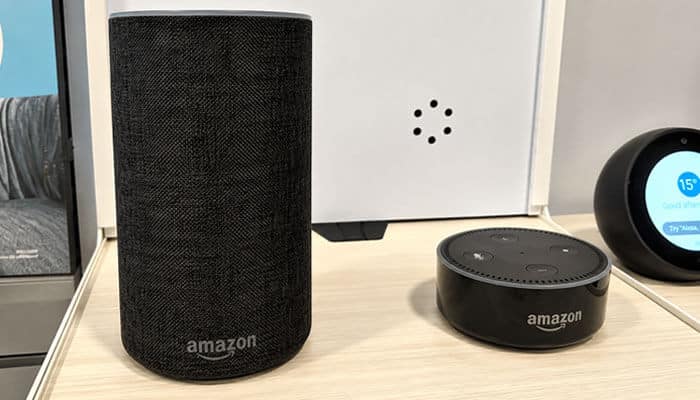
There is no single answer because Amazon Alexa Business is not one current product. Alexa Smart Properties and Alexa+ each have their own regional availability.
India is not currently listed among Amazon’s supported Alexa Smart Properties countries for Hospitality, Senior Living, Healthcare, or Core.
Alexa+ also has a separate rollout schedule.
As of August 2026, Amazon’s international Alexa+ rollout has included markets such as:
- United States
- Canada
- United Kingdom
- Mexico
- Italy
- Spain
- Germany
- Austria
- Brazil
- France
- Australia
India is not currently included in that Alexa+ expansion list.
That does not mean every Alexa feature is unavailable in India. It means companies researching Amazon Alexa Business in India should verify the exact product, API, device, and capability they intend to use.
How Are Alexa Smart Properties Devices Deployed?
A commercial Alexa deployment requires more planning than setting up one consumer Echo.
A typical project may involve:
- Identifying the business problem.
- Choosing the correct Smart Properties subscription.
- Creating the required organization and property structure.
- Selecting compatible devices.
- Preparing network access.
- Provisioning devices.
- Assigning devices to rooms or units.
- Configuring supported Alexa features.
- Connecting backend systems or skills.
- Testing real-world requests.
- Monitoring devices after launch.
For large Amazon Alexa Business projects, starting with a small pilot is usually more practical than deploying hundreds of devices immediately.
What Is Alexa+?
Alexa+ is Amazon’s next-generation assistant powered by generative AI.
It is designed to be:
- more conversational
- more personalized
- more context-aware
- better able to complete tasks
Alexa+ can help with:
- smart-home management
- research
- entertainment
- recommendations
- shopping
- reservations
- organization
- real-world tasks
The biggest change is the move from rigid voice commands toward natural, multi-turn conversation.
Is Alexa+ the New Amazon Alexa Business Platform?
Not exactly.
Alexa+ can certainly be useful to businesses, but it is not a direct replacement for the old Alexa for Business service.
| Alexa for Business | Alexa+ |
| Workplace-management service | Generative-AI assistant |
| Conference-room focus | Broad conversational focus |
| Shared office devices | Multi-device experiences |
| Employee enrollment | Personalization |
| Workplace skills | Add-ons and services |
| Central administration | Task completion |
| Calendar and meeting workflows | Shopping, booking, research and services |
Alexa+ represents a different direction for Amazon Alexa Business—one focused more on AI assistance, service discovery, shopping, personalization, and action completion.
Where Is Alexa+ Available in 2026?
Alexa+ became broadly available in the United States on February 4, 2026. Amazon currently charges U.S. non-Prime customers $19.99 per month for full Alexa+, while Prime members receive it at no additional cost.
Canada moved from Early Access to full availability in June 2026.
Amazon has also launched or begun Early Access in markets including:
- UK
- Mexico
- Italy
- Spain
- Germany
- Austria
- Brazil
- France
- Australia
Availability remains important for companies considering Alexa+ as part of an Amazon Alexa Business strategy.
Alexa+ Expanded to Fire TV in August 2026
Another major 2026 development is Alexa+’s wider availability on Fire TV.
Alexa+ on compatible Fire TV devices can support:
- conversational entertainment search
- follow-up questions
- personalized recommendations
- smart-home controls
- contextual assistance
The expansion shows that Alexa is evolving beyond Echo speakers.
For businesses, Amazon Alexa Business increasingly represents a multi-surface AI ecosystem that can appear across devices, apps, shopping experiences, web interfaces, and entertainment platforms.
What Is Alexa+ for Builders?
Alexa+ for Builders is particularly relevant for businesses that want customers to interact with their services through Alexa.
Eligible partners can potentially connect services so users can:
- discover businesses
- search
- book
- order
- pay
- confirm
- complete tasks
through natural conversation.
This creates one of the most important new Amazon Alexa Business opportunities in 2026.
What Is Natural Discovery?
Natural Discovery can change how customers find businesses through Alexa. Traditional Alexa skills often required users to know the skill name. Alexa+ can instead surface a relevant add-on based on context and intent.
For example, a user might say:
- “Book dinner for four tomorrow.”
- “Find someone to repair my sink.”
- “Order Thai food.”
- “Find tickets for tonight.”
- “Book me a haircut.”
- “Get me a ride to the airport.”
Alexa can potentially match the request with an eligible service.
For businesses, this creates a new type of Amazon Alexa Business discovery channel where customers may find a service without searching directly for a specific brand.
Alexa Skills vs Alexa+ Add-Ons
| Area | Traditional Alexa Skill | Alexa+ Add-On |
| Interaction | Voice commands | Generative conversation |
| Discovery | Often explicit invocation | Store plus contextual discovery |
| Task completion | Skill dependent | Designed around completed actions |
| Integration | Alexa Skills Kit | Category SDK or MCP Toolkit |
| Personalization | Skill dependent | Broader Alexa+ experience |
| Availability | Established ecosystem | Newer and more limited |
| Partner access | Broad developer ecosystem | Select partners currently |
Businesses should not assume Alexa+ add-ons are simply Alexa skills with a new name.
Alexa+ Integration Options for Businesses
Category SDK
The Category SDK supports predefined service categories such as:
- restaurant reservations
- food ordering
- home services
- local booking
- ticketing
- ride booking
These categories provide some of the clearest current Amazon Alexa Business opportunities for customer-facing companies.
MCP Toolkit
The MCP Toolkit is designed for services that do not fit into one of the predefined Alexa+ categories.
Companies with Model Context Protocol infrastructure may be able to connect services to Alexa+ through an MCP server.
Smart-Home Integrations
Alexa also remains strategically important for manufacturers building:
- connected appliances
- smart lights
- security systems
- thermostats
- locks
- cameras
- other IoT devices
For these businesses, Amazon Alexa Business may be less about workplace productivity and more about making products naturally controllable through Alexa.
How Businesses Can Use Alexa+ in 2026
Restaurant Reservations
Restaurants and reservation platforms can potentially let customers find and book tables through natural Alexa+ conversations.
Food Ordering
Supported partners can allow customers to browse food choices and place orders conversationally.
Home Services
Home-services companies can potentially connect customers with:
- plumbers
- cleaners
- repair technicians
- maintenance services
- other professionals
Local Booking
Businesses offering appointments or activities may benefit from conversational booking.
Ticketing
Ticketing platforms can potentially allow users to find and purchase tickets through Alexa+.
Ride Booking
Ride-booking services are another supported integration category.
These examples show how Amazon Alexa Business is shifting from workplace commands toward customer-facing transactions and AI-assisted service discovery.
What Is Alexa for Shopping?
Amazon renamed its Rufus AI shopping assistant to Alexa for Shopping in May 2026.
Alexa for Shopping uses generative and agentic AI to help customers:
- research products
- ask detailed questions
- compare products
- receive recommendations
- find deals
- view pricing information
- add items to carts
- complete selected shopping actions
This is an important part of the modern Amazon Alexa Business ecosystem because retailers and brands can increasingly be discovered through conversational shopping rather than only traditional search.
Why Alexa for Shopping Matters to Businesses
Traditional product search may look like:
“best ergonomic office chair under $300”
Conversational shopping may look like:
“I work from home eight hours a day and need an ergonomic chair under $300 with adjustable lumbar support. Compare the best options.”
This changes what retailers need to optimize.
Important product information includes:
- titles
- descriptions
- specifications
- pricing
- availability
- images
- variations
- compatibility
- reviews
- detail-page accuracy
For retailers, Amazon Alexa Business optimization increasingly means making product information easy for both customers and AI systems to understand.
Alexa Shopping on Echo Show
Amazon has also expanded Alexa-powered shopping experiences on Echo Show.
Customers can:
- browse products
- compare options
- review product information
- complete shopping actions
using supported combinations of voice and touch.
This gives brands another surface where accurate product information can influence the customer journey.
What Is Amazon Business Assistant?
Amazon Business Assistant should not be confused with Alexa for Business.
It is designed for organizations using Amazon Business, not for managing Echo devices.
Potential uses include:
- purchasing guidance
- account configuration
- approval processes
- organizational workflows
- procurement settings
Amazon Business Assistant therefore occupies a different role within the wider Amazon Alexa Business and Amazon AI ecosystem.
Amazon Business Assistant vs Alexa for Shopping
| Feature | Amazon Business Assistant | Alexa for Shopping |
| Main audience | Business purchasing teams | Shoppers |
| Main purpose | Procurement guidance | Product discovery and shopping |
| Business account support | Yes | Not primary purpose |
| Shopping comparisons | Not primary purpose | Yes |
| Conversational AI | Yes | Yes |
| Alexa fleet management | No | No |
Can Small Businesses Still Use Alexa?
Yes.
The retirement of Alexa for Business does not prevent a small company from using regular Alexa-enabled devices or Alexa+ where supported.
A small office may use Alexa for:
- timers
- reminders
- information
- weather
- music
- compatible lighting
- smart plugs
- thermostats
- hands-free tasks
However, there is a difference between using Alexa in a business and deploying a centrally managed Amazon Alexa Business solution.
Consumer Alexa does not automatically provide the same enterprise fleet-management capabilities the old Alexa for Business service once offered.
Which Amazon Alexa Business Product Fits Your Company?
| Business Need | Best Starting Point |
| One or two Alexa devices in an office | Consumer Alexa/Alexa+ |
| Hotel or resort | Alexa Smart Properties Hospitality |
| Senior-living community | Alexa Smart Properties Senior Living |
| Eligible healthcare organization | Alexa Smart Properties Healthcare |
| Other supported managed property | Alexa Smart Properties Core |
| Restaurant reservation platform | Alexa+ Category SDK |
| Food-ordering service | Alexa+ Category SDK |
| Home-services marketplace | Alexa+ Category SDK |
| Local booking platform | Alexa+ Category SDK |
| Ticketing platform | Alexa+ Category SDK |
| Ride-booking service | Alexa+ Category SDK |
| MCP-enabled service | Alexa+ MCP Toolkit |
| Smart-device manufacturer | Alexa smart-home ecosystem |
| Retail brand or seller | Alexa for Shopping |
| Amazon Business purchasing team | Amazon Business Assistant |
This comparison is one of the easiest ways to understand which Amazon Alexa Business technology may fit a particular use case.
What Should Former Alexa for Business Customers Do?
Businesses with legacy Alexa for Business implementations should conduct a technical audit.
Alexa for Business Migration Checklist
| Old Use Case | What to Review in 2026 |
| Shared workplace Alexa devices | Evaluate consumer Alexa or Smart Properties |
| Large Alexa fleet | Evaluate Alexa Smart Properties |
| Conference-room controls | Review current meeting-room systems |
| Calendar integration | Check for retired APIs |
| Meeting APIs | Replace discontinued dependencies |
| Private workplace skills | Review current skill/property options |
| Smart Properties Residential | Evaluate Core |
| Alexa Routines Kit | Move to supported tasks/triggers |
| Amazon Pay skill payments | Review account linking/payment flow |
| Smart Home API v2 | Migrate to supported current APIs |
There is no universal migration button from Alexa for Business to Alexa+.
Companies moving from the old service to a current Amazon Alexa Business solution need to review each workflow separately.
How Much Does Amazon Alexa Business Cost in 2026?
There is no single Amazon Alexa Business price in 2026.
Costs depend on the technology being used.
Potential expenses include:
- Alexa or Echo hardware
- Alexa+ subscriptions
- Smart Properties subscriptions
- integration providers
- software development
- backend infrastructure
- networking
- installation
- testing
- maintenance
- support
- internal administration
Alexa+ Pricing
In the United States, Alexa+ currently costs $19.99 per month for non-Prime customers and is included with Prime at no additional charge. Canada has its own local pricing.
Businesses should verify current regional pricing rather than applying historical Alexa for Business rates to a new deployment. Amazon Alexa Business Security and Privacy Considerations:
Any Amazon Alexa Business deployment should include a privacy and security review.
Businesses should ask:
- What information could users say near the device?
- Could confidential information be exposed?
- Who controls the Amazon account?
- Who has administrator permissions?
- Which third-party services are connected?
- What data is retained?
- What happens when an employee leaves?
- What happens when a guest checks out?
- How are devices reset?
- How are devices reassigned?
- Does the system process regulated information?
- Which regional privacy laws apply?
- How are backend integrations secured?
These questions become especially important in hotels, healthcare facilities, senior-living environments, and shared commercial spaces.
Using an Amazon service does not automatically satisfy every regulatory or legal requirement.
Benefits of Amazon Alexa Business Technology
Hands-Free Interaction
Voice can reduce friction when using a keyboard, touchscreen, or phone is inconvenient.
Faster Routine Requests
Simple information and service requests can require fewer steps.
Better Guest Experience
Hotels and hospitality businesses can provide faster access to information and supported services.
Smart-Property Automation
Alexa can control compatible:
- lighting
- thermostats
- televisions
- blinds
- other connected devices
Reduced Repetitive Work
Routine questions can be automated or routed to an appropriate workflow.
Accessibility
Voice provides an additional way for some people to interact with technology.
Conversational Commerce
Alexa+ and Alexa for Shopping create new pathways for finding and purchasing products or services.
AI-Based Business Discovery
Natural Discovery may help eligible businesses appear when users describe a need without naming a company.
These benefits demonstrate why Amazon Alexa Business still has value even though the original Alexa for Business product has been retired.
Limitations of Amazon Alexa Business
No Direct Alexa for Business Replacement
Companies seeking the exact old workplace-management platform will not find a current one-for-one replacement.
Uneven Geographic Availability
Alexa+, Smart Properties, and developer APIs have different country restrictions.
Limited Alexa+ Partner Access
Not every business can immediately create and publish an Alexa+ integration.
Voice Does Not Suit Every Workflow
Tasks involving complex documents, financial analysis, programming, or confidential discussions may be better handled through another interface.
Deployments Can Be Complex
Commercial Alexa implementations may require:
- APIs
- authentication
- account linking
- networking
- device provisioning
- backend integrations
- testing
- security reviews
Older Guides Can Be Outdated
Businesses researching Amazon Alexa Business should check the publication date of setup instructions before following them.
How to Measure Amazon Alexa Business ROI
Installing Alexa devices does not automatically create business value.
An Amazon Alexa Business deployment should be tied to measurable results.
| Business Goal | KPI to Track |
| Reduce repetitive questions | Requests completed without staff |
| Improve hotel service | Guest-request completion rate |
| Reduce call volume | Calls avoided |
| Increase bookings | Alexa-assisted reservations |
| Increase sales | Alexa-assisted purchases |
| Improve reliability | Successful interaction rate |
| Increase adoption | Active users or devices |
| Save employee time | Hours saved |
| Improve experience | Customer or resident satisfaction |
| Control cost | Cost per successful task |
A simple ROI formula is:
ROI = (Annual Benefit − Annual Cost) ÷ Annual Cost × 100
Businesses should include total cost of ownership rather than only device purchase prices.
How to Evaluate Amazon Alexa Business for Your Company
Step 1: Define the Business Problem
Start with the business need rather than the technology.
Possible goals include:
- reducing customer-service workload
- improving guest experiences
- automating properties
- increasing bookings
- helping customers find products
- improving accessibility
- controlling connected devices
Step 2: Choose the Right Amazon Alexa Business Product
Match the objective to the correct solution:
- Alexa Smart Properties
- Alexa+
- Alexa+ for Builders
- Alexa for Shopping
- another relevant Amazon platform
Step 3: Verify Availability
Check:
- country
- subscription
- hardware
- API availability
- developer access
- partner requirements
Step 4: Calculate Total Cost
Include:
- hardware
- software
- integrations
- networking
- training
- maintenance
- support
Step 5: Review Security and Privacy
Determine what information may pass through Alexa and who can access it.
Step 6: Run a Pilot
Test the Amazon Alexa Business use case with a limited department, property, room group, or workflow.
Step 7: Measure Results
Track adoption, reliability, cost savings, sales, bookings, or customer-service outcomes.
Step 8: Expand Only When the Data Supports It
Do not scale simply because the technology works.
Scale when it creates meaningful business value.
When Amazon Alexa Business May Not Be the Best Choice
Alexa is not automatically the best AI solution for every company.
Another platform may be better if the primary need involves:
- document creation
- spreadsheet analysis
- coding
- enterprise knowledge search
- complex project collaboration
- meeting transcription
- detailed visual analysis
- prolonged keyboard-and-screen interaction
Amazon Alexa Business is most compelling when voice, ambient computing, conversational discovery, smart-device control, or hands-free interaction provides a genuine advantage.
Amazon Alexa Business in 2017 vs 2026
| 2017–2023 Direction | 2026 Direction |
| Workplace assistant | Generative-AI ecosystem |
| Conference rooms | Conversational task completion |
| Employee productivity | Broader customer and business services |
| Shared office Echo devices | Specialized managed-property deployments |
| Private workplace skills | Skills and Alexa+ add-ons |
| Explicit skill invocation | Contextual/Natural Discovery |
| Workplace calendar workflows | Service integrations |
| Alexa Business APIs | Smart Properties and newer APIs |
| Alexa Routines Kit | Custom tasks and triggers |
| Traditional shopping commands | Alexa for Shopping |
| Primarily Echo focused | Echo, apps, web and Fire TV |
| Alexa for Business | Multiple specialized Alexa technologies |
The shift is much larger than a product rename.
Amazon Alexa Business has evolved from one workplace-focused AWS service into a broader ecosystem of generative AI, managed properties, conversational services, connected devices, shopping, and customer-facing automation.
What Does the Future of Amazon Alexa Business Look Like?
Three trends stand out.
Alexa Is Becoming More Agentic
Alexa+ is increasingly designed to complete tasks rather than simply answer questions.
Potential tasks include:
- booking
- ordering
- shopping
- finding services
- managing devices
- coordinating actions
Amazon Alexa Business Discovery Is Becoming Conversational
Customers can increasingly describe what they need instead of typing a short keyword.
For example:
“Find a highly rated plumber who can come tomorrow afternoon.”
For businesses, that means accurate information about:
- services
- locations
- availability
- prices
- bookings
- catalog data
- APIs
may become increasingly important.
Alexa Is Expanding Beyond Echo
Alexa+ now spans multiple surfaces, including Alexa-enabled devices, apps, web experiences, and compatible Fire TV products.
That means Amazon Alexa Business is becoming less about simply putting Echo speakers in workplaces and more about participating in a wider conversational AI ecosystem.
Conclusion
Amazon Alexa Business has changed considerably from the original Alexa for Business service that Amazon introduced for workplaces. The legacy AWS service was deprecated on May 31, 2023, so businesses can no longer sign up for it. Instead, the current ecosystem includes specialized technologies such as Alexa Smart Properties, Alexa+, Alexa+ for Builders, Alexa for Shopping, and Amazon Business Assistant.
For organizations considering Amazon Alexa Business in 2026, the key is choosing technology based on the actual business need rather than treating Alexa as a single enterprise product. Hotels and other supported properties may benefit from Alexa Smart Properties, while customer-facing businesses may find opportunities through Alexa+ integrations and conversational discovery. Retailers can also consider Alexa for Shopping as AI-assisted product discovery becomes more important.
Before investing, businesses should verify regional availability, calculate total implementation costs, assess privacy and security requirements, and test the technology through a limited pilot. Ultimately, Amazon Alexa Business makes the most sense when voice interaction, smart-device management, conversational commerce, or hands-free automation can deliver measurable business value.
Amazon Alexa Business FAQs
1. What is Amazon Alexa Business in 2026?
Amazon Alexa Business is best understood as a broad term covering Amazon’s business-facing Alexa technologies rather than one standalone product. Current options include Alexa Smart Properties, Alexa+, Alexa+ for Builders, Alexa for Shopping, and other Alexa integrations.
2. Is Alexa for Business still available?
No. Amazon Web Services deprecated the original Alexa for Business service on May 31, 2023. Businesses looking for Alexa-based solutions today need to evaluate Amazon’s newer products according to their specific use cases.
3. What replaced Amazon Alexa for Business?
There is no single direct replacement for Alexa for Business. Alexa Smart Properties handles many centrally managed commercial deployments, while Alexa+ focuses on generative AI and conversational tasks. Other solutions serve shopping, service integrations, and procurement use cases.
4. Can small businesses use Amazon Alexa Business?
Yes. Small businesses can still use Alexa-enabled devices and Alexa+ where supported for reminders, information, timers, smart lighting, thermostats, smart plugs, and other hands-free tasks. However, regular consumer Alexa does not provide all the centralized fleet-management capabilities of the retired Alexa for Business service.
5. How much does Amazon Alexa Business cost in 2026?
There is no universal Amazon Alexa Business price. Costs can include Echo or Alexa hardware, Alexa+ subscriptions, Smart Properties subscriptions, development, networking, installation, integrations, maintenance, and technical support. Businesses should calculate the total cost of ownership before deployment.
6. Can Amazon Alexa Business be used in hotels?
Yes. Alexa Smart Properties for Hospitality can support commercial Alexa deployments in hotels and resorts. Depending on the setup, guests may use Alexa to request services, obtain property information, control compatible lights or thermostats, operate televisions, and set alarms.
7. Is Amazon Alexa Business available in India?
Availability depends on the specific Alexa product. As of August 2026, India is not listed among the supported countries for Alexa Smart Properties subscriptions, and it is also not included in the Alexa+ international expansion markets listed in the article. Businesses in India should therefore verify the exact product, API, device, and feature before planning a deployment.
8. Is Amazon Alexa Business worth using in 2026?
It can be valuable when a business has a clear use case for voice interaction, smart-property automation, hands-free services, conversational commerce, customer bookings, or AI-assisted discovery. Businesses should measure results such as requests completed without staff, bookings, sales, hours saved, customer satisfaction, and cost per successful task before scaling a deployment.
