


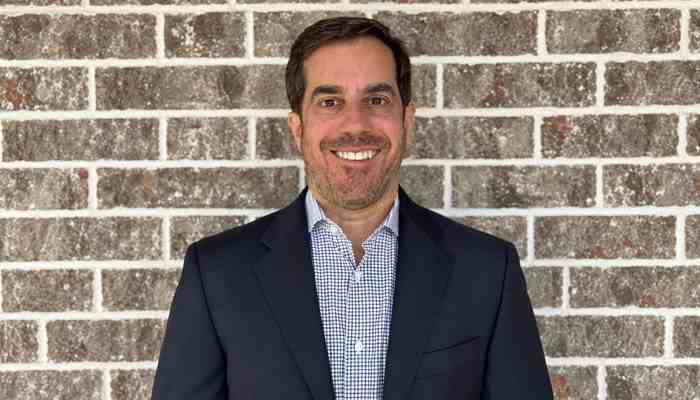

In a typical capital campaign, the top 20 gifts account for 72 percent of the goal, according to a 2026 benchmarking study of more than 650 nonprofits by Capital Campaign Pro . David Gewant did not know that figure the night he stood in front of roughly 400 people in Oregon and asked them, out loud, for money.
Gewant spent three decades managing portfolios and advising wealthy families and institutions while steadily deepening his involvement in nonprofit leadership, including earning an MBA in nonprofit management. None of that finance experience had prepared him for a podium. When the St. John’s Society, a Catholic religious order active in Oregon and several other countries, asked him to deliver its annual fundraising appeal at its gala, he agreed to do something he had never done: make the ask himself, out loud, in front of a room, with no client meeting to retreat into if it went sideways.
The room gave a little over $100,000 that night for the Society’s Oregon programs. Gewant had previously chaired the major-gifts appeal for a larger campaign, one that raised $16 million to build a Catholic K-8 school. But the gala was his first experience with the moment every major-gifts strategy eventually reaches: standing up and making a direct ask.
The Arithmetic Behind the Ask
American giving hit a record $617.2 billion in 2025, the first time it has topped $600 billion, driven largely by strong markets and a jump in bequests . That growth reflects a structural reality fundraisers have long understood, and one Gewant quickly recognized through the lens of portfolio management: campaigns do not succeed evenly. They succeed through concentration. The same 2026 Capital Campaign Pro study also found that the capital campaigns it tracked closed at a 95 percent success rate and raised an average of 116 percent of their original target, with 61 percent relying on a volunteer campaign chair , exactly the kind of unpaid, high-trust role Gewant has taken on repeatedly over the years.
In portfolio management, concentration is often assessed regarding risk, but in a campaign, it can be leveraged as an opportunity to identify where the bulk of the value sits. Secure that first, and let it set the terms for everything built around it. That means locking in leadership gifts before the invitation ever reaches a general audience. By the time Gewant took the podium at the St. John’s Society gala, the room had already been prepared that way. His job was to make the ask clearly and let the room respond.
Learning to Sit With Silence

Making the ask is only part of the challenge. The silence that follows is often harder. Rhea Wong, writing in Nonprofit Quarterly, describes the seconds after a major-gift ask as a genuine neurological event: “even a four-second gap can feel like social rejection,” she writes, because the brain’s threat response activates during silence whether or not anything is actually wrong . Her advice for first-time askers is not to rehearse a better pitch. It is to prepare through donor discovery beforehand, so the asker can tolerate the silence once the number is out.
A separate piece on the same problem, published by the fundraising consultancy Real Deal Fundraising, reduces the discipline to three words: “End. Pause. Listen.” The article argues that whoever speaks first after naming the ask gives something away, and that the instinct to soften an awkward silence with more talking is almost always about the asker’s own discomfort, not the donor’s actual hesitation.
David Gewant’s version of that discipline did not come from a fundraising manual. It came from three decades of client meetings. “You can imagine, in my profession, having to sit down with clients and listen, trying to be reflectively listening,” he said. At its best, wealth management is largely a listening job along with building trust, curating a strategy and implementing it. A gala ask follows a similar pattern, compressed into one night and one number, with 400 people watching instead of one client across a desk.
None of this made Gewant a professional fundraiser overnight. What it left him with is a framework he now hands to the newer nonprofits he mentors on governance and board-building: find where the concentration actually sits, prepare more than you perform, and once the number is said, stop talking.
