


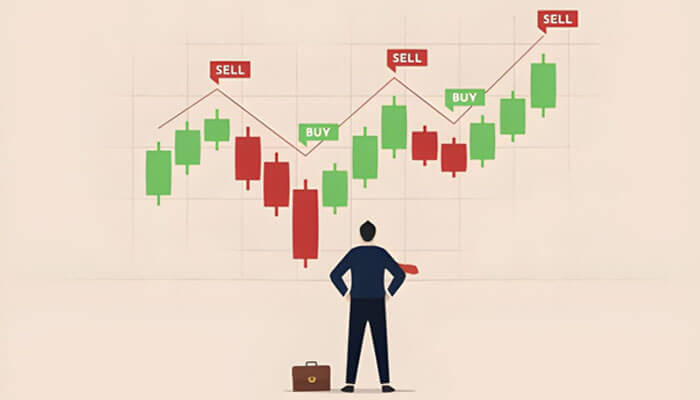
Trading today is no longer limited to calling a broker or sitting at a desktop. With digital platforms and automated tools, traders have more ways to enter and exit the market than ever before. But having more options also raises a simple question: should you make every trading decision yourself, or let software handle some of the work?
Manual and algorithmic trading take different approaches to the same goal. Manual trading relies on your judgement, while algorithmic trading follows rules programmed into a system. Understanding the difference can help you decide which approach fits your trading style.
What Is Manual Trading?
Manual trading is the more familiar approach. You study the market, decide when to buy or sell, and place the order yourself.
Your decision may be based on a company’s financial performance, market news, price movements, charts, or other information. One advantage is flexibility. If something unexpected happens, you can change your plan before placing or exiting a trade.
The challenge is that emotions can get in the way. A sudden fall in price may make you exit too early, while a rapidly rising stock may tempt you to enter without proper research.
What Is Algorithmic Trading?
Algorithmic trading uses software to execute trades according to predefined instructions.For example, a trader could create rules that tell the system to buy a stock when it reaches a certain price and sell it when another condition is met. Once the conditions are triggered, the system can execute the order automatically.
This can reduce repetitive manual work and make execution more consistent. However, automation does not guarantee better results. If the strategy is poorly designed, the system will follow those poor instructions automatically.
Manual vs Algorithmic Trading: Key Differences
| Factor | Manual Trading | Algorithmic Trading |
| Decision-making | Trader makes each decision | Software follows predefined rules |
| Execution | Depends on the trader | Can happen automatically |
| Emotional influence | Higher | Lower during execution |
| Flexibility | Easy to adapt to new information | Limited to programmed conditions |
| Consistency | May vary between trades | Rules can be applied consistently |
| Monitoring | Requires active attention | Software can monitor selected conditions |
| Technical knowledge | Easier to start with | May require technical understanding |
| Main risk | Emotional or delayed decisions | Strategy or technical errors |
Speed and Execution: Where the Difference Shows


Speed is one of the biggest differences between the two approaches.
A manual trader must spot an opportunity, assess it, and place an order. An algorithm can respond automatically when its predefined conditions are met. This can be useful for strategies that depend on specific price movements or timing.
However, speed should not be mistaken for accuracy. An algorithm may execute an unsuitable trade just as quickly as a good one. Strategy quality still matters more than execution speed.
For manual traders, modern trading apps have also reduced the gap to some extent. Orders can be placed quickly from a smartphone, while prices, positions, and holdings can be monitored in real time.
Emotions: The Human Factor
One of the biggest challenges of manual trading is managing emotions.Consider a trader who buys a stock after researching it and then sees it fall sharply the next morning. Even if the original reason for buying remains valid, watching the loss grow can make it difficult to stick to the plan.
An algorithm does not experience fear, greed, or hesitation. Once activated, it follows its rules.But that does not make algorithmic trading completely free from human bias. The person designing the strategy decides which rules the algorithm follows. If those rules are based on unrealistic expectations, automation can make the problem worse instead of solving it.
Consistency in Trading
Manual traders may make different decisions in similar situations depending on their confidence, experience, or emotions at the time.
An algorithm, on the other hand, can apply the same conditions repeatedly. For traders following a clearly defined strategy, this consistency can be useful.
There is a downside. Markets do not always behave as expected. A strategy that worked well during one market phase may perform differently when volatility, liquidity, or broader conditions change.
That is why automated systems should be tested and monitored, not simply switched on and forgotten.
Which Approach Gives You More Control?
Manual trading keeps the final decision with you. You can react to breaking news, changing market conditions, or information that was not part of your original plan.
Algorithmic trading gives some of that control to software. This can be useful when you have a strategy you can clearly express through rules and want to reduce repetitive decision-making.Neither approach is inherently better. The choice depends on how you prefer to analyse the market and manage your trades.
Risks to Consider
Both methods involve market risk, but the risks differ.
Manual traders may face:
- Emotional decision-making
- Delayed order execution
- Overtrading
- Acting on incomplete information
Algorithmic traders may face:
- Coding or configuration errors
- Technical failures
- Poorly designed strategies
- Unexpected market conditions
- Unintended or excessive orders
Retail investors using automated strategies should also understand the applicable requirements around brokers, APIs, and algo providers before connecting any system to a trading account.
Can You Use Both?
Yes. Traders do not necessarily have to choose one approach for every situation.
Someone may manually manage long-term investments while using an automated strategy for a specific short-term setup. The key is to track the different strategies and understand the risks attached to each.
It is also worth remembering that automation does not mean handing over responsibility. You still need to understand what the system is doing, how much capital it uses, and what happens if the strategy performs poorly.
Which Is Better for a Beginner?
Manual trading is often easier to understand when you are starting because you remain involved in each decision. It can help you learn how orders work, how prices move, and how you respond to gains and losses.
Algorithmic trading can become useful once you have a clearly defined strategy and understand the technology behind it.
You don’t need to automate simply because the option exists. Learning the basics of investing and risk management should come first.
Final Thoughts
Manual and algorithmic trading offer different ways to participate in the market. Manual trading gives you flexibility and direct control, while algorithmic trading can provide speed and consistent execution.
Neither can remove market risk or guarantee returns. The better choice matches your strategy, experience, and ability to manage losses.
Technology can make trading faster, but good trading decisions still begin with understanding what you are doing and why.
