


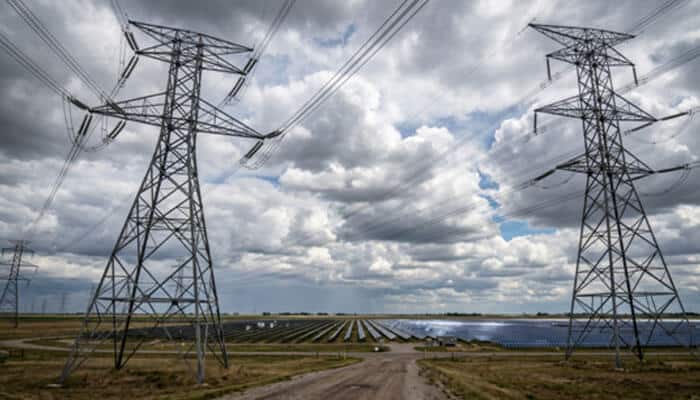

Grid congestion is no longer just a technical headache for grid operators. It is a direct threat to the revenue, bankability, and timelines of independent power producers (IPPs) and portfolio operators across Europe and increasingly in Southeast Asia. When a grid connection point reaches capacity, solar and wind projects cannot inject their full output — and every curtailed megawatt-hour is lost revenue that never appears on the balance sheet.
What Is Grid Congestion and Why Does It Happen?
Grid congestion is a physical constraint — not a market failure — and it is intensifying as renewable capacity outpaces grid expansion.
The Physical Constraint: Wires Have Limits
Grid congestion occurs when the electricity transmission or distribution network does not have enough capacity to carry all the power that generators want to inject and consumers want to draw. The physical constraint is simple: wires have a maximum thermal rating. When generation in an area exceeds the wire’s capacity, the system operator must curtail — reduce or shut off — some generators to maintain grid stability.
Why Congestion is Accelerating
The rapid buildout of solar and wind capacity has outpaced grid expansion in most markets. Solar farms are often built where land is cheap and irradiance is high, but the transmission infrastructure in those areas was designed for much lower generation levels. In Germany, the north-south transmission bottleneck means that wind generation in the north cannot reach demand centers in the south. In Spain, southern provinces with the best solar resources face the most congested grid connections. In the Netherlands, distribution networks in rural areas are reaching capacity as agricultural solar installations proliferate.
The problem is compounded by permitting timelines: new transmission lines take 5-10 years from planning to commissioning, while a solar farm can be built in 12-18 months. This mismatch means congestion will intensify before it improves.
How Does Grid Congestion Affect IPPs and Portfolio Operators?
The financial impact of congestion extends beyond lost generation. It delays projects, increases financing costs, and creates planning uncertainty.
Direct Revenue Losses From Curtailment
For a 100 MW solar farm in a congested grid area, curtailment of 10-15% of annual generation means the loss of 10,000-15,000 MWh per year. At a PPA price of €40/MWh, that translates to €400,000-€600,000 in lost annual revenue. Over a 20-year project life, the cumulative loss is substantial — and it worsens as more solar capacity connects to the same grid area.
Connection Delays And Waiting Lists
In markets with declared congestion zones, new projects face extended grid connection timelines. The Dutch grid operator TenneT has a multi-year waiting list for new connections in several provinces. In the UK, some projects are offered connection dates in the 2030s for applications submitted in 2024. For IPPs, these delays translate to lost development costs, expired land leases, and missed PPA windows.
Impact On Project Finance And Debt Financing
Lenders evaluate curtailment risk as part of their debt sizing analysis. A project in a congestion zone with a 10% curtailment forecast will receive less debt capacity than an identical project in an uncongested area. Higher curtailment risk means higher debt-service coverage ratios are required, which reduces debt financing and increases the equity the developer must contribute.
Portfolio-level Planning Uncertainty
For portfolio operators managing multiple assets across different grid zones, congestion creates correlated risk that is difficult to hedge. A portfolio with three solar farms in the same congested region faces simultaneous curtailment events — the revenue shortfall is not diversified across assets but concentrated in the same hours. This correlated exposure makes congestion a portfolio-level planning problem, not just a single-asset problem. Operators need congestion forecasting at the portfolio level to make informed decisions about new acquisitions and asset allocation.
| Congestion Impact | Effect on Project | Financial Consequence |
| Energy curtailment | Reduced generation | Lost revenue, lower IRR |
| Connection delays | Later COD | Extended development costs, lost PPA windows |
| Higher DSCR requirements | Lower debt financing | More equity needed, higher cost of capital |
| Curtailment uncertainty | Harder to model | Revenue forecast variance, lender caution |
Why Is BESS the Solution to Grid Congestion?
Battery storage addresses congestion by absorbing generation that the grid cannot accept and dispatching it when capacity becomes available. This shifts curtailment from a lost-revenue event into a time-shifting opportunity.
Bess As The Congestion Mitigation Tool
A Battery Energy Storage System (BESS) co-located with a solar or wind farm absorbs generation during congestion events and discharges when the grid has available capacity. Instead of curtailing 10% of generation (lost revenue), the BESS stores that energy for later dispatch — converting a lost megawatt-hour into a sold megawatt-hour. The BESS effectively decouples the generator’s output from the grid’s real-time capacity constraint.
Sizing The BESS For Congestion Patterns
The BESS capacity depends on the local congestion pattern: how many hours per year congestion occurs, how severe the curtailment is during those hours, and what the price spread is between congested and uncongested periods. In markets with frequent but short congestion events (2-4 hours), a 2-4 hour BESS is typically sufficient. In markets with extended congestion (8+ hours daily during peak solar months), a larger BESS — 4-8 hours — is needed to absorb the full curtailed volume.
Ancillary Revenue Streams Beyond Congestion
Beyond congestion management, a co-located BESS can participate in frequency regulation markets, provide capacity market services, and arbitrage time-of-day price spreads. These ancillary revenue streams improve the project’s overall economics and can make the difference between a bankable and unbankable project in congested grid areas.
How Sungrow Provides BESS Solutions for IPPs and Portfolio Operators
Sungrow’s PowerTitan BESS is designed for utility-scale storage applications, including grid congestion management. The system’s liquid-cooled LFP (lithium iron phosphate) architecture handles the frequent charge-discharge cycling that congestion management requires — the battery must absorb and release energy multiple times per day during congestion events, rather than performing a single daily cycle.
The PowerTitan’s modular design allows capacity to be scaled in increments that match the congestion profile of the specific grid connection point. A project facing 2-3 hour daily congestion windows needs a smaller system than one facing 6-8 hour events, and the modular architecture lets developers right-size the storage without over-investing in unused capacity. The integrated energy management system automates dispatch — charging when curtailment is ordered, discharging when grid capacity becomes available — without requiring manual intervention or separate trading software.
For IPPs and portfolio operators evaluating BESS co-location, Sungrow offers a platform that integrates the battery, power conversion system, and energy management software into a single containerized solution. This integrated approach reduces the engineering complexity of retrofitting storage onto existing solar or wind projects — a practical consideration for developers who need to address congestion risk on operational assets.
What This Means for IPPs and Portfolio Operators
Grid congestion is not a problem that resolves itself — it worsens as more renewable capacity connects to constrained grids. For IPPs, the choice is between accepting curtailment losses and investing in co-located storage that converts congestion events into dispatchable revenue. Sungrow’s BESS solutions are built for the frequent cycling that congestion management demands.
