


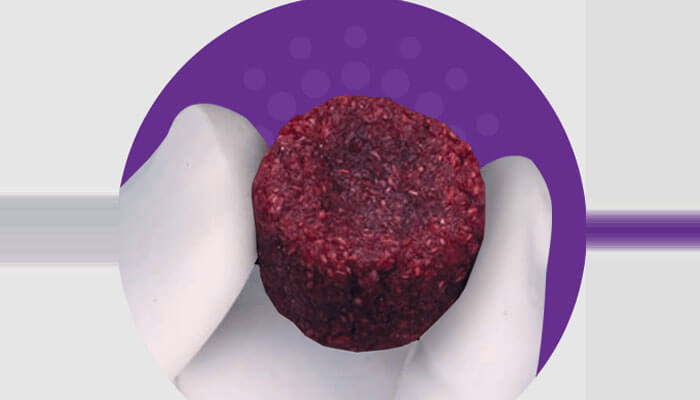

ACTIGEN™ Verified Inductive Bone Matrix is a human allograft bone matrix offered by Sanara MedTech. It contains no extrinsic carriers and is processed using a proprietary method designed to preserve native bone morphogenetic proteins. Its handling properties allow clinicians to adjust the material for their intended application, subject to product instructions and medical judgment.
For surgical teams, evaluating a bone matrix requires understanding more than its composition. Testing, preparation, storage, patient considerations, and tissue traceability also influence product selection. This guide explains ACTIGEN’s key characteristics and offers a practical framework for reviewing its suitability within a facility’s surgical workflow.
Begin With Product Composition
ACTIGEN is derived entirely from human allograft bone. Sanara states that it does not contain an added carrier. These characteristics help surgical teams understand what the product contains when comparing it with other graft materials.
Composition provides a starting point, but it does not establish that one product is appropriate for every patient or procedure. Reviewers should consider the intended application alongside the product’s processing, preparation requirements, and supporting evidence.
A useful evaluation question is: What characteristics does the surgical team need from the graft material? Defining those requirements first makes product comparisons more focused and helps distinguish clinically relevant features from general marketing descriptions.
Understand What “Verified Inductive” Means
Sanara reports that every ACTIGEN lot undergoes osteoinductivity testing after sterilization by an independent laboratory. Its brochure describes an animal model in which histological assessment identified new bone, bone marrow, osteocytes, chondrocytes, and cartilage at 28 days after implantation.
This testing provides information about biological activity under defined experimental conditions. Surgical teams should interpret the verification claim within that context.
The reported 28-day observation is an animal-model finding. It should not be presented as a human healing timeline or a guarantee of fusion. During evaluation, teams can request details about the assay, acceptance criteria, and available clinical evidence relevant to their proposed application.
Review the Evidence Behind Each Claim
A thorough product review separates composition, laboratory findings, handling observations, and patient outcomes. Each answers a different question.
Composition explains what a material contains. Laboratory testing explores performance under controlled conditions. Clinical research examines outcomes in patients. Handling information helps teams understand preparation and placement.
For ACTIGEN, reviewers should identify which evidence supports each feature they consider important. If a team is assessing the product for a particular procedure, it can ask whether available clinical publications address a comparable patient population and application.
This approach supports an informed discussion without assuming that a biological test alone predicts every surgical outcome.
Assess Hydration and Handling Options
Sanara identifies saline, blood, bone marrow aspirate, platelet-rich plasma, and other cellular components as possible hydration options, subject to a physician’s informed medical judgment. The company also describes clinician-controlled handling characteristics that include molding, flowing, and injection.
These options give surgical teams specific preparation questions to resolve. Which hydration medium is planned? What consistency is needed? Which instruments will be used?
The package insert states that freeze-dried verified inductive matrix requires hydration, with the amount of solution indicated on the container label. It also directs users to apply the prepared material promptly to minimize drying.
Staff education should therefore address the actual product supplied and its current instructions.
Interpret Irrigation Resistance Accurately
ACTIGEN’s package insert describes the material as irrigation resistant once molded and pressed into the defect. That condition matters when explaining the feature.
Irrigation resistance should not be interpreted as unrestricted resistance to every fluid volume, pressure, or technique. Surgical teams should review how the characteristic fits their planned workflow and preparation method.
During product evaluation, clinicians can ask for handling information or educational support that clarifies the labeled preparation process. Discussing the sequence of hydration, placement, and irrigation helps staff understand how the product’s handling claims relate to use.
Consider the Proposed Surgical Application

Sanara lists orthopedics, reconstruction, foot and ankle, dental, spine, and trauma among ACTIGEN’s potential areas of use.
These categories provide context rather than blanket authorization for every procedure within a specialty. The evaluating clinician should review current product documentation and determine whether the proposed application is appropriate.
A facility’s review can begin with a clearly described use case. Identifying the procedure, desired handling characteristics, anticipated graft volume, and relevant evidence makes the discussion more concrete. It also helps purchasing and clinical teams evaluate the same requirements.
Evaluate Storage and Inventory Needs
Sanara’s brochure specifies ambient storage at 15–30°C and a five-year shelf life from the date of internal packaging. It lists product sizes of 1.0 cc, 2.5 cc, 5.0 cc, and 10 cc.
These details help supply teams assess inventory requirements. Facilities should confirm available sizes, ordering information, and storage conditions before adoption.
A practical inventory plan can identify where the product will be stored, who monitors expiration dates, and how staff access it for scheduled procedures. The label on the supplied unit remains the reference for its expiration date and applicable handling requirements.
Include Patient Safety and Tissue Traceability
The package insert identifies ACTIGEN as donated human tissue processed by CellRight Technologies. It describes donor screening and testing, while noting that human-derived tissue may still transmit infectious agents. Processing agents may also leave traces.
The insert specifies single-patient, single-occasion use, prohibits facility resterilization, and requires tissue tracking. Compromised packaging or an expired product must not be used.
Facilities should establish responsibility for receiving, storing, dispensing, and documenting each graft. Clear ownership of these steps helps clinical and supply teams maintain traceability throughout the product’s use.
Build a Focused Evaluation Process
ACTIGEN product evaluation should connect the material’s documented characteristics with a defined surgical need. A useful review brings together clinicians, operating room staff, supply personnel, and other relevant facility reviewers.
The process can address composition, testing, handling, storage, patient considerations, and documentation in one coordinated discussion. Questions that remain unresolved can then be directed to the product supplier.
At Sanara MedTech, we help healthcare professionals access information about our surgical product portfolio.
