



Brass is the enemy of every person trying to maintain cool, ashy, or platinum tones in color-treated or naturally light hair. It shows up predictably, usually within a few weeks of a fresh color service, and it shows up faster in people whose hair has higher porosity, who wash frequently, or who spend significant time in hard water or chlorinated pools. The warm shift isn’t a failure of the original color. It’s oxidation doing exactly what oxidation does, and the toning products meant to counteract it work on a principle that most people understand loosely but apply incorrectly often enough that the results disappoint them.
The Color Theory Behind the Correction
Toning works through the principle of opposing hues on the color wheel. Violet sits directly across from yellow, which means violet pigment deposited onto yellow-brassy hair absorbs the warm wavelengths visually. It also influences the overall perception of the tone toward cooler, more neutral territory.
The mechanism isn’t chemical in the way bleach or dye is. It’s optical. The violet molecules attach to the hair shaft and alter how light reflects off the surface. This is why the effect is temporary and why it fades with each wash as those pigment molecules lift out.
The concentration of violet pigment in a toning product determines how aggressively it corrects. This is where most people run into trouble. A formula strong enough to neutralize significant brassiness will overcorrect toward purple or silver. This is true especially if left on too long or used too frequently on porous or fine hair,
The line between toned and overtoned is narrower than product packaging typically communicates. It’s different for every person depending on their starting level, their hair’s porosity, and the specific formula they’re using.
Why Timing Is the Primary Variable
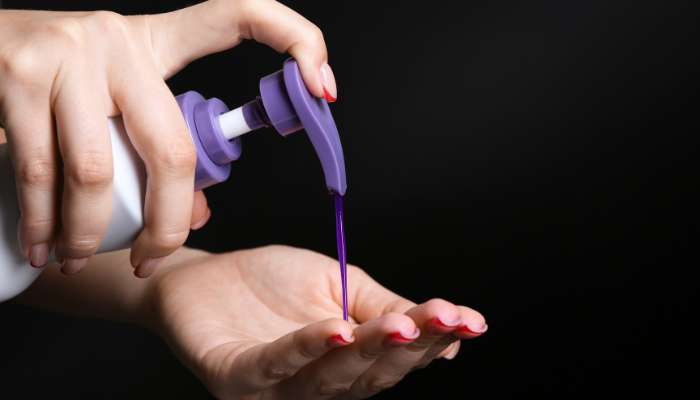
The same product produces different results at five minutes versus fifteen versus thirty, and that range matters more than which product you’re using in most cases. Hair that’s been freshly lightened, whether professionally bleached or naturally blonde with some processing history, has a more open cuticle structure than hair that’s been left alone. Open cuticles absorb pigment faster and deeper, which means the timing window for a strong toning formula on compromised hair is genuinely short. The person leaving purple shampoo on for forty-five minutes because they want maximum correction is usually the person standing in front of a mirror an hour later, trying to figure out how to fix lavender hair.
The correct approach involves starting with a shorter application time, assessing the result, and building from there across sessions rather than assuming maximum time produces the best outcome. This is harder to do consistently than it sounds because the color shift during processing isn’t always visible until the hair is rinsed and dried, and people make timing decisions based on wet hair that looks different from what it becomes once the water is out.
How Frequency Interacts With Formula Strength
There’s a meaningful difference between using a strong toning shampoo twice a week and using a gentler formula more frequently, and neither approach is universally correct. High-porosity hair that grabs pigment aggressively might do better with a diluted formula. Low-porosity hair that resists pigment absorption might need a longer dwell time or a stronger formula to see any changes at all. The texture and porosity of the hair should be driving the product selection and frequency decision.
Heat is an amplifying variable that most people don’t account for. Applying a toning product to hair and then sitting under a hooded dryer or in a warm shower dramatically accelerates pigment absorption in ways that can compress a thirty-minute result into ten. Consistently cool water during rinsing slows the process slightly and helps preserve whatever color has been achieved by closing the cuticle after the product is removed.
What Actually Sustains the Result Between Uses
Toning products address the symptom of warmth on a cycle, but the rate at which warmth returns is shaped by factors outside the product itself. Sun exposure accelerates oxidation and fades cool tones faster than almost anything else. Heat styling without protection lifts pigment and accelerates the warm shift. Water quality matters enough that people in hard water areas often find their toning results disappearing faster than those in softer water markets, regardless of how consistently they’re using the product.
