


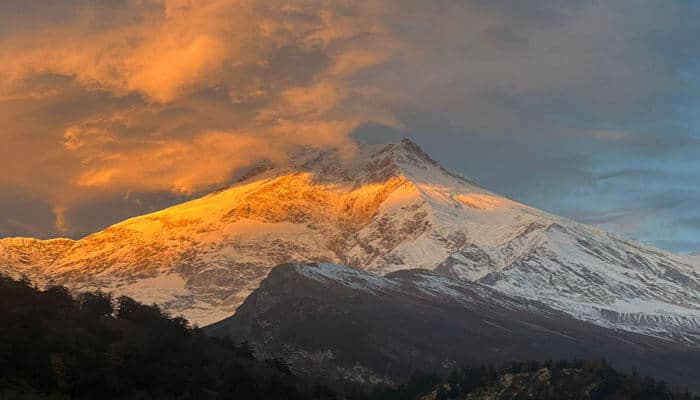

Beyond the striking physical environment of deep river gorges, sweeping glaciers, and the formidable Larkya La Pass (sitting at an elevation of 5,106 meters), what truly defines the region are its indigenous inhabitants: the Nubri and Tsumba people.
Visiting these remote high-altitude valleys offers an experience that changes how you travel, providing a deeper look into ancient Tibetan Buddhist traditions, rare linguistic heritage, and some of the world’s most successful community-led conservation models developed by the local inhabitants.
The Ecological Framework of the Manaslu Conservation Area
The entire Manaslu and Tsum Valley trekking route is located within the Manaslu Conservation Area (MCA), a protected area managed by the National Trust for Nature Conservation (NTNC) since 1998. Spanning 1,663 square kilometers, the MCA represents a successful integration of ecotourism and environmental protection, stretching from subtropical forests at 600 meters to the nival zone above 5,000 meters.
This extreme vertical ecological gradient enables diverse habitats to coexist, making the region a critical hotspot for Himalayan biodiversity. Rigorous conservation efforts, funded largely by mandatory Restricted Area Permits, have yielded significant ecological dividends on multiple fronts:
| Ecological Category | Documented Species / Data | Notable Examples and Conservation Status |
| Flora | Over 2,000 species | Rhododendron arboreum, Himalayan Blue Poppy (Rare), Swertia chirayita |
| Avifauna | 110 to over 200 species | Satyr Tragopan (Near Threatened), Himalayan Monal, Golden Eagle |
| Mammals | 33 to 39 species | Red Panda (Endangered), Himalayan Musk Deer (Endangered), Blue Sheep |
| Apex Predators | Highly monitored populations | Snow Leopard (Vulnerable), with 15 individuals recently counted via camera traps |
The ecological richness of the MCA directly supports the distinct cultural landscapes of its indigenous inhabitants, whose traditional practices have sustained this delicate equilibrium for centuries.
The Tsum Valley and the Tsumba People: A Living Sanctuary of Non-Violence
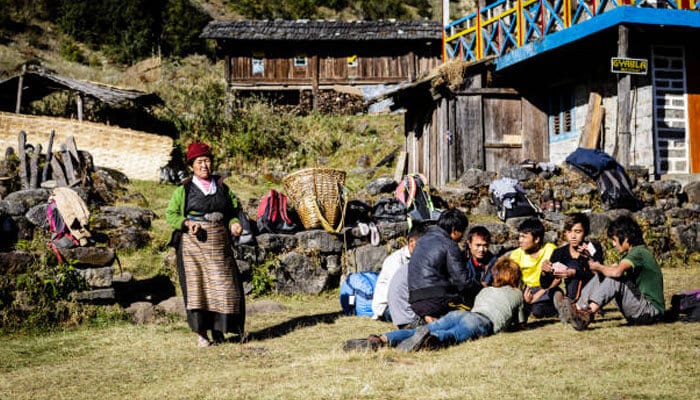
Diverging from the main Manaslu Circuit at Lokpa lies the Tsum Valley, a region recognized in ancient texts as Beyul Kyimolung, a sacred, hidden valley designated by the eighth-century saint Guru Rinpoche as an inviolable spiritual refuge. The Tsumba people, who speak a unique dialect known as Tsumke, have cultivated an extraordinary relationship with their natural environment, rooted entirely in the Tibetan Buddhist principles of Ahimsa (non-violence).
In 1920, under the guidance of the revered Lama Serap Dorje Drukpa Rinpoche, the community formalized the Shyagya tradition, a binding edict that strictly prohibits the killing of any living creature within the valley’s boundaries.
Key Pillars of the Shyagya Tradition
- No Slaughterhouses: Killing animals for meat, trade, or personal consumption is strictly forbidden within the valley boundaries.
- Import Restrictions: Bringing live animals into the valley for the purpose of slaughtering them is prohibited.
- Vegetarian Ethos: The local diet relies heavily on agriculture, utilizing crops like barley, potatoes, and buckwheat.
- Safe Haven for Wildlife: Hunting, snaring, or trapping any wild animal or bird is entirely outlawed.
- Flourishing Biodiversity: Species like the endangered snow leopard, musk deer, and Himalayan blue sheep (bharal) live without human threat.
- Preserving Bee Colonies: Harvesting wild rock honey from cliffs, a common practice in other parts of Nepal, is banned.
Legal Recognition and Modern Milestones
The indigenous stewardship of the Tsumba people achieved a monumental milestone when the local Tsum Nubri Rural Municipality passed the Shyagya Tradition Preservation Act, granting formal legal recognition to these customary laws.
Supported by advocacy groups like the Center for Indigenous Peoples’ Research and Development (CIPRED), this legislation cements the valley as a global model for community-led biodiversity protection. Concurrently, the municipality passed the Amchi Act, formally authorizing traditional Tibetan medical practitioners (Amchis) to utilize the region’s medicinal flora for holistic healthcare.
Discovering Nubri and the Nubripa: Cultural Identity and Linguistic Evolution
When you go up through the Budhi Gandaki gorge, the landscape changes from lush subtropical forests to rugged alpine terrain, which means you are entering the cultural domain of the Nubri people. The Nubri people trace their ancestry back to Tibet and they have kept a way of life that is suited to the harsh environment at high altitude. The Nubri people are very connected to Tibetan Buddhism. You can see this in the intricate mani walls and old monasteries that serve as spiritual centers in villages like Samagaun, Lho, and Prok.
Studies on the language and culture of the Nubri people show that there are changes happening within the Nubri identity. The Nubri language is a Tibeto-Burman language that has no written form. It has different dialects that are specific to certain villages.
The name Nubri comes from the words nup, which means west, and ri which means hill, which shows how the valley was oriented towards Lhasa in the past. However as younger Nubri people start to identify more with the nation of Nepal, the word nup now means north, which shows an orientation towards Kathmandu.
As younger Nubri people move to cities for education and jobs, they start to use the Nepali language which puts their native dialects at risk of disappearing. Seeing this change happen highlights the need to balance preserving traditions with embracing new things all while the locals continue to have a strong spiritual connection to Mount Manaslu, which they worship as the protective deity Pungyen. The Nubri people still have a lot of respect, for Mount Manaslu and the Nubri culture. They try to keep their traditions alive.
Trekking Landscapes and Larkya La Pass
The cultural depth of the trek is matched by an extraordinary Himalayan landscape. The Manaslu Circuit surrounds Mount Manaslu (8,163 meters), passing through steep river valleys, terraced farmland, forests, waterfalls, suspension bridges, and alpine glaciers.
The hardest part of the trip is the Larkya La Pass. It is at 5,106 meters. Going over the pass is very hard on the body. You need to start to deal with the changing weather in the mountains, ice, strong winds and the high altitude. The way, to the top goes through a village called Dharmashala before going up toward the top.
At the top, trekkers are rewarded with expansive views of Himalchuli, Ganesh Himal, Annapurna, and surrounding peaks, before descending toward Bhimthang and continuing to Dharapani.
Sustainable Eco-Tourism and Local Stewardship
As these secluded valleys open up to international visitors, the influx of tourism brings risks, including trail erosion, waste accumulation, and cultural commodification. Navigating these delicate regions requires a conscientious approach from both travelers and operators.
Partnering with a dedicated local operator like the Nepal Hiking Team ensures that the ecological footprint remains minimal while maximizing socio-economic benefits for local inhabitants. Responsible trekking involves:
- Packing out all non-biodegradable waste.
- Eliminating single-use plastics in favor of water purification systems.
- Prioritizing local teahouses to keep revenue circulating in the mountain economy.
- Employing licensed guides and porters directly from local communities.
Conclusion
The journey through the Manaslu Circuit, Tsum Valley, and Nubri region offers a profoundly transformative travel experience, acting as a bridge between demanding physical exploration and deep spiritual introspection. By walking alongside the Nubri and Tsumba people, trekkers gain a rare window into communities that view nature as a sacred entity rather than a resource to be exploited.
Through mindful preparation, an embrace of indigenous wisdom like the Shyagya tradition, and an unwavering commitment to sustainable trekking operators, visitors ensure their presence actively supports the preservation of this remarkable Himalayan sanctuary.
