


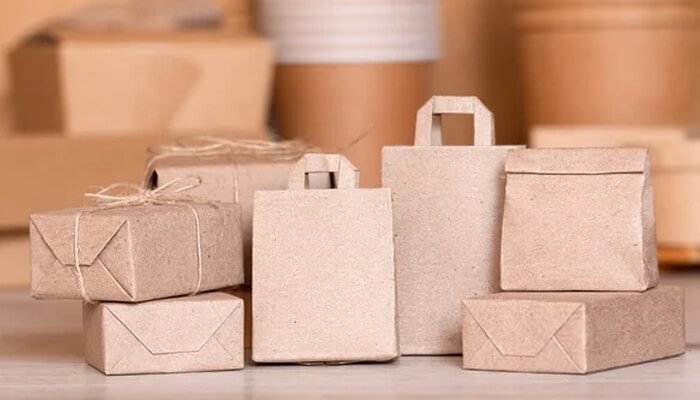

Product packaging used to be the last thing brands thought about. Now it’s one of the first. The unboxing moment lives on TikTok, shipping costs are up again, and customers judge a product before they even open it. So what’s actually changing in 2026 and what do buyers actually respond to? Here’s a breakdown of the trends that matter right now.
The Bundle Era: Why Kits Are Everywhere
Walk through any Costco aisle or scroll through Amazon’s “frequently bought together” section, and the pattern is obvious. Brands aren’t selling single items anymore — they’re selling experiences assembled into a box.
This isn’t just a retail strategy. It’s a packaging challenge. Combining multiple SKUs into one cohesive kit requires coordination that most brands underestimate: custom inserts, right-sized boxes, branded tissue, product sequencing. Getting this wrong means damaged goods and disappointed customers. Getting it right means a $47 average order value instead of $19. Companies that handle kitting and fulfillment services for e-commerce brands know exactly what “getting it right” looks like — it’s the difference between a box that feels like a gift and a box that looks like it was packed in a hurry.
The kit trend is accelerating because of several converging forces:
- Subscription boxes (Birchbox, FabFitFun, and their hundreds of imitators) trained customers to expect curated sets
- Amazon’s bundling algorithm rewards multi-product listings with better placement
Well-executed kitting also compresses shipping costs. One box instead of three separate shipments — that math adds up fast, especially with USPS and UPS rates climbing again in Q1 2026.
What Makes a Great Kit in 2026?
The physical components matter less than people think. What customers remember:
- The moment they open it (does it feel intentional or chaotic?)
- Whether the products “made sense” together
- Small details — a handwritten thank-you card, a QR code that leads somewhere useful, tissue that matches the brand color
What brands get wrong: oversized boxes with too much filler. A kit that arrives with half its volume in air pillows feels cheap, regardless of what’s inside.
Sustainable Packaging: Past the Greenwashing Phase
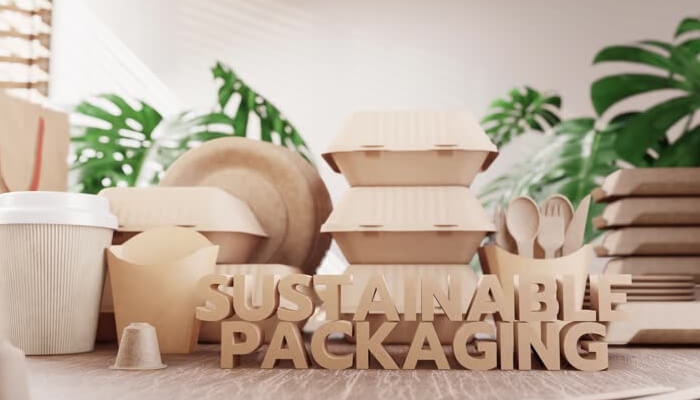
In 2021, “eco-friendly packaging” meant putting a leaf on your box and calling it a day. That era is over. Customers have gotten smarter, and so have regulations.
The EU’s Packaging and Packaging Waste Regulation (PPWR) went through major updates in 2024, and its effects are rippling outward even for brands that don’t sell into Europe. The California Plastic Pollution Prevention and Packaging Producer Responsibility Act kicked in with new compliance deadlines this year. Brands that ignored sustainability as a trend are now dealing with it as a legal requirement.
But here’s what’s interesting: the brands doing sustainability well aren’t treating it as compliance. They’re treating it as design.
Patagonia’s packaging has been plastic-free for years. Their repair bags, shipping mailers, and hangtags are all made from recycled or recyclable materials — and the packaging communicates that without screaming about it. It just looks intentional.
What’s actually working in 2026:
- Mushroom packaging — grown from agricultural waste, fully compostable, used by Dell and IKEA for protective inserts
- Seaweed-based pouches — still niche, but brands like Notpla (who partnered with Just Eat for sauce packets) are scaling
- Water-activated tape instead of plastic tape — better recyclability, stronger seal
- Kraft paper void fill instead of bubble wrap
- Right-sized boxes — generated by software like Sparck Technologies’ CVP Everest, which auto-sizes boxes around product dimensions, cutting void fill by 60-80%
The “Frustration-Free” Standard
Amazon’s Frustration-Free Packaging (FFP) certification has become a de facto industry benchmark. Getting FFP-certified means your product ships in its own packaging without an additional Amazon box — it has to be easy to open, made from recyclable materials, and sized to minimize waste.
Brands that hit FFP certification get preferential treatment in Amazon’s systems. That’s a real business incentive, not just an ethical one.
Smart Packaging: QR Codes Are the Gateway Drug
NFC chips, AR experiences, digital product passports — packaging technology is moving fast. But most of it still starts with a QR code.
QR adoption exploded during the pandemic and never really went back down. Restaurant menus, vaccination cards, event tickets — people know how to use them now. That opened a door for brands.
What smart packaging is doing in 2026:
- Dynamic QR codes that update post-print — change the landing page without reprinting the box
- Digital Product Passports (DPPs) — the EU is mandating these for textiles and batteries starting in 2027, but forward-thinking brands are implementing early. Scan the code, see the full supply chain story
- Loyalty program integrations — scan the package, get points. Coca-Cola’s “Sip & Scan” campaign did this at scale
Minimalism and the Anti-Clutter Signal
There’s a counter-movement happening alongside all the smart features and AR experiences. Some brands are stripping everything back.
Apple doesn’t put much on their boxes. Neither does Muji. Neither does Aesop. The whitespace, the restraint, the matte finish — it signals premium without saying a word.
This aesthetic has spread significantly in the past two years. Brands in skincare, wellness, and even food are moving toward:
- Minimal ink coverage (cheaper to produce, lower carbon footprint)
- Single-color designs
- Matte laminates instead of glossy
- Clean typography with no decorative elements
- Ingredient-first information hierarchy
It’s not just aesthetics. Minimal packaging is often cheaper. Less ink, simpler dielines, lighter materials. The look of luxury can align with cost reduction — that’s a rare combination.
Packaging That Ships Itself
One of the more underrated trends: packaging designed to eliminate the outer shipping box entirely.
The traditional model is: product packaging → placed in a shipping box → filled with void fill → shipped. The emerging model: make the product packaging the shipping packaging.
Brands like Grove Collaborative ship products in mailers that fold into the product display. Some wine brands (Dry Farm Wines included) ship bottles in corrugated sleeves that are the shipper. The box you open is the box that arrived.
This matters for several reasons:
- Fewer materials overall
- Cheaper per unit shipped
- Cleaner unboxing experience (no extra box to deal with)
- Aligns with Amazon FFP requirements
The engineering challenge is real. The shipping packaging has to survive the journey — that means understanding drop tests, compression tests, ISTA 6 Amazon standards. Getting there requires close coordination between packaging designers and fulfillment partners.
Private Label and the Brand-as-Product Shift
Private label was once the budget option. The store brand. The thing you bought when you couldn’t afford the real version.
That positioning has completely shifted. Amazon Basics, Trader Joe’s private label, Costco’s Kirkland — these are brands people seek out. And the packaging is doing a lot of that work.
Kirkland products are designed to look confident, not cheap. The typeface is clean, the layout is organized, and the brand mark is consistent across hundreds of SKUs. Target’s Good & Gather line redesigned their food packaging to compete visually with premium national brands — and it worked. The line now does over $3 billion in annual sales.
The lesson: packaging communicates brand value before price does. A well-designed package on a budget product shifts perception before anyone looks at the number.
This is why e-commerce brands investing in custom packaging are seeing returns. It’s not about the box itself. It’s about what the box says about the product inside.
What Actually Matters for E-Commerce Fulfillment
Here’s where the trend discussion has to get practical. All of this — the sustainable materials, the custom kits, the personalized prints — has to survive a warehouse, a conveyor belt, a sorting facility, and a delivery driver’s route before it reaches a customer.
That means packaging decisions can’t be made in isolation. The choice of box dimensions affects DIM weight pricing. The choice of materials affects how easy something is to scan for inventory. The insert configuration affects pick-and-pack speed.
Brands that treat packaging as a design problem disconnected from operations end up with beautiful boxes that are expensive to fill and slow to ship. Brands that get fulfillment right end up with packaging that looks good, ships efficiently, and holds up in transit. An ecommerce fulfillment center built specifically for e-commerce brands can help navigate exactly these tradeoffs through custom kitting, Amazon FBA prep, D2C fulfillment, and the operational infrastructure needed to make branded packaging work at volume.
The practical checklist for brands updating packaging in 2026:
- Does your box dimension minimize DIM weight charges?
- Is your material recyclable in curbside programs (not just “technically recyclable”)?
- Can your current 3PL handle variable packaging configurations without errors?
- Does your QR code go somewhere useful, and is that page mobile-optimized?
- Have you tested for ISTA 6 Amazon standards if you’re selling on FBA?
- Is your insert sequence documented for pick-and-pack teams?
Conclusion
Packaging in 2026 is doing more work than it ever has before. It’s a brand touchpoint, a sustainability signal, a digital gateway, and a logistics variable — all at once. The brands winning aren’t the ones with the biggest budget. They’re the ones treating packaging as a system, not an afterthought. Every trend on this list connects to that idea: intentional choices, made with the full journey in mind from warehouse shelf to customer doorstep.
