




This ultimate guide explains what sitemap generator by spellmistakes are, why they matter, and how to fix them for better seo rankings and indexing.
What Is a Sitemap Generator?
A sitemap generator is a tool or plugin that automatically creates a sitemap (usually XML) listing all important URLs of your website so search engines can crawl them easily.
Common formats:
- XML sitemaps (for search engines)
- HTML sitemaps (for users)
What Does “Sitemap Generator by Spellmistake” Mean?
A sitemap generator by spellmistake refers to errors caused by incorrect spelling, syntax, or formatting inside the sitemap file or during sitemap generation.
These mistakes often go unnoticed but can:
- Block search engine crawling
- Prevent pages from indexing
- Reduce organic traffic
Common Sitemap Generator By Spellmistakes
1. Incorrect Sitemap File Name
Examples:
sitmap.xmlinstead ofsitemap.xmlsitemap.XML(case-sensitive issues)
2. Misspelled URLs Inside Sitemap
- Wrong slugs
- Extra characters
- Missing hyphens
3. Invalid XML Tags
<loc>misspelled as<lock><urlset>typed incorrectly
4. Wrong Protocol (HTTP vs HTTPS)
-
Sitemap URLs using
http://while site runs onhttps://
5. Broken or Redirected URLs
- 404 pages
- 301/302 redirected links inside sitemap
Why Sitemap Spellmistakes Are Dangerous for SEO
- Search engines may ignore your sitemap
- Important pages may not get indexed
- Crawl budget gets wasted
- Rankings drop silently without warnings
Tools like Google Search Console often flag these issues, but only if you actively check.
How to Identify Sitemap Generator By Spellmistakes
✔ Check in Google Search Console
- Go to Sitemaps
- Look for “Couldn’t fetch” or “Invalid URL” errors
✔ Validate Your Sitemap
- Use XML validators
- Open sitemap in browser and check for syntax errors
✔ Manual URL Spot Check
- Click random URLs inside sitemap
- Confirm they load correctly
How to Fix Sitemap Generator By Spellmistakes
1. Regenerate the Sitemap
- Use a trusted plugin or tool
- Clear cache before regeneration
2. Correct Misspellings Manually
- Fix incorrect tags
- Correct URL spelling errors
3. Submit Sitemap Again
- Resubmit updated sitemap in Google Search Console
- Monitor crawl status for 24–72 hours
Sitemap Location & robots.txt (Often Overlooked)
Search engines expect to discover your sitemap through the robots.txt file. If the sitemap URL is missing or misspelled there, search engines may take longer to find and process it—even if the sitemap itself is valid.
Ensure your sitemap is correctly referenced in your robots.txt file:
A missing or incorrect sitemap entry in robots.txt can delay crawling and indexing.
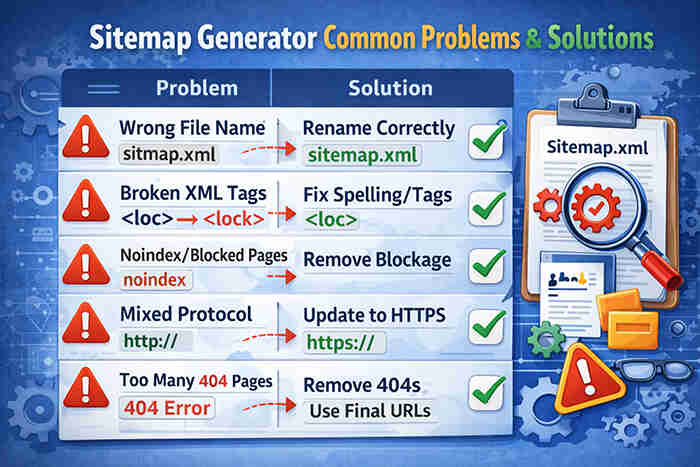
Common Problems & Solutions
| Problem | Cause | Solution |
|---|---|---|
| Sitemap couldn’t be fetched | Wrong file name or URL | Rename correctly to sitemap.xml and ensure public access |
| Invalid XML format | Misspelled or broken tags | Validate XML and fix incorrect tags |
| URLs not indexed | Noindex or blocked pages | Remove noindex/robots.txt blocked URLs |
| HTTP URLs in sitemap | Mixed protocol usage | Update sitemap to HTTPS only |
| Too many 404 pages | Deleted or incorrect URLs | Remove broken URLs and regenerate sitemap |
| Redirected URLs included | Old URL structure | Replace with final destination URLs |
| Sitemap generator by spellmistake | Plugin or manual typo | Regenerate sitemap and recheck output |
Best Practices to Avoid Sitemap Errors
- Use one canonical sitemap file
- Keep URLs lowercase and consistent
- Update sitemap after major content changes
- Avoid including noindex or blocked pages
- Test sitemap after every update
Image & Video Sitemaps (Important for 2026 SEO)
Large or media-heavy websites should use image and video sitemaps to improve visibility in Google Images and video search results.
These sitemaps follow strict XML formatting rules, and even small spellmistakes can prevent images or videos from being indexed properly.
Advanced SEO Tips for Sitemaps
- Use a single canonical sitemap URL (avoid multiple versions like
/sitemap_index.xmland/sitemap.xml) - Split large sites into multiple sitemaps using a sitemap index (ideal for 50,000+ URLs)
- Include only indexable URLs (200 status, no
noindex, no blocked pages) - Ensure canonical URLs match sitemap URLs exactly
- Always use HTTPS URLs if your site is secured
- Remove pagination, filter, and parameter-based URLs
- Update sitemaps automatically after:
- Publishing new content
- Deleting pages
- Changing URL structures
- Monitor sitemap health regularly in Google Search Console
- Re-submit sitemap after major SEO or technical changes
Recommended Sitemap Generator Tools
- Yoast SEO
- Rank Math
- Screaming Frog
- XML-Sitemaps.com
(Always double-check output—even automated tools can generate errors.)
Bing & Other Search Engines
While Google dominates search, submitting clean and error-free sitemaps to other platforms like Bing Webmaster Tools can help capture additional organic traffic and ensure broader indexing coverage.
Sitemap Generator By Spellmistake vs Alternatives
| Factor | Spellmistake-Prone Sitemap | Optimized Sitemap (Best Practice) |
|---|---|---|
| File naming | Incorrect (sitmap.xml) |
Standard (sitemap.xml) |
| XML structure | Broken or misspelled tags | Valid XML structure |
| URL accuracy | Typos & wrong slugs | Clean, canonical URLs |
| Crawl efficiency | Low, wasted crawl budget | High, optimized crawling |
| Indexing success | Partial or failed indexing | Faster and complete indexing |
| SEO impact | Rankings suffer silently | Strong technical SEO foundation |
| Maintenance | Manual fixes required | Automated + monitored |
Sitemap Generator By Spellmistake FAQs
1. Can a single spelling error break a sitemap?
Yes. One incorrect XML tag, file name, or URL can make the entire sitemap invalid.
2. What is the most common sitemap generator by spellmistake?
Wrong file names (like sitmap.xml) and misspelled XML tags such as <loc>.
3. Do sitemap spelling errors affect SEO rankings?
Yes. They can block crawling, delay indexing, and reduce organic visibility.
4. How can I quickly detect sitemap spellmistakes?
Check your sitemap status in Google Search Console or validate the XML file.
5. Should I resubmit my sitemap after fixing errors?
Yes. Always resubmit the corrected sitemap to ensure proper re-indexing.
SEO Suggestions for 2026 (Future-Proofing Your Sitemap)
Here’s what will matter more in 2026 SEO :
- AI-driven crawling
Search engines will rely more on AI signals — clean, error-free sitemaps help AI understand site structure faster. - Index-only Sitemaps
Google is increasingly ignoring low-quality URLs. Only include pages with real search intent. - Frequent Sitemap Validation
Monthly sitemap audits will become standard, especially for content-heavy sites. - JavaScript & Dynamic URLs
Ensure sitemap URLs load cleanly without JS dependency issues. - Core Web Vitals Alignment
Pages listed in sitemaps should meet CWV performance benchmarks — slow pages may be crawled less. - Entity-Focused SEO
Sitemaps will support entity indexing (brands, authors, topics) rather than just URLs. - Zero-Error Technical SEO
Even small spellmistakes will matter more as Google becomes stricter with technical quality signals.
Conclusion:
A sitemap generator by spellmistake may look minor, but it can have a serious impact on your website’s SEO performance. Even small errors—such as misspelled XML tags, incorrect URLs, or wrong file names—can prevent search engines from crawling and indexing your pages properly.
By regularly validating your sitemap, fixing spelling and formatting issues, and following best practices, you ensure search engines can discover, crawl, and rank your content efficiently. As search engines become more AI-driven and quality-focused, maintaining a clean, error-free sitemap will remain a critical part of long-term SEO success.
