


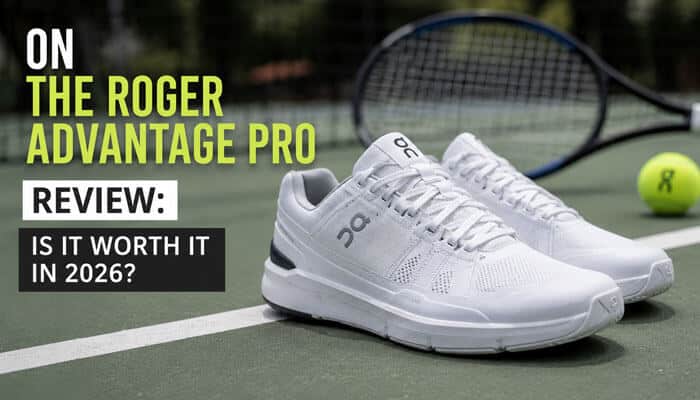

The Roger Advantage Pro is a premium multi-court tennis shoe created for players who want credible on-court performance without the stiff, heavily reinforced feel of an elite competition model.
It occupies the middle of On’s Roger footwear lineup. It is more supportive and court-ready than the lifestyle-focused Roger Advantage, but less specialized and expensive than the competition-oriented Roger Pro 3.
At a current U.S. list price of $170, the shoe combines a breathable mesh upper, concealed CloudTec cushioning, a Speedboard, a hidden heel clip and a rubber multi-court outsole. On positions it as an everyday tennis shoe that can be used on hard courts, indoor courts, clay and other racket-sport surfaces.
This makes The Roger Advantage Pro especially appealing to recreational tennis players, doubles specialists and pickleball players who want:
- Reliable court grip
- Good ventilation
- Secure heel containment
- Responsive but flexible movement
- A modern design that works on and off the court
However, it is not ideal for every type of player. Independent testing indicates that its forefoot cushioning is relatively light, the outsole can feel extremely grippy, and the women’s version may fit shorter than the official true-to-size recommendation suggests.
So, is The Roger Advantage Pro worth buying in 2026?
Yes—for recreational and club-level players who prioritize ventilation, secure traction, multi-court versatility and a less restrictive fit. Aggressive hard-court competitors, chronic toe draggers and players who need deep forefoot cushioning or a dedicated wide size should compare other models before buying.
Quick Answer: The Roger Advantage Pro
The Roger Advantage Pro is worth considering if you want a breathable, stable, and stylish multi-court shoe for recreational tennis, doubles, or pickleball.
Its greatest strengths are:
- Excellent ventilation
- Secure heel containment
- Strong multi-court traction
- Good recreational stability
- Minimal break-in for many players
- A surprisingly quick on-foot feel
- Versatile tennis and pickleball performance
- Premium court-to-casual styling
Its main weaknesses are:
- Limited forefoot cushioning
- Moderate toe protection
- A premium $170 price
- Sticky traction that may restrict sliding
- No dedicated wide-width option
- A relatively high 12 mm drop
- Women’s sizing that may feel short
Best For
- Recreational tennis players
- Intermediate club players
- Doubles specialists
- Pickleball players
- Players who prefer strong grip
- Standard-width or mildly wide feet
- Players who dislike highly rigid court shoes
- Buyers who value modern styling
Consider Another Shoe If You Need
- Maximum hard-court durability
- A true wide or extra-wide size
- Deep forefoot cushioning
- A low heel-to-toe drop
- Easy hard-court sliding
- Tour-level lateral reinforcement
- A prominently advertised outsole warranty
Key Takeaways
- The Roger Advantage Pro is a genuine performance court shoe, not merely a tennis-inspired lifestyle sneaker.
- Its current U.S. list price is $170.
- The men’s model has an official listed weight of 382 grams per shoe.
- The women’s model is officially listed at 315 grams per shoe.
- Both models have a 12 mm heel-to-toe drop.
- The standard version is classified as a multi-court shoe.
- A separate clay-court version is available.
- Concealed CloudTec provides moderate rather than plush cushioning.
- The Speedboard adds structure and responsiveness.
- The hidden heel clip improves rear-foot containment.
- Ventilation is one of the shoe’s strongest qualities.
- Men’s testers generally found the fit accessible.
- Women’s testers found that the shoe could fit approximately a quarter- to half-size short.
- Traction is secure but may feel too sticky for players who slide.
- Forefoot cushioning is lighter than some buyers may expect from an On shoe.
- The shoe works well for tennis, doubles, and pickleball.
- It is better suited to recreational and club play than elite hard-court competition.
The Roger Advantage Pro Specifications
| Specification | Men’s model | Women’s model |
| U.S. list price | $170 | $170 |
| Intended use | Tennis and court sports | Tennis and court sports |
| Surface | Multi-court | Multi-court |
| Official listed weight | 382 g | 315 g |
| Heel-to-toe drop | 12 mm | 12 mm |
| Upper | Breathable mesh | Breathable mesh |
| Cushioning | Concealed CloudTec | Concealed CloudTec |
| Structural component | Speedboard | Speedboard |
| Outsole | Rubber multi-court outsole | Rubber multi-court outsole |
| Heel support | Hidden heel clip | Hidden heel clip |
| Official fit guidance | True to size | True to size |
| U.S. size range | 7–15, depending on stock | 5–12, depending on stock |
| Best suited to | Tennis, doubles and pickleball | Tennis, doubles and pickleball |
On’s current product information confirms the $170 price, 382-gram men’s weight, 12 mm drop, multi-court classification, breathable mesh, rubber outsole, concealed CloudTec, Speedboard and hidden heel clip. On’s international women’s listings identify the women’s model at approximately 315 grams.
What Is The Roger Advantage Pro?
The Roger Advantage Pro is an everyday performance court shoe from Swiss sportswear company On. It belongs to THE ROGER collection, a range of performance and lifestyle footwear developed around On’s partnership with Roger Federer.
The word “Pro” matters because On also sells a standard Roger Advantage. Despite their similar names and clean tennis-inspired styling, the two shoes serve different purposes.
The Performance Model Includes
- A rubber court outsole
- A multi-court tread pattern
- A technical mesh upper
- Lateral court support
- Concealed CloudTec cushioning
- A Speedboard
- A hidden heel clip
- Reinforcement for racket-sport movement
The Standard Roger Advantage Is Primarily Designed For
- All-day wear
- Casual use
- Walking
- Tennis-inspired style
- Off-court outfits
On currently lists the standard Roger Advantage at $160 and positions it as an all-day, tennis-inspired lifestyle shoe. The Advantage Pro costs only $10 more but is specifically built for court activity.
That difference is important. Tennis and pickleball involve sudden stops, lateral cuts, and repeated changes of direction. A lifestyle sneaker may look suitable for tennis while lacking the side-to-side support and outsole structure expected from a real court shoe.
Where Does It Fit in On’s Lineup?
The Roger Advantage Pro sits between On’s lifestyle models and its premium competition shoes.
| Model | Primary purpose | Current list price |
| Roger Advantage | Lifestyle and all-day wear | $160 |
| Roger Clubhouse Pro | Multipurpose court and casual wear | $170 |
| Roger Advantage Pro | Everyday multi-court performance | $170 |
| Roger Pro 3 | Competition-focused tennis | $220 |
The Advantage Pro is not intended to deliver the maximum energy return, reinforcement or hard-court specialization of the Roger Pro 3.
Instead, it aims to provide an accessible balance of:
- Comfort
- Grip
- Flexibility
- Stability
- Breathability
- Multi-court usability
- Everyday styling
That positioning may make it more relevant to ordinary club players than a more expensive competition shoe.
Our Review Methodology
This review was developed from three evidence categories.
Official Product Information
Manufacturer pages were used to verify:
- Price
- Weight
- Heel-to-toe drop
- Court-surface classification
- Materials
- Product technologies
- Size availability
- Shipping and return information
Independent Playtesting
Professional playtests were used to evaluate:
- Comfort
- Fit
- Ventilation
- Stability
- Traction
- Durability
- On-court speed
- Break-in experience
Customer Feedback
Retailer reviews were used to identify recurring patterns involving:
- Arch support
- Forefoot cushioning
- Width
- Sizing
- Appearance
- Pickleball use
- Out-of-the-box comfort
| Evidence source | Best used for | Main limitation |
| Official On pages | Specifications and positioning | Manufacturer descriptions are promotional |
| Men’s playtest | Detailed performance analysis | Small tester group |
| Women’s playtest | Women’s fit and movement feedback | Limited testing duration |
| Retailer reviews | Real-world fit patterns | Self-selected reviewers |
| Editorial synthesis | Matching the shoe to buyers | Not a personal wear test |
Official specifications and subjective opinions are separated throughout the article so readers can distinguish measurable facts from experience-based conclusions.
Who Should Buy The Roger Advantage Pro?
The shoe is best suited to players who want balanced court performance rather than maximum specialization.
Recreational Tennis Players
Recreational players generally need secure movement, comfort and traction more than carbon-fiber propulsion or extreme abrasion protection.
The Advantage Pro provides enough structure for regular club play without feeling as rigid as many competition shoes. Men’s testers found it more accommodating than the Roger Pro 2 and praised its comfort, ventilation and quick on-foot sensation.
It is particularly suitable for people who play:
- Once or twice per week
- Social tennis
- Club matches
- Coaching sessions
- Casual singles
- Recreational doubles
Intermediate Club Players
Intermediate players who move confidently but do not regularly slide on hard courts may appreciate the shoe’s balance. It offers enough stability for normal direction changes while remaining more flexible than heavily reinforced tournament footwear.
Aggressive intermediate players should pay closer attention to toe durability and lateral support, especially when they:
- Defend far behind the baseline
- Drag the toe during serves
- Slide on hard courts
- Play several long matches each week
Doubles Players
Doubles may be the strongest use case for this model.
Doubles movement often involves:
- Frequent split steps
- Quick reactions
- Short lateral movements
- Forward movement toward the net
- Sudden braking
- Repeated repositioning
The Advantage Pro’s ventilation, grip, and relatively quick feel suit these movement patterns. Doubles players may also be less likely than aggressive singles grinders to expose its moderate toe protection.
Pickleball Players
The shoe is also a credible pickleball option.
Its useful pickleball features include:
- Lateral stability
- Strong traction
- Quick first-step response
- Secure heel containment
- A multi-court outsole
- Good ventilation
On classifies the model as multi-court and states that this tread category is suitable for racket sports on hard, indoor, and clay surfaces.
Style-Conscious Players
Many performance court shoes look bulky or highly technical. The Roger Advantage Pro has a cleaner silhouette and more understated branding.
Its visual strengths include:
- Minimal branding
- A refined shape
- Neutral color options
- Sports-meets-street styling
- Less visual bulk than many stability shoes
On specifically markets the shoe as a design that can work on and off the court.
Players Who Dislike Stiff Court Shoes
Some performance shoes require several sessions before their uppers and soles begin to feel natural.
The Advantage Pro’s mesh upper and flexible construction create a more accommodating experience. Both men’s and women’s testers generally found it more comfortable than the Roger Pro 2, although the women’s team still reported sizing concerns.
Who Should Avoid It?
A different model may be more appropriate when:
- You are a high-level hard-court competitor.
- You regularly slide on hard courts.
- You need maximum lateral reinforcement.
- You require a dedicated wide or extra-wide size.
- You want deep cushioning beneath the forefoot.
- You frequently wear through toe guards.
- You prefer a low-drop court shoe.
- You want a specific outsole-wear guarantee.
- You mainly need an everyday walking shoe.
- You play almost exclusively on clay.
- Your budget is substantially below $170.
These are not necessarily design defects. They reflect the shoe’s focus on ventilation, flexibility, and versatile recreational performance rather than maximum protection.
Design and Build Quality
The Advantage Pro uses a layered construction instead of relying on a thick external support cage.
Its main components work together to produce a stable but relatively flexible platform.
Breathable Mesh Upper
The upper uses technical mesh to release heat while maintaining enough structure for normal court movement.
Breathability was the highest-rated category in both independent tests:
- Men’s ventilation score: 9
- Women’s ventilation score: 7
Testers consistently reported that the shoe remained cool during play.
This makes the upper particularly useful for:
- Summer tennis
- Humid climates
- Indoor facilities
- Long doubles sessions
- Thick tennis socks
- Tournament days
- Players whose feet become hot quickly
The tradeoff is that breathable mesh usually provides less abrasion resistance than thick synthetic materials or a large TPU cage.
Concealed CloudTec Cushioning
CloudTec is one of On’s signature technologies, but it is less visually obvious in this model than in many On running shoes.
The cushioning is concealed inside the sole, helping the shoe retain a cleaner tennis silhouette.
On says the hidden CloudTec and Speedboard combination provides responsive cushioning, flexibility, support and stability for on-court movement.
The cushioning feels:
- Moderately firm
- More noticeable in the heel
- Responsive rather than plush
- Stable during lateral movement
- Relatively light in the forefoot
Players expecting the deep compression of a maximum-cushion running shoe may find the platform firmer than expected.
Speedboard
The Speedboard is a structured component inside the sole.
It helps:
- Control flex
- Improve responsiveness
- Support transitions
- Stabilize the midfoot
- Assist push-offs
The Advantage Pro does not use the carbon-fiber Speedboard found in the Roger Pro 3.
This creates a more forgiving platform. It may deliver less explosive energy return than the premium competition model, but recreational players may find it more natural and easier to use.
Hidden Heel Clip
The concealed heel clip helps:
- Secure the rear foot
- Reduce internal movement
- Improve landing stability
- Support directional changes
- Preserve the clean external design
A secure heel is important because excessive internal movement can delay the foot’s response.
Testers generally praised the heel padding and containment.
Rubber Multi-Court Outsole
The standard model uses a rubber outsole with a versatile herringbone-style tread.
On classifies the shoe as multi-court and states that the tread can be worn on:
- Hard courts
- Indoor courts
- Clay courts
- Other racket-sport surfaces
The outsole provides dependable grip, although testers differed over whether it felt too sticky. The overall pattern is clear: the shoe emphasizes grip rather than easy release.
Fit and Sizing
Sizing is one of the most important topics in this review because the official recommendation and independent experiences do not fully agree.
Officially, the shoe is true to size.
Independent testing provides a more nuanced picture.
Men’s Fit
Men’s testers generally found the shoe more accommodating than the Roger Pro 2.
Positive observations included:
- A relatively roomy forefoot
- Secure heel lockdown
- A flexible upper
- Minimal break-in
- A shape that worked for one wide-footed tester
- Less lateral toe rubbing than the Roger Pro 2
However, one tester found his normal size slightly short with thicker socks and preferred moving up half a size.
Men’s Sizing Recommendation
Start with your normal court-shoe size when:
- Your feet are standard width.
- You wear average-thickness socks.
- You usually have adequate toe room.
- You do not use a thick orthotic.
Compare a half-size larger when:
- You are between sizes.
- You wear thick tennis socks.
- Your toes normally sit near the front.
- Your feet swell during long sessions.
- You use a thick replacement insole.
Women’s Fit
The women’s test produced a more cautious conclusion.
The testers reported that the shoe could fit approximately a quarter- to half-size short. Some experienced toe jamming during abrupt forward stops.
Width generally felt medium, but the fit depended on:
- Foot length
- Arch height
- Toe shape
- Sock thickness
- Movement style
- How aggressively the player stopped
Women’s Sizing Recommendation
Compare:
- Your normal athletic-shoe size
- A half-size larger
Wear your normal court socks when testing both sizes.
The larger option is better only when it creates useful toe space without causing:
- Heel lift
- Side-to-side movement
- Loose midfoot containment
- Delayed response during lateral movement
Men’s vs Women’s Fit
| Fit consideration | Men’s model | Women’s model |
| Official recommendation | True to size | True to size |
| Independent finding | Generally accessible | Can fit short |
| Forefoot | Accommodating for some feet | Medium width |
| Main concern | Short with thick socks | Toe jamming |
| Break-in | Usually minimal | Usually minimal |
| Starting point | Normal size | Compare normal and half-size up |
| Wide-foot suitability | May suit mildly wide feet | Try before buying |
Is It Good for Wide Feet?
The answer depends on how much additional width you need.
It may work for:
- Slightly broad forefeet
- Players who sometimes wear standard sizes
- Mildly wide feet
- Buyers comfortable with flexible mesh
It is less suitable for:
- Consistently wide feet
- Extra-wide feet
- High-volume feet
- Players who experience sidewall pressure
- Buyers who normally wear 2E or wider shoes
The most accurate description is an accommodating standard fit, not a genuine wide fit.
Toe Box
Toe-box feedback is mixed because width and length are separate measurements.
Some men found the forefoot roomy. Some women found the width acceptable but the overall shoe too short.
Before keeping the shoe, confirm that:
- Your longest toe does not touch the front.
- Your toes do not curl.
- The upper does not press against the nails.
- Your foot does not slide forward during braking.
- You still have toe room after wearing the shoes for 20 to 30 minutes.
Midfoot and Heel Fit
The midfoot should feel secure without requiring extreme lace pressure.
Narrow-footed players can improve lockdown by:
- Using the final eyelet
- Applying heel-lock lacing
- Wearing a slightly thicker sock
- Tightening the middle eyelets gradually
Repeated heel lifting may indicate:
- The shoe is too large
- The midfoot is too loose
- The laces need adjustment
- The heel shape does not match your foot
Comfort and Cushioning
Comfort is one of the shoe’s strengths, but this is not a maximum-cushion model.
Step-In Comfort
The soft upper, padded heel and flexible construction create a welcoming first impression.
The men’s team awarded comfort 8.5 out of 10, while the women’s team gave it 7.9. The difference was connected mainly to sizing and forefoot pressure.
Testers commonly reported:
- Little or no break-in
- Comfortable heel padding
- Flexible upper materials
- A less restrictive feel than the Roger Pro 2
- Strong ventilation
Heel Cushioning
Cushioning is more noticeable beneath and around the heel than under the forefoot.
It should be adequate for:
- Recreational serving
- Normal landings
- Doubles movement
- Pickleball
- Moderate singles play
Players who strike the court heavily or play for several hours may prefer a shoe with a thicker overall midsole.
Forefoot Cushioning
Forefoot cushioning is the most consistent weakness identified across independent and customer feedback.
The shoe may feel too firm beneath the ball of the foot for:
- Long hard-court sessions
- Heavier players
- Forceful movers
- Players coming from cushioned running shoes
- People sensitive to forefoot impact
- Frequent singles competitors
The women’s playtest specifically described the heel cushioning as adequate while noting that forefoot cushioning was limited. Several Zappos reviewers made similar observations.
The shoe is not uncushioned. It simply emphasizes stability and court response rather than a plush ride.
Arch Support
Arch-support feedback is inconsistent.
The standard insole appears most appropriate for neutral feet. Some testers found it adequate, while several customer reviewers wanted a stronger arch contour.
Players using prescription orthotics should test the shoe with the orthotic before playing because a thicker insert will reduce internal volume.
The 12 mm Heel-to-Toe Drop
Both models have a 12 mm drop, meaning the heel sits 12 mm higher than the forefoot.
A 12 mm drop may suit players who:
- Prefer a raised heel
- Are accustomed to conventional running shoes
- Like more cushioning behind the foot
- Do not seek an extremely flat court feel
It may feel less natural to players who:
- Prefer low-drop shoes
- Want to feel close to the court
- Use flatter competition footwear
- Depend heavily on low defensive positions
Players changing from a significantly lower drop should introduce the shoe gradually.
On-Court Performance
Stability and Lateral Support
The shoe provides good recreational stability through:
- A broad platform
- The Speedboard
- A secure heel clip
- Midfoot lockdown
- A structured outsole
- A supportive upper profile
The men’s playtest awarded support and stability 8.3, while the women’s test awarded 7.9.
Stability Strengths
- Secure rear-foot hold
- Stable landings
- Good lateral confidence
- Controlled sole flex
- Strong court connection
- Less restriction than heavier stability shoes
- Adequate support for club matches
Stability Limitations
The flexible mesh upper is comfortable but less rigid than a substantial TPU cage.
Some testers wanted more lateral reinforcement, and one men’s tester noticed the upper stretching slightly during hard stops after extended use.
This matters most for:
- Aggressive baseline defenders
- Hard-court sliders
- Heavier players
- Competitors who change direction violently
- Players who repeatedly move outside the doubles alley
For ordinary club play, stability is strong. For elite movement, it is good rather than exceptional.
Traction and Court Grip
Traction is reliable and relatively aggressive.
The men’s team rated traction 8.3, while the women’s team awarded 7.5 because several testers considered the outsole too sticky.
Players likely to enjoy the grip include:
- Recreational players
- Doubles players
- Pickleball players
- Players who want confident braking
- Players who do not slide
- Buyers who prioritize security
Players who may dislike it include:
- Hard-court sliders
- Players who prefer outsole release
- Athletes who pivot aggressively
- Players sensitive to abrupt stopping
- Anyone experiencing toe jamming
Hard-Court Performance
The standard multi-court version provides dependable stopping power on hard courts.
Its strengths include:
- Reliable grip
- Predictable changes of direction
- Stable forward movement
- Good recreational durability
- Quick transitions
Its limitations include:
- Moderate toe protection
- Less durability than heavy hard-court specialists
- Restricted sliding
- Potentially firm forefoot cushioning
Players who compete frequently on abrasive hard courts may prefer a more reinforced model.
Indoor-Court Performance
The Advantage Pro can work well for indoor tennis and pickleball.
Its ventilation is particularly valuable in warm indoor facilities.
Traction may vary according to:
- Floor material
- Dust
- Court cleanliness
- Humidity
- Outsole wear
Wiping the outsole periodically can improve consistency on dusty courts.
Clay-Court Performance
The standard version can be used occasionally on clay because it is classified as multi-court.
However, On also sells a dedicated Roger Advantage Pro Clay with a specialized herringbone outsole. The men’s clay model costs $170, weighs 382 grams, and has the same 12 mm drop.
Regular clay players should choose the clay version because it is designed for:
- Clay release
- Controlled sliding
- Surface-specific traction
- Agility on loose material
Multi-Court vs Clay
| Feature | Multi-court version | Clay version |
| List price | $170 | $170 |
| Men’s listed weight | 382 g | 382 g |
| Drop | 12 mm | 12 mm |
| Primary use | Mixed surfaces | Clay |
| Outsole | Versatile herringbone tread | Specialized clay herringbone |
| Hard-court suitability | Yes | Not its main purpose |
| Indoor suitability | Yes | Less versatile |
| Clay use | Occasional | Frequent |
| Best buyer | Multi-surface player | Regular clay player |
Choose the standard version when you play mostly on hard or indoor courts, participate in tennis and pickleball, or need one shoe for several activities.
Choose the clay version when most of your matches are played on clay and controlled sliding is part of your movement.
Speed and Agility
The men’s shoe is not ultralight on paper at 382 grams, but testers consistently said it felt quicker than the number suggested.
The men’s test gave perceived weight 8.8, while the women’s team gave it 8.1.
A shoe’s perceived speed depends on more than total weight. Other factors include:
- Weight distribution
- Upper flexibility
- Heel lockdown
- Outsole geometry
- Toe-off response
- Sole stiffness
- Overall fit
The Advantage Pro distributes its weight well and avoids excessive bulk around the forefoot.
It works particularly well for:
- Quick split steps
- Doubles positioning
- Short lateral reactions
- Net approaches
- Pickleball kitchen-line movement
- Controlled pivots
- Recreational baseline play
It is less specialized for:
- Extreme lateral recovery
- Aggressive hard-court sliding
- Maximum-speed tournament movement
- Players who demand a very low platform
Breathability
Breathability is arguably the shoe’s strongest performance category.
The mesh upper helps reduce heat buildup without making the shoe feel insubstantial.
It is especially useful for:
- Summer play
- Humid climates
- Long sessions
- Indoor tournaments
- Thick socks
- Players with hot feet
- Multiple matches in one day
The tradeoff is that highly breathable mesh is generally less abrasion-resistant than thick reinforced material.
Durability
The shoe offers respectable durability for a relatively breathable and flexible court model.
The men’s test gave overall sole durability 8.3 and toe durability 7.6. The women’s team gave overall sole durability 8.0 and toe durability 8.1.
Actual lifespan depends on:
- Court abrasiveness
- Playing frequency
- Player weight
- Movement intensity
- Sliding
- Toe dragging
- Casual use
- Rotation with another pair
The front area may wear faster for players who drag the toe while serving or reaching for wide balls.
The official listing does not prominently advertise a six-month outsole warranty. Buyers should distinguish between general returns, manufacturing defects and normal outsole wear.
Tennis Performance
Singles
The shoe works well for moderate singles play when the player has:
- Controlled movement
- Efficient footwork
- Limited hard-court sliding
- Moderate cushioning needs
- A preference for breathable footwear
Its limitations become more noticeable during long, physical matches.
Aggressive singles players may prefer:
- More forefoot cushioning
- Greater lateral reinforcement
- Stronger toe protection
- A harder-wearing outsole
Doubles
Doubles is one of the best uses for this shoe.
Its quick feel supports:
- Reaction volleys
- Split steps
- Short recovery movements
- Net approaches
- Frequent repositioning
The ventilation also helps during long social or league sessions.
Training
The shoe is appropriate for:
- Coaching sessions
- Ball-machine practice
- Footwork drills
- Club training
- Moderate match play
Serious competitors could use it as a comfortable training shoe while reserving a more reinforced model for tournaments.
Pickleball Performance
The Roger Advantage Pro is suitable for both indoor and outdoor pickleball.
Its useful pickleball characteristics include:
- Lateral support
- Strong grip
- Secure heel containment
- Good breathability
- Responsive movement
- A court-specific outsole
It is best for pickleball players who:
- Play recreationally or in leagues
- Value quick reactions
- Prefer secure grip
- Want one shoe for tennis and pickleball
- Need good ventilation
- Prefer moderate cushioning
- Care about appearance
It is less suitable for players who:
- Require a true wide fit
- Need maximum cushioning
- Prefer a low-drop shoe
- Drag the toe frequently
- Play for several hours daily on rough outdoor courts
- Want a slick outsole
Zappos customer feedback includes positive reports about stability, grip, immediate comfort and use for tennis or pickleball. Other customers wanted more forefoot cushioning, arch support or width.
Can You Wear It for Walking?
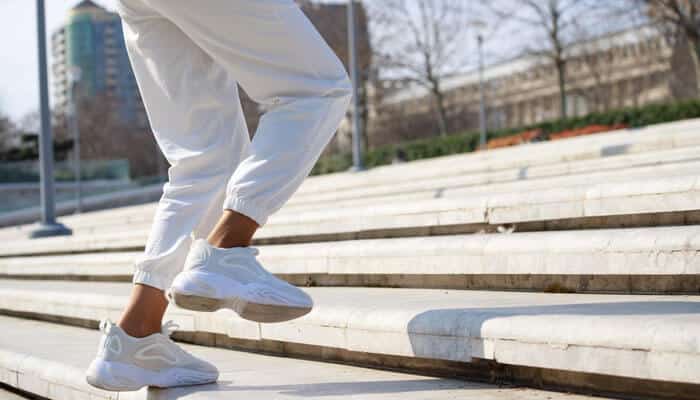
Yes, but it is not primarily designed as a walking shoe. Court shoes are built for lateral control and may feel firmer than dedicated walking or running footwear.
Using the Advantage Pro extensively on pavement can:
- Wear down the outsole
- Reduce court traction
- Shorten its useful tennis life
- Add unnecessary flex fatigue
Buyers mainly interested in casual wear should consider the standard Roger Advantage instead.
Pros and Cons
Pros
- Excellent ventilation
- Secure heel containment
- Strong multi-court grip
- Comfortable initial feel for many players
- Minimal break-in
- Responsive Speedboard
- Flexible compared with heavier court shoes
- Good recreational stability
- Quick on-foot sensation
- Suitable for tennis and pickleball
- Dedicated clay model available
- Modern styling
- More accessible than some Roger Pro models
- Can transition into casual use
Cons
- Premium $170 price
- Limited forefoot cushioning
- Women’s model may fit short
- Standard width may not suit wide feet
- Less rigid than competition models
- Moderate toe protection
- Traction may be too sticky for sliders
- High 12 mm drop
- No prominently advertised outsole warranty
- Not designed for maximum hard-court durability
- Arch support may be insufficient for some feet
- Some colors and sizes sell out quickly
The Roger Advantage Pro vs Roger Pro 3
The Roger Pro 3 is On’s more advanced competition shoe.
| Feature | Roger Advantage Pro | Roger Pro 3 |
| List price | $170 | $220 |
| Main purpose | Everyday multi-court play | Competition tennis |
| Men’s weight | 382 g | 390 g |
| Drop | 12 mm | 8 mm |
| Cushioning | Concealed CloudTec | Helion HF hyper foam |
| Speedboard | Standard performance board | Carbon-fiber Speedboard |
| Upper | Breathable mesh | Supportive mesh and lace cage |
| Feel | Flexible and accessible | More explosive and structured |
| Best for | Recreational and club players | Serious competitors |
The Roger Pro 3 combines Helion HF foam with a carbon-fiber Speedboard, a more supportive upper and an 8 mm drop. The men’s model weighs approximately 390 grams.
Choose the Advantage Pro when you want:
- A $50 lower price
- Multi-court versatility
- A more forgiving upper
- Easier recreational comfort
- A higher-drop platform
- Court-to-casual styling
Choose the Roger Pro 3 when you want:
- Carbon-fiber propulsion
- More advanced foam
- Stronger lockdown
- A lower drop
- Competition-focused performance
- Greater reinforcement for high-speed movement
The Pro 3 is technically more advanced, but the Advantage Pro may be more practical for ordinary players.
The Roger Advantage Pro vs Roger Clubhouse Pro
The Roger Clubhouse Pro also costs $170.
On describes it as a multipurpose tennis shoe that combines performance and lifestyle use. It includes Helion superfoam, hidden CloudTec, a 3/4 Speedboard, medial reinforcements and a large TPU toe cap.
| Feature | Roger Advantage Pro | Roger Clubhouse Pro |
| Price | $170 | $170 |
| Main focus | Everyday tennis performance | Multipurpose court and casual use |
| Court emphasis | Higher | Moderate |
| Cushioning | Firmer, responsive | Plusher |
| Toe reinforcement | Moderate | Larger TPU toe cap |
| Best for | Tennis and pickleball first | Court and casual use equally |
Choose the Advantage Pro when on-court performance is the priority.
Choose the Clubhouse Pro when cushioning and off-court versatility matter equally.
The Roger Advantage Pro vs Roger Advantage
These two products should not be confused.
| Feature | Roger Advantage Pro | Roger Advantage |
| List price | $170 | $160 |
| Intended use | Tennis and court sports | Lifestyle and all-day wear |
| Surface | Multi-court | Not positioned as a performance court shoe |
| Lateral structure | Court-oriented | Casual |
| Upper | Performance mesh | Lifestyle construction |
| Best for | Playing tennis or pickleball | Walking and casual use |
The extra $10 for the Pro model is worthwhile when the shoe will actually be used for court sports.
Best Alternatives
A different model may be better when your priorities are speed, width, cushioning or maximum stability.
| Shoe | Current list price | Best for | Main difference |
| On Roger Advantage Pro | $170 | Balanced multi-court use | Ventilation and styling |
| ASICS Solution Speed FF 4 | $155–$170 | Speed-focused movement | Softer speed-oriented platform |
| Babolat Jet Mach 4 | $159 | Lightweight all-court play | 10 mm drop and speed focus |
| Babolat SFX 4 | $109 | Wide feet and cushioning | Wider, comfort-focused fit |
| Adidas Barricade 14 | $160 | Stability and support | More structured design |
| On Roger Pro 3 | $220 | Premium competition | Carbon Speedboard and Helion HF |
Prices were checked in July 2026 and may vary by color, size, or promotion.
Best Speed Alternative: ASICS Solution Speed FF 4
ASICS positions the current Solution Speed FF 4 around speed and dynamic movement. Standard colorways are generally listed between $155 and $160, while some special editions reach $170.
Consider it when:
- Speed is your main priority.
- You want a current-generation model.
- You prefer a traditional tennis-shoe design.
- You do not need Roger styling.
Best Wide-Fit Alternative: Babolat SFX 4
The Babolat SFX 4 costs $109 and is positioned around fit, cushioning, and stability.
It is a stronger option for players who consistently need additional width and cushioning.
Best Lightweight Alternative: Babolat Jet Mach 4
The Jet Mach 4 costs $159 and has a standard fit, a 10 mm drop and an all-court design focused on energy release, lightness and traction.
It may appeal to players who want:
- A lower drop
- A speed-focused design
- An all-court outsole
- A more competition-oriented appearance
Best Stability Alternative: Adidas Barricade 14
The Adidas Barricade 14 has a standard list price of $160 and is designed for players who prioritize structured support.
It is worth considering when:
- Lateral reinforcement matters more than ventilation.
- You play frequently on hard courts.
- You prefer a traditional stability shoe.
- You want a more protected upper.
Is The Roger Advantage Pro Worth $170?
At full price, the shoe sits firmly within the premium court-footwear category.
Its value comes from:
- Genuine multi-court construction
- Concealed CloudTec
- A responsive Speedboard
- Excellent ventilation
- Strong traction
- Secure heel containment
- Tennis and pickleball versatility
- Premium styling
- A dedicated clay option
- Strong independent men’s playtest scores
Its value becomes less convincing when:
- Durability is your only priority.
- You need a true wide size.
- You want maximum cushioning.
- You compete aggressively on hard courts.
- You do not care about styling.
- You can find a suitable alternative for substantially less.
Best Value Scenario
The shoe offers the strongest value to a player who uses it for:
- Tennis
- Pickleball
- Coaching
- Training
- Occasional casual wear
Weakest Value Scenario
It provides weaker value to an aggressive singles player who:
- Plays several times per week
- Slides on hard courts
- Drags the toe
- Requires substantial cushioning
- Wears through court shoes quickly
Price, Sales, Shipping and Returns
The current U.S. list price is $170. Some last-season colorways may be discounted.
For example, On has listed certain older colors at $135 and, in some cases, $115, although size availability can be extremely limited.
On’s U.S. product page currently advertises:
- Free shipping on orders over $50
- Free returns within 30 days
- Refund-only treatment for some limited-edition and last-season products when exchanges are unavailable
Policies vary by country and may change, so confirm the terms before ordering.
Pay Full Price When
- You need a specific size.
- Your size sells out quickly.
- You want a current colorway.
- You need the shoes before a season or tournament.
- You may need a size exchange.
Wait for a Sale When
- Color is not important.
- You already know your On size.
- You are buying a backup pair.
- You can accept limited inventory.
- You do not need the shoes immediately.
Do not buy the wrong size solely because it is discounted.
How to Choose the Correct Size
Follow this process before removing the tags or wearing the shoes outside.
- Use the correct men’s or women’s guidance: Men should usually begin with their normal court-shoe size. Women should compare their normal size with a half-size larger.
- Wear your regular court socks: Thin casual socks may create a misleading fit.
- Try both shoes: One foot is often slightly larger.
- Check toe space: Leave a small amount of room ahead of the longest toe.
- Simulate braking: Your toes should not hit the front.
- Perform lateral steps: Your foot should remain centered over the platform.
- Check heel movement: Repeated lifting indicates a poor fit.
- Consider swelling: Feet often expand during hot or extended activity.
- Test any orthotic: A replacement insert changes internal volume.
- Keep the shoes clean indoors: Do not affect return eligibility while testing them.
Break-In Period
Most players should experience a short or minimal break-in period.
Independent testers frequently reported that:
- The upper felt flexible immediately.
- The shoes were playable out of the box.
- The Advantage Pro felt less rigid than the Roger Pro 2.
- Heel comfort was strong from the beginning.
However, fit problems should not be dismissed as normal break-in.
A shoe that causes:
- Numbness
- Severe pressure
- Toe impact
- Blisters
- Sharp pain
is more likely the wrong size or shape than a shoe that simply needs softening.
Common Problems and Solutions
| Problem | Possible cause | Practical response |
| Toes hit the front | Shoe is short or foot slides forward | Compare a half-size larger |
| Forefoot feels firm | Limited forefoot cushioning | Choose a more cushioned model |
| Arch support feels low | Insole does not match the foot | Test a compatible replacement insole |
| Outsole feels too sticky | Aggressive rubber grip | Choose a slicker court shoe |
| Forefoot tightens during play | Heat-related swelling | Test with match socks and compare sizes |
| Heel lifts | Excess size or loose lacing | Use heel-lock lacing |
| Toe area wears quickly | Repeated toe dragging | Choose a reinforced durability shoe |
| Shoe feels elevated | 12 mm drop | Transition gradually or select a lower drop |
| Foot moves laterally | Too much internal volume | Try a smaller or narrower model |
| Toes become numb | Pressure or poor shape match | Stop wearing and reassess fit |
Do not cut, sand or chemically alter the outsole to reduce traction. Modifying the rubber can damage the shoe and create unpredictable grip.
Care and Cleaning
Proper care can help preserve appearance and performance.
After Playing
- Remove loose dust with a soft brush.
- Wipe clay from the outsole.
- Let the shoes air-dry.
- Remove damp insoles.
- Loosen the laces before storage.
Cleaning the Upper
Use:
- Cool water
- Mild soap
- A soft cloth
- A soft brush
Avoid:
- Bleach
- Harsh chemicals
- Machine drying
- Direct heat
- Aggressive scrubbing
Drying
Allow the shoes to dry naturally in a ventilated area.
Do not place them:
- On a heater
- In a dryer
- In intense sunlight
- Inside a hot vehicle
High heat can damage adhesives, cushioning materials and synthetic components.
Outsole Inspection
Consider replacing the shoes when you notice:
- Smooth tread
- Uneven wear
- Loss of traction
- Deep cracks
- Sole separation
- An unstable platform
- Severe toe abrasion
What Customer Reviews Say
Customer feedback is divided, which helps identify which players are most likely to enjoy the shoe.
As of July 26, 2026, Zappos displayed 18 customer reviews. Its fit survey reported that:
- 88% considered the shoe true to size.
- 80% considered it true to width.
- 73% reported moderate arch support.
The sample is small and self-selected, so these percentages should be treated as directional rather than representative of every buyer.
Conclusion: The Roger Advantage Pro
The Roger Advantage Pro is a strong premium multi-court shoe for recreational tennis players, doubles specialists, and pickleball players who want ventilation, dependable grip, and a comfortable performance fit.
Its greatest strength is balance.
It provides:
- More support than a lifestyle sneaker
- More flexibility than many competition shoes
- Excellent ventilation
- Secure heel containment
- Strong traction
- Responsive movement
- Tennis and pickleball versatility
- Premium sports-meets-street styling
Its limitations are equally clear.
Forefoot cushioning may feel too light for players accustomed to soft footwear. The upper does not provide the maximum lateral reinforcement of a tournament shoe. Toe protection is moderate, the 12 mm drop may feel high, and the outsole may be too sticky for players who slide.
Men should generally begin with their normal size but compare a half-size larger when wearing thick socks or sitting between sizes.
Women should compare their normal size with a half-size larger because independent testing found that the shoe could fit short and occasionally cause toe jamming.
Buy The Roger Advantage Pro when you want:
- A versatile tennis and pickleball shoe
- Excellent ventilation
- Secure traction
- A flexible upper
- Moderate cushioning
- Good recreational stability
- Premium styling
- A balance of performance and everyday wear
Choose another shoe when you want:
- Maximum hard-court durability
- A dedicated wide width
- Deep forefoot cushioning
- A low-drop platform
- Easy sliding
- Tour-level reinforcement
- A lower purchase price
For its intended audience, The Roger Advantage Pro is worth considering in 2026. It is not the most technically advanced shoe in On’s collection, but it may be the most practical Roger performance model for everyday court players.
The Roger Advantage Pro FAQs
