




Posts ThriftyEvents.net can help readers plan memorable events without letting small decisions quietly push the final cost beyond their budget. The biggest savings often come not from discount codes, cheap decorations, or choosing the lowest-priced venue, but from making smarter decisions earlier in the planning process.
Guest count, venue inclusions, vendor pricing, event priorities, and contingency planning can influence the budget far more than minor last-minute savings. Comparing total costs, requesting itemized quotes, focusing spending on what guests actually value, and knowing where not to cut can make an event both affordable and enjoyable.
ThriftyEvents.net presents itself as a resource for budget-friendly event planning, DIY ideas, and practical budgeting strategies designed to help people avoid unnecessary overspending.
This guide explores the most useful ideas behind Posts ThriftyEvents.net, explains which planning principles offer real value, highlights claims that may require verification, and shows how these strategies can be applied to weddings, birthdays, corporate events, fundraisers, and other celebrations.
Quick Answer
The main lesson from Posts ThriftyEvents.net is simple: save money by controlling major cost decisions early instead of searching for cheaper alternatives later.
A smart event budget starts with a clear purpose, realistic guest count, spending limit, vendor comparison, and contingency fund. These Posts ThriftyEvents.net ideas can help reduce unnecessary expenses without hurting the guest experience.
Current Eventbrite guidance also recommends defining goals, audience, budget, and timeline early, which supports the same planning-first approach.
Key Takeaways
The most useful Posts ThriftyEvents.net budgeting principles are summarized below.
| Money-Saving Principle | Why It Matters |
|---|---|
| Set the budget early | Prevents unnecessary spending |
| Control guest count | Reduces per-person costs |
| Compare total venue cost | Reveals hidden extras |
| Request itemized quotes | Makes fees easier to compare |
| Use DIY selectively | DIY is not always cheaper |
| Track actual spending | Helps prevent budget overruns |
| Protect contingency money | Covers unexpected expenses |
| Don’t cut essentials | Protects safety and accessibility |
What Are Posts ThriftyEvents.net?
Posts ThriftyEvents.net generally refers to articles and planning content published on ThriftyEvents.net. The site’s public homepage mainly focuses on Budgeting Tips, DIY Ideas, and Event Planning.
Its Event Planning section covers topics such as budget-friendly events, venue choices, weddings, equipment rentals, budgeting, and other practical planning ideas.
Some newer articles also describe features such as event listings, filters, map views, organizer profiles, badges, messaging, and submission tools. However, readers should verify that these features are currently available before relying on them.
Based on its visible homepage and main categories, ThriftyEvents.net is best understood as an informational event-planning and budgeting resource.
In this guide, Posts ThriftyEvents.net refers primarily to the site’s publicly available event-planning, DIY, and budgeting content.
How to Find the Most Useful Posts ThriftyEvents.net
Instead of reading every article, start with the event-planning problem you need to solve. This makes it easier to find useful advice quickly.
| Your Planning Problem | Best Content to Look For |
|---|---|
| Overall planning | Event Planning |
| Controlling costs | Budgeting posts |
| DIY projects | DIY Ideas |
| Wedding savings | Wedding and DIY articles |
| Venue costs | Venue-planning posts |
| Vendor decisions | Vendor and rental articles |
| Budget tracking | Event-budget templates |
| Timelines | Planning checklists |
The Event Planning section contains many event-focused articles, while the broader Budgeting Tips category also includes general financial topics. A targeted Google search can therefore help you find relevant Posts ThriftyEvents.net faster.
For example:
site:thriftyevents.net wedding budget
site:thriftyevents.net event venue
1. Start With the Event Goal, Not the Shopping List
Before buying decorations or comparing packages, decide what guests should remember most. Posts ThriftyEvents.net emphasizes setting a clear budget and prioritizing high-impact parts of an event.
For example, a wedding may prioritize food and photography, while a corporate event may need reliable AV equipment and networking space.
Instead of asking “Can we afford this?”, ask “Does this meaningfully improve the event?”
2. Build the Budget Before Requesting Quotes
Create spending categories before vendors begin influencing your expectations. Posts ThriftyEvents.net discusses budget areas such as venue, catering, entertainment, transportation, equipment, and contingency funds.
A simple starting budget could look like this:
| Category | Planned | Quoted | Actual |
|---|---|---|---|
| Venue | $1,000 | — | — |
| Food and drinks | $1,200 | — | — |
| Entertainment | $400 | — | — |
| Décor | $300 | — | — |
| Photography | $500 | — | — |
| Printing | $100 | — | — |
| Transport | $150 | — | — |
| Contingency | $350 | — | — |
| Total | $4,000 | — | — |
These figures are examples, not recommended market prices.
3. Separate Fixed Costs From Per-Person Costs
Some expenses remain fairly stable regardless of attendance, while others increase with every guest. Eventbrite also distinguishes fixed expenses from variable per-person costs, making this an important principle when applying Posts ThriftyEvents.net budgeting ideas.
| Expense | Cost Behavior |
|---|---|
| Venue | Mostly fixed |
| DJ | Mostly fixed |
| Photographer | Mostly fixed |
| Catering | Variable |
| Drinks | Variable |
| Chairs | Potentially variable |
| Favors | Variable |
| Printed programs | Variable |
This distinction makes it easier to see which costs will rise as attendance grows.
4. Treat Guest Count as a Financial Lever
Guest count can influence catering, drinks, seating, stationery, favors, staffing, transport, and even venue size.
If food and drinks cost $45 per person:
100 guests × $45 = $4,500
80 guests × $45 = $3,600
That is a $900 difference before considering other per-person expenses. Guest count should therefore be treated as a financial decision as well as a social one.
5. Compare Venues by Total Cost, Not Rental Price
A lower advertised rental price does not always mean a cheaper event. When using Posts ThriftyEvents.net for venue-planning ideas, compare the complete cost rather than the headline rate.
| Venue | Base Price | Included | Additional Needs |
|---|---|---|---|
| Venue A | $700 | Empty room | Tables, chairs, sound, setup and cleanup |
| Venue B | $1,050 | Tables, chairs, basic audio and cleanup | Few extras |
Venue A appears $350 cheaper, but additional rentals and labor could make Venue B the better value.
Before booking, check what is included, such as tables, chairs, Wi-Fi, AV equipment, parking, setup, cleanup, staffing, taxes, security, and overtime.
Always compare all-in cost with all-in cost.
6. Ask About Alternative Dates and Times
Venue prices can vary by day, time, season, and demand. Posts ThriftyEvents.net encourages planners to consider flexible timing and lower-cost alternatives before committing to one date.
If several dates work, request quotes for each. The goal is not to assume one weekday is always cheaper, but to create more options for comparison.
Flexibility gives you more opportunities to save.
7. Request Itemized Vendor Quotes
Package prices can hide major differences. When following Posts ThriftyEvents.net budgeting ideas, ask vendors to show exactly what their quote includes.
For catering, check food, drinks, staffing, delivery, setup, service charges, taxes, and cleanup. For photography or décor, confirm hours, travel, installation, delivery, and overtime costs.
Itemized quotes make vendors easier to compare and reveal extras you may not need.
8. Negotiate Scope Before Asking for a Discount
Instead of immediately asking for a lower price, use Posts ThriftyEvents.net principles to negotiate what is included in the package.
Ask:
“What could we change to bring this package within a $2,000 budget?”
A vendor may offer shorter coverage, fewer custom elements, a simpler menu, different equipment, or another date. The goal is to remove low-value costs without reducing essential quality.
9. Compare Suppliers With a Simple Scorecard
Price should not be the only factor when comparing vendors. Posts ThriftyEvents.net budgeting advice supports looking at price, quality, flexibility, and overall value together.
| Vendor | Price | What’s Included | Flexibility | Cancellation Terms | Overall Fit |
|---|---|---|---|---|---|
| Vendor A | $1,900 | Good | Low | Strict | Medium |
| Vendor B | $2,050 | Excellent | High | Flexible | High |
| Vendor C | $1,750 | Limited | Medium | Moderate | Medium |
A slightly more expensive vendor may provide better value if important services are already included.
10. Spend More Where Guests Actually Notice
Smart budgeting does not mean cutting every category equally. Posts ThriftyEvents.net ideas work best when spending is directed toward the parts of an event guests are most likely to experience.
Guests usually notice comfortable seating, good food, clear sound, smooth activities, and easy access more than expensive favors or decorative extras.
If $500 remains, compare whether it would create more value in custom favors or in better lighting, food, seating, sound, shade, or heating.
Spend based on guest impact, not appearance alone.
11. Reuse Décor Instead of Decorating Every Space Separately
Décor costs rise when every area is treated as a separate project. Posts ThriftyEvents.net supports reusing multi-purpose décor to reduce unnecessary spending.
Flowers can move from the ceremony to reception tables, while a welcome backdrop can later become a photo area. Before buying décor, ask:
How many useful functions can this item perform?
12. DIY Only When DIY Is Actually Cheaper
DIY can save money, but Posts ThriftyEvents.net ideas are most useful when you calculate the complete cost rather than materials alone.
Materials + tools + transport + mistakes + storage + time
Simple projects such as signs or centerpieces may work well. Avoid DIY for essential tasks where mistakes could create safety or reliability problems.
13. Borrow or Rent Before Buying
Many event items are needed for only a few hours. Following Posts ThriftyEvents.net budgeting principles, check whether an item can be borrowed or rented before purchasing it.
Ask:
Do we own it? Can we borrow it? Would renting cost less?
This works well for cake stands, easels, lanterns, serving trays, backdrop frames, coolers, and similar short-term items.
14. Simplify Catering Instead of Simply Serving Less
Food cuts can quickly hurt the guest experience. Posts ThriftyEvents.net budgeting ideas work better when planners simplify catering rather than simply reduce portions.
Consider fewer menu options, seasonal ingredients, buffet or family-style service, or simpler desserts where appropriate.
Reduce waste, not hospitality.
15. Reduce Printing That Adds Little Value
Invitations, programs, menus, maps, schedules, and signs can add up quickly. Posts ThriftyEvents.net strategies can include replacing suitable printed materials with digital alternatives.
A single event page can provide RSVPs, directions, schedules, dress codes, accommodation details, and updates. Keep printed materials where they genuinely improve communication.
16. Track Projected, Committed, Paid and Actual Spending
A budget should be updated whenever costs change. When applying Posts ThriftyEvents.net budgeting methods, tracking different spending stages can reveal overruns before they become serious.
| Status | Meaning |
|---|---|
| Projected | What you expect to spend |
| Committed | Amount agreed in a quote or contract |
| Paid | Money already transferred |
| Actual | Final cost after adjustments |
Eventbrite also recommends tracking projected and actual costs so the budget reflects current spending rather than outdated estimates.
17. Event Budget and Cash Flow Are Not the Same Thing
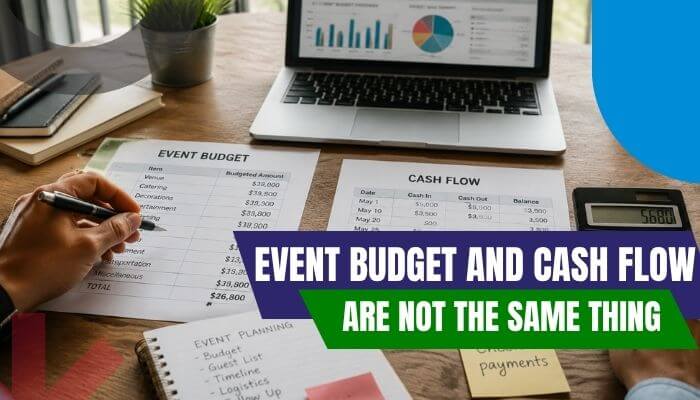
An affordable event can still create payment problems. Posts ThriftyEvents.net planning principles become more useful when vendor due dates are tracked alongside total costs.
Budget: How much will we spend?
Cash flow: When must the money be available?
| Vendor | Total | Deposit | Deposit Due | Balance | Balance Due |
|---|---|---|---|---|---|
| Venue | $3,000 | $900 | March 1 | $2,100 | June 1 |
| Caterer | $2,500 | $750 | March 15 | $1,750 | June 10 |
| Photographer | $1,200 | $400 | April 1 | $800 | Event week |
| Entertainment | $800 | $300 | April 15 | $500 | Event day |
Record deposits, final balances, refundability, and payment deadlines as soon as contracts are agreed.
18. Protect a Real Contingency Fund
Unexpected costs can come from weather, equipment, transport, attendance changes, or extra labor. Posts ThriftyEvents.net budgeting ideas support keeping contingency money available for these surprises.
Do not treat this money as spare cash for optional extras.
Its purpose is to protect the event from unexpected costs.
19. Watch Small Per-Person Costs
Small upgrades can become expensive when multiplied across a large guest list. Posts ThriftyEvents.net budgeting principles are especially useful when checking costs charged per attendee.
For a 100-person event:
| Extra | Per Person | Total |
|---|---|---|
| Favor | $2.50 | $250 |
| Printed program | $3 | $300 |
| Chair upgrade | $4 | $400 |
| Dessert upgrade | $5 | $500 |
| Combined | — | $1,450 |
A few small upgrades can therefore add $1,450 to the budget. Always multiply per-person prices by the full guest count before deciding whether an extra is inexpensive.
20. Include the Cost of Your Time
DIY may look cheaper until labor is considered. When applying Posts ThriftyEvents.net money-saving ideas, include your time alongside materials, tools, transport, and storage.
Suppose DIY decorations save $180 but require 15 hours:
$180 ÷ 15 = $12 saved per hour
If the project creates stress or takes time away from more important tasks, outsourcing may offer better overall value.
Cheap and efficient are not always the same thing.
21. Review Cancellation and Change Policies Before Paying
The cheapest vendor can become expensive when plans change. Posts ThriftyEvents.net budgeting strategies work better when price is considered alongside cancellation and rescheduling terms.
For example, Vendor A may cost $900 with a large non-refundable payment, while Vendor B costs $975 but offers greater flexibility.
Before paying, check cancellation rules, rescheduling terms, overtime fees, guest-count deadlines, payment schedules, and refund conditions.
22. Don’t Forget Permits, Insurance and Compliance Costs
Some expenses are easy to overlook. Posts ThriftyEvents.net planning ideas should therefore be combined with checks for permits, insurance, security, accessibility, food-service rules, and other local requirements.
Requirements vary by location and event type. Confirm what applies with the venue and relevant local authorities rather than relying only on a generic online checklist.
23. Accessibility Should Be Planned Early
Accessibility should influence venue and layout choices from the beginning, not after most of the budget has already been spent.
Important considerations may include accessible parking, entrance routes, meeting spaces, seating, and restrooms. Exact requirements depend on the location, venue, and type of organization.
Planning accessibility early can also reduce expensive last-minute changes.
24. Know Where You Should Not Cut Costs
Saving money does not mean reducing every expense. Some areas deserve protection because cutting them can create safety, legal, or guest-experience problems.
Accessibility and Safety
Do not reduce essential access or safety arrangements simply to lower costs.
Food Safety
Save through menu choices and service style, not unsafe food preparation or storage.
Essential Technology
If speeches, presentations, or performances are important, unreliable audiovisual equipment can damage the event.
Required Staffing or Security
Do not remove necessary staff or security simply because those costs are less visible to guests.
Required Permits or Insurance
Ignoring an applicable requirement is not a legitimate money-saving strategy.
Cut extravagance before you cut essentials.
Which Money-Saving Strategy Matters Most for Each Event?
There is no single budget formula for every event. Different celebrations have different cost pressures and priorities.
| Event | Major Budget Lever | Easier Place to Simplify | Area Requiring Care |
|---|---|---|---|
| Wedding | Guest count and venue | Décor, stationery and favors | Guest comfort and essential services |
| Birthday party | Venue and catering | Decorations and invitations | Food and activities |
| Corporate event | Venue, catering and AV | Swag and decorative branding | Technology and accessibility |
| Community event | Venue and infrastructure | Printing and decorative extras | Safety, permissions and logistics |
| Baby shower | Catering and décor | Favors and stationery | Seating and comfort |
| Fundraiser | Venue and promotion | Non-essential décor | Activities that support participation or donations |
For weddings, guest count can influence several major expenses at once. Birthday parties may save more through venue choice, while corporate events often benefit from protecting technology and accessibility budgets. The best Posts ThriftyEvents.net ideas should therefore be treated as flexible planning strategies rather than fixed rules.
How to Use ThriftyEvents.net More Effectively
Instead of browsing for random cheap ideas, start with your biggest planning problem. Research venues and timing when location costs are high, explore reuse or rentals when decor is expensive, and review menu format or guest count when catering exceeds the budget.
Using Posts ThriftyEvents.net this way turns individual articles into practical solutions for specific budget problems rather than simply another collection of money-saving tips.
What Should You Verify Before Following ThriftyEvents.net?
Before relying on Posts ThriftyEvents.net, quickly verify these details:
- Prices: Event costs vary by location, season, guest count, and service level.
- Vendors: Check current pricing, availability, reviews, terms, and cancellation policies.
- External tools: Confirm that recommended apps, templates, or ticketing services still offer the stated features.
- Website features: Verify that any claimed event listings, maps, profiles, badges, messaging, or submission tools are actually available.
- Current information: Check original provider websites before relying on older prices, features, or recommendations.
- Important requirements: Confirm permits, insurance, accessibility, and local rules with the relevant venue or authority.
Sample $5,000 Event Budget: Before and After Better Decisions
A simple Posts ThriftyEvents.net budgeting example shows how the same $5,000 budget can become stronger without increasing total spending.
Initial Budget
- Venue: $1,600
- Catering: $1,800
- Decor: $700
- Entertainment: $500
- Printing and favors: $300
- Contingency: $100
- Total: $5,000
The budget balances, but only $100 is available for unexpected expenses.
Revised Budget
- Venue with useful inclusions: $1,450
- Catering: $1,800
- Decor: $450
- Entertainment: $500
- Printing and favors: $150
- Contingency: $650
- Total: $5,000
The event does not cost less, but the budget becomes financially stronger because more money is protected for unexpected costs.
Key lesson: Smart budgeting is often about using the same money more effectively, not simply spending less.
Conduct a Post-Event Budget Audit
After the event, use Posts ThriftyEvents.net budgeting ideas to review what worked and where money could be saved next time.
Check these points:
- Compare estimated costs with final spending.
- Identify purchases that were barely used.
- Note which upgrades guests actually valued.
- Review unexpected or extra vendor charges.
- Check whether any deposits or refunds are still outstanding.
- Record items that could have been borrowed or rented.
- Identify the vendors that provided the best value.
- Save the final budget for future event planning.
Key lesson: The next event should start with what the previous one taught you.
Common Event Budgeting Mistakes
When using Posts ThriftyEvents.net for event planning, avoid these common budgeting mistakes:
- Choosing the cheapest quote: Compare what each package actually includes.
- Buying too early: Confirm the venue, layout, and guest count before purchasing supplies.
- DIYing everything: Include materials, tools, mistakes, and your time in the real cost.
- Ignoring per-person costs: Small upgrades can become expensive across a large guest list.
- Spending the contingency fund: Keep emergency money for unexpected costs.
- Ignoring extra fees: Check delivery, setup, taxes, overtime, staffing, parking, and cleanup.
- Cutting guest comfort: Reduce non-essential extras before cutting seating, food, access, or other essentials.
Final Event Money-Saving Checklist
Before finalizing your budget, use these Posts ThriftyEvents.net planning checks:
- Set a clear event goal.
- Establish a maximum budget.
- Confirm a realistic guest count.
- Identify your top priorities.
- Separate fixed and per-person costs.
- Compare several vendor quotes.
- Check what venue prices include.
- Review deposits and payment deadlines.
- Calculate the full cost of DIY projects.
- Borrow or rent before buying when practical.
- Reuse décor where possible.
- Protect a contingency fund.
- Check cancellation and rescheduling terms.
- Confirm permits, insurance, and venue requirements.
- Plan accessibility early.
- Track projected and actual spending.
- Review the full budget before event day.
Conclusion
Good event planning is not about spending less at every turn. It is about knowing where money matters most and where it does not.
That is the practical value of Posts ThriftyEvents.net. Better guest-count decisions, clearer vendor comparisons, realistic contingency planning, and smarter priorities can protect a budget far more effectively than chasing small discounts.
Used carefully, Posts ThriftyEvents.net can help planners cut waste without cutting the quality of the event.
The smartest budget is not the cheapest one. It is the one that spends with purpose.
FAQs About Posts ThriftyEvents.net
1. Are Posts ThriftyEvents.net Free to Read?
Yes. The site’s publicly available articles can currently be read without a paid subscription.
2. Do I Need an Account to Read Posts ThriftyEvents.net?
No account appears necessary for accessing the site’s public planning and budgeting articles.
3. Are the Prices in ThriftyEvents.net Posts Guaranteed?
No. Prices are examples and may vary by location, season, demand, guest count, and supplier.
4. Does ThriftyEvents.net Have an Event Marketplace?
Some articles mention marketplace-style features, but readers should verify whether those tools are currently available before relying on them.
5. Which Posts ThriftyEvents.net Should I Read First?
Start with content related to your biggest cost, such as venue, catering, guest count, vendors, or overall budgeting.
6. Is DIY Always the Cheapest Option for an Event?
No. Include materials, tools, transport, mistakes, and time before deciding whether DIY actually saves money.
7. Can I Use Posts ThriftyEvents.net With a Budget Spreadsheet?
Yes. Useful costs, deadlines, vendor quotes, and priorities can be transferred into your own event-budget spreadsheet.
8. How Often Should I Recheck Posts ThriftyEvents.net?
Recheck useful articles before major bookings because prices, services, tools, and availability may change.
