Home Blog Page 1346

Entrepreneurship Is Hard And It’s Not For Everyone

0

I’ve said it time and time again: Entrepreneurship is hard and it’s not for everyone. If, after taking a realistic personal inventory of who you are and what you want to be doing, it turns out that you are ready to take the next steps in starting a business, I want to discuss the advice I always give to first-time entrepreneurs.

1. Be Practical About Your Money

The first and most important thing that I tell new entrepreneurs is the importance of practicality when it comes to money. I’m blown away by all the “entrepreneurs” who start businesses and, at launch, don’t realize the importance of generating money and how to manage profits. Instead of focusing on their present financial needs and building an actual company, they are too busy thinking about how much money they’ll be making four years from now. It’s a complete lack of practicality.

Cash is oxygen. How much money do you have to stay afloat and for how long? Do you have one year’s worth of rent and overhead? First-time entrepreneurs always make this mistake and it’s my biggest concern for them. You have to make sure your actions can respond to the bleeding of cash that occurs before you even turn a profit.

I often see first-time entrepreneurs making one of two mistakes at the start:

(1) They do not have a funded business and haven’t raised venture capital (or any other capital). They only have six months worth of money to make their business goal come true. While they dream up every perfect scenario that will allow them to achieve their dream, by the third day of being “entrepreneurs,” the realization hits that nothing goes perfectly and they run out of cash.

(2) They are so well funded that they don’t build up the necessary muscle to generate revenue. They are so used to the idea that losing $150,000 in burn rate is “fine” because they have a funded company. Most of their attention and behavior is focused on raising their next round instead of building an actual, profitable business.

No matter the situation, starting a new business, particularly one that requires an upfront financial investment and not just your time, drains money. You need to understand financially what it takes in order to pay for necessities like rent, supplies, and inventory (and that doesn’t even include your personal expenses). A high level of practicality is necessary for success.

2. Realize That Building A Business Is A Huge Time Commitment

The next thing I remind first-time entrepreneurs is that by starting a business, you have made a decision that does not allow you any time, in your first year, to do anything but build your business. No more binge-watching Game of Thrones. You are not allowed to watch the #AskGaryVee Show going forward (maybe). No more late-night parties with your friends. You are in such a Code Red zone that every minute (let’s call it 18 hours a day if you want this to be successful) needs to be allocated for your business. This even includes time with your family. It’s a substantial sacrifice and you have to realize the level of commitment that is required.

Also, I was trying to be very kind in the first year because I know we live in a politically correct world where leisure, “me” time and family time are so important to so many. However, if you have the ambition of building a business, you have to make this mental commitment. Then any time you have for family or leisure time is an added bonus. In fact, you have to ask yourself how big of a business you are actually trying to build. The bigger the business, the more years you’ll need to tack onto year one.

Startup founders and professionals shaking hands in a meeting room, showing teamwork and resilience despite the reality that Entrepreneurship Is Hard.

3. Hold Yourself To Your Word

One of the best pieces of business advice I’ve ever received (and one that I try to impart to anyone entering the business world) is that your word is bound. My dad told me this at an early age and it has shaped how I’ve conducted business ever since. He told me once that if I commit to buying 100 cases of wine for the store and change my mind the week before it arrives, I will have to drink all of it because I made the commitment.

If you make a commitment, no matter what happens, you have to deliver. Not only is your business’s brand at stake, but your personal brand and reputation are too. Poor business decisions could put your status as an entrepreneur at risk.

While the sources vary, it’s often stated that most businesses will fail within the first 18 months. The number one reason why I think so many businesses fail so quickly is because they don’t realize how hard it is, how “all-in” you have to be, and how much talent it takes to be a successful entrepreneur. I’m not promising that following this advice will guarantee your business will survive the first year, but without these considerations, you are not setting yourself up for success.

PS: This may just be words for you on a screen right now, but I beg you to read this very carefully. Read it and make sure it sinks in. We are absolutely living through the greatest generation of fake entrepreneurship that we’ve seen in a long time. Unfortunately, many people will be hurt both financially and emotionally because of this era. I implore you to take these words seriously.

Article Written By: G

Samsung Foldable Phones In 2017; Comes In 3 Forms With Dual-Display Screen Feature

0

Samsung Electronics is working on Samsung foldable phones, a ‘dual-screen’ smartphone that has flat screens on both sides as well as a phone with a single flexible OLED display, as per a report by Etnews. The company has been tipped to produce a small amount of dual-screen smartphones in 2017 in order to gain user response from the market.

The dual-screen smartphone features two flat displays on each side and even though the panel doesn’t bend itself, there is a hinge between the two displays that allows for the smartphone to have a foldable design. Once completely folded, the displays will be inside, and no longer visible.

On the other hand, the opposite foldable smartphone, anticipated to be launched subsequent to the dual-screen cellphone, is expected to function with a unique panel design as a way to be capable of bending, thereby allowing the device to have displays on each its back and front while folded completely.

This innovative concept is made viable by way of the integration of a genuinely foldable display, which necessitates the incorporation of highly advanced hardware components to perform seamlessly and deliver a user experience like no other. This groundbreaking technique to smartphone design is poised to redefine modern technology and establish a new generation of mobile devices that perfectly blend style and functionality.

Notably, Samsung has already given us a glimpse of its ‘in-foldable’ smartphone that sports a foldable display panel inside the smartphone. Quoting an expert from the industry, the report said,

“In-foldable Smartphone is seen as a first type of a foldable Smartphone. Out-foldable Smartphone is the next step of in-foldable Smartphone.”

In the out-foldable smartphones, the panels work even at the point where it is bent, as highlighted by Etnews. This innovative technology allows for seamless functionality across the entire display area, maintaining performance and quality regardless of the bending angle. Notably, Lenovo also demonstrated its advancements in flexible displays during its Tech World 2016 event held in June of this year, showcasing the potential for enhanced user experiences and versatile device designs.

Samsung garnered significant attention in anticipation of the Mobile World Congress 2017, as speculation arose around the unveiling of not one, but two smartphones boasting innovative bendable displays. As the tech world braced for this groundbreaking reveal, reports surfaced indicating that the agency’s ambitious timeline for the release of its foldable device faced unexpected hurdles due to the far-reaching repercussions of the Galaxy Note 7 global recall fiasco. Amidst this backdrop of high expectations and unforeseen setbacks, Samsung’s trajectory into the world of foldable technology became a narrative intertwined with triumphs and challenges.

Don’t Burn Out! 9 Stress-Busting Tips for Entrepreneurs

0

As any entrepreneur will tell you, running your own business takes a whole lot of time and dedication. You’re in charge of executing the day-to-day tasks, the long-term strategic planning and everything in between.With all of these responsibilities, on top of your own personal obligations, succumbing to stress-busting tips out might seem inevitable.

But with the right time-management strategies, you can learn to create room on your to-do list for well-deserved rest and relaxation. Small business owners and startup leaders shared their best tips for finding “you” time (and a refreshed perspective) as an entrepreneur.

1. Build a great team. “Entrepreneurs work longer and harder hours than anyone else, but if your heart isn’t in it, then trying to make your business a success is going to burn you out. Are you spending time on the aspects you love or are you finding yourself stuck crunching numbers or micromanaging others? Hiring the right people and building the right systems will help others carry your vision, so you can focus on what you love in and outside of the business.” – Eric Casaburi, CEO and founder, Retro Fitness

2. Delegate tasks to free up your time. “To be a successful entrepreneur, a person must sacrifice the most valuable asset in life: time. Yet, to avoid burn out … it is crucial to understand time management. Remember, you are not married to the business, and it does not love you back. Try to delegate, and hire a motivated and competent staff. Sometimes, it is hard to let go of micromanaging, but in order to grow and think big, you must learn how to trust and develop talent.” – Elan Katz, CEO, Cure Urgent Care

3. Treat your time like a financial budget. “Be fiscally responsible. Budget free time first, much like you would put money into a savings account. Then build a monthly budget around the remainder of your expenses or time spent working. By sticking to your budget, you’re forced to allocate the expenses you can afford and cut unnecessary expenses. For example, you can decline meetings you don’t need to attend, or delegate client questions to team members who are more than capable of handling them on their own. Challenge yourself each day to unplug outside the office and hold yourself accountable to your time budget.” – Yuri Sagalov, co-founder and CEO, AeroFS

4. Try a different tech tool. “Take a week away from your computer and try running everything from your [mobile device]. It’ll force you to communicate and get closer with your team.”– Konrad Billetz, founder, Frameri

5. Unchain yourself from your desk. “There is nothing like a change of scenery to get creative juices flowing in ways they wouldn’t otherwise. Take time out of the office and use that time to think creatively about the business. [This] sends a message to the team that unconventional thinking is good, rewarded and something to constantly seek out.” – Sandra Ponce de Leon, co-founder, Lifetime Memori, Inc., creators of Trunx

6. Pursue a nonwork hobby you’re passionate about. “Pick one thing you really love doing that has nothing to do with work, whether it’s reading, dancing or singing. Take some time to do … that nonwork-related [activity] and make it a routine.”– Katherine Niefeld, president and CEO, BlinkPR

7. Play as hard as you work. “You have to find the one thing that makes you happiest and do it, and for me, that’s golf. I play when I am home at least four times a week, because I can still do business on the course. I apply the same passion in my work as my play, and they both give me the same thrill and challenges.” – Dan Brinton, CEO, Fractured Prune Doughnuts. Check an excellent article on Golf GPS watches on US Golf Pro

8. Stick to your routine, no matter what. “My business requires so much traveling, so I try hard to stay grounded and healthy no matter where I am. I keep my routine and eat as well as I can to take care of myself. Every day, I try to meditate in the morning, and I do yoga at the end of the day as often as I can. I have very challenging and exhausting days, but when you do what you love, it’s easy to get re-energized and start in again the next day.” – Jennifer Adams, CEO, Jennifer Adams Worldwide

9. Actively make time for yourself.“I need euphoria, peace and tranquility — aka, the expensive luxury of doing nothing. These things have to be incorporated in your daily living. I always find time to meditate at least 20 minutes a day. I find the time to get in the car and drive an hour to a place unknown, because the ride is silent and peaceful. You have the time, [but] you also have to make the time. Learn how to create time for yourself. There is nothing wrong with stepping away from the desk or computer and saying, ‘Enough is enough. I am taking a break.'” – Jimmy Gilchrist, founder, Rock N Dade

6 Stepping Stones to a Spectacular Digital Marketing Strategy

0

For high rankings of any website, I have a 6-step digital marketing strategy plan that virtual reality headsets can help your website to be number – 1 on the internet. These steps are integral parts of your digital marketing strategy to create awareness among citizens and the whole online world.

Step 1: – Know Your Audience Closely

It is extremely important to know your audience very closely. You must know who are they, what are they doing where they hang out, what newspapers they go through, what websites or search engines they search for, and where their audience is.

Step 2: – Spy Your Competitors’ Movement With Close Attention

The world is full of competition. It is indispensable to spy on and know your competitors’ movement in the online world about how they reach their customers using digital media channels. Do thorough research on the competitors’ activity online. Be a private detective, do some mystery shopping, and impersonate your customers to find you and your competitors online.

Check out who is on top concerning digital media. If you feel you are not ahead of them, make a spreadsheet and start noting down the deficiency. Eventually, compete with them to remain ahead of others online. Note down each digital marketing strategy they have achieved on your spreadsheet. This research will help you to have a phenomenal achievement to reach your customers online.

Step 3: -Prioritize Your Digital Marketing Campaign & Channels

Think of multiple digital channels that are important to your organization such as Search engine optimization, pay-per-click, YouTube Video, Facebook, Twitter, Email marketing, and others.

Prioritize the digital marketing strategy channel that you need to put your effort first. This effort will make you sure about the web channels that create a ‘win-win situation’ for you. Also, think of the following aspects to make a narrow list of digital marketing.

Company Goals:

Think of the company’s priority for the business to achieve. Think of the company’s goal and try to understand what the company wants; whether it is brand popularity, raw traffic, or sales and education.

Budget:

The budget of the company should be taken into account while making a marketing plan.
Resources: What resources (personnel or outsourced vendors) do you have to achieve your marketing goals?

Step 4: – Digital Marketing Channels And Quick Wins

There are versatile digital media marketing channels available that are relevant to your business depending upon your business objectives as well as customers. For example, if you want brand popularity, social media may be the best bet for you.

If you want to increase your sales and web traffic, a blend of search engine marketing and email marketing could be the best fit for your business. It is wise to take a ‘pick and mix approach’ to have online achievement.

Don’t forget to test the effectiveness of your marketing activities and monitor the results. The different channels have been given below in a nutshell to make a dynamic online campaign. Increase your market visibility by consulting services engagement.

Digital Marketing Strategy

1. Search Engine Optimization (SEO)

This is a process of getting ranked on the search engine result pages in an organic way i.e. free listing on Google, Yahoo, and Bing.

Social Firestarter provides you with the best SEO services. This website gives you law firm marketing tips that will help you build your online presence and get you more clients.

Examples: Keyword research, on-page optimization, off-page optimization, link building, etc.

2. Pay–Per–Click Advertisement (PPC)

Pay-per-click is a process of getting visibility on the multiple ranges of search engines that bring visitors and leads to your website. Your money will get deducted from your account when the user clicks on your advertisement either on the search or display network.

Examples: Google Adwords, Bing Ad Center, Business.com Advertising, Yahoo! Search Marketing, etc.

3. Social Media Marketing (SMM)

Social media marketing is one of the popular processes of leveraging social media platforms (small and large) to earn visibility and traffic.

Examples: Facebook Group pages, Twitter marketing, Video marketing, pushing content on StumbleUpon, etc.

4. Email marketing

Email marketing is considered to be the most dynamic form of digital marketing strategy that brings immediate leads to your business. You can collect Emails from the visitors on your blog in due course of time or else you may also buy an email database.

Examples: Email newsletters, brand-building emails, conversion-focused emails, etc.

5. Affiliate marketing

Affiliate marketing is one of the most popular business techniques prevailing these days on the internet. You can make money through your website. Money comes to your wallet when the users make a purchase from the advertiser on your website.

Examples: Share sales, Commission Junction in-house affiliate programs, etc.

6. Display Advertising

This is a process of placing ads on third-party websites to create branding awareness and/or generate site traffic.

Examples: Banner ads, video ads, interactive ads, overlays, interstitials, etc.

7. Blogging

Creating a blog for different blogging sites and posting them. Creating a blog network is also a creative way of increasing traffic. To create good and secure websites for your clients, you can check out Devio here for WordPress website design.

Examples: blogger.com, wordpress.com, etc.

8. Viral Content Marketing

Viral content is a household name these days. You need to create viral content in the form of Videos, Podcasts, and Infographics and popularize it by blogs, social media, press releases, and video sites as well

Examples: Linkbait production, blog posts, viral videos, social marketing, etc.

9. Video Marketing

Create a video on your products or services that will make your business a brand and educate people

Examples: YouTube, Metacafe, Vimeo, etc.

10. Microblogging

Creating short messages and posting them on various microblogging sites

Example: Twitter.com

11. Local search marketing

This is a process of submitting your website on different local search engines and online Yellow Pages

Examples: Google Local, Yahoo Local, Bing Local

12. Forum participation

This is a process of participating in online forums that are relevant to your business and discussing the topics that people want to know.

Examples: Google Group

13. Questions and Answers

Participating in different question-and-answer sites and putting questions to the people and answering the questions.

Examples: Yahoo answer, AOL answer

Most Important: – Measuring Results Through Web Analytic Tools

Create a performance report every month that will help you to understand your business success. You can create a report indicating the below-mentioned examples.

Increased online sales by 24% from September to October
Increased organic search traffic by 20%
Increased social engagement on Facebook or Twitter by 25%

Google Analytics of Digital Marketing Strategy

Step 5: – Is Your Campaign Result Oriented?

You should test if your digital marketing strategy works with the help of Google Analytics, Facebook Insight, and other web analytics tools. Regular monitoring and reporting help you to know where you stand in the digital world; it allows you to proceed with further action.

Step 6: – Monthly Review

Take the required time to have a review of your entire marketing plan every month. You should check the pros and cons of your digital marketing plan or tactics that are driving results. Keep yourself updated by going through various blogs and articles on the latest web trends.

Conclusion

Today’s digital marketing strategy is quite different from yesteryears. You need to keep yourself updated with multiple channels. Making a network through Twitter can help you immensely to get all the information in one place. Google Alert is also one of the ways and means to find the recent trends.

15 Business Statistics You Need to Be Well Aware of Running Small Business

0

If you own a small business—or are thinking about starting one—you’re in excellent company: there are 28.8 million small businesses in the United States, according to the U.S. Small Business Administration, and they have 56.8 million employees. Small businesses (defined as businesses with fewer than 500 employees) account for 99.7% of all business in the US, according to these statistics.

Thanks to this enormous number, and thanks to agencies like the SBA, the U.S. Census Bureau, and the National Small Business Association, there are a lot of small business statistics available: from their role in the economy to their failure rates to the challenges of finding financing. Here, we’ve gathered 15 small business statistics that you’ll want to know about running a small business.

Small Businesses Statistics: Entrepreneurs in the Economy

1. HOW IMPORTANT ARE SMALL BUSINESSES?

Pretty important, as you can tell from the numbers above!

Small businesses have consistently played a major role in economic growth because they create so many jobs—many more than large businesses. In the first three fiscal quarters of 2014, reports the SBA, small businesses added 1.4 million new jobs, 39% of which were from very small businesses (with fewer than 50 people). As you can imagine, small business was key for the nation’s recovery from the recession. Between the middle of 2009 and the middle of 2013, 60% of the jobs created were from small businesses.

Small Business Statistics: Challenges & Risks

2. HOW OFTEN DO SMALL BUSINESSES FAIL?

About two-thirds of business survive 2 years in business, half of all businesses will survive 5 years, and one-third will survive 10. The longer a company has been in business, the more likely it is to stay in business—it’s those first few years that are the hardest. The Bureau of Labor Statistics also tracked business survival across industries and concluded that these statistics are pretty consistent regardless of industry. Which leads us to our next statistic…

3. THAT THING YOU HEAR ABOUT RESTAURANTS BEING INCREDIBLY RISKY? IT’S NOT REALLY TRUE.

You might have heard that restaurants are particularly risky, and almost destined to fail. One statistic thrown around often is that 60% of restaurants close within a year of their opening. This is especially easy to believe because it seems to be supported by personal anecdotes: how often do restaurants seem to open and close in your neighborhood?

But according to a paper published in 2005, the 60% figure applies to the first 3 years of the business, not one year. (According to this chart from the SBA, it’s more like 20% for the first year.) The craziest part? One of the most significant reasons for high restaurant failure rates is a lack of startup capital: banks will often refuse to lend to restaurants because they’re too risky. This creates a vicious cycle in which restaurants can fail simply because they weren’t able to obtain enough startup financing to become profitable. (Luckily, alternative lenders are happy to lend to restaurant owners.)

4. WHAT’S THE MOST FREQUENT REASON FOR SMALL BUSINESS FAILURE?

According to a U.S. Bank study, a whopping 82% of businesses that fail do so because of cash flow problems. Remember that cash flow doesn’t just mean the amounts of money that are coming in and out: you have to take timing into account, too. If you operate a business based on an invoicing system, for example, and your invoices aren’t paid until after your loan payments are due, you might end up with a cash flow problem.

Seasonal business—like landscaping companies—can also run into this problem: their money doesn’t flow in until the summer, so they wind up scraping by in other seasons. It’s important to budget and to prepare and analyze cash flow statements to make sure you’re keeping on top of it. Hiring a bookkeeper, using cloud-based software like QuickBooks, and enlisting a Certified Public Accountant can all also help to keep your cash flow in check.

5. WHAT ARE THE BIGGEST CHALLENGES OF RUNNING A SMALL BUSINESS, ACCORDING TO SMALL BUSINESS OWNERS?

The top 3 challenges of running a business, according to the small businesses surveyed by the National Association of Small Businesses for their 2015 report?

Economic uncertainty, the cost of health insurance benefits, and a decline in customer spending, with regulatory burdens almost tying for that third place spot. Still, most business owners are pretty optimistic—75% say that they’re confident in their own business, which is an improvement from a year earlier.

Small Business Statistics: Financing

6. WHAT ABOUT GETTING FINANCING?

Obtaining enough financing is a problem for some: 27% of businesses surveyed by the NSBA claimed that they weren’t able to receive the funding they needed. For those 1-in-4 businesses, the most frequent primary impact that a lack of funding had was preventing them from growing their business (especially for women- and minority-owned businesses). It also sometimes left them unable to finance sales and forced them to lay off employees.

7. HOW MUCH STARTUP CAPITAL DO MOST SMALL BUSINESSES NEED?

Well, it depends who you ask: two surveys had very different answers to this question. According to the Wells Fargo Small Business Index, $10,000 is the average amount of startup capital required by a small business owner. But the Kauffman Firm Survey suggests that the figure is more like $80,000.

8. WHERE DOES THAT FINANCING USUALLY COME FROM?

Loans, credit cards, and lines of credit account for about three-fourths of financing for new firms, according to the SBA. But personal investment from the owner or the owner’s family and friends can also play a significant role.

9. HOW ABOUT FOR HOMEOWNERS?

Entrepreneurs who own a home are 10% more likely to start a business than entrepreneurs who don’t—even after controlling for education, family income, and initial employment status. Real estate can be a valuable asset for business owners, because it can act as a form of collateral when they’re looking to secure certain loans.

Of course, you certainly don’t need to own a home, or if you do, you don’t need to put it up for collateral in order to receive financing. For example, there are plenty of unsecured loans that don’t require any collateral at all.

10. WHAT’S THE APPROVAL RATE FOR SMALL BUSINESS LOANS?

Trick question: it depends completely on the type of loan.

Let’s start with the example of an SBA 7(a) loan, which is a great option for business owners with stellar credit, and is the most popular type of SBA loan. Their low interest rates and long repayment terms come along with a fairly low approval rate, which requires excellent credit, among other conditions. The SBA’s published statistics from 2015 break down the approval rates along gender, ethnicity, and location lines: 29% approval for all minority-owned businesses versus 57% white-owned, 71% for male-owned businesses versus 29% female-owned, 67% existing  businesses versus 33% new business, and 17% rural companies versus 83% urban.

Bonus statistic: In 2015, the average SBA 7(a) loan size was $371,628.

11. WHAT ABOUT FOR NON-SBA LOANS?

Biz2Credit’s Small Business Lending Index breaks it down for us. In March 2016, big banks approved 23% of funding requests, institutional lenders (which include savings banks and life insurance companies) approved 62.8%, small banks approved 48.7%, alternative lenders (like the ones Fundera works with) approved 60.7%, and credit unions approved 42% of loan applications.

12. HOW LONG DOES IT TAKE TO RECEIVE FINANCING AFTER YOUR LOAN’S BEEN APPROVED?

There’s a direct correlation between time to funding and funded loan amount—which means that the longer you can to wait to receive financing, the higher your loan amount will likely be. This extra time will give you the opportunity to provide more information and put together a stronger application.

The more desirable (but harder to obtain) financing options, like SBA loans, also take longer than short-term loans, which could end up in your bank account in a matter of days. For a short-term loan, the average time to funding was fewer than 10 days, whereas for an SBA loan it was more like a month and a half.

Small Business Statistics: Credit Scores

13. WHAT GOES INTO A CREDIT SCORE, ANYWAY?

Credit scores are extremely important for your business—both your personal credit score and your business credit score. They’ll be one of the major factors in deciding whether or not a lender approves your application for financing, and if so, at what rates and term. For a FICO score, which is the most well-known credit score, 5 factors are taken into account:

  • Payment history: 35% (Have you paid your bills on time in the past, and if not, how late were they?  A single late payment can drop an excellent credit score by 100 points!)
  • Credit utilization: 30% (This refers to the amount of credit you use as a percentage of the credit that’s offered to you.)
  • Age of credit history: 15% (How long have you been a borrower?)
  • New credit: 10% (This means both to the number of credit cards or loans that you’ve applied for recently as well as inquiries into your credit score.)
  • Credit mix: 10% (The different types of credit that make up your credit history, like phone bills and utilities, mortgages, and lines of credit.)

Small Business Statistics: Taxes & Legal Structures

14. WHAT’S THE MOST COMMON TYPE OF LEGAL STRUCTURE FOR A SMALL BUSINESS?

According to the National Association of Small Business’s 2015 Economic Report, the majority of small businesses surveyed are S-corporations (42%), followed by LLCs (23%). S-corporations are popular in part because they’re not double-taxed: you don’t pay taxes on the earnings of the business itself.

15. WHAT TAX RATE DOES A SMALL BUSINESS NORMALLY PAY?

It depends on your legal structure and the size and profitability of your business. But on average, sole proprietorships paid the lowest effective tax rate—just 15.1% in 2013, according to the SBA’s Office of Advocacy—while S-corporations paid double that (31.6%).

The “effective tax rate” just means the tax rate as a percentage of your business’s net profit—the average rate you pay on all the money you make over the course of a year—as opposed to the marginal tax rate, which is the tax you pay on the last dollars you make.

Article Written by Gretchen Schmid | fundera ledger

Bluetooth 5 With 2x Faster Speed, 4x Longer Range Officially Released

0

Post the release of Bluetooth 4.2 a couple years ago, the widely used wireless tech is finally getting a much-needed upgrade. The Bluetooth Interest Group has today officially adopted Bluetooth 5 as the next-gen wireless platform and cleared the way for manufacturers to use the tech in their devices.

Major improvements to this new wireless technology include a longer range, faster speed, and larger broadcast message capacity. Talking about specifics, the data transfer speeds have increased two-fold whereas the range has grown four times. Also, you can use Bluetooth 5 to send eight times more data using broadcast messages. This comparison is based on the widely used and existing Bluetooth 4.2 wireless technology.

Bluetooth 5 also improves interoperability and coexistence with other wireless technologies. With the reduction in potential interference, these devices can better adapt and co-exist within the increasingly complex IoT environment. Commenting on the release, Mark Powell, Executive Director of the Bluetooth SIG, says,

Bluetooth is revolutionizing how people experience the IoT. Bluetooth 5 continues to drive this revolution by delivering reliable IoT connections and mobilizing the adoption of beacons, which in turn will decrease connection barriers and enable a seamless IoT experience.


This increment in basic specifications will be immensely helpful for IoT and smart home devices, required to accommodate the needs of a whole building or a home at once. It could also prove to be useful for further improvements in wearable, especially smartwatches, which are losing market due to slow connection speeds (and upgrades). Bluetooth 5 can also be used in a variety of settings – outdoor, industrial, and commercial environments.

This means whole-home and building coverage, as well as new use cases for outdoor, industrial, and commercial applications will be a reality. With the launch of Bluetooth 5, we continue to evolve to meet the needs of IoT developers and consumers while staying true to what Bluetooth is at its core: the global wireless standard for simple, secure, connectivity.

Though the wireless technology has been released, one shouldn’t expect to see Bluetooth 5-equipped devices for the next 2-6 months. The better connectivity options could debut in the coming wave of smartphones, including the Galaxy S8, the next Apple iPhone, and the hoard of other Android smartphones. The same will be the case with the IoT device ecosystem.

Bluetooth 5 Features

The new version of the Bluetooth technology has arrived with many visible improvements, giving it an edge over its predecessors —

  • Four times range (Around 800 feet or 240m).
  • Two times the speed (Around 50 Mbit/s).
  • Low energy.
  • Eight times the broadcast message size, increasing the amount of data sent.

Bluetooth SIG (Special Interest Group) group says that the long-range Bluetooth 5 can cover an entire home or building. They have worked to reduce the interference of Bluetooth 5 with radio signals of co-existent wireless technologies.

Bluetooth 5 Will propel the IOT Ecosystem

It is very likely that Bluetooth 5 will play a significant role in realizing the dream of smart homes and spaces with IoT (Internet of Things) devices capable of talking to each other. And before that, it could be used to boost data syncing between your smartphone and wearable gadgets like fitness bands and smartwatches.

Devices equipped with Bluetooth 5 are expected to hit the shelves in a span of around 2 to 6 months, according to the group.

The 17 Most Useful Free Resource Websites For Startups

0

Startup life means doing more than one task; at times, small tasks can take up a lot of time. To help fellow startups like us, we have listed a few websites and tools that can be very helpful in getting the work done. All these free resource websites for startups will make your life easier.

1. Perfect Domain

Search for a perfect domain, Facebook, or Twitter name using the Name App. Also, check Naminum.

2. Logos

To start with, you need a logo. For some excellent free logos, visit Postermywall Logo Generator; it’s simple, fast, and even looks good. Here are some sample logos that we made.

3. Website & more

Happy with the logo; now you need a cool website. WordPress helps you create some of the most amazing websites, like Theme Forest, with some free and paid themes. Also, visit Hive for free hosting.

4. Design

Create menus, visit cards, social media posts, etc. all in one rich tool—Canva. God bless the Canva team! No professional expertise is required. You can also try Pixlr.

5. Stock Photos

Need stock images for your site, social media, etc.? Log onto Pixabay for some stunning royalty-free stock photos! Also, try Pexels.

A young child dressed in a business suit wearing a protective cone collar while working on a laptop at a desk with a stack of files.

6. Lead Generation

Capture contact details, grow Facebook fans, etc. using Hello Bar.

7. Mailers

Send limited free promotional mailers using Mailchimp; they are the best in the market!

8. Social Media Marketing

Make use of Tweetdeck and Hootsuite to schedule tweets, Facebook posts, etc.

9. Invoice

Create simple, free invoices in any format; less time to make bills means more time to run behind payments There are 3 sites to create free invoices: Slimvoice, Free Invoice Generator, and Invoice To Me.

10. Check Grammar & Spelling

Because the first email impression is the last impression, try SpellCheck Plus.

11. Site Test

Get your site tested for UI and other functionality from Peek or Nibbler.

12. Compress Images

Internet and heavy images never go together; make sure you compress your image while uploading it to your site or even on an email. Compressing now will make your life so much easier.

13. Screenshot

Screenshots can be useful at times. Now take a screenshot of only the portion you require. Download this really simple tool for Windows and Mac from Light Shot.

14. Photoshop Files

There is nothing better than some free, visually appealing PSD files; do check out Freepik.

15. Grow Site Traffic

Get more traffic, easy sign-ups, and much more, thanks to SumoMe

16. Videos

Make free videos up to 45 seconds using Wideo. It’s easy to use, requires no special skills, and looks fantastic.

17. Internet Put To Work

IFTTT (now IF) connects different apps and reduces your repetitive work. It might be a little difficult to understand at first, but it will be really useful once you understand how it works.

Don’t forget to bookmark this article; it’s going to be helpful! Did we miss any sites? Please let us know in the comment section.

5 Tools To Help You Get The Most Work Done

0

Why Productivity Tools Matter in Today’s Work Environment

Being a digital marketer can have different meanings. You can be a content marketer, a social media expert, a search engine optimization manager, a campaign marketer… The list goes on. But what’s the one thing we all have in common, regardless of our role? The need to multitask between specialties. A lot productivity tools and strategies to accomplish ‘Most Work Done’ efficiently.

Sometimes there’s so much to do, and so many hats to wear that I’ve found myself wishing for more hours in the day. So how can we get the most work done without losing your bearings? Easy. By stocking an arsenal of reliable productivity tools.

Here are a few Tools…

Todoist: one tool to rule them all

Why use ten tools when one integrates them all? Todoist carries over 10+ integrations across different platforms. This lets you manage tasks and projects anywhere, anytime inside a single app. Online or offline.

Asana: keep all of your tasks in one place

Our team loves to keep their to-do lists in a single place. Having a holistic overview of all the things you need to do (personal and professional) is one of the best ways we’ve found to our manage time. Keep those lists is Asana. It works great for teams and individuals. It also has amazing integrations that help you improve your workflow.

Asana task management dashboard displaying team assignments, deadlines, and workflows as collaborative Productivity Tools for project management.

SaneBox: keep a sane mind

Achieving “inbox zero” might seem hardcore, because not a lot of people have the tenacity to follow through. Because staying organized requires focus and dedication, especially if you’re subscribed to tons of newsletters like me. (I have a serious case of FOMO.) SaneBox, like the name suggests, keeps your mind sane by cleaning your inbox and snoozing emails for later.

Feedly: find the best content

Reading and browsing for inspiration are some of my favorite things to do. Whether it’s on Pocket or my Twitter feed. The downside? Finding great content can be difficult if you don’t have the right tools. That’s why Feedly is my go-to source. It allows me to carefully curate lists based on my interests—making the process of discovering, reading, and monitoring content a simple task in my daily routine.

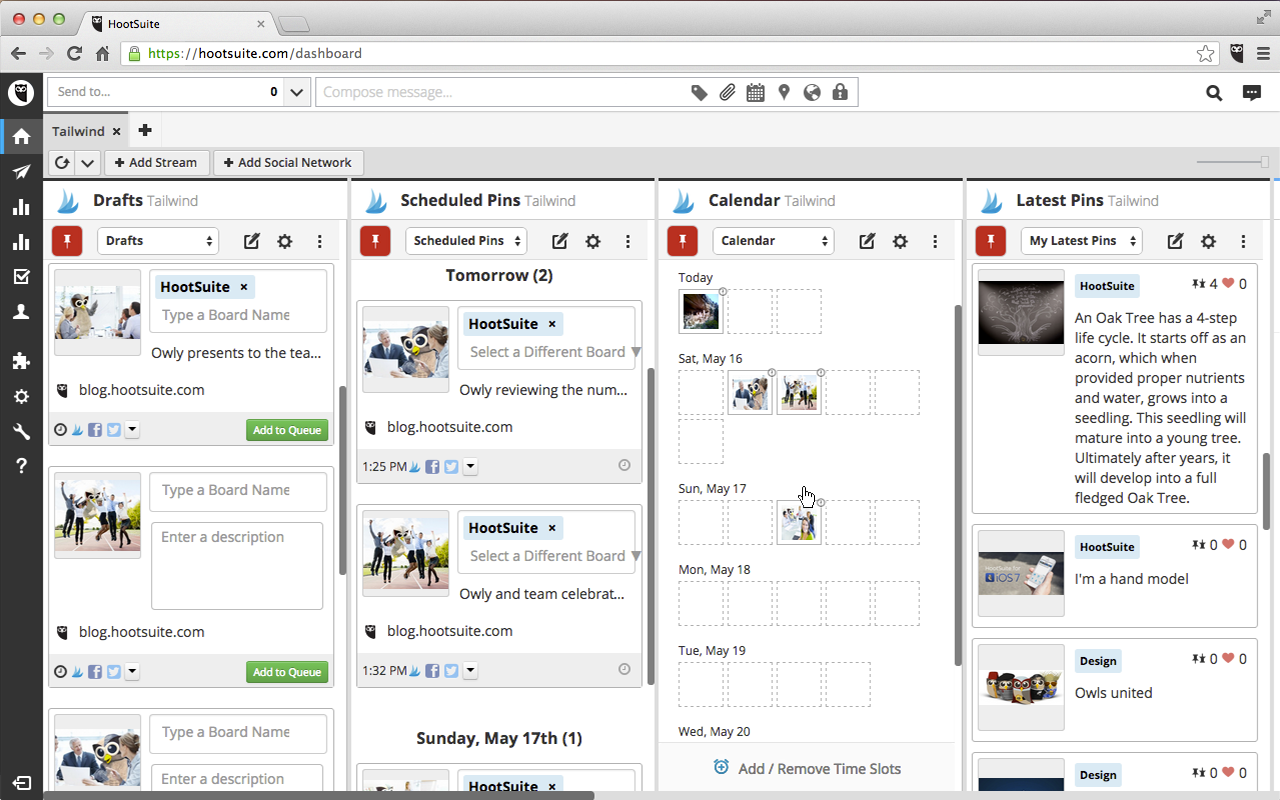
Hootsuite: monitor your brand

Hootsuite social media dashboard showing scheduled posts, calendars, and drafts as social media Productivity Tools for content planning.

Monitoring your brand is a big part of managing how people perceive your company. Need help with that? Enter Hootsuite. This tool lets you view several social media streams at the same time. From mentions, to direct messages, to scheduled tweets—Making it awesome for a social media team, customer success departments, and support channels.

My favorite feature? Bulk uploads. Being able to upload tweets for several different purposes is very helpful. Mostly because we can take care of that task at the beginning of the week and not worry about it until the next. Saving a lot of time.

Canadian Students Rank Fourth For Science Performance

1

Canadian students are among the top performers in science, according to a new international ranking that shows a marked departure from the challenges faced in math.

Canada placed fourth overall in science, tied with Finland and behind Singapore, Japan and Estonia, in the latest results from the OECD’s Programme for International Student Assessment (PISA), the highly anticipated survey conducted every three years that measures how 15-year-old high school students are doing in science, math, and reading.

The education assessment of 72 countries, released Tuesday morning, paints a picture of Canadian students having a strong grasp of science literacy, but, at the same time, experts say educators and governments need to do a better job of helping students apply that interest to careers.

“There’s a greater awareness of the importance of science in the country’s future,” said Bonnie Schmidt, president of Let’s Talk Science, a non-profit organization that promotes learning in STEM subjects (science, technology, engineering and mathematics).

“Collectively as a country, we have to do a better job of showing where the opportunities are, helping young people and parents connect the dots to what they’re learning in school and what it means for future work and citizenship opportunities.”

Canadian students in a science lab analyzing DNA data on a computer surrounded by microscopes and research equipment.

The test results showed that Canada’s performance did not change much since 2006, when the country ranked third. The Council of Ministers of Education, Canada (CMEC), noted the lack of improvement is cause for a closer analysis.

“Provinces and territories take these tests very, very seriously,” said Doug Currie, Prince Edward Island’s Minister of Education and CMEC chair. “Canada continues to prove and to back up that we’re certainly a global leader.”

Provincially, there were no significant changes over time in the test scores of students in almost all provinces. The only exceptions were Newfoundland and Labrador, Manitoba and Saskatchewan, where the average score dropped by about 20 points.

About 20,000 Canadian students wrote the two-hour computer-based assessment in April and May, 2015.

The results found no significant difference in achievement scores between Canadian boys and girls.

Science scores, the focus of the 2015 PISA test, come three years after Canada dropped out of the top 10 in international math education standings, igniting a debate about how the subject is being taught in schools. Parents have been appealing to education ministries to take a back-to-basics approach to teaching math, emphasizing repetition and drills before problem-solving.

Math, as well as reading, were tested in the latest PISA results. But there were fewer questions asked and a smaller proportion of students participated.

Only students in Quebec and British Columbia performed above the Canadian average. Saskatchewan ranked at the bottom among provinces and even performed below the OECD average, the only province to do so. Students in PEI, meanwhile, showed improvements from previous years.

Anna Stokke, a professor in the Department of math and Statistics at the University of Winnipeg and one of the main drivers for change in math, said she was heartened by the results in science but remains troubled that students in many provinces continue to struggle in math.

Unlike the early stage of learning science, she said that math is “relentlessly cumulative, so if students don’t have the necessary background to learn new concepts they will struggle.”

Saskatchewan has held onto its curriculum and “ignored” parents, Prof. Stokke said. PEI’s scores, meanwhile, reflect changes in the province. The province went from having no standardized testing to introducing rigorous tests at Grades 3, 6 and 9 about six years ago.

“The PEI government seems to take feedback and data seriously and uses that data towards improving outcomes for students,” Prof. Stokke said.

She added: “It is extremely important that steps be taken to reverse the decline so that our children have access to a wide range of careers and the skills required to participate internationally.”

Source: Canadian  Report

Inspiring Women Entrepreneurs on Finding Business Idea

0

Women Entrepreneurs may have once been pigeonholed into certain professions, but are no longer simply expected to do gender-specific jobs. Women entrepreneurs are taking control of their careers in a way that works best for them, including when and how they start their own businesses.

“Everyone has to start a business that’s meaningful to them; I think it’s an old model to tell [women] to go into a specific field,” said Carin Rockind, a happiness and life purpose expert. “I think that’s got us to where we are today. What you’re passionate about is way more important. Women need to tap into what they’re good at and what makes them feel great.”

American Express OPEN’s 2016 State of Women-Owned Businesses Report found that 11.3 million U.S. businesses are currently owned by women, and an average of 1,072 new female-owned companies are being started every day. This number is growing five times faster than the national average for all businesses, meaning more women than ever are leaping into entrepreneurship.

entrepreneurship Women Entrepreneurs

As to what kinds of businesses a women entrepreneurs should start, businesswomen agree that the sky is the limit.

“I don’t think there are any guidelines to the type of companies women should begin,” said Cologne Trude, co-founder and creative director of Show Me Your Mumu, a boho-chic clothing line. “Women’s strengths are so diverse that opportunities are endless.”

“I think women should get excited about what excites them,” added Melinda Emerson, an author and business coach known as “SmallBizLady” on Twitter. “There aren’t [enough] women-centric businesses out there.”

Emerson suggests starting a business you know something about. When you’re ready to begin the business you’re most passionate about, consider your limitations.

“I have seen people quit really good jobs to start businesses they hate,” Emerson said. “There are fantasies of grandeur about running a business. It’s really hard out there.”

“If you have no savings, no money, and bad credit, you should not start a business,” Emerson said. She suggests saving 20 to 40 percent per paycheck before you quit your job to begin your business.

Most importantly, Emerson emphasized the importance of doing your research. Make sure you know who your paying customer is.

“You always have to check and make sure your business model makes sense in an industry that’s growing and not sinking,” Emerson said. “It needs to be relevant three to five years from now. You don’t want [technological advances] taking your business.”

“As you get your business off the ground, surround yourself with people who will help you succeed, whether it’s through support or lending a hand to get the business started,” said Cammy Miller, co-founder and creative director of Show Me Your Mumu.

“Being a leader doesn’t mean you have all of the answers and the more open you are to learning from everyone around you, the more you can grow in your role,” Miller said.

“One of the things that’s been harder for me to learn is to bring other people with you,” happiness expert Rockind added. “It’s very lonely to have your own business. There are so many important skills, and you can’t be good at everything. It’s is OK to ask for help and collaborate with other people.”

Building a business from the ground up is challenging no matter how you look at it. But ultimately, you should love what you do.

“I always encourage women entrepreneurs to be strong and work hard at what they love. Starting and running a business is by no means easy, and there are going to be a lot of hardships and emotional setbacks,” Trude said. “As a female, running Mumu has been very stressful and emotional at times, but every tear has been worth it and I am stronger because of it.”

If Rockind had to go back in time to give herself advice, it would be to just do it.

“You have to put yourself out there,” she said. “Believe in yourself and your purpose.”

Article Written by : Shannon Gausepohl