


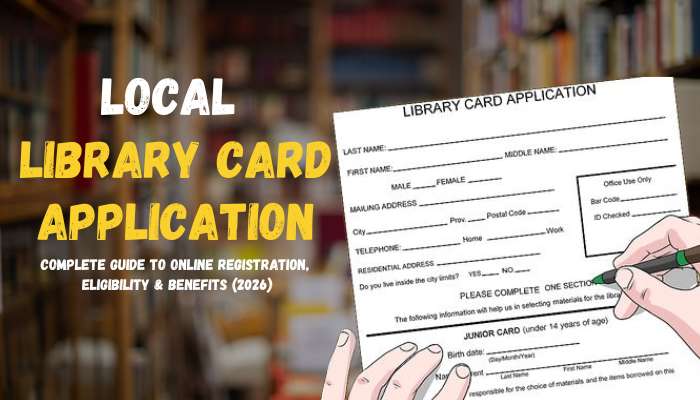

A local library card application is the first step to accessing free books, eBooks, audiobooks, research tools, study spaces, computers, children’s programs, community events, and digital learning resources. In 2026, many public libraries now allow users to start or complete the application online, making the process faster, easier, and more convenient than before.
Whether you are a student, parent, job seeker, researcher, senior citizen, or regular reader, a library card can give you free access to valuable resources that may otherwise cost money. This guide explains how the local library card application process works, who is eligible, what documents you may need, how online registration works, and what benefits you can enjoy after approval.
How to Apply for a Local Library Card
Local Library Card Application at a Glance
Key Takeaways
- A local library card application is usually free for residents in the library service area.
- Many libraries offer online registration or e-card options.
- Proof of identity and proof of address are commonly required.
- Children and teens may need a parent or guardian to sign the application.
- A library card can give access to books, eBooks, audiobooks, databases, events, computers, and digital learning tools.
- Rules, eligibility, and card expiration policies vary by local library system.
What Is a Local Library Card Application?
A local library card application is the process of registering for library membership and gaining access to a wide range of free educational, digital, and community resources. Once approved, you may receive a physical library card, digital card, or account number that allows you to borrow materials, access online services, and take advantage of library programs.
Many people are surprised to learn that a local library card application can unlock much more than books. Depending on your library system, membership may provide access to eBooks, audiobooks, research databases, study rooms, computers, workshops, and community events.
The application process may be available through:
- The library’s official website
- A local library branch
- A mobile library app
- A school or student partnership program
- Pre-registration before visiting the library
Most applications require basic information such as:
- Full name
- Address
- Date of birth
- Phone number
- Email address
- Parent or guardian information for minors, if required
Understanding what information is needed before applying can help make the registration process faster and easier.
Why a Library Card Still Matters in 2026
In a world where information is increasingly digital, a library card remains one of the most valuable free resources available. While many people associate libraries with printed books, today’s libraries offer far more than traditional borrowing services. In fact, obtaining a library card can open the door to educational tools, digital learning platforms, career resources, technology access, and community programs that support people of all ages.
With a single library card, users can access a wide range of resources designed to support learning, productivity, and personal growth.
| Library Card Benefit | What It Helps With |
|---|---|
| Print Books | Reading, research, and school projects |
| eBooks and Audiobooks | Convenient digital reading from anywhere |
| Computers and Wi-Fi | Online work, job applications, and study |
| Research Databases | Academic, business, legal, and local research |
| Children’s Programs | Early literacy and family learning |
| Study Rooms | Quiet work and exam preparation |
| Events and Workshops | Community learning and networking |
| Digital Tools | Language learning, test preparation, and career development |
As libraries continue to expand their digital services and educational offerings, a library card remains a powerful tool for accessing knowledge, building skills, and staying connected to your community.
My Experience Using Library Resources
Many people apply for a library card expecting access only to books, but modern libraries often provide far more value than most users realize. In practice, library memberships can unlock digital learning platforms, research databases, career development resources, community events, and quiet study environments that would otherwise require paid subscriptions.
One of the biggest surprises for many new members is how much can be accessed remotely. From eBooks and audiobooks to online courses and educational databases, a library card often becomes a long-term learning resource rather than simply a borrowing tool.
Who Should Get a Library Card?
A library card is useful for far more than borrowing books. Whether you want to learn new skills, access digital resources, or find a quiet place to study, a library card can provide valuable benefits for people of all ages.
A library card may be especially useful for:
- Students looking for free educational resources
- Parents supporting children’s learning and reading habits
- Job seekers using career tools and internet access
- Researchers accessing databases, archives, and reference materials
- Seniors interested in lifelong learning opportunities
- Remote workers seeking quiet study and work spaces
- Readers who enjoy free books, eBooks, and audiobooks
Because modern libraries offer both physical and digital resources, a library card can provide value to almost anyone in the community.
Who Can Apply for a Local Library Card?
Eligibility for a local library card application depends on your library system’s membership rules. Most public libraries allow people who live, work, study, or own property within the service area to apply for a library card.
Common eligible applicants include:
- Local residents
- Students living or studying in the area
- Employees working within the service area
- Property owners
- Children with parent or guardian approval
- Temporary residents, depending on library policy
- Non-residents, sometimes with an annual fee
Some libraries also offer special membership options for teachers, seniors, homebound users, educators, and local organizations. Before submitting a local library card application, check your library’s eligibility requirements to confirm which membership type applies to you.
Library Card Eligibility by Residency Type
Common Local Library Card Application Requirements
Before submitting a local library card application, it helps to understand what information and documents are commonly required. While requirements can vary between library systems, most libraries use basic identity and address verification to confirm eligibility and create a membership account.
The table below outlines the documents and details commonly requested during the application process:
| Requirement | Common Examples |
|---|---|
| Full Name | Legal name on an ID or official document |
| Photo ID | Driver’s license, passport, state ID, or school ID |
| Proof of Address | Utility bill, lease agreement, bank statement, mail, or voter ID |
| Contact Details | Phone number and email address |
| Date of Birth | Used for age-based account policies |
| Parent/Guardian Approval | Usually required for children or teens |
| Local Residency Proof | Often required for free resident memberships |
Providing accurate information can help speed up the local library card application process and reduce the chances of delays or additional verification requests. If your photo ID does not show your current address, the library may ask for a separate document as proof of residence.
How to Complete a Local Library Card Application Online
Applying online has made library membership more convenient than ever. In many areas, a local library card application can be completed from home in just a few minutes, allowing you to access books, eBooks, audiobooks, research tools, and other valuable resources. While the exact process varies by library system, the steps below are commonly used for online registration.
Step 1: Find Your Local Library Website
The first step in completing a local library card application is finding the official website of your city, county, or district library. Using the correct website helps ensure your information is submitted securely and to the right library system.
You can search using terms such as:
- “local library card application near me”
- “apply for library card online”
- “[city name] public library card”
- “[county name] library card application”
Step 2: Choose the Correct Card Type
Most libraries offer different membership options based on age, residency, or eligibility. Selecting the correct card type can help prevent delays during the local library card application process.
Common card types include:
- Resident library card
- Non-resident library card
- Student library card
- Child or teen library card
- Digital-only e-card
- Temporary online card
- Teacher or educator card
Choose the option that best matches your situation.
Step 3: Complete the Application Form
The next step is filling out the local library card application form with accurate personal information. Providing correct details can speed up verification and approval.
Information commonly requested includes:
- Full name
- Address
- Date of birth
- Phone number
- Email address
- Preferred library branch
- Parent or guardian details, if required
Make sure the information matches your official documents whenever possible.
Step 4: Submit Identity Verification Documents
Some libraries require supporting documents before approving a local library card application, while others may allow temporary access until verification is completed.
Commonly accepted documents include:
- Government-issued photo ID
- School ID
- Utility bill
- Lease agreement
- Bank statement
- Official mail showing your address
Always check your library’s specific document requirements before submitting your application.
Step 5: Receive Your Library Card Number
After approval, many libraries send a card number or digital account information by email. Depending on the library system, this may provide immediate access to eBooks, audiobooks, online databases, and other digital resources.
Step 6: Activate Full Library Access
Some online registrations provide only temporary or digital access at first. To unlock full borrowing privileges, you may need to visit a library branch and verify your identity in person.
Completing a local library card application online is often the fastest way to begin using library services. Having your documents ready and choosing the correct membership type can make the process smoother and help you gain access to valuable resources sooner.
Applying for a Library Card In Person
While many libraries offer online registration, some people prefer applying in person for immediate assistance and account activation. In some cases, an in-person visit may also be required to complete a local library card application and unlock full borrowing privileges.
To apply at a library branch, bring your identification and proof of address. Library staff can guide you through the process and answer any questions about membership requirements.

The in-person application process typically includes:
- Requesting a library card application form
- Completing your personal information
- Providing identity and address verification
- Signing the library membership agreement
- Receiving your card or account number
- Creating a PIN or password for account access
For many applicants, completing a local library card application in person can be the quickest way to gain full access to library services and resources.
Local Library Card Application for Children and Teens
Many libraries encourage children and teens to become members at an early age. A local library card application for a minor often requires approval from a parent or guardian, although specific rules vary by library system.
Having a library card can help young users develop reading habits, improve learning skills, and access educational resources throughout the year.
Benefits for children and teens may include:
- Early literacy development
- School assignments and research support
- Summer reading programs
- Homework assistance
- Educational activities and workshops
- Children’s events and community programs
Before submitting a local library card application for a child, parents or guardians should review the library’s policies regarding account responsibility, borrowing limits, and replacement fees.
Library Card Privacy and Confidentiality
Many library users are surprised to learn that privacy is an important part of library membership. After completing a local library card application, personal information and account activity are generally handled according to library policies and applicable privacy laws.
Depending on the library system, account records may include:
- Borrowing history
- Holds and reservations
- Digital resource usage
- Contact information
- Account balances
- Computer session records
Parents and guardians should pay special attention to privacy policies when submitting a local library card application for a child or teenager, as access rules for minor accounts can vary between library systems.
Understanding how your information is managed can help you use library services with confidence while making informed decisions about account security and privacy.
Can AI Search or Public Search Engines See Your Library Activity?
Many users are concerned about privacy as AI-powered search tools become more common. In most library systems, your borrowing history, account details, and membership records remain private and are protected by library policies and applicable privacy laws.
Search engines, AI-generated search results, and public websites generally cannot view your personal borrowing activity through a library card account. However, users should still review library privacy policies and account security settings to understand how personal information is handled and protected.
Local Library Card Application for Students
A library card can be one of the most valuable educational tools available to students. Beyond providing access to books, a local library card application can open the door to free learning resources, research materials, study spaces, and digital tools that support academic success throughout the year.
Many students use library services to complete assignments, prepare for exams, develop research skills, and access resources that may not be available at school or home.
Student library card benefits may include:
- Homework assistance
- Research databases
- Free Wi-Fi access
- Study rooms and quiet workspaces
- Test preparation resources
- eBooks and audiobooks
- Printing and computer access
- Academic workshops and learning programs
Before submitting a local library card application, students should check whether their school has a partnership with the local public library, as some institutions provide automatic or simplified library access.
What Is an E-Card or Digital Library Card?
Many libraries now offer digital membership options for users who want quick access to online resources. In some cases, a local library card application can be completed entirely online, allowing users to receive an e-card without immediately visiting a library branch.
An e-card functions as a digital library card and can provide access to:
- eBooks
- Audiobooks
- Digital magazines
- Online learning platforms
- Research databases
- Educational resources
While an e-card is convenient, some libraries may place restrictions on physical borrowing until the local library card application has been fully verified. Users may need to visit a branch and confirm their identity before receiving complete membership privileges.
The table below compares common library card types and their typical uses:
| Card Type | Best For | Possible Limits |
|---|---|---|
| Physical Card | Full library access | Requires branch visit |
| E-Card | Fast online access | May limit physical borrowing |
| Temporary Card | Quick registration | May expire after a set period |
| Student Card | School-related use | May have borrowing restrictions |
| Non-Resident Card | Users outside the service area | May require an annual fee |
Choosing the right card type can help you get the most value from your local library card application and ensure access to the resources that best fit your needs.
Temporary Library Cards vs Full Library Cards
Many people are surprised to learn that a local library card application does not always result in immediate full membership access. To make registration faster and more convenient, many libraries issue temporary library cards while they verify identity, residency, or other eligibility requirements.
A temporary library card can provide quick access to a variety of digital resources, including:
- eBooks
- Audiobooks
- Digital magazines
- Online learning platforms
- Research databases
While convenient, temporary cards often come with restrictions. Depending on the library system, a temporary card may have borrowing limits, reduced account features, or an expiration date until the local library card application is fully verified.
Once verification is complete, users are typically upgraded to a full library card, which may include access to:
- Physical book borrowing
- DVD and media borrowing
- Hold and reservation requests
- Study room reservations
- Computer and Wi-Fi access
- Special library programs and events
- Extended borrowing privileges
Understanding the difference between temporary and full membership can help you set realistic expectations during the local library card application process. If you receive a temporary card, keep your account information safe and complete any requested verification steps to unlock full library benefits as quickly as possible.
Documents Needed for a Local Library Card Application
Preparing the required documents before you apply can make the registration process much faster and help avoid delays. While requirements vary by library system, most libraries ask applicants to verify their identity and residency before approving a local library card application.
The documents below are commonly accepted by public libraries:
Common Documents Accepted
- Driver’s license
- State ID
- Passport
- School ID
- Utility bill
- Lease or rental agreement
- Bank statement
- Voter registration card
- Pay stub showing your address
- Official government mail
Having these documents ready before starting a local library card application can help ensure a smoother approval process and reduce the need for additional verification.
If You Do Not Have Proof of Address
Not everyone has access to traditional proof-of-address documents. In some cases, libraries may accept alternative forms of verification or provide limited access while residency information is being reviewed.
If your address documents are missing, outdated, or unavailable, contact the library directly before submitting your local library card application. Library staff can explain what alternative documents may be accepted and whether temporary access options are available.
How to Apply for a Library Card Without a Permanent Address
Access to educational resources is important for everyone, and many libraries work to make services available to individuals without a permanent residence. Depending on local policies, a local library card application may still be possible through alternative verification methods.
Possible alternatives may include:
- Shelter address documentation
- Mailing address verification
- Government-issued photo identification
- School documentation
- Social service agency verification
- Temporary residency documentation
Because policies vary between library systems, it is always best to contact the library directly before submitting a local library card application. Staff can explain available options and help determine the best way to complete the registration process.
How Long Does a Library Card Application Take?
One of the most common questions applicants ask is how quickly they can start using library services. The answer depends on the library system, verification requirements, and the type of membership being requested.
The table below shows typical approval timelines:
| Application Method | Typical Time |
|---|---|
| Online E-Card | Immediate to a few minutes |
| Online Full Card Request | Same day to a few business days |
| In-Person Application | Usually immediate |
| Child Card Application | Immediate if a guardian is present |
| Non-Resident Application | Depends on payment and verification |
Most local library card application requests are processed quickly, especially when all required documents are submitted correctly. If approval takes longer than expected, check your email, including spam folders, and contact the library for an update on your application status.
Main Benefits of Having a Local Library Card
Common Mistakes to Avoid During Library Card Application
A local library card application is usually simple to complete, but small mistakes can delay approval or limit access to library services. Taking a few extra minutes to review your information can help make the process smoother.
Common mistakes to avoid include:
- Using the wrong library system website
- Entering an old or incorrect address
- Forgetting proof of identity
- Submitting incomplete information
- Applying for the wrong card type
- Ignoring age requirements for children and teens
- Not checking e-card restrictions or limits
- Losing your library card number or PIN
- Failing to update your address after moving
- Assuming every library follows the same membership rules
- Uploading unclear or outdated documents
- Missing required verification steps
Avoiding these common errors can help speed up your local library card application and ensure you receive access to library resources without unnecessary delays.
What to Do If Your Application Is Rejected
Receiving a rejection or delay notice can be frustrating, but it does not always mean your local library card application has been denied permanently. In many cases, the issue is related to missing documents, incorrect information, or eligibility verification requirements that can be resolved quickly.
Common reasons a local library card application may be rejected or delayed include:
- Missing or incomplete information
- Incorrect personal details
- Address outside the library service area
- Missing proof of identity
- Missing proof of residency
- Eligibility verification issues
If your application is not approved immediately, try the following steps:
- Contact the library directly for clarification.
- Ask which document or detail is missing.
- Correct any errors in your application.
- Submit updated proof of residence if requested.
- Ask whether a non-resident membership is available.
- Check if you qualify through work, school, or property ownership.
Most local library card application issues can be resolved quickly once the required information is provided.
How to Renew or Replace a Library Card
A library card is not always permanent. Many libraries periodically renew memberships to verify account information and ensure members remain eligible for services. If your card has expired, renewing it is usually a straightforward process.
To renew your library card, you may need to:
- Log in to your library account
- Visit a local library branch
- Confirm your current address
- Present updated identification
- Pay any outstanding fees, if applicable
If you lose your card, contact the library as soon as possible. Most libraries can deactivate the old card and issue a replacement to protect your account and borrowing privileges.
Keeping your account information current can help prevent interruptions after completing your local library card application and receiving your membership.
Why Library Cards Expire
Many people are surprised to learn that library cards often have expiration dates. Libraries use renewal periods to ensure member information remains accurate and that users continue to meet eligibility requirements.
When reviewing an account, libraries may verify:
- Current address
- Phone number
- Email address
- Residency status
- Account activity
- Membership eligibility
Renewing your membership helps maintain uninterrupted access to books, digital resources, research databases, study spaces, and other library services. In many cases, users can renew their membership online, although some libraries may require an in-person visit.
Understanding renewal policies is an important part of maintaining the benefits gained through a local library card application. Checking your account status regularly can help you avoid unexpected interruptions and continue enjoying library resources without delays.
Local Library Card Application Checklist
Use this checklist before applying:
| Checklist Item | Completed |
|---|---|
| Found official local library website | ☐ |
| Checked eligibility rules | ☐ |
| Selected correct card type | ☐ |
| Prepared photo ID | ☐ |
| Prepared proof of address | ☐ |
| Added correct email and phone number | ☐ |
| Checked child/guardian rules | ☐ |
| Submitted application | ☐ |
| Saved library card number | ☐ |
| Created PIN or password | ☐ |
Local Library Card Application Tips for Faster Approval
A few simple preparation steps can help speed up the approval process and reduce the likelihood of additional verification requests.
To improve your chances of quick approval:
- Use your legal name exactly as it appears on your ID.
- Make sure your address information is current.
- Apply through the official library website.
- Use an active email address that you check regularly.
- Bring both photo ID and proof of address when visiting a branch.
- Ask about e-card access if you need immediate digital resources.
- Check whether student, educator, or special membership options are available.
- Save your library card number and PIN in a secure location.
Following these tips can help ensure your local library card application is processed as quickly as possible.
Is a Local Library Card Free?
One of the most common questions people ask before completing a local library card application is whether membership costs anything. In most cases, public library cards are free for residents who live within the library’s service area.
However, some libraries may charge fees for:
- Non-resident memberships
- Replacement library cards
- Lost or damaged materials
- Printing and copying services
- Special programs or services
Before submitting a local library card application, review the library’s membership and fee policies so you understand any potential costs.
Library Card Security Tips
A library card provides access to personal account information and library services, so it is important to keep your account secure. After completing a local library card application, taking a few basic precautions can help protect your membership and prevent unauthorized use.
Follow these library card security tips:
- Keep your library card number private.
- Use a strong PIN or password.
- Report lost or stolen cards immediately.
- Update your address and contact information when necessary.
- Monitor your account for unusual activity.
- Log out after using public library computers.
Protecting your account helps ensure that the benefits gained through your local library card application remain secure and accessible.
Common Digital Resources Available With a Library Card
Many people associate libraries with books, but today’s libraries offer a wide range of digital resources. In fact, a local library card application can provide access to online tools and educational services that would otherwise require paid subscriptions.
Depending on your library system, you may gain access to:
- eBooks
- Audiobooks
- Digital magazines
- Online newspapers
- Research databases
- Language learning programs
- Career development courses
- Test preparation resources
- Genealogy databases
- Educational video platforms
Exploring these resources can help you get the maximum value from your local library card application and library membership.
Common Questions to Ask Your Library Before Applying
Before submitting your application, consider asking a few important questions that can help you maximize your membership benefits.
Examples include:
- Does the library offer free eBooks and audiobooks?
- Are study rooms available for reservation?
- What digital learning platforms are included?
- Are there borrowing limits for new members?
- Can non-residents apply?
- Are mobile apps available for digital access?
- Does the library participate in reciprocal borrowing programs?
Understanding these details before applying can help you choose the most suitable membership option and make better use of available resources.
Expert Tip Before Submitting Your Local Library Card Application
Before submitting a local library card application, take a few minutes to review your library’s official eligibility requirements, accepted identification documents, borrowing policies, and renewal rules.
Library policies can vary significantly between cities, counties, districts, and library systems. Verifying the requirements beforehand can help prevent delays, reduce application errors, and improve the chances of quick approval.
Why Public Libraries Continue to Matter in 2026
Public libraries remain essential community resources in an increasingly digital world. They provide free access to information, technology, educational opportunities, research tools, and lifelong learning programs for people of all ages.
Students use libraries for academic support, job seekers access career resources, families participate in educational programs, and researchers benefit from specialized databases and archives. These services help make knowledge more accessible to everyone in the community.
As technology continues to evolve, a local library card application remains one of the simplest and most affordable ways to access both physical and digital learning resources. For many people, completing a local library card application is the first step toward discovering valuable tools, services, and opportunities that support education, personal growth, and lifelong learning.
Conclusion
A local library card application is one of the easiest ways to access free educational, digital, and community resources. From books and audiobooks to research databases, study spaces, and online learning tools, a library card can provide valuable benefits for students, families, professionals, and lifelong learners. With many libraries now offering online registration and e-cards, getting started has never been more convenient.
Before submitting a local library card application, take a few minutes to review your library’s eligibility requirements, gather the necessary documents, and choose the correct membership type. Once approved, your library card can help you discover new opportunities, build knowledge, develop skills, and stay connected to valuable resources within your community.
Local Library Card Application FAQs
1. Can I complete a Local Library Card Application on my phone?
Yes. Many libraries allow users to complete a Local Library Card Application through a mobile-friendly website or library app, making registration convenient from anywhere.
2. Can I use a Local Library Card Application to access multiple library branches?
In many library systems, one approved Local Library Card Application provides access to multiple branches within the same library network.
3. Does a Local Library Card Application affect my credit score?
No. A Local Library Card Application does not involve a credit check and does not affect your credit score.
4. Can tourists submit a Local Library Card Application?
Some libraries offer temporary or visitor memberships for tourists, but eligibility rules vary by location.
5. Can I transfer my Local Library Card Application to another city?
Usually not. Most library cards are tied to a specific library system, so moving to another city may require a new application.
6. What happens if I forget my library card after approval?
Many libraries can look up your account using identification or allow access through a digital library card stored in a mobile app.
7. Can I have more than one library card at the same time?
Yes. If you qualify under different library systems, you may be able to hold multiple library cards.
8. Can I update my information after submitting a Local Library Card Application?
Yes. Most libraries allow members to update addresses, phone numbers, email addresses, and other account details online or in person.
