



FintechAsia.net Start Me Up has attracted attention from founders looking for information on fintech funding, startup validation, investors, market research, and growth across Asia. But what exactly is it—and should founders treat it as an accelerator, funding platform, or simply a startup-focused resource?
This guide takes a closer look at FintechAsia.net Start Me Up, including what it actually offers, which features are described by the site, what founders should verify independently, and how its resources can support fintech funding, regulation, product validation, and growth in 2026.
Key Takeaways
- FintechAsia.net Start Me Up focuses on fintech startup validation, funding, investor research, regulation, product development, and growth.
- Some features, including investor tools, startup listings, dashboards, and mentor connections, are described by the site but should be verified before use.
- Asia-Pacific fintech investment totaled about $9.3 billion across 763 deals in 2025, showing that funding remains available despite a more selective market.
- AI, digital assets, B2B payments, regtech, privacy technology, and financial infrastructure are important areas for fintech founders to watch in 2026.
- Founders should use the site as a research resource alongside official regulators, customer validation, investor due diligence, and professional advice where needed.
FintechAsia.net Start Me Up at a Glance
FintechAsia.net Start Me Up can be viewed as a startup-focused research and educational resource covering fintech validation, funding, investors, regulation, and growth across Asia.
| Detail | Current Understanding |
|---|---|
| Website | FintechAsia.net |
| Section | Start Me Up |
| Main focus | Fintech startups and entrepreneurship |
| Best suited for | Founders researching validation, funding, regulation, and growth |
| Startup education | Available through published content |
| Direct startup funding | Not confirmed |
| Investor tools | Described; verify current availability |
| Startup listings | Described; verify current availability |
| Mentoring | Described; verify current availability |
| Formal accelerator | Not clearly established |
| Geographic relevance | Asian fintech ecosystem |
| Best use | Research, education, and startup discovery |
What Is FintechAsia.net?
FintechAsia.net is a publication covering fintech, finance, technology, business, cryptocurrency, trading, and startups. FintechAsia.net Start Me Up is its startup-focused section, and FintechAsia.net Start Me Up is best used as an informational resource rather than assumed to be a funding or advisory service.
FintechAsia.net Start Me Up: Verified vs. Described Features
FintechAsia.net Start Me Up includes verified startup-focused content, but some platform-style capabilities are only described and should be checked before use. This matters because FintechAsia.net Start Me Up should not automatically be treated as a live funding platform, accelerator, or investor network.
| Feature | Current Interpretation |
|---|---|
| Start Me Up article category | Verified |
| Startup educational content | Verified |
| Fintech market commentary | Verified |
| Funding-related articles | Verified |
| Startup-building guidance | Verified |
| Startup listings | Described; verify access |
| Investor discovery | Described; verify functionality |
| Sector dashboards | Described; verify functionality |
| Deal databases | Described; verify functionality |
| Engagement analytics | Described; verify functionality |
| Mentor connections | Described; verify availability |
| Direct startup funding | Not confirmed |
| Guaranteed investor meetings | Not confirmed |
| Formal accelerator cohort | Verify separately |
| Financial or legal advice | Not confirmed |
Who Is FintechAsia.net Start Me Up For?
FintechAsia.net Start Me Up is most relevant to founders, entrepreneurs, and startup teams researching fintech validation, funding, regulation, competitors, and growth. FintechAsia.net Start Me Up may also help investors, product teams, and advisers understand startup trends and opportunities across Asian fintech markets.
| Audience | Best Use |
|---|---|
| First-time founders | Validation, MVPs, and fundraising |
| Existing startups | Growth and market expansion |
| Investors | Sector and startup research |
| Product teams | Competitor and technology research |
| Entrepreneurs | Exploring fintech opportunities |
| Compliance teams | Regulatory research |
| Startup advisers | Market and funding insights |
Founders using FintechAsia.net Start Me Up may find it useful when researching product demand, competitors, target markets, funding needs, and investor fit. However, FintechAsia.net Start Me Up should complement—not replace—official regulators, verified investors, professional advisers, and independent due diligence.
Who May Need More Than Start Me Up?
FintechAsia.net Start Me Up may not be enough for founders who need direct funding, guaranteed investor introductions, accelerator admission, legal advice, or regulatory authorization. In those cases, FintechAsia.net Start Me Up should be used alongside qualified investors, accelerators, regulators, lawyers, accountants, and cybersecurity professionals.
- Direct startup capital
- Guaranteed investor introductions
- Formal accelerator admission
- Legal or investment advice
- Regulatory approval
- Licensing guidance
- Technical security audits
Why FintechAsia.net Start Me Up Matters in 2026
Fintech funding across Asia has become more selective, making research and validation more important for founders. FintechAsia.net Start Me Up is relevant in this environment because FintechAsia.net Start Me Up focuses on funding, market research, regulation, and startup growth, while FintechAsia.net Start Me Up can help founders understand what investors increasingly expect.
According to KPMG, Asia-Pacific fintech investment declined from about $11.7 billion across 1,028 deals in 2024 to $9.3 billion across 763 deals in 2025. FintechAsia.net Start Me Up therefore sits within a market where capital is still available but harder to secure, making FintechAsia.net Start Me Up useful for founders researching investor readiness, while FintechAsia.net Start Me Up should still be supported by independent market data.
Founders increasingly need to show:
- Genuine customer demand
- Product-market fit
- Sustainable unit economics
- Strong security
- Regulatory readiness
- Customer retention
- Scalable growth
- A credible path to profitability
How Does FintechAsia.net Start Me Up Work?
Rather than viewing FintechAsia.net Start Me Up as a guaranteed funding pipeline, founders can use FintechAsia.net Start Me Up as a research framework for validating ideas, studying markets, finding relevant investors, and checking regulatory requirements. The value of FintechAsia.net Start Me Up is strongest when its information supports real customer research and independent due diligence.
1. Research the Market
Study customer problems, competitors, pricing, regulation, funding activity, and market gaps.
2. Validate the Idea
Use customer interviews, prototypes, landing pages, paid pilots, or early contracts to test whether people actually want the product.
3. Prepare for Investors
Clearly explain the problem, solution, business model, traction, team, competitive advantage, funding needs, and regulatory strategy.
4. Research Investors and Partners
Compare potential investors by geography, fintech sector, startup stage, check size, portfolio, and investment thesis.
5. Verify Important Claims
Cross-check funding, licensing, investor, and regulatory information with official regulators, central banks, government programs, investor websites, and qualified advisers.
Major FintechAsia.net Start Me Up Features for Founders
FintechAsia.net Start Me Up covers several areas that can help founders research, validate, fund, and grow a fintech startup. Some platform-style features may change over time, so important tools and services should always be verified before relying on them.
1. Market Research
Founders can use the platform’s content to explore:
- Customer demand
- Competitors
- Fintech investment trends
- Changing regulations
- Emerging technologies
- Underserved markets
Important findings should also be checked against central banks, regulators, government databases, company filings, and reliable funding reports.
2. Startup Idea Validation
A good fintech idea still needs real customer demand. FintechAsia.net Start Me Up can support early research, but founders should also test their assumptions directly with potential users.
A simple validation process is:
Problem → Customer → Solution → Willingness to Pay
Before scaling, confirm:
- Who has the problem
- How often it occurs
- How customers solve it today
- What the current process costs
- Whether the new solution is better
- Whether customers are willing to pay
3. Startup Profiles and Visibility
Start Me Up content describes startup listings and profile-related visibility. If these features are currently available, founders can use them to present their business more clearly to potential partners or investors.
A strong startup profile should explain:
- The problem
- Target customer
- Product or service
- Competitive advantage
- Business model
- Founder experience
- Traction
- Market
- Funding stage
4. Investor Discovery
FintechAsia.net Start Me Up also discusses investor-related resources that may help founders narrow their fundraising search.
Before approaching an investor, check:
| Question | Why It Matters |
|---|---|
| Does the fund invest in fintech? | Avoids irrelevant outreach |
| Which stage does it fund? | Seed and growth investors differ |
| Which markets does it cover? | Some funds have geographic limits |
| What is its typical check size? | Your raise needs to fit |
| Has it backed competitors? | May create conflicts |
| Does it lead rounds? | Important for syndication |
| What expertise does it offer? | Adds strategic value |
5. Mentors and Industry Networks
The platform also describes mentor and networking opportunities. The most valuable mentor is usually someone with expertise that matches the founder’s current challenge.
Useful areas may include:
- Licensing
- Enterprise sales
- Bank partnerships
- Fraud management
- Product development
- International expansion
- Fundraising
- Hiring
6. Market and Deal Intelligence
FintechAsia.net Start Me Up content also covers funding activity, sector trends, and deal intelligence. These insights may help founders understand where capital is moving and which fintech markets are becoming more competitive.
Founders may use this information to track:
- Business models attracting capital
- Large fintech funding rounds
- Mergers and acquisitions
- Active investor sectors
- Crowded categories
- Regional deal activity
Funding and deal data should still be independently verified before making major decisions.
Fintech Funding in Asia: What 2026 Founders Need to Know
Funding remains a major concern for founders researching FintechAsia.net Start Me Up. Capital is still available across Asia-Pacific, but investors are becoming more selective about traction, regulation, business models, and long-term growth potential.
Asia-Pacific Funding Snapshot
| Metric | 2025 |
|---|---|
| Total fintech investment | $9.3 billion |
| Total deals | 763 |
| VC investment | $7.5 billion |
| VC deals | 672 |
| M&A investment | About $1.7 billion |
| M&A deals | 82 |
| PE investment | About $101.8 million |
| PE deals | 9 |
Source: KPMG, Pulse of Fintech H2 2025.
India was one of the region’s major fintech markets, attracting about $3.5 billion across 213 deals in 2025. The numbers show that fintech funding has not disappeared, but founders now need stronger proof of demand, sustainable economics, and a credible growth plan.
Key takeaway: Fintech capital is still available, but investors are choosing opportunities more carefully.
Fintech Funding by Startup Stage
Funding needs vary significantly depending on how developed the startup is.
| Stage | Main Objective | Possible Capital Sources |
|---|---|---|
| Idea | Validate the problem | Founder savings, grants |
| Pre-seed | Build an MVP | Angels, accelerators, micro-VCs |
| Seed | Prove product-market fit | Seed VCs, angels |
| Series A | Scale repeatable growth | Institutional VC |
| Series B+ | Expand products and markets | Growth VC |
| Later stage | Scale internationally | Growth equity, strategic investors |
There is no fixed amount every fintech startup should raise. Capital requirements depend on factors such as:
- Business model
- Market and location
- Regulatory requirements
- Product-development costs
- Hiring needs
- Revenue
- Burn rate
- Customer acquisition costs
- Runway
- Milestones the funding must achieve
Fintech Startup Funding Beyond Venture Capital
Venture capital is only one way to fund a fintech startup. Founders researching FintechAsia.net Start Me Up should also consider bootstrapping, angel investors, accelerators, government programs, strategic investors, and customer-funded growth.
Founder Funding
Bootstrapping allows founders to retain more ownership while testing demand. It works best when development costs are manageable and early customers can generate revenue.
Angel Investors
Angel investors can provide:
- Early-stage capital
- Industry experience
- Business introductions
- Mentoring
- Credibility with future investors
Fintech founders should look for angels with relevant financial-services or technology experience.
Accelerators
Accelerators may offer:
- Seed funding
- Mentorship
- Investor introductions
- Regulatory guidance
- Corporate partnerships
- Demo days
Founders using FintechAsia.net Start Me Up for funding research should still compare accelerator equity requirements, program terms, and eligibility before applying.
Government Startup Programs
Government-backed programs can provide grants, mentorship, technology support, investment, and market access. Singapore’s Startup SG ecosystem is one example of public support available to eligible startups.
These programs can be especially valuable for founders who want alternatives to traditional venture capital.
Strategic Corporate Investment
Banks, insurers, card networks, telecom companies, cloud providers, and payment processors can become strategic investors.
Beyond capital, they may provide:
- Distribution
- Infrastructure
- Customers
- Industry expertise
- Market access
Customer-Funded Growth
For B2B fintech companies, paying customers can be one of the strongest forms of early validation. Paid pilots can prove demand, pricing power, product value, and enterprise credibility.
For founders exploring FintechAsia.net Start Me Up, the key lesson is simple: venture capital is useful, but it should not be treated as the only path to building and funding a fintech business.
What Fintech Investors Are Watching in 2026
Fintech investors are focusing on practical technologies that reduce costs, improve security, or solve real financial problems. FintechAsia.net Start Me Up highlights several areas worth watching.
Key Areas
- AI: Fraud detection, compliance, risk analysis, and automation
- Data & Privacy: Digital identity, secure data sharing, and privacy tools
- Digital Assets: Tokenization, stablecoins, custody, and settlement
- Efficiency: Technology that reduces payment, compliance, and operating costs
Regulation: What Founders Need to Know
Fintech regulation depends on the service being offered. Payments, lending, insurance, crypto, securities, and money transmission can all face different rules.
Founders should use FintechAsia.net Start Me Up for research but verify regulatory requirements with official authorities before launching.
Fintech Regulation Across Asia
Fintech rules vary widely across Asia, so FintechAsia.net Start Me Up should be used as a research aid rather than a substitute for official regulatory guidance.
| Market | Main Authority | Key Areas |
|---|---|---|
| India | RBI | Banking, payments, lending |
| Singapore | MAS | Banking, payments, digital assets |
| Indonesia | OJK / Bank Indonesia | Fintech, financial services, payments |
| Hong Kong | HKMA / SFC / IA | Banking, securities, insurance |
A Regulatory Sandbox Is Not a License
A sandbox allows controlled testing but does not guarantee full commercial approval or permanent authorization.
Product → Regulator → License → Compliance → Launch
Cybersecurity, Data and AI Governance
Fintech companies handle sensitive data, so security should be built in from the start. FintechAsia.net Start Me Up founders should pay close attention to customer information, transactions, authentication data, and financial records.
Core Security Priorities
- Multi-factor authentication
- Encryption
- Secure APIs
- Access controls
- Fraud monitoring
- Backups and disaster recovery
- Vendor security
- Incident response
AI Risk
AI can create extra risks around bias, data leakage, inaccurate outputs, and sensitive information entering third-party systems. FintechAsia.net Start Me Up research should therefore be combined with strong data governance and human review for high-impact financial decisions.
How to Launch a Fintech Startup Using the Start Me Up Framework
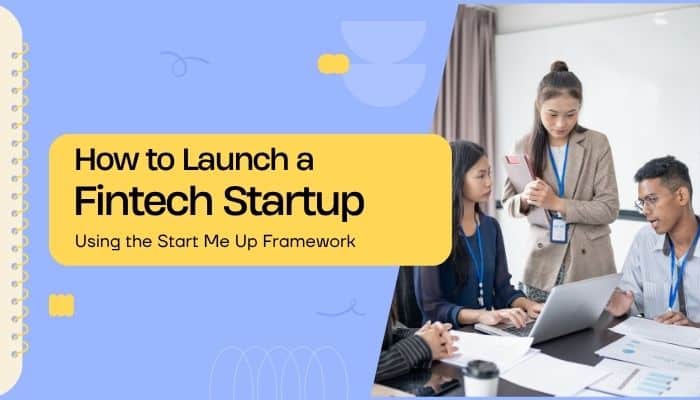
Founders can use FintechAsia.net Start Me Up as a simple framework for moving from idea to early traction.
Step 1: Define the Problem
Start with one specific customer problem, not a vague idea like “build a fintech app.”
Step 2: Identify the Customer
Choose a clear audience such as SMEs, freelancers, merchants, exporters, banks, or wealth managers.
Step 3: Research Competitors
Compare competitors by customer, product, pricing, strengths, and weaknesses.
| Competitor | Customer | Product | Pricing | Strength |
|---|---|---|---|---|
| Company A | SMEs | Payments | Subscription | Distribution |
| Company B | Enterprise | API | Usage-based | Infrastructure |
| Your startup | SMEs | Automated payments | TBD | Simplicity |
Step 4: Validate Demand
Interview potential users and ask how they solve the problem today, what it costs them, and what would make them switch.
Step 5: Build a Lean MVP
Create only the features needed to test the main assumption. Avoid adding unnecessary functionality before demand is proven.
Step 6: Measure Traction
Track metrics that match the business model:
- Consumer fintech: activation, retention, churn, CAC
- B2B fintech: MRR, conversion, sales cycle, retention
- Payments: TPV, take rate, fraud rate, chargebacks
FintechAsia.net Start Me Up can support the research process, but real customer behavior and measurable traction should guide the final decisions.
Fintech Unit Economics Founders Should Understand
Founders using FintechAsia.net Start Me Up should track:
- CAC: Cost to acquire a customer
- LTV: Customer value over time
- Burn rate: Monthly cash spend
- Runway: Cash ÷ monthly burn
- Gross margin: Revenue after direct costs
- Retention: How well customers stay
Step 7: Prepare for Funding
A strong pitch should clearly explain the problem, market, traction, business model, team, funding need, and use of capital. FintechAsia.net Start Me Up can support this research, but investors still expect clear evidence and realistic milestones.
Founder Funding-Readiness Scorecard
| Area | Key Question |
|---|---|
| Problem | Is the customer pain clear? |
| Demand | Have customers shown real interest? |
| Product | Does the MVP solve the problem? |
| Traction | Can you show users, pilots, or revenue? |
| Economics | Can the model scale sustainably? |
| Regulation | Are licensing requirements understood? |
| Security | Is customer data protected? |
| Funding | Is the raise tied to clear milestones? |
If several answers are “no,” more validation may be more useful than another fundraising campaign.
How to Choose the Right Asian Fintech Market
Choose a market based on product fit, not population size.
| Factor | Key Question |
|---|---|
| Demand | Is the problem significant? |
| Regulation | Can you legally operate? |
| Competition | How crowded is the market? |
| Infrastructure | Are banking and payment rails available? |
| Economics | Can customers be acquired profitably? |
| Expansion | Does the market support future growth? |
Step 8: Build Strategic Partnerships
Useful fintech partners may include banks, payment processors, card networks, cloud providers, compliance firms, insurers, and marketplaces.
Strong partnerships should improve:
- Distribution
- Market access
- Compliance
- Transaction costs
- Customer acquisition
Step 9: Build Sustainable Distribution
Customer acquisition can come from:
- Organic search
- Partnerships
- Referrals
- Direct sales
- Embedded distribution
- Communities
- Enterprise channels
The best channel depends on the customer and business model.
A Simple Fintech Growth Framework
Think about growth in six stages:
Acquire → Activate → Retain → Monetize → Refer → Expand
Metrics Fintech Founders Should Track
Founders using FintechAsia.net Start Me Up should focus on metrics that support real business decisions.
| Area | Useful Metrics |
|---|---|
| Acquisition | Leads, CAC |
| Retention | Churn, cohort retention |
| Revenue | MRR, ARR, ARPU |
| Economics | Gross margin |
| Payments | TPV, take rate |
| Risk | Fraud or default rate |
| Funding | Burn rate, runway |
| B2B sales | Pipeline, win rate |
A 90-Day Fintech Startup Action Plan
Founders can use FintechAsia.net Start Me Up as a simple 90-day framework for moving from research to early proof.
Days 1–30: Validate
- Define one customer segment
- Interview potential users
- Research competitors
- Check regulatory requirements
- Test positioning
- Define the MVP
Goal: Prove that a real customer problem exists.
Days 31–60: Build
- Develop the MVP
- Test onboarding
- Set pricing
- Launch pilot programs
- Add basic analytics
- Build security and compliance processes
Goal: Prove that the product can solve the problem.
Days 61–90: Prove
- Win initial customers
- Run paid pilots
- Measure retention and revenue
- Review unit economics
- Prepare investor materials
- Research investors and partners
Goal: Build evidence of traction.
After 90 days, FintechAsia.net Start Me Up should support a clearer decision: improve the product, keep validating, or prepare for growth and fundraising.
Best Fintech Opportunities to Watch in 2026
Founders researching FintechAsia.net Start Me Up should focus on sectors solving clear financial, operational, or compliance problems rather than chasing trends alone.
Key Opportunities
- AI for Finance: Fraud detection, compliance, underwriting, reconciliation, and customer support
- B2B Payments: Cross-border payments, AP/AR, treasury, and supplier payments
- Regtech: KYC, AML, identity verification, reporting, and risk management
- Financial Infrastructure: APIs, ledgers, payment orchestration, and banking middleware
- Privacy Technology: Secure data sharing and privacy-preserving analytics
- Digital Assets: Tokenization, custody, stablecoin infrastructure, and settlement
The strongest opportunities around FintechAsia.net Start Me Up are likely to be products that solve measurable problems, reduce costs, improve compliance, or create better financial infrastructure. Regulation should always be checked before entering sensitive areas such as digital assets or financial data.
Benefits of FintechAsia.net Start Me Up
FintechAsia.net Start Me Up can give founders a useful regional view of Asian fintech, startup trends, funding, regulation, and business growth.
Key Benefits
- Regional insight: Covers Asian fintech markets that may receive less attention from US-focused publications.
- Startup education: Includes content on validation, funding, entrepreneurship, and growth.
- Market awareness: Tracks fintech, finance, technology, crypto, and related business trends.
- Founder research: Covers investors, partnerships, regulation, mentoring, and market opportunities.
- Potential visibility: Startup-listing or engagement features may offer an extra discovery channel if currently available.
Limitations of FintechAsia.net Start Me Up
FintechAsia.net Start Me Up should be treated as a research resource rather than a guaranteed funding or advisory platform.
- Features may need verification: Investor tools, dashboards, analytics, listings, and mentor access may not always be available.
- Information can become outdated: Funding data, regulations, licensing rules, and investor activity can change quickly.
- Funding is not guaranteed: Visibility does not mean investors will respond or provide capital.
- Official regulators still matter: Licensing, sandbox eligibility, payment rules, and digital-asset requirements should be checked directly.
- Sensitive data needs protection: Avoid sharing passwords, API keys, banking data, private source code, or confidential investor materials without reviewing security and privacy practices.
Overall, FintechAsia.net Start Me Up can be useful for discovery and education, but important funding, regulatory, and platform claims should always be independently verified.
Due-Diligence Checklist Before Using Any Startup Platform
Before sharing company information, check:
- Who operates the platform?
- Are contact details and a privacy policy available?
- Are fees clearly disclosed?
- Can submitted data be deleted?
- Are investors independently verifiable?
- Are advertised services actually operational?
- Are funding claims documented?
A polished website alone is not proof of credibility.
Is There a FintechAsia.net Start Me Up Login, Fee or Application?
FintechAsia.net Start Me Up describes startup resources and platform-style features, but founders should not assume there is a paid membership, application fee, guaranteed admission, investor subscription, or dedicated dashboard unless an official page confirms it.
Third-party claims about FintechAsia.net Start Me Up login systems, pricing, or application steps should be checked against current first-party information.
FintechAsia.net Start Me Up vs. a Traditional Accelerator
| Feature | FintechAsia.net Start Me Up | Traditional Accelerator |
|---|---|---|
| Startup content | Yes | Usually |
| Fintech focus | Strong | Varies |
| Startup profiles | Described; verify | Common |
| Mentorship | Described; verify | Usually structured |
| Investor access | Described; verify | Often |
| Guaranteed funding | No | Depends |
| Formal cohort | Verify | Usually |
| Equity requirement | Verify | Often |
| Demo day | Verify | Common |
| Regulatory support | Mainly informational | Varies |
FintechAsia.net Start Me Up should therefore be viewed as a research and discovery resource rather than automatically treated as a substitute for a traditional accelerator.
Common Mistakes Fintech Founders Should Avoid
Founders using FintechAsia.net Start Me Up should avoid common mistakes that can weaken growth and fundraising:
- Building before validation: A strong product cannot fix weak customer demand.
- Raising too early: Limited traction often reduces fundraising leverage.
- Ignoring regulation: Licensing and compliance can reshape the business model.
- Expanding too fast: New markets add operational, regulatory, and localization costs.
- Tracking vanity metrics: Downloads matter less than retention, revenue, and usage.
- Ignoring unit economics: Growth is risky if every new customer increases losses.
- Underestimating security: Cybersecurity affects compliance, trust, and reputation.
- Choosing investors only by valuation: Strategic fit can matter more than the highest offer.
- Using one information source: Important decisions should always be independently verified.
Is FintechAsia.net Start Me Up Worth Using?
FintechAsia.net Start Me Up can be useful for founders researching Asian fintech, especially for startup guidance, funding research, market trends, validation, and regulatory awareness.
Its broader platform-style features, including investor tools, startup listings, analytics, and mentoring, should be verified before relying on them.
Best approach: Use FintechAsia.net for discovery → primary sources for verification → customer data for validation → professional advice when needed.
Conclusion
FintechAsia.net Start Me Up can be a useful starting point for founders researching fintech validation, funding, regulation, investors, and growth across Asia. Its strongest value lies in helping entrepreneurs understand the questions they need to answer before committing significant time, money, or resources.
At the same time, founders should verify any platform-style features, funding claims, investor access, or regulatory information through primary sources. FintechAsia.net Start Me Up works best as part of a wider research process that includes customer validation, official regulators, market data, investor due diligence, and qualified professional advice.
Ultimately, the startups most likely to succeed are not simply those with the newest technology. They are the ones that solve a real problem, prove demand, manage regulation and risk, understand their economics, and execute with discipline.
FAQs About FintechAsia.net Start Me Up
1. Does FintechAsia.net Start Me Up cover startup accounting?
Yes. The Start Me Up archive includes startup accounting content covering financial basics that can be relevant to early-stage founders.
2. Does FintechAsia.net Start Me Up have a fintech newsletter?
Its 2026 launch material describes newsletters as part of the site’s content strategy. Founders should check the website for current signup availability.
3. Does FintechAsia.net Start Me Up include a fintech jobs board?
A small fintech job board is described in its launch plans. Check the current site to confirm whether the feature is live.
4. Does FintechAsia.net Start Me Up publish founder interviews?
Founder interviews are included among the editorial formats described in its 2026 launch strategy, alongside market briefs and data-focused content.
5. Does FintechAsia.net Start Me Up offer premium fintech reports?
Paid reports are described as a potential revenue and content offering. Availability, topics, and pricing should be checked directly.
6. Does FintechAsia.net Start Me Up host fintech events or AMAs?
Its published plans mention virtual meetups, events, and local AMAs as possible ways to build a fintech community.
7. Is FintechAsia.net Start Me Up useful outside Asia?
Its primary focus is Asian fintech, but general ideas around validation, funding, and startup development may also help founders elsewhere. Local regulations still require separate research.
8. How often is FintechAsia.net Start Me Up updated?
No fixed publishing schedule is clearly stated in the official pages reviewed. Readers should check each article’s publication or update date before relying on time-sensitive information.
