



An insurance liability limits search can reveal something that may completely change how an insurance claim is evaluated: the first policy you find may not represent all of the coverage potentially available.
A defendant may have a primary auto, homeowners, commercial, or professional liability policy. Depending on the circumstances, there may also be umbrella insurance, excess liability coverage, another insured party, an employer’s policy, commercial auto insurance, or additional coverage connected to the same loss.
The difficult part is separating possible coverage from confirmed coverage.
Insurance-search reports, public information, claim correspondence, and investigative research may provide useful leads. However, an actual policy, legally required insurer disclosure, or formal litigation discovery generally provides stronger evidence of what coverage exists and whether it applies.
This guide explains how an insurance liability limits search works, what coverage people commonly overlook, how different policies coordinate, what information is needed for a search, and why a stated policy limit does not always equal the amount actually available for a claim.
This article provides general U.S. insurance information, not legal advice. Insurance-disclosure laws, discovery rules, deadlines, and coverage requirements vary by state, policy, and case.
Quick Answer
An insurance liability limits search identifies liability policies and coverage limits that may potentially apply to a claim. It can help uncover primary, umbrella, excess, commercial, employer-related, or additional-insured coverage that may not be obvious from the first policy identified.
However, a search result does not by itself prove that a policy was active, that the insured qualifies for coverage, or that the entire stated limit is available.
Policy documents, insurer disclosures, and formal discovery generally provide stronger verification.
Depending on the case, potentially relevant coverage may include:
- Primary automobile liability insurance
- Homeowners or renters liability insurance
- Commercial general liability insurance
- Commercial auto coverage
- Employer-related insurance
- Umbrella liability insurance
- Excess liability insurance
- Additional-insured coverage
- Insurance belonging to another potentially responsible party
Key Takeaways
- Policy limits represent maximum amounts an insurer may pay subject to the policy’s terms.
- One accident can potentially involve several insureds or policies.
- Umbrella and excess insurance may create additional layers of liability protection.
- Multiple policies do not always simply add together.
- Some policies use occurrence triggers while others use claims-made structures.
- Defense costs can sometimes reduce the limit remaining for settlement or judgment.
- Pre-lawsuit policy-limit disclosure rules differ by state.
- A policy-limit number does not automatically mean that the entire amount is available for a particular claim.
- Search reports should generally be treated as investigative information until the coverage is independently verified.
- A negative search result does not necessarily prove that no insurance exists.
Insurance Liability Limits Search
An insurance liability limits search investigates what liability insurance may be connected to a person, company, vehicle, property, employer, or other party involved in a loss.
The process is sometimes described using related terms such as:
- Policy limits search
- Liability limits research
- Insurance coverage search
- Policy discovery
- Insurance policy investigation
- Liability limit tracing
- Umbrella policy search
Although these phrases are often used interchangeably, they do not necessarily describe identical services.
One search might simply attempt to identify whether an insurance policy exists. Another may estimate a likely carrier and policy limits. A more detailed investigation may examine primary, umbrella, excess, commercial, and other potentially applicable coverage.
That distinction matters.
A research report may indicate that a defendant likely has a certain type of insurance, but that is different from an insurer producing the actual policy and confirming that coverage applied during the relevant period.
What Is the Main Goal?
The central question should not be limited to:
“What is the defendant’s policy limit?”
A more useful question is:
“What insurance agreements could potentially respond to this loss?”
That broader approach matters because focusing only on the first identified policy can cause other potential sources of coverage to be overlooked.
Why Liability Limits Matter
A liability limit is the maximum amount an insurer may pay under a particular coverage, subject to the policy’s terms and applicable law.
Understanding these limits is an important part of an insurance liability limits search because the number shown on a policy does not always represent the total coverage potentially available after an accident or claim.
Personal auto liability insurance, for example, is often expressed as three numbers.
Consider: 25/50/15
The National Association of Insurance Commissioners explains this general type of structure as follows:
| Limit | Meaning |
|---|---|
| $25,000 | Maximum bodily injury payment for one person |
| $50,000 | Maximum bodily injury payment for all people in one accident |
| $15,000 | Maximum property-damage payment for the accident |
These figures represent maximum payments within the applicable coverage categories, subject to the terms of the policy.
Consider a simplified example.
Suppose one person suffers $90,000 in covered bodily-injury damages, but the applicable bodily-injury liability limit is only $25,000 per person.
The insurer does not automatically become responsible for the entire $90,000 simply because the damages exceed the policy limit.
That gap is one reason additional coverage—such as umbrella, excess, commercial, or another potentially applicable policy—may become important in higher-value claims.
What Coverage Are You Missing?
Finding one policy does not always reveal the complete insurance picture. An insurance liability limits search may uncover additional coverage connected to the driver, property owner, employer, business, or another responsible party.
1. Primary Auto Liability Insurance
After a motor vehicle accident, the first policy identified is usually the at-fault driver’s auto liability insurance.
Important details to verify include:
- Named insured
- Covered driver and vehicle
- Policy period
- Bodily-injury limits
- Property-damage limits
- Business or personal vehicle use
- Relevant exclusions or coverage defenses
The driver and vehicle owner may also be different people, which can affect the coverage analysis.
2. Umbrella and Excess Liability Coverage
Umbrella and excess insurance can provide additional limits above underlying liability coverage.
For example:
| Coverage Layer | Illustrative Limit |
|---|---|
| Auto liability | $300,000 |
| Personal umbrella | $1,000,000 |
| Potential combined limits* | $1,300,000 |
*This simplified example assumes both policies apply and all applicable conditions are satisfied.
Excess coverage generally adds limits above designated underlying insurance. Umbrella policies may also provide broader protection in some circumstances.
Finding an umbrella or excess policy does not automatically mean its full limit is available. Policy terms, exclusions, underlying limits, and exhaustion requirements still matter.
3. Employer and Commercial Coverage
A claim may involve commercial insurance when the person responsible was working or acting for a business.
Potential coverage may include:
- Commercial auto insurance
- Commercial general liability insurance
- Employer-related liability coverage
- Commercial umbrella insurance
- Excess liability coverage
Questions such as who owned the vehicle, whether the driver was working, and whether the activity benefited an employer can reveal additional insurance relationships.
4. Homeowners Liability Insurance
Homeowners policies commonly include personal liability coverage in addition to property protection.
Depending on the policy and circumstances, coverage may potentially relate to:
- Injuries on residential property
- Certain negligent acts by household members
- Some incidents away from the home
- Certain pet-related injuries
Actual coverage depends on the policy language and exclusions.
5. Additional Insureds and Other Responsible Parties
In commercial claims, another person or company may qualify as an additional insured or may have separate liability insurance.
This frequently arises with:
- Contractors and subcontractors
- Property owners and managers
- Landlords
- Vendors
- Employers
- Commercial leases
- Construction projects
The applicable contracts, endorsements, and insurance policies should be reviewed rather than relying only on a certificate of insurance.
A claim may also involve several potentially responsible parties, each with separate insurance.
6. Uninsured or Underinsured Motorist Coverage
Uninsured and underinsured motorist coverage, commonly called UM/UIM, is different from the defendant’s liability insurance.
It generally protects an insured when the at-fault motorist has no insurance or insufficient liability coverage, subject to applicable law and policy terms.
UM/UIM should therefore be viewed as a separate potential recovery source, not as hidden liability insurance belonging to the defendant.
Primary vs Umbrella vs Excess Coverage
Understanding how different insurance layers work can make an insurance liability limits search more useful, especially when damages may exceed the first policy identified.
| Coverage | Typical Role | When It May Respond |
|---|---|---|
| Primary liability | First applicable insurance layer | A covered claim occurs |
| Excess liability | Adds limits above designated underlying coverage | Underlying limits are exhausted as required |
| Umbrella liability | Adds limits and may provide broader protection | Applicable underlying requirements are satisfied |
| UM/UIM | Protects an insured when an at-fault motorist has insufficient insurance | Applicable UM/UIM requirements are met |
Finding a $1 million umbrella policy does not automatically mean another $1 million is available for a particular claim.
Actual coverage may depend on:
- Whether the policy covers the event
- Whether the person qualifies as an insured
- Required underlying insurance
- Exhaustion of underlying limits
- Applicable exclusions
- Other policy conditions
The policy documents must therefore be reviewed before treating an umbrella or excess limit as available coverage.
Do Multiple Liability Policies Always Stack?
No.
Finding several potentially applicable policies does not necessarily mean their limits can simply be added together.
Insurance contracts frequently contain other insurance provisions addressing how coverage should coordinate when more than one policy potentially applies to the same insured and loss.
Depending on policy language, one policy may operate as:
- Primary coverage
- Excess coverage
- Pro-rata coverage alongside another insurer
Other insurance clauses can establish the priority between overlapping policies. Common approaches include pro-rata, excess, and sometimes escape provisions.
Conflicting clauses can also produce disputes that depend on jurisdiction and policy wording.
For this reason, an insurance liability limits search should identify potential policies first and then examine how those policies relate to one another.
Discovering two policies is not the same as proving that the full limits of both policies are independently available for the same claim.
How to Conduct an Insurance Liability Limits Search
There is no single nationwide public database where someone can enter a defendant’s name and reliably find every applicable liability policy and coverage limit.
Instead, an insurance liability limits search usually combines available insurance information, claim records, policy requests, investigative research, and, when necessary, formal legal discovery.
The goal is to identify potentially relevant policies first and then verify whether those policies were in force and actually apply to the claim.
What Information Is Needed for an Insurance Liability Limits Search?
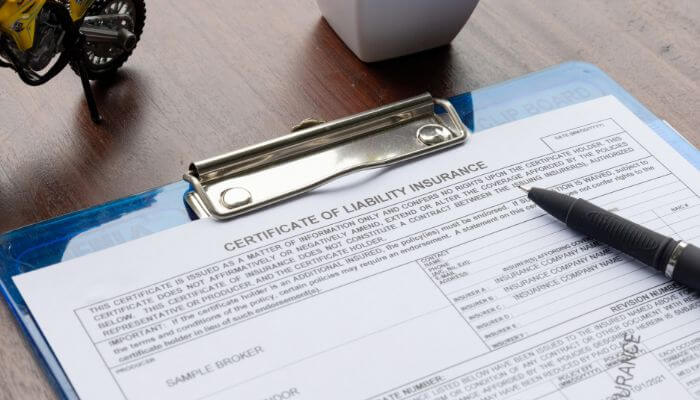
The quality of an insurance liability limits search depends largely on the accuracy and completeness of the information available at the beginning. Useful details may include the defendant’s full legal name, state or jurisdiction, date of loss, known address, vehicle information, employer or business name, known insurance carrier, policy or claim number, accident report, insurance card, and information about related companies or potentially responsible parties. More complete information can make it easier to distinguish the correct individual, business, vehicle, or policy from unrelated records. Only lawfully obtained information should be used during the investigation.
1. Identify Every Relevant Party
The search should begin with the people and businesses connected to the loss rather than focusing only on the first policy discovered. Relevant parties may include the driver, vehicle owner, property owner, employer, business entity, contractor, subcontractor, or another party that may share responsibility. Identifying these relationships helps create a broader coverage picture and may reveal insurance that would otherwise be overlooked.
2. Identify the Known Insurer
Existing records can provide useful clues about which insurer may be involved. Accident reports, insurance information exchanged after an incident, claim correspondence, contracts, business records, and existing policy documents may help identify a carrier or policy. However, the first insurer found should not automatically be treated as the only insurer that could potentially provide coverage.
3. Request Policy Information
Depending on the jurisdiction and type of claim, a claimant or attorney may be able to request liability insurance information before filing a lawsuit. The documents required, deadlines, and disclosure rules vary by state, so current local law should be checked before relying on a particular procedure. A formal request may provide more reliable information than an investigative search alone.
4. Look for Umbrella and Excess Coverage
When damages may exceed the primary liability limit, the investigation should also consider whether umbrella or excess coverage exists. A personal umbrella policy, commercial umbrella policy, or excess liability policy may provide another layer of insurance above the primary coverage. The goal is to identify all potentially applicable insurance rather than stopping after the first policy is disclosed.
5. Investigate Relationships That Could Create Coverage
Employment, business activity, vehicle ownership, property ownership, leases, and contractor relationships can all affect the insurance picture. For example, a driver may have been working for an employer, a vehicle may belong to a company, or a contractor may have been operating under an agreement requiring additional-insured coverage. These relationships can point to policies that are not obvious from the initial claim.
6. Obtain the Actual Policy When Possible
A declarations page can show useful information such as the policy period and stated limits, but it does not provide the complete coverage picture. The full policy may contain insuring agreements, exclusions, endorsements, additional-insured provisions, other-insurance clauses, and coverage-trigger terms. These provisions can determine whether the identified insurance actually applies to the loss.
7. Check Whether Coverage Is Occurrence or Claims-Made
Not every liability policy responds based on the same event date. An occurrence policy generally focuses on when the covered injury or damage happened, while a claims-made policy generally focuses on when the claim was first made and, under some forms, when it was reported to the insurer. Retroactive dates, notice requirements, and extended reporting provisions can also affect coverage. This distinction is particularly important in areas such as professional liability and medical malpractice insurance.
8. Use Formal Discovery When Necessary
If pre-suit requests and available records do not reveal the complete insurance picture, formal discovery may provide additional information after litigation begins. In federal civil litigation, Rule 26(a)(1)(A)(iv) generally addresses disclosure of qualifying insurance agreements, subject to applicable exceptions and court orders. State-court discovery rules can differ, so the applicable jurisdiction should always be reviewed.
Can You Find Liability Policy Limits Before Filing a Lawsuit?
Sometimes. An insurance liability limits search may help identify potential coverage before a lawsuit is filed, but there is no single nationwide rule requiring insurers to disclose policy limits in every claim.
Pre-suit disclosure requirements can depend on the state, type of insurance, nature of the claim, person making the request, supporting documentation, and whether litigation has already begun.
Florida: Florida law provides a procedure for obtaining certain liability insurance information after a qualifying written request. Depending on the circumstances, the disclosure may include applicable policies, liability limits, insured identities, potential coverage defenses, and umbrella or excess insurance.
New Jersey: New Jersey also provides procedures for obtaining certain policy-limit information in qualifying claims. In some motor-vehicle matters, applicable auto coverage and certain umbrella or excess policies may be subject to disclosure when statutory requirements are satisfied.
Virginia: Virginia has its own requirements for certain pre-suit liability insurance disclosures. Eligibility, documentation, and the information that must be provided can depend on the type of claim and the circumstances involved.
Why State Law Must Be Checked
Policy-limit disclosure rules vary significantly between jurisdictions.
It is therefore inaccurate to say that insurers always have to disclose policy limits before a lawsuit. It is equally inaccurate to say that they never have to disclose them.
The correct answer depends on the applicable state law, insurance policy, claim type, and stage of the dispute.
What Can a Policy Limits Search Actually Reveal?
A useful insurance liability limits search can potentially generate several types of information.
| Potential Finding | Why It Matters |
|---|---|
| Carrier identity | Shows which insurer may handle the claim |
| Policy existence | Indicates potentially applicable insurance |
| Policy number | Helps identify the insurance contract |
| Policy period | Helps evaluate the relevant coverage period |
| Named insured | Shows who purchased the policy |
| Primary liability limit | Identifies an initial coverage layer |
| Umbrella policy | May indicate additional limits |
| Excess policy | May reveal higher coverage layers |
| Additional insured | May expand the parties protected |
| Coverage defense | May affect whether the insurer accepts coverage |
Not every search method can reliably produce every item.
That is why the source and verification level of each result matter.
Estimated Coverage vs Confirmed Coverage
This is one of the most important distinctions in an insurance coverage investigation.
Some policy-search services use public records, licensed databases, proprietary information, and analytical methods to identify or estimate potentially relevant insurance coverage.
That information can be useful during early case evaluation, but it should not automatically be treated as carrier-confirmed coverage.
A practical verification hierarchy is:
| Evidence Level | Example | General Reliability |
|---|---|---|
| Investigative lead | Third-party policy search | Preliminary |
| Insurer disclosure | Written carrier response | Stronger |
| Policy documentation | Declarations page and complete policy | Strong |
| Formal discovery | Insurance agreement produced in litigation | Strong |
| Coverage analysis | Policy terms applied to facts and governing law | Case-specific |
Search lead → insurer disclosure → policy document → coverage analysis
The closer the investigation gets to actual policy documents, legally required disclosures, and a review of the policy terms, the stronger the verification generally becomes.
What an Insurance Liability Limits Search Cannot Guarantee
An insurance liability limits search can provide valuable investigative information, but it cannot necessarily guarantee that coverage exists or will respond.
Depending on the method used, a search may not conclusively establish:
- That every applicable policy has been located
- That a policy applied during the relevant coverage period
- That the identified person or company qualifies as an insured
- That the stated limit remains fully available
- That umbrella or excess coverage will respond
- That no exclusions apply
- That an insurer has accepted coverage
- That another unidentified policy does not exist
- That the claimant will recover the identified limit
Search reports, statutory disclosures, produced policies, and legal coverage analysis do not all provide the same level of certainty.
A useful way to interpret the process is:
Potential coverage identified → coverage independently verified → policy applicability analyzed
That distinction becomes especially important before major settlement or litigation decisions are made.
What If an Insurance Liability Limits Search Finds Nothing?
A “no result” does not necessarily prove that a defendant was uninsured.
A search might fail to identify coverage because:
- The insured appears under another legal name
- A business or employer owns the relevant policy
- The vehicle is insured under another party
- The property is insured through another entity
- The relevant policy is historical rather than current
- A commercial insurance program is involved
- The defendant uses a self-insured retention or other retained-risk structure
- Available identifying information is incomplete
- The search method simply cannot confirm the policy
For this reason, a negative insurance liability limits search should generally be treated as a research result rather than definitive proof that no applicable insurance exists.
Insurer communications, policy documents, statutory disclosure procedures, and formal discovery may provide stronger answers where those options are legally available.
Policy Limit Does Not Always Equal Available Coverage
Suppose a declarations page lists:
Liability limit: $1,000,000
It may be tempting to assume that the full $1 million is available for a claim. That conclusion can be premature.
An insurance liability limits search should look beyond the stated limit because several policy features can affect how much coverage may actually remain available.
Per-Person Limits
Auto liability policies may place a maximum on bodily-injury payments for any one injured person.
Per-Accident Limits
A separate limit may apply to all injured people combined. If several people suffer serious injuries in the same accident, they may be competing for the same per-accident limit.
Per-Occurrence Limits
Commercial liability policies often use a per-occurrence limit that restricts how much the insurer may pay for covered claims arising from the same qualifying occurrence.
Aggregate Limits
Some commercial policies also contain aggregate limits that restrict the insurer’s total payments for certain claims during a policy period.
Other claims during that period may therefore reduce the amount still available.
Defense Costs May Reduce the Remaining Limit
Some liability policies use defense-within-limits, also called:
- Eroding limits
- Wasting limits
- Burning limits
Under these structures, covered defense expenses reduce the amount remaining for settlement or judgment.
For example, if a policy begins with a $1,000,000 limit and $250,000 of covered defense costs are charged against that limit, the theoretical amount remaining for indemnity could be:
$750,000
The actual amount depends on the policy language and expenses involved.
This is especially relevant in some professional-liability policies, where defense costs can materially reduce the remaining limit.
Self-Insured Retentions
Commercial insurance programs may include a self-insured retention (SIR) that requires the insured to fund an initial portion of covered loss before the insurance layer begins responding.
An SIR is not necessarily the same as a conventional deductible because the insured may have greater responsibility for funding defense or indemnity expenses until the retention is satisfied.
| Coverage Layer | Illustrative Amount |
|---|---|
| Self-insured retention | First $100,000 |
| Liability policy | Next $1,000,000 |
| Excess coverage | Potential additional layer |
This is another reason an insurance liability limits search should examine the full insurance structure rather than relying only on the number shown on a declarations page.
Deductibles
Depending on the policy, a deductible can affect how loss is divided between the insurer and insured.
The policy terms determine how the deductible operates and whether it affects the practical amount available.
Coverage Exclusions
A high policy limit may provide little value for a particular claim if the event falls within an exclusion.
Depending on the policy, exclusions may address matters such as intentional conduct, certain business activities, professional services, or other specifically excluded risks.
Reservation of Rights
An insurer may sometimes defend a claim while reserving the right to dispute coverage later.
That means these two statements are not the same:
“The policy exists.”
and
“The insurer agrees that the policy covers this claim.”
The complete policy, coverage position, and applicable law ultimately determine whether the stated limit is actually available.
Example: How Missing Coverage Can Change a Claim
Imagine a serious motor vehicle accident.
The injured person’s damages are evaluated at approximately:
$600,000
The driver has:
$100,000 in primary auto liability coverage.
At first glance, the insurance picture appears limited to $100,000.
Further investigation reveals that:
- The vehicle was being used for work
- The driver was acting within the scope of employment
- The employer maintained commercial coverage
The claim may now require analysis of an additional insurance program.
In another scenario, suppose the driver was not working but maintained an applicable personal umbrella policy.
Again, the potential coverage picture could be different.
The lesson is not that additional insurance always exists.
The important point is that the investigation should follow the facts before assuming that the first identified liability limit represents the entire insurance picture.
Common Insurance Liability Limits Search Mistakes
A careful insurance liability limits search can still be misleading if potential coverage is treated as confirmed coverage or the investigation stops too early.
- Stopping at the First Policy: The first auto, homeowners, or commercial policy found may not be the only coverage. Umbrella, excess, employer-related, or additional-insured policies may also matter.
- Treating Search Results as Proof: Third-party research can provide useful leads, but estimated limits should be verified through policy documents, insurer disclosures, or formal discovery when possible.
- Ignoring Other Responsible Parties: Coverage may also be connected to employers, vehicle owners, property owners, contractors, or businesses involved in the loss.
- Assuming Multiple Policies Automatically Add Together: Two policies do not necessarily mean both full limits are available. Primary, excess, umbrella, and other-insurance provisions can affect how coverage coordinates.
- Confusing Policy Limits With Claim Value: A high policy limit does not automatically make a claim more valuable. Liability, damages, and coverage must be evaluated separately.
- Treating a Negative Search as Proof of No Insurance: A search that finds nothing does not necessarily mean no coverage exists. A policy may be under another person, business, employer, or historical insurance arrangement.
Questions to Ask When Reviewing Search Results
Once an insurance liability limits search identifies potential coverage, ask:
- Is this the correct insured and relevant policy period?
- What type of liability policy and coverage trigger apply?
- What are the per-person, per-accident, per-occurrence, or aggregate limits?
- Can defense costs, deductibles, or self-insured retentions reduce available coverage?
- Is an umbrella or excess insurance available?
- Are additional insureds or other responsible parties involved?
- How do multiple policies coordinate?
- Has the insurer confirmed the limits and provided the complete applicable policy?
These questions help turn a preliminary policy-search result into a more reliable coverage analysis.
When Is an Insurance Liability Limits Search Most Useful?
An insurance liability limits search is most useful when the potential value or complexity of a claim suggests that one primary policy may not show the full coverage picture.
A deeper search may be especially useful when:
- Injuries or medical expenses are substantial
- Permanent disability or wrongful death is involved
- Several people were injured
- A commercial vehicle or employer is involved
- Primary insurance appears inadequate
- Multiple responsible parties may exist
- Umbrella or excess coverage may be available
- The insurer has not disclosed complete coverage information
In smaller claims that are clearly within confirmed primary limits, a broader insurance investigation may be less important.
The scope of the search should generally match the complexity, damages, and potential insurance structure of the claim.
Is There a Public Database for Insurance Liability Limits?
There is generally no single public database that lets consumers search every person’s liability insurer, policy, and coverage limit in one place.
An insurance liability limits search may instead rely on available insurance records, lawful investigative sources, insurer disclosures, or formal discovery, depending on the claim and jurisdiction.
Access to policy information can also be affected by:
- Privacy rules
- State insurance laws
- Statutory disclosure procedures
- Court discovery rules
- Policyholder authorization
- Litigation procedures
That is one reason private policy-limit research services exist.
However, a private search result should not be confused with an official government record or an insurer’s formal confirmation that a policy exists and applies.
Insurance Liability Limits Search vs Asset Search
An insurance liability limits search and an asset search answer different questions.
| Search | Primary Question |
|---|---|
| Insurance liability limits search | What insurance may respond to the claim? |
| Asset search | What non-insurance assets or financial resources may exist? |
A policy-limits investigation focuses on identifying potentially relevant insurance, including carriers, policy limits, named insureds, umbrella coverage, excess insurance, and commercial policies.
An asset search instead looks for non-insurance financial information through lawful sources.
The two searches can complement each other, but they should not be treated as interchangeable. Limited insurance does not prove that a defendant has substantial collectible assets, and finding assets does not establish that an insurance policy covers the loss.
Can Policy Limits Determine Settlement Value?
No. Policy limits can influence settlement strategy, but they do not determine what a claim is actually worth.
Claim value may depend on factors such as:
- Strength of the liability evidence
- Comparative or contributory fault
- Medical expenses and future treatment
- Lost income or reduced earning capacity
- Permanent impairment
- Property damage
- Available damages under state law
- Credibility and supporting evidence
- Applicable insurance coverage
A $1 million policy does not automatically make a minor claim worth $1 million.
Likewise, damages exceeding a $50,000 policy limit do not automatically require an insurer to pay more than the applicable contractual limit.
Coverage and damages are separate questions.
Conclusion
An insurance liability limits search should answer a bigger question than simply identifying the first policy limit. A thorough investigation looks at the complete insurance structure and considers whether primary, umbrella, excess, commercial, employer-related, or additional-insured coverage may also apply.
Finding a policy is only the beginning. Occurrence versus claims-made triggers, aggregate limits, other-insurance clauses, self-insured retentions, defense costs, exclusions, and reservations of rights can all affect whether a stated limit is actually available for a particular claim.
That is why search results should be separated from confirmed coverage.
A practical progression is:
Potential coverage identified → coverage verified → policy terms reviewed → applicability analyzed
Ultimately, an effective insurance liability limits search is not about finding the largest number. It is about identifying coverage that may have been overlooked, verifying that coverage, and determining whether it can actually respond to the claim.
Insurance Liability Limits Search FAQs
1. How long does an insurance liability limits search take?
The time required for an insurance liability limits search varies by search method, available identifying information, insurer response times, jurisdiction, and the complexity of the insurance structure.
2. Can an insurance liability limits search identify an expired policy?
An insurance liability limits search may uncover historical policy information, but finding an expired policy does not establish that it covered the relevant loss. The applicable coverage period and policy terms must still be verified.
3. Can an insurance liability limits search identify business insurance?
Yes, an insurance liability limits search may identify potential commercial coverage when a business, employer, company-owned vehicle, contractor, or other commercial relationship is connected to the incident.
4. Can an insurance liability limits search reveal more than one insurer?
Potentially. An insurance liability limits search may point to multiple carriers when different people, businesses, policies, or coverage layers are involved. Each policy must then be evaluated separately.
5. Can an insurance liability limits search find coverage under another person’s policy?
Potentially. Coverage can sometimes arise through vehicle ownership, household relationships, additional-insured status, employment, or other insured relationships, depending on the policy and circumstances.
6. Does an insurance liability limits search show how much coverage remains?
Not necessarily. An insurance liability limits search may identify stated limits, but aggregates, prior claims, defense costs, and other policy provisions can affect how much coverage actually remains.
7. Can an insurance liability limits search be wrong?
Yes. Search results can be incomplete, outdated, estimated, or matched to the wrong party. Important findings should therefore be verified using authoritative insurance information whenever possible.
8. Who can perform an insurance liability limits search?
The available methods vary. Claimants, attorneys, insurers, and authorized research providers may obtain insurance information through different lawful procedures depending on the jurisdiction and circumstances.
