




Key Takeaways
- Modern homeowners benefit from a range of selling methods beyond the traditional listing approach.
- Flexible home selling strategies are designed to optimize convenience, minimize stress, and accelerate transaction times.
- Understanding new selling options helps homeowners make informed, strategic decisions for their unique circumstances.
Table of Contents
- Traditional Home Selling
- Cash Offers
- Flat-Fee and Low-Commission Services
- Sale-Leaseback Arrangements
- Virtual Staging and Modern Marketing
- Conclusion
Instead of being locked into a single traditional route, you can now choose selling methods that align with your timeline, financial goals, and lifestyle needs. From leveraging technology’s advantages to exploring innovative buyer arrangements, the modern real estate marketplace offers opportunities tailored to individual circumstances.
This variety of approaches makes it easier than ever to navigate the sale of your home, whether you prioritize a quick close, reduced hassle, or maximizing profits.
Additionally, services like HomeOptionsGroup provide practical guidance and options for homeowners looking to customize their selling strategy, reflecting the broader trends shaping today’s real estate transactions.
Traditional Home Selling
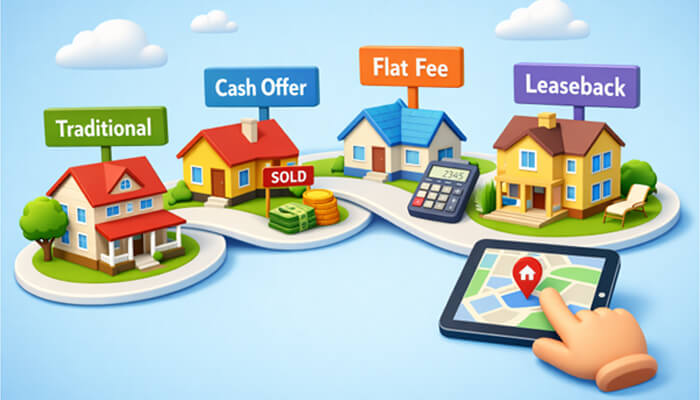
For many decades, working with a licensed real estate agent has remained the dominant way to sell a home. Agents are sought after for their expertise in pricing, marketing, and negotiating sales, as well as their ability to handle the extensive paperwork that accompanies real estate transactions. The comfort of professional guidance is appealing, yet it comes at a cost: standard commissions typically range from 5% to 6% of the final sale price. While some homeowners value comprehensive agent support, others weigh these costs against the potential savings of alternative routes.
With the market’s pace in many cities, some sellers question whether the traditional model is always the best fit, especially when speed and lower transaction fees are top priorities. A recent New York Times article highlights how commission structures and agent roles are evolving as more people examine their true value in today’s housing market.
Cash Offers
The appeal of cash offers has skyrocketed, especially among sellers who want certainty and speed. Cash buyers, often investors or specialist companies, can streamline the sale by purchasing homes directly. This avoids traditional hurdles such as waiting for mortgage approvals or dealing with appraisal contingencies. Most cash sales close in a matter of days, which can be crucial for people facing urgent relocations, inheriting property, or seeking to avoid lengthy negotiations and multiple showings.
Demand for fast, hassle-free cash sales has increased, according to CNBC’s coverage of trends in hot housing markets. Sellers benefit from fewer contingencies, while buyers gain a competitive edge, resulting in smoother, expedited transactions for everyone involved.
Flat-Fee and Low-Commission Services
Budget-conscious sellers often explore flat-fee and low-commission brokerage services to cut costs. Rather than paying a full-service agent percentage, you pay a set fee for essentials like Multiple Listing Service (MLS) access, online exposure, or showing management. This model is ideal for properties that tend to sell quickly with minimal marketing, or for experienced sellers comfortable handling some aspects of the process independently.
Sites like Realtor.com and Zillow have popularized these flexible listing options, enabling sellers to customize service packages to their specific needs. This approach can preserve equity and provide a more tailored experience for those who still want expert help but are unwilling to pay traditional commission rates.
Sale-leaseback Arrangements
Sale-leaseback programs offer a creative solution for homeowners who need to unlock the maximum value from their property while remaining temporarily in place. With this scenario, you sell your home to a buyer who agrees to lease it back to you as a tenant for a fixed time period. It is especially practical for those dealing with life transitions, such as retirement, new job offers, or family changes that require liquid capital but not an immediate move.
Sale-leaseback options can reduce stress during a big change, offering both immediate cash and flexibility for finding your next residence. Homeowners can avoid the rush of moving out while shopping for their next property, making this strategy particularly attractive for downsizers and relocators. An article from Forbes reviews the advantages and considerations of these arrangements, offering insights for those considering this less conventional sales pathway.
Virtual Staging and Modern Marketing
Digital innovation is transforming how homes are presented and promoted. Virtual staging technology enables empty or outdated rooms to be visually furnished and upgraded, helping buyers imagine their future in the space. This can boost interest, shorten time on market, and help listings stand out, at a fraction of the cost of traditional home staging.
Beyond staging, modern marketing campaigns can now target buyers with high-definition video tours, interactive floor plans, and robust social media outreach. These tactics significantly expand your home’s audience and make scheduling showings more convenient for potential buyers. Online visibility has become essential, considering the vast number of buyers who browse listings before contacting agents or attending open houses.
Conclusion
The contemporary real estate market is characterized by flexibility and choice. Whether you are seeking a conventional experience, a swift cash sale, cost-saving commission models, or innovative digital marketing, there is an option suited to you. Exploring these flexible home-selling options empowers homeowners to take charge of their real estate journey, minimize stress, and ensure their goals are met in a fast-changing marketplace. No matter your priorities, understanding the range of available selling methods will help you move forward with confidence and achieve your real estate objectives.
