


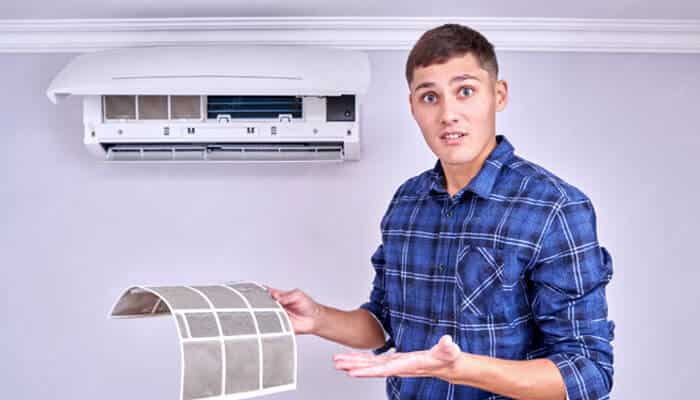

The Internet is a cesspool of air conditioning myths that most people believe because they’ve heard them so often. These myths can cause everything from higher energy bills to costly repairs or comfort issues. It’s time we put these annoying myths to rest once and for all.
MYTH: Setting your thermostat lower will cool your home quicker
It’s a common misconception that when you want your home cooled quickly you should crank the thermostat down to 60 degrees. This is completely FALSE!
Your air conditioner works at one rate to cool your home down, whether you set your thermostat to 72 degrees or 62 degrees. All you’re doing by setting the thermostat lower than you need it is raising your energy bill and wasting energy. Your system will cool at the same rate until it reaches your desired temperature.
MYTH: Larger units are better
Just because a unit is larger doesn’t mean it will cool better than a smaller system. An oversized air conditioner actually cools worse than one that is properly sized. Since an oversized system will cool the air quickly, it causes the room to feel damp and clammy. It may be cooling to the set temperature, but it’s not removing humidity from the air like it should.
This is also true because an oversized system will turn on and off more frequently, causing extreme wear and tear on your equipment.
MYTH: Closing vents saves energy
Closing vents in rooms that don’t need to be cooled is another myth that could potentially damage your air conditioning system. Closing vents can cause your system to work harder, which defeats the purpose of saving energy.
Depending on how your system is configured, your ductwork can be damaged by the increased or decreased air pressure. Your best bet for zoning is to invest in a zoning system.
MYTH: Fans will cool the air
Fans do a great job at making you feel cooler, but they aren’t technically cooling the room. Fans create a breeze, causing your skin to evaporate and lower your personal temperature. That’s why it feels so good when you’re sitting in front of a fan on a hot summer day.
While using your fans won’t cool the air, using them with your air conditioner can allow you to raise your thermostat a few degrees while keeping your home comfortable.
MYTH: Turning your system off saves more energy than lowering your thermostat
Many people think that by turning their air conditioner off before they leave work they are saving money. Unfortunately, this process often causes your air conditioner to consume more energy.
When you leave for work, leaving your air conditioner at a moderate temperature will allow for less buildup in heating. If you leave your air conditioner completely off, your home may overheat while you’re gone, and your system will work twice as hard (consumption-wise) to cool your home down.
If you don’t want to come home to a hot house, try setting your thermostat for the temperature you like it at when you walk in. A smart thermostat or programmable thermostat can make this very easy.
MYTH: Maintenance is only needed when your system isn’t working properly
Some people believe as long as your air conditioner is running, you don’t need maintenance done. Unfortunately, poor maintenance can cause your air conditioner to run less efficiently over time.
Air conditioner maintenance allows you to catch small problems before they turn into huge expenses. Just because your system doesn’t need a repair doesn’t mean that your air conditioner is running at peak efficiency.
MYTH: Air conditioners only cool your air
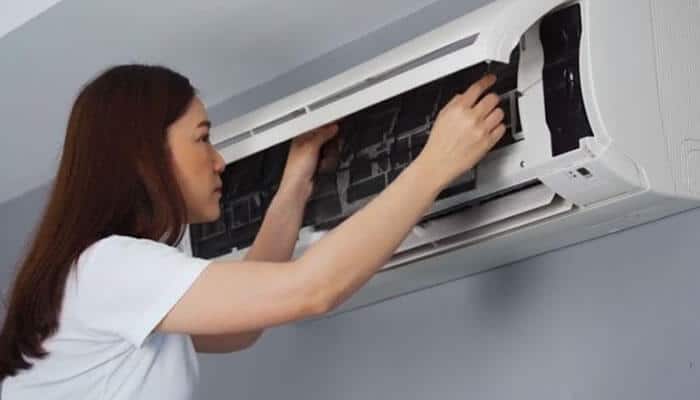
Air conditioners do more than just cool your air. While their primary purpose is to lower the temperature in your home, they also remove humidity from the air. This is called dehumidification and it can make a huge difference in how comfortable you feel in your home.
MYTH: All refrigerants are created equally
Just because your neighbor has an air conditioner that uses R22 doesn’t mean you should too. Many homeowners aren’t aware there are different kinds of refrigerants. Not only do different refrigerants have different environmental impacts, but they also operate with varying efficiencies.
Certain refrigerants are being phased out because they are found to cause damage to the ozone. Instead of sticking with the same refrigerant as your neighbors, do your research on the most efficient and sustainable refrigerant for your air conditioner.
MYTH: Buy the cheapest unit you can find
Sure, buying the cheapest unit will save you money upfront. However, you may end up paying more on your electric bill each month in efficiency losses. Not to mention, units with higher efficiency usually tend to last longer.
My advice is to find the best efficiency you can afford. Look at the efficiency ratings and estimated cost to run the unit before making a decision.
MYTH: Central air is better than ductless
Just because your neighbors have central air doesn’t mean you should too. Like any HVAC system, it all depends on your needs. If you have existing ductwork that is sealed correctly, then by all means central air is a great option. But if you don’t have ducts already installed or you want zone control, consider a ductless mini-split system.
Central air conditioners lose efficiency with every leak in your ducts. If you don’t have ducts that are sealed tight, you’re wasting money and energy.
MYTH: You only need to set your programmable thermostat once
Once you set your programmable thermostat, you may think you are all done with it. Unfortunately, there are always changing variables when it comes to your thermostat. Maybe you had your schedule set just right last summer, but something has changed with your schedule.
Life is constantly changing, and for that reason you should check your thermostat settings every once in a while. There are many smart thermostats on the market that can learn your behavior and change automatically.
Case Study: How the Right Air Conditioning System Can Improve Energy Efficiency
Sometimes it can be difficult to see how air conditioner size, insulation, airflow and building efficiency can affect home comfort and energy usage. A retrofit project conducted by the U.S. Department of Energy highlights the benefits of correct air conditioner sizing and whole-home efficiency.
The project took place in Sunnyvale, California. An existing 1,658-square-foot home was upgraded using air sealing, added insulation, new windows and an HVAC system upgrade. The effects of adding a high-efficiency mini-split heat pump were also calculated.
The ductless mini-split heat pump was one of several retrofit measures used to improve home heating and cooling efficiency. When comparing total annual energy use before and after the retrofits, savings of around 40% were achieved.
Annual energy bills for the retrofitted home were around $500 lower than the original building.
These savings weren’t achieved by installing a larger air conditioner. Although adding the mini-split improved heating and cooling efficiency, the most important thing was improving the building as a whole.
Correct HVAC system sizing, air sealing, insulation levels, window quality and airflow were all taken into consideration during the retrofit. This resulted in lower annual energy costs, while comfort levels were also improved.
This case study highlights why homeowners should think carefully before opting for a bigger air conditioner. Adding central air or a mini-split can be counterproductive if the building isn’t efficient.
Conversely, poor indoor comfort doesn’t automatically mean an air conditioner needs replacing. Poor insulation, ductwork or air sealing can cause cool air to leak out and warm air to enter the home.
Frequently Asked Questions About Air Conditioning
Does turning the thermostat down make an air conditioner cool faster?
No. Turning down the thermostat won’t usually make an air conditioner cool faster. Instead, it will cause the system to run for longer once it comes back on.
Is a bigger air conditioner better?
No. Air conditioners that are too large for the space will cool it quickly but won’t run for long enough to dehumidify the room properly. This often makes rooms feel damp and uncomfortable, even when the air temperature is low.
Can closing air conditioning vents save energy?
Closing vents won’t always save energy. It can reduce airflow and put more pressure on the HVAC system. If you want rooms to be a different temperature, zoning controls are a more efficient solution.
Do fans actually cool the air?
Fans don’t actually cool the air in a room. They create airflow that blows across your skin. As your sweat evaporates, you’ll feel cooler. Fans can be used in conjunction with air conditioning to improve comfort.
How often should I have my air conditioner serviced?
How often an air conditioner should be serviced will depend on the type of system and your usage patterns. Check the manufacturer’s instructions for guidance. HVAC maintenance is important for spotting small problems before they become costly to repair.
Does an air conditioner remove humidity from the air?
Yes. Air conditioners remove humidity through the dehumidification process. Sweating can make you feel uncomfortable, even if the temperature doesn’t feel that hot.
Is R22 refrigerant still used in air conditioners?
R22 refrigerant is often found in older air conditioning systems. However, it has been phased out in many countries due to its harmful effects on the environment.
Air conditioners purchased today will usually use alternative refrigerants. Refer to the manufacturer’s instructions if you aren’t sure which refrigerant your HVAC system uses.
Should I buy the cheapest air conditioner I can find?
No. Cheaper air conditioners may have higher running costs than newer models. Purchase price, energy efficiency ratings and running costs should all be considered when buying an air conditioner.
Is central air conditioning better than a ductless mini-split system?
Central air conditioning and ductless mini-split systems can both be effective. Central air conditioning is ideal if suitable ductwork is already installed in the property.
Ductless mini-split systems don’t require ducts and allow greater control over individual rooms or zones. Determine which air conditioner type is best by assessing your property and cooling needs.
Does air conditioning maintenance improve efficiency?
Regular maintenance can keep an air conditioner working efficiently. Faults can be identified early and stopped from becoming serious issues that require an expensive repair job.
Cleaning air filters, checking airflow and refrigerant levels can all improve air conditioner efficiency.
Why does my air conditioner make the room cold but still feel damp?
Your air conditioner may be too big for the space. A system with a high cooling capacity will reduce the temperature without removing humidity from the room.
Air conditioners can also become damp if they aren’t sized correctly, aren’t maintained or have poor airflow.
Should I turn my air conditioner off when leaving home?
Leaving your air conditioner on when you leave home can waste energy, particularly if you’re out for long periods. However, turning it off completely can put extra strain on the system if you’re out during hot or humid weather.
It’s often more effective to increase your thermostat by a few degrees instead of switching off or running your system continuously.
How do I know which air conditioner is right for my home?
Air conditioner size is important, but it isn’t the only thing you should consider. Learn about room size, insulation, windows, heat gain, ceiling height, climate and ductwork to find the ideal air conditioner for your needs.
Speak to a qualified HVAC professional who can visit your property to recommend the right-sized air conditioner for your home.
Final Words
There are always going to people who try spreading those dreaded air conditioning myths. We hope that by reading this article, the next time you hear someone tell one of these myths you can explain to them why it’s wrong.
