


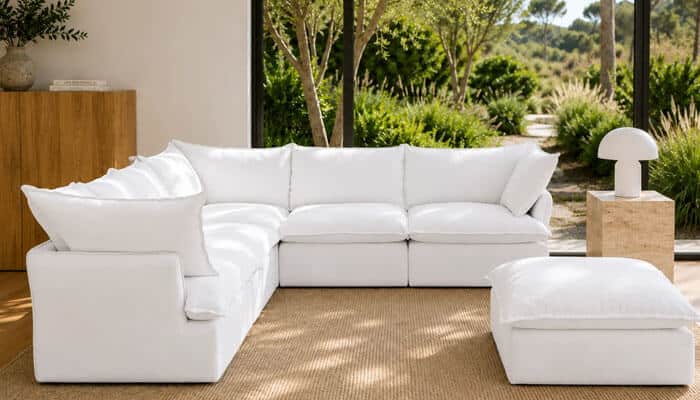

For most of the last century, a sofa was sold once. You bought it in a showroom, a truck delivered it, and when it was stained, sagging or the wrong size for the next apartment, you threw it away and bought another. Direct-to-consumer furniture brands have spent the past decade attacking that model, and the ones winning in 2026 are not winning on the sticker price. They are winning on what the sofa costs to own over ten years. This piece looks at how that works, using Mirewood, a modular sofa brand based in Austin, Texas, as the worked example.
The Old Model: A Sofa Is A Single Transaction
Legacy furniture retail is built around the showroom. The retailer carries inventory, pays for floor space, employs commissioned sales staff and runs a delivery fleet. Each of those costs is baked into the price, and because the retailer’s margin is earned at the moment of sale, there is no incentive to make the product last. A sofa that wears out in five years is a repeat customer in five years.
The result, for the buyer, is a product that is expensive to acquire and impossible to maintain. Covers are sewn on. Cushions can’t be replaced. Frames are made from whatever timber was cheapest. The sofa is designed to be bought, not kept.
The Dtc Model: A Sofa Is A System
Direct brands cut the showroom, the sales staff and the distributor, which lowers the acquisition price. That part is well understood. The less obvious shift is in how the product itself is designed. Without a retailer in the middle, the brand owns the customer relationship for the life of the product, and it is now in the brand’s interest for that life to be long. That has pushed DTC furniture toward four design choices that legacy retailers rarely make.
1. Modular pieces instead of fixed frames.
A sofa sold as individual seats, corners and ottomans can be bought small and grown later. A couple buys a two-seater; three years later they add a corner piece and an ottoman instead of replacing the whole thing. The customer spends less over time, and the brand earns a second and third order it would never have seen under the old model.
2. Replaceable covers instead of permanent upholstery.
If every cover unzips and can be bought on its own, a stain is a $175 problem rather than a $2,000 problem. The brand sells covers as a recurring product line; the customer keeps the sofa for a decade.
3. Boxed shipping instead of a delivery fleet.
A modular sofa ships in boxes that go through a standard door and move with ordinary parcel carriers. No white-glove truck, no delivery window, no damage on the stairs. The brand’s logistics cost drops and the customer gets the sofa in days rather than weeks.
4. A long frame warranty instead of a one-year one.
A brand that expects to sell you covers and add-on pieces for ten years needs the frame to last ten years. Kiln-dried wood frames and lifetime frame warranties are now common among DTC brands and still rare at legacy retail.
Mirewood As The Worked Example
Mirewood’s Halo cloud sofa collection is a useful case because it applies all four choices at once. The sofa is sold as individual modular pieces that connect without tools, so a $1,299 two-seater can become a five-piece corner sectional later by adding pieces at $650 each, rather than being replaced. Every cover, including the seat cushions, is machine-washable at home and sold individually, with a single piece cover at $175 and a full set at $350. The frame is kiln-dried wood backed by a Limited Lifetime frame warranty. Orders ship within 72 hours in boxes that fit through a standard doorway, and assembly takes a few minutes per seat with no tools.
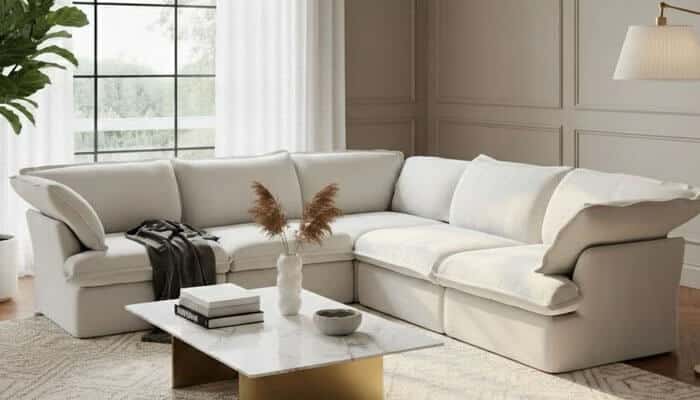
The economics for the buyer look different from a showroom purchase. A legacy sofa bought for $2,500 and replaced after six years because of staining and sagging costs roughly $4,200 a decade, before delivery fees. A modular sofa bought for $1,499, with two replacement covers over the same period and no replacement, is closer to $1,850. Those are illustrative figures, not a study, but the direction is consistent: the DTC product is cheaper to buy and far cheaper to keep.
The economics for the brand are the interesting part. Mirewood is not relying on a single sale. It sells a sofa, then covers, then additional pieces, to the same customer, over years, with no retailer taking a cut of any of it. Its return policy, 30 days with a 20 percent restocking fee, is deliberately not the “free returns” model that has caused margin problems elsewhere in DTC; the brand is betting on the product being kept, not on volume churn.
Why Legacy Retailers Struggle To Copy It
None of these design choices is secret. The reason big-box furniture retailers rarely adopt them is structural. A retailer that sells replaceable covers cannibalises its own replacement-sofa sales. A retailer with a delivery fleet has no reason to design for parcel shipping. A retailer whose floor staff are paid on the ticket has no reason to sell a $1,299 starter configuration and wait three years for the rest. The DTC model is not just a cheaper channel; it is a different set of incentives, and the product follows the incentives.
What This Means For Buyers And Operators
For a buyer, the practical lesson is to stop comparing sticker prices and start comparing cost of ownership: whether the covers wash, whether they can be replaced, whether the frame has a real warranty, and whether the sofa can grow or shrink with the household. For an operator in any physical-product category, the lesson is broader. Owning the customer relationship changes what you should build. The brands that treat the first sale as the start of a ten-year account, rather than the end of a transaction, are the ones that are winning.
Frequently Asked Questions
Are DTC sofas actually cheaper?
Usually cheaper to buy, because there is no showroom or retailer margin, and almost always cheaper to own, because covers and pieces can be replaced rather than the whole sofa.
What is a modular sofa?
A sofa sold as individual pieces, such as seats, corners and ottomans, that connect together. The layout can be changed or expanded later by adding or moving pieces.
Why do DTC furniture brands offer lifetime frame warranties?
Because their business model depends on the customer keeping the sofa and buying covers and add-on pieces over time. A frame that fails ends that relationship.
What should I check before buying a sofa online?
Whether the seat cushion covers are machine-washable, whether covers are sold individually, what the frame is made of and how long it is warranted, and what the full configuration you want actually costs.
