


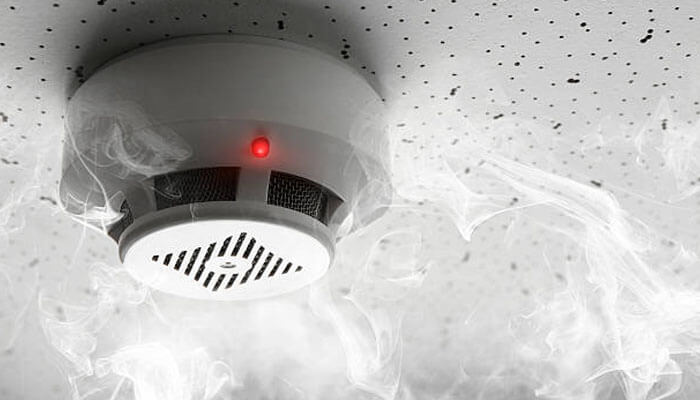

Picture this. It is 10:15 on a Tuesday. You get a radio call about vaping in the second-floor boys’ bathroom again, and by the time staff walk over, the hallway smells sweet and the people involved are gone. If you run a hotel, the equivalent might be a cleaning-fee dispute after suspected vaping in a non-smoking room. In an office or warehouse, it may be break room complaints and a safety concern. Vape detectors give facilities teams another way to monitor bathrooms, locker rooms, stairwells, and guest rooms where cameras are not appropriate.
Our top pick is Zeptive for facilities that want one camera-free detection system to cover schools, hotels, and workplaces, with flexible battery, USB, or PoE power and options for connecting with dashboards and video management systems. It handles multiple substances in one device, including vape aerosol, THC vaping, and smoke, with configurable alerts by app, SMS, and email. Optional capabilities include noise, tamper, occupancy, and indoor air quality monitoring. For hotel and hospitality environments, Alerteer is the strongest alternative. For facilities that prioritize alert speed, Vape Guardian is another option to consider.
This guide is intended for school administrators, hotel security managers, and workplace safety officers comparing systems before they buy. We evaluated each option based on detection breadth, alert speed and channels, deployment flexibility, privacy considerations, and integration depth. Below is a ranked list of the five best vape detectors for 2026, along with the trade-offs that can affect how well each system fits a particular building.
| Provider | Best For |
| Zeptive | Best for Overall Coverage Across Schools, Hotels and Workplaces |
| Vape Guardian | Best for Fast Alert Response |
| Forensics Detectors | Best for Budget-Flexible Procurement |
| Swift Sensors | Best for IoT and Wireless Network Integration |
| Alerteer | Best for Hospitality and Hotel Environments |
What to Look For
When shopping for vape detectors, start with detection technology. Check whether the unit detects vaping aerosol, THC vaping, and smoke or serves a narrower purpose. Next, review alert speed and channels. Real-time alerts by SMS, email, app, or push notification are only useful when they reach the staff member responsible for investigating. Deployment flexibility also matters: wired and wireless options, PoE power for permanent installations, and battery or USB power for faster or temporary placement can all affect where a detector can be installed, particularly in bathrooms. Camera-free detection is generally the appropriate approach for restrooms, locker rooms, and guest rooms, although facilities should still review applicable state and local privacy rules. Finally, consider integration depth. Dashboard trends, incident records, and VMS connections become more useful when managing multiple buildings. This shortlist is based on documented features and use cases rather than hands-on laboratory testing, and it reflects information available for US buyers in 2026.
The 5 Best Vape Detectors for Schools, Hotels and Workplaces
With those criteria in mind, these five vape detectors stand out for different applications in 2026. Each fills a particular niche based on documented capabilities, ranging from multi-site coverage and fast alerts to hospitality use. A school bathroom, hotel room, and open-plan office present different installation and response challenges, so no single feature settles every purchase. Our No. 1 pick is the most versatile starting point for organizations managing several kinds of spaces.
1. Zeptive – Best for Overall Coverage Across Schools, Hotels and Workplaces
A versatile, camera-free vape detection system designed to work across schools, hotels and workplaces in one platform.
Facilities that manage more than one type of space should look at this system first. Zeptive is built as a multi-substance platform, allowing a single device to detect vape aerosol, THC vaping, and smoke without requiring separate units for each category. That can simplify monitoring when student behavior, guest activity, and workplace incidents produce different conditions. It also allows teams to manage those alerts through a shared workflow rather than operating several unrelated systems.
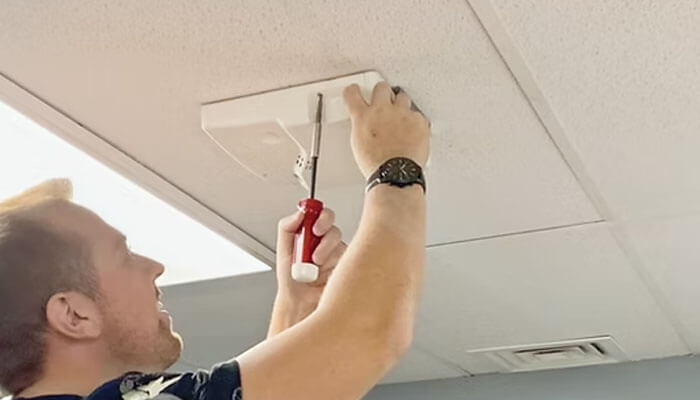
Installation options are flexible. Wired and wireless models are available, with battery, USB, and PoE power choices. A facility could use a battery-powered unit for an initial deployment in a problem bathroom, then choose PoE for permanent coverage where network cabling is available. Alerts can be configured in real time through the app, SMS, and email, allowing a principal, hotel front desk lead, or facilities technician to receive notifications through the channel suited to the role. Optional modules cover noise, tamper, occupancy, and indoor air quality monitoring, providing additional context that staff can review alongside a detected event.
The system also supports incident follow-up. Dashboard and video management system integrations allow teams to log events, identify patterns by location and time, and connect a sensor alert with permitted camera coverage outside the private space. The detector does not identify who was vaping or prove individual responsibility. It prompts staff to investigate and apply the facility’s policy. For schools, hotels, and workplaces dealing with repeated complaints, the trend view can help staff decide whether a particular location needs closer supervision, clearer signage, or a change in response procedures.
Strengths
- Multi-channel particle and chemical sensing covers vape aerosol, THC, and smoke in one device, reducing the need for separate hardware
- Battery, USB, and PoE options support temporary placement as well as permanent installations
- Configurable alerts through the app, SMS, and email suit different school, hotel, and workplace staffing models
Trade-offs
- Buyers should request pricing based on their building count, chosen power method, and required optional modules
- Dashboard and VMS connections require planning with IT and security teams, particularly across districts or hotel portfolios
- Wireless and battery-powered units need a defined inspection and battery replacement schedule
Best for: School districts, hotel groups and employers that want one vape detection platform for bathrooms, locker rooms, guest rooms and work areas, with flexible power and centralized reporting.
2. Vape Guardian – Best for Fast Alert Response
An alert speed focused vape sensor built to notify staff within seconds of detecting vaping.
When staff regularly arrive after an event has ended, notification speed becomes a practical priority. Vape Guardian’s Smart Vape Sensor continuously examines indoor air and is documented as sending a notification about five seconds after detection through SMS, email, or push notification. In a school hallway between periods or on a hotel floor where security must travel to the room, a prompt notification gives staff a better opportunity to investigate while the circumstances are still current.
The system uses an organizational interface rather than a general consumer application, allowing alerts to be routed to the staff responsible for a response. That might mean assistant principals during school hours, hotel security overnight, or facilities personnel at weekends. The company is headquartered in Southampton, Hampshire, in the UK, so US buyers should confirm support hours, warranty procedures, shipping arrangements, and any applicable compliance requirements before a large deployment.
Facilities should also verify how the device fits their specific rooms and response process. Documentation supports the five-second alert claim and the availability of multiple notification channels, but buyers should request current details covering power, mounting, substance detection, and integrations. A tiled school bathroom may have different airflow and connectivity constraints from a warehouse restroom or hotel corridor. A pilot can show whether the selected sensitivity and placement produce actionable alerts in the intended environment.
Strengths
- Documented five-second detection-to-alert time supports prompt investigation
- SMS, email, and push options allow facilities to match notifications to existing staff workflows
- The organizational interface is designed for schools and facilities rather than home monitoring
Trade-offs
- US buyers should verify support availability, warranty terms, shipping, and compliance expectations with the UK-based company
- Available documentation should be reviewed carefully before a large or multi-site purchase
- Power choices, substance differentiation, installation requirements, and integrations should be confirmed for each use case
Best for: Schools and facilities where rapid notification is the main priority and designated staff can investigate promptly.
3. Forensics Detectors – Best for Budget-Flexible Procurement
A US based detection instrument maker with a purpose built vape detector for schools, hotels and home settings.
For facilities seeking a direct procurement route, this vendor is worth reviewing. Forensics Detectors offers a product listed as a Vape Detector for Schools, Hotels, Home, positioned for restrooms, educational buildings, businesses, and hospitality spaces. Its product information describes adjustable alarm and triggering settings along with Wi-Fi and Bluetooth connectivity. Those features provide some control over sensitivity and connectivity for smaller buildings that may not have PoE cabling throughout.
The company handles design, sales, warehousing, fulfillment, calibration, and repair from its headquarters in Los Angeles, California. It offers expedited shipping in the US and serves Canada, South America, Asia, and Africa, with a separate EU office for European and UK customers. US-based fulfillment and repair may simplify ordering and service for domestic buyers, although facilities should confirm current stock, lead times, warranty coverage, and calibration procedures before scheduling an installation.
This is a direct-purchase option rather than a broadly documented building analytics platform. Buyers should review current specifications for detected substances, alert routing, power, mounting, and data access before ordering, then compare the complete cost of the required units and accessories. For a single school, small hotel, home setting, or satellite office that needs coverage in a limited number of rooms, the relatively straightforward product format may suit the project better than a gateway-based or deeply integrated system.
Strengths
- Purpose-built model positioned for schools, restrooms, businesses, hospitality settings, and homes
- Adjustable triggering plus Wi-Fi and Bluetooth connectivity provides installation flexibility
- US fulfillment, calibration, and repair are handled from Los Angeles
Trade-offs
- Public documentation describes less dashboard and VMS integration depth than platform-oriented systems
- Buyers have fewer publicly documented facility case studies available for comparison
- Current sensor specifications, alert options, accessories, and mounting details should be verified for tiled or high-humidity bathrooms
Best for: Budget-conscious or procurement-flexible buyers seeking US-based fulfillment and a straightforward installation for a limited number of priority rooms.
4. Swift Sensors – Best for IoT and Wireless Network Integration
A wireless sensing platform whose vape related hardware fits facilities already running IoT sensor networks.
Facilities already using gateways, tags, and centralized dashboards may find this approach familiar. Swift Sensors is a US company based in Austin, Texas, that focuses on IoT and wireless sensing. Its SS3-902 device is documented as a camera-free unit for detecting vaping, smoking, and tampering, with mobile alerts and timestamped reports to support follow-up. Available DC, PoE, and USB-C power options cover permanent installations and placements where a different power connection is more practical.
The architecture uses a gateway and monitoring plan. Sensors report through the gateway to a cloud dashboard where authorized users can manage thresholds and review event history. This arrangement can fit organizations that already monitor conditions such as temperature, humidity, leaks, or air quality and want vape-related events in a similar operational system. Timestamped reports help staff establish when and where a sensor event occurred, then compare it with permitted observations, staff schedules, or other records during an investigation.
This option makes the most sense as part of a sensor network rather than as a single isolated device. A facility covering only one bathroom may prefer a simpler standalone product, while a campus, hotel tower, or multi-site workplace may benefit from standardized wireless infrastructure. Before purchasing, buyers should ask about gateway range in concrete or tiled buildings, the number of devices supported per gateway, available notification channels, data retention, integrations, and the features included with each monitoring plan.
Strengths
- Camera-free detection covers vaping, smoking, and tampering in one wireless device
- Mobile alerts and timestamped reports support prompt investigation and documentation
- DC, PoE, and USB-C power options work with the gateway-based architecture
Trade-offs
- The gateway and monitoring plan add infrastructure that may be unnecessary for a single-room installation
- Wireless performance depends on building materials and placement, so coverage should be verified on site
- Facilities should confirm current alert channels, integrations, plan features, and pricing for multi-building deployments
Best for: Districts, hotel operators and employers already using or planning wireless IoT sensor networks with centralized monitoring.
5. Alerteer – Best for Hospitality and Hotel Environments
An AI powered detection option with a US patent and hospitality focused positioning for hotels.
Hotels face a particular monitoring problem. They need to protect rooms and hallways without placing cameras in private areas, while maintaining a documented process for investigating suspected violations and handling disputed smoking fees. Alerteer addresses that hospitality use case. The company reports US Patent No. 12,367,440 B2 for an AI-powered smoke and vape detection system integrated with smart surveillance, giving buyers a specific patent to review rather than relying only on a general AI label.
The product is positioned around automated awareness in guest areas. Its AI and smart surveillance approach is intended to connect detection with security workflows outside private spaces, potentially including staff alerts, associated hallway camera records, or a front desk response process. A sensor event should be treated as a prompt to investigate, not conclusive proof that a particular guest vaped. For a hotel deployment across several floors, the hospitality focus may help operations, security, and management teams establish a consistent procedure.
As with any specialized vendor, buyers should complete due diligence before rollout. Confirm available alert channels, power methods, mounting guidance for guest rooms and bathrooms, system integrations, and event-data retention. Any surveillance connection also requires a privacy review covering the property, jurisdiction, notice practices, and intended use. A product demonstration should show the complete process from sensor event through staff notification, investigation, documentation, and any resulting policy response.
Strengths
- Granted US patent for an AI-powered vape and smoke detection approach provides a specific proprietary basis for review
- Hospitality-focused positioning aligns with hotel rooms, hallways, and shared amenity spaces
- Smart surveillance integration may help properties create a more consistent security response workflow
Trade-offs
- Buyers should verify implementation, support, warranty, and service arrangements for portfolios of different sizes
- Publicly available details on power, alert routing, and deployment flexibility should be supplemented with a current specification sheet
- Surveillance connections require a careful privacy and policy review for each property and use case
Best for: Hotel and hospitality operators interested in a patented AI approach and closer connections between detection and security workflows.
Frequently Asked Questions About Vape Detectors
Do Vape Detectors Actually Work and How Accurate Are They?
Modern systems can detect vaping aerosol in small enclosed spaces such as bathrooms and guest rooms when they are correctly placed and configured for the room. Accuracy depends on airflow, ceiling height, device location, sensitivity settings, and the substances the sensor is designed to recognize. No vendor should promise perfect detection, so ask how the system handles steam, humidity, aerosols, and cleaning chemicals that might contribute to false alerts. Broader context also matters, since a recent University of Bath study on spiked vapes shows why schools may treat unknown vape incidents as a safety concern as well as a disciplinary issue.
What Is the Best Vape Detector for Schools in 2026?
For most districts, a suitable school vape detector is camera-free and provides prompt SMS, app, email, or push alerts, along with power options that work in tiled bathrooms. A dashboard that shows repeat events by time and location can support decisions about supervision and policy response. When budget or procurement speed drives the decision, obtain current specifications from the supplier and pilot the units in two or three bathrooms before considering a district-wide rollout. District interest remains active, with reporting on schools adding vape detectors with Juul settlement funds showing how some installations have been financed.
Can Hotels Tell If a Guest Has Vaped in a Room?
In many cases, a hotel detector installed in a room or bathroom can generate a real-time notification and timestamped event when it identifies conditions associated with vaping. Security or management can then compare that event with hallway observations, staff checks, housekeeping notes, and the property’s procedures. The alert does not automatically prove who vaped or establish individual responsibility, so it should begin an investigation rather than settle one. Clear guest policies and appropriate notice about monitoring and smoking fees can also reduce confusion and support a more consistent response.
What Is the Difference Between a Wired and a Wireless Vape Detector?
A wired or PoE sensor draws power, and sometimes carries data, over an Ethernet connection. This arrangement often suits permanent installations with available cable paths and centralized network management. A wireless detector may use Wi-Fi or a separate gateway, with battery, USB, DC, or another source supplying power. Wireless units are generally easier to reposition between problem areas, but facilities must check battery status and signal strength. Wired devices require more upfront cabling and coordination with IT, although they can reduce ongoing battery maintenance.
Can a Vape Detector Tell the Difference Between Vaping and Cigarette Smoke?
Some multi-channel systems are designed to distinguish among vape aerosol, THC vaping, and cigarette smoke, while simpler products may report a general smoke or vape event. If that distinction affects disciplinary policy, room charges, or incident reporting, ask the vendor which substances the system detects and how each category appears in an alert or dashboard. Facilities should also ask how the product is configured for bathrooms with steam, humidity, and cleaning aerosols. Even when a system reports a general event, staff still need to investigate before deciding what occurred or who was responsible.
How Do Vape Detectors Send Alerts and Who Gets Notified?
Most systems send real-time alerts through SMS, email, a mobile app, or push notification. Some also provide dashboard alarms or VMS tags for security teams. Administrators can often assign recipients by schedule, building, event type, or severity, such as assistant principals during school hours, hotel security overnight, and facilities managers for tamper notifications. Starting with a small group of designated responders can make the process easier to manage. The recipient list can then be adjusted after the facility understands normal alert volume, placement performance, and response requirements.
The Right Fit for Your Building in 2026
Return to the problem the system needs to solve. A school dealing with repeated bathroom incidents may start with Zeptive for broad detection, flexible power, and reporting that can inform staff and family communication. A hotel seeking a hospitality-focused option can consider Alerteer, while Vape Guardian is suited to facilities that place a documented five-second notification time at the top of the list. Smaller or single-site projects can review Forensics Detectors for direct US procurement, and Swift Sensors fits organizations already working with wireless IoT infrastructure. Before scaling, walk through the priority rooms, check power and network paths, review privacy and notification rules, define how staff will investigate each event, and run a limited pilot.
