

Food waste often starts with small decisions, buying more groceries than a family can finish, preparing too much food in a restaurant, ordering excess stock for a supermarket, or failing to notice produce before it spoils. Learning how to reduce food waste with technology can make these everyday problems easier to identify and prevent.
The scale of the problem is large. UNEP’s Food Waste Index estimates that 1.05 billion tonnes of food were wasted at the retail, food-service, and household levels in 2022. Households accounted for about 60% of that total. Food waste also means wasting the water, land, energy, labor, transportation, and money used to produce food.
In 2026, the most useful technologies go beyond simple food-tracking apps. Artificial intelligence (AI), smart sensors, connected refrigerators, predictive analytics, dynamic pricing, digital donation platforms, improved packaging, and precision agriculture can help prevent waste at different points in the food system. This guide explains how to reduce food waste with technology through 12 practical solutions that households, restaurants, retailers, farmers, and food businesses can use.
Why Technology Matters in Reducing Food Waste
Technology works best when it prevents edible food from becoming waste in the first place. The U.S. Environmental Protection Agency’s Wasted Food Scale places prevention at the top, followed by options such as donation and upcycling. Composting and other recycling methods remain useful for food scraps that cannot be prevented, but they should not replace prevention.
Technology can support this approach by helping people:
- Predict how much food they actually need.
- Monitor freshness and storage conditions.
- Find ingredients before they expire.
- Match surplus food with people who can use it.
- Measure what is being thrown away.
- Improve harvesting and transportation.
- Turn unavoidable scraps into useful resources.
This prevention-first approach is central to understanding how to reduce food waste with technology effectively.
12 Smart Ways Technology Can Reduce Food Waste in 2026
| Technology | Main use | Best suited for |
| AI forecasting | Predict demand | Retailers, restaurants |
| Smart inventory systems | Track food stock | Homes and businesses |
| Smart refrigerators | Monitor stored food | Households |
| Expiry reminder apps | Prevent forgotten food | Consumers |
| AI waste tracking | Measure discarded food | Commercial kitchens |
| Dynamic pricing | Sell food before expiry | Supermarkets |
| Food-sharing platforms | Redistribute surplus | Retailers and consumers |
| IoT sensors | Monitor storage | Supply chains |
| Smart packaging | Extend or indicate freshness | Producers and retailers |
| Precision agriculture | Reduce farm losses | Farmers |
| AI meal planning | Use available ingredients | Households |
| Composting/digestion tech | Recover unavoidable scraps | Homes and businesses |
1. Use AI to Predict Food Demand
Forecasting is one of the strongest answers to how to reduce food waste with technology because overproduction often begins before food reaches the customer.
Traditional ordering can depend heavily on previous sales and human judgment. AI systems can analyze larger datasets, including:
- Historical sales
- Seasonal demand
- Inventory levels
- Promotions
- Local events
- Weather patterns
- Customer purchasing behavior
The goal is simple: order or prepare closer to the amount customers are likely to buy. ReFED identifies AI and predictive analytics as technologies that can improve demand forecasting, predict surplus, optimize inventory, and support real-time decisions.
A bakery, for example, could use historical sales and current demand signals to estimate how many loaves to bake on a rainy Tuesday instead of preparing the same amount every day.
2. Track Food With Smart Inventory Systems
You cannot manage food effectively if you do not know what you already have. Digital inventory platforms can record what enters a kitchen, pantry, warehouse, or store and track how quickly it is being used.
Some systems can connect inventory information with point-of-sale data. This helps businesses identify slow-moving items before they become waste.
At home, the same principle can be much simpler. A household can maintain a digital pantry or shopping list that records:
- What is in the refrigerator
- What is in the freezer
- Approximate quantities
- Which items should be eaten first
- What actually needs to be purchased
This prevents duplicate purchases and forgotten ingredients.
3. Use Smart Refrigerators and Connected Kitchen Devices
Smart kitchen appliances can make food storage more visible. Depending on the device, connected refrigerators may provide internal cameras, shopping-list integration, temperature monitoring, or inventory-management features.
The real value is not the appliance itself. It is the behavior it encourages.
Imagine standing in a supermarket and being able to check what is already inside your refrigerator. Instead of buying another carton of milk or bag of vegetables, you can use what you already have.
For families researching how to reduce food waste with technology, visibility is one of the easiest places to start.
4. Set Digital Expiry and Leftover Reminders
Sometimes food is wasted simply because people forget about it. Food-management apps, calendar reminders, voice assistants, and digital inventory tools can alert users that an ingredient should be used soon.
You can create reminders such as:
- Use spinach by Wednesday.
- Freeze chicken tonight.
- Eat Sunday leftovers tomorrow.
- Check yogurt before buying more.
However, expiry dates should be interpreted correctly. In the United States, USDA explains that, except for infant formula, federal regulations generally do not require food date labels and these dates commonly indicate quality rather than safety. Food must still be stored and handled safely, and signs of spoilage should never be ignored.
Technology should therefore help people manage food safely, not encourage them to ignore food-safety guidance.
5. Install AI Food-Waste Tracking in Commercial Kitchens
Restaurants, hotels, cafeterias, hospitals, and other commercial kitchens can generate significant food waste without knowing exactly what is being discarded.
AI-enabled waste tracking can change that. A smart system can combine cameras and weighing equipment to identify discarded food and calculate its quantity, type, and financial cost. This turns a vague problem into measurable data.
For example, UNEP describes Winnow systems that use AI to identify and measure discarded food in commercial kitchens. UNEP also reports that a 2023 Green Breakfast initiative involving Winnow, UNEP, and Hilton reduced post-consumer waste by 62% across 13 participating hotels during a four-month period.
Once managers know what is being wasted, they can adjust purchasing, menus, buffet quantities, preparation methods, and portion sizes.
6. Use Dynamic Pricing for Food Nearing Expiry
A product approaching the end of its saleable life does not automatically need to become waste. Digital pricing systems can identify items that should sell quickly and reduce their prices.
Instead of employees manually finding every short-dated product, inventory and AI systems can help identify eligible stock and recommend discounts.
UNEP highlights the use of AI-driven dynamic discounts in food retail, where technology can help move products approaching expiry while also improving ordering decisions.
Dynamic pricing creates a useful trade-off: shoppers get lower prices, stores recover some revenue, and more food has a chance to be eaten.
7. Connect Surplus Food With People Who Need It
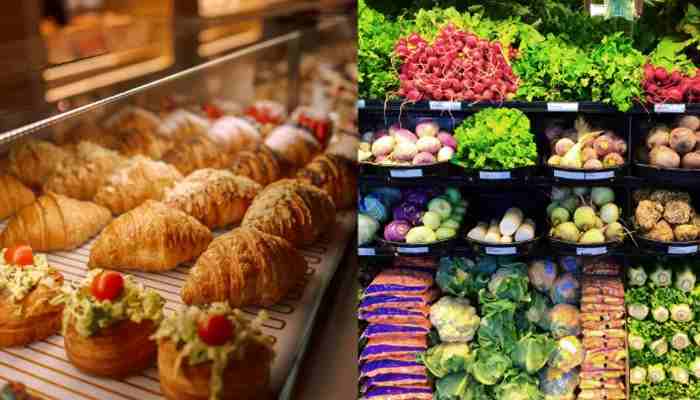
Another important part of how to reduce food waste with technology is making redistribution faster. Digital platforms can connect restaurants, supermarkets, bakeries, manufacturers, charities, food banks, and consumers.
If a bakery has unsold products at the end of the day, a digital marketplace can offer that food at a discount. Businesses may also use redistribution platforms to coordinate donations of safe, suitable surplus food.
UNEP points to platforms such as Too Good To Go and FoodCloud as examples of technology being used to redistribute surplus food or help businesses manage donations.
The key is speed. Perishable food loses redistribution opportunities quickly, so real-time matching can make a major difference.
8. Monitor the Cold Chain With IoT Sensors
Food can be lost long before it reaches someone’s plate. Internet of Things (IoT) sensors can monitor conditions during storage and transportation. Depending on the system, they may track:
- Temperature
- Humidity
- Location
- Storage duration
- Equipment conditions
If a refrigerated truck or cold room moves outside its required temperature range, a connected monitoring system can generate an alert. That gives operators an opportunity to investigate quickly instead of discovering spoiled products hours later.
For businesses asking how to reduce food waste with technology across the supply chain, better cold-chain visibility can help protect perishable products from farm to store.
9. Improve Freshness With Smart Packaging
Packaging is becoming more intelligent. Some packaging technologies are designed to extend shelf life, while sensors or freshness indicators can help monitor product conditions.
The broader goal is to protect food from oxygen, moisture, contamination, physical damage, or unsuitable storage conditions.
Shelf-life innovation is also happening beyond packaging. USDA Agricultural Research Service projects include technologies and treatments intended to reduce storage losses and extend the useful life of fruits and vegetables. Longer-lasting food gives retailers and consumers more time to use it.
10. Reduce Farm Losses With Precision Agriculture
How to reduce food waste with technology is not only a household or supermarket question. Losses can occur before food even reaches retail.
Farmers increasingly have access to tools such as:
- Drones
- Satellite imagery
- AI crop monitoring
- Weather sensors
- Automated sorting
- Disease-detection systems
- Smart irrigation
- Harvest forecasting
Better information can help growers identify diseases earlier, optimize harvesting, improve storage, and reduce avoidable losses.
USDA researchers, for example, are exploring AI, disease detection, storage improvements, new crop varieties, and other technologies aimed at reducing food loss from farm to table.
11. Use AI Meal Planning to Cook What You Already Have
AI can also be useful in an ordinary kitchen. Instead of asking, “What should I cook tonight?” users can give an AI assistant the ingredients already sitting in the refrigerator.
For example:
“I have two carrots, cooked rice, spinach, eggs, and half an onion. Suggest three simple meals that use these ingredients first.”
UNEP has specifically highlighted the potential for AI assistants to help households identify what they waste, understand why it happens, and develop better shopping, cooking, and storage habits.
AI can also help create weekly meal plans and shopping lists based on existing food. The important point is to verify food-safety advice rather than treating an AI assistant as a substitute for authoritative safety guidance.
12. Use Technology for Unavoidable Food Scraps
Even an efficient kitchen will produce some unavoidable scraps. Technology can help manage what cannot reasonably be prevented, eaten, donated, or upcycled.
Options may include:
- Smart composting systems
- Commercial composting equipment
- Organic-waste collection technology
- Anaerobic digestion
- Food by-product processing
- Waste-to-resource systems
Anaerobic digestion uses microorganisms to break down organic material without oxygen and can generate biogas. Composting returns organic matter and nutrients to soil.
But there is an important distinction: recycling scraps is not the same as preventing edible food waste. EPA places prevention, donation, and upcycling above composting on its Wasted Food Scale.
How Technology Helps at Each Stage of the Food System
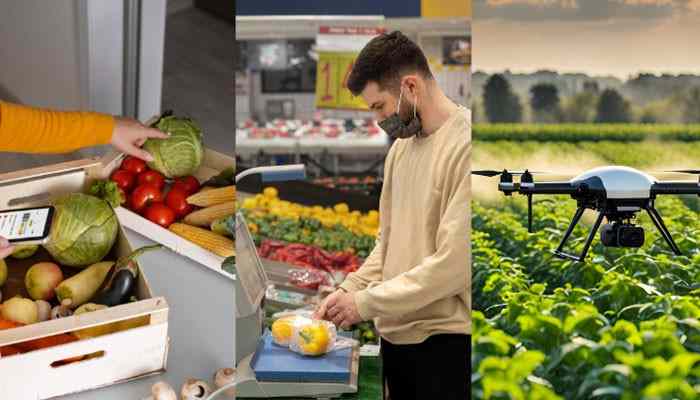
Understanding how to reduce food waste with technology becomes easier when we look at where waste occurs.
On Farms
Sensors, disease detection, weather forecasting, precision agriculture, better storage, and automated sorting can reduce losses before products leave farms.
During Transportation
Cold-chain monitoring, GPS, route optimization, and connected sensors can protect perishable food and identify storage problems sooner.
In Supermarkets
AI forecasting, inventory management, dynamic pricing, freshness monitoring, and donation platforms can reduce unsold inventory.
In Restaurants and Hotels
AI waste measurement, demand forecasting, menu analytics, portion analysis, and inventory systems can reveal exactly where money and food are being lost.
At Home
Meal-planning apps, smart shopping lists, freezer inventories, expiry reminders, AI recipe tools, and connected appliances can help families buy and prepare only what they are likely to eat.
A Simple Technology-Based Food Waste Plan for Households
You do not need an expensive smart refrigerator to begin.
Start with tools you probably already own:
- Check before shopping: Use your phone to keep a shared grocery list.
- Photograph your refrigerator: Check the image while shopping if you cannot remember what is at home.
- Plan meals digitally: Build meals around ingredients that need using first.
- Set reminders: Add alerts for leftovers and highly perishable foods.
- Keep a freezer list: Record what goes into the freezer and when.
- Track what you throw away: Review your waste every week and look for patterns.
- Ask AI for leftover recipes: Give it your available ingredients rather than buying new ones.
This approach shows that how to reduce food waste with technology does not have to mean buying expensive equipment. Often, better information is enough to change behavior.
Benefits of Using Technology to Reduce Food Waste
The benefits extend far beyond having a cleaner refrigerator.
1. Lower Food Costs: Better forecasting and shopping decisions mean households and businesses buy less food that will never be eaten. USDA says a family of four could save more than $3,000 annually by reducing waste.
2. Lower Environmental Impact: Wasted food also wastes the land, water, labor, energy, transportation, and other resources used to produce it.
3. Less Landfill Waste: Food is a major component of U.S. municipal landfills. EPA estimates it represents about 24% of material in municipal solid-waste landfills.
4. Better Business Decisions: Waste data can show restaurants and retailers which products are overordered, which dishes generate plate waste, and where operational changes could save money.
5. More Food Redistribution: Digital coordination makes it easier to identify suitable surplus food and connect it with charities, community groups, food banks, or consumers before the food becomes unusable.
Where Technology Still Falls Short
Technology is a tool, not a complete solution. An app cannot reduce waste if users ignore its alerts. An AI forecasting platform cannot fix poor inventory practices if its data is incomplete. Smart packaging cannot compensate for unsafe storage.
There are also costs to consider. Sensors, cameras, software subscriptions, integration, training, and connected equipment may be difficult for smaller businesses to afford.
AI itself has an environmental footprint. UNEP notes that AI-supporting data centers consume electricity and water, which means digital solutions should deliver meaningful efficiency benefits rather than adding technology without a clear purpose.
The best system is therefore not necessarily the most advanced. It is the one that identifies a real source of waste and helps people take measurable action.
What Is the Future of Food-Waste Technology?
The next phase will likely involve more connected systems. Instead of a supermarket using separate tools for purchasing, inventory, pricing, and donations, data can increasingly move between these functions.
For example, a future integrated workflow could:
Predict demand → order stock → monitor freshness → adjust prices → identify surplus → coordinate donation → measure remaining waste.
ReFED identifies AI, predictive analytics, automation, and integration between inventory, point-of-sale, logistics, and other operational systems as important areas for food-waste innovation.
That shift is important because the strongest answer to how to reduce food waste with technology is not one clever device. It is better information flowing through the entire food system.
Conclusion
Understanding how to reduce food waste with technology starts with one principle: prevent waste before trying to manage it. AI forecasting can stop businesses from ordering too much. Smart inventory systems can make forgotten food visible. IoT sensors can protect the cold chain. Dynamic pricing can help retailers sell products sooner. Digital marketplaces can redirect surplus food, while precision agriculture and storage innovations can reduce losses before food even reaches stores.
Technology alone will not solve food waste. People still need to shop carefully, store food correctly, measure waste, change habits, and make responsible business decisions. But when technology provides the right information at the right time, those decisions become much easier.
In 2026, the smartest approach to how to reduce food waste with technology is therefore not simply adding more devices. It is using AI, data, sensors, apps, and connected systems where they can prevent edible food from being lost in the first place, and finding the best possible use for what remains.
How to Reduce Food Waste With Technology FAQs
1. How can technology help reduce food waste?
Technology can reduce food waste by improving demand forecasting, inventory tracking, storage monitoring, meal planning, dynamic pricing, surplus redistribution, waste measurement, and food-scrap management.
2. How can AI reduce food waste?
AI can analyze sales, inventory, weather, consumer behavior, and waste data to predict demand and identify patterns. It can also help households create recipes and meal plans using food they already have.
3. What technology can reduce food waste at home?
Useful household tools include grocery-list apps, meal planners, freezer inventories, expiry reminders, AI recipe assistants, connected refrigerators, and food-waste tracking apps.
4. How can restaurants use technology to prevent food waste?
Restaurants can use AI waste-tracking systems, digital inventory management, sales forecasting, portion analysis, menu analytics, and surplus-food redistribution platforms.
5. Can smart refrigerators prevent food waste?
They can help. Features such as internal cameras, inventory visibility, temperature monitoring, and shopping-list integration may help users remember what food they have and avoid unnecessary purchases.
6. How does technology reduce supermarket food waste?
Retailers can combine demand forecasting, automated inventory systems, dynamic markdowns, freshness tracking, and food-donation platforms to sell or redistribute products before they become waste.
7. Is composting the best technological solution for food waste?
Not when edible food can be prevented from becoming waste. EPA prioritizes prevention, donation, and upcycling above composting. Composting remains valuable for appropriate scraps that cannot reasonably be prevented or reused.