


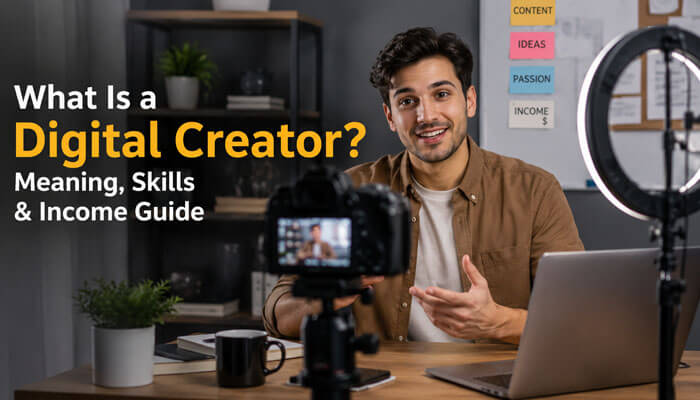

The internet has changed how people build careers, share knowledge, grow communities, and earn money. Today, many beginners ask, What is a Digital Creator? A digital creator is someone who creates and publishes original content online to educate, entertain, inspire, or inform an audience.
A digital creator may produce videos, blogs, podcasts, photos, graphics, newsletters, livestreams, online courses, or digital products. They use platforms like YouTube, Instagram, TikTok, Facebook, LinkedIn, Substack, podcasts, blogs, and websites to reach and grow their audience.
What is a Digital Creator in simple words? It is someone who uses creativity, knowledge, and digital tools to build trust, share value, grow a community, and sometimes turn online content into income.
Quick Answer: What Is a Digital Creator?
A digital creator is a person who creates and publishes original content on digital platforms. This content can include videos, blog posts, podcasts, social media posts, newsletters, online courses, digital products, livestreams, photos, graphics, tutorials, or templates.
In simple words, What Is a Digital Creator means understanding someone who uses online platforms to share knowledge, creativity, entertainment, expertise, or personal experience with an audience.
A digital creator may create content as a hobby, side hustle, personal brand, freelance career, or full-time business. Digital creators can earn money through ads, sponsorships, affiliate marketing, memberships, subscriptions, online courses, digital products, consulting, freelance services, and brand collaborations.
How We Researched This Digital Creator Guide
To create this guide on What Is a Digital Creator, we reviewed creator economy trends, platform monetization requirements, creator income models, brand partnership practices, disclosure rules, SEO search intent, and beginner creator career paths.
This guide focuses on:
- Digital creator meaning
- Digital creator examples
- Skills needed to become a digital creator
- Digital creator income streams
- Best platforms for creators
- Creator vs influencer differences
- UGC creator and creatorpreneur comparisons
- Legal and ethical responsibilities
- AI and originality concerns
- Beginner action steps
- Brand deal preparation
- Creator metrics and KPIs
The goal is to answer What Is a Digital Creator in a clear, useful, and practical way for beginners, freelancers, students, entrepreneurs, and professionals who want to build an online presence.
What Is a Digital Creator?
A digital creator is a person who makes original content for online platforms. The content may be educational, entertaining, artistic, informative, motivational, commercial, or community-based. Digital creators use digital tools and digital channels to publish their work and connect with a specific audience.
The focus keyword What Is a Digital Creator is commonly searched by beginners who want to understand whether digital creation is a hobby, side hustle, profession, freelance skill, or full-time business. The answer is that it can be all of these, depending on the creator’s goals, skills, consistency, audience, and income strategy.
A digital creator builds attention online by creating valuable content consistently for a specific audience. In today’s creator economy, creators can turn knowledge, creativity, and communities into scalable digital businesses.
A digital creator may create:
- Short videos
- Long-form YouTube videos
- Blog articles
- Social media posts
- Podcasts
- Online courses
- Digital art
- Newsletters
- Photography
- Tutorials
- Memes
- Product reviews
- Live streams
- E-books
- Templates
- Community content
For example, a person who teaches business tips on LinkedIn is a digital creator. A YouTuber who reviews gadgets is a digital creator. A blogger who writes travel guides is a digital creator. A designer who shares Canva templates is also a digital creator.
Digital Creator Meaning in Simple Words
The meaning of digital creator can be understood by breaking the term into two parts.
| Term | Meaning |
| Digital | Something created, shared, or consumed through electronic platforms such as websites, apps, social media, and online tools |
| Creator | A person who produces original work, ideas, content, or media |
| Digital Creator | A person who creates and shares original content online |
So, when someone asks What is a Digital Creator, the simple answer is:
A digital creator is a person who creates online content for digital platforms and builds an audience through creativity, knowledge, entertainment, expertise, or storytelling.
A digital creator may or may not be famous. Many digital creators start with small audiences. Some creators only create content as a hobby, while others earn money through ads, sponsorships, subscriptions, affiliate marketing, digital products, consulting, freelance services, or paid communities.
What a Digital Creator Is Not
A digital creator is not simply someone who uses social media. Many people post photos, videos, or personal updates online, but that does not always make them digital creators.
A digital creator usually creates content with a clear purpose, audience, niche, and publishing strategy.
| Not Always a Digital Creator | Why |
| A person who only scrolls social media | They consume content but do not create it |
| A user who posts random personal updates | There may be no niche, strategy, or audience goal |
| A person who reposts other people’s videos | This may lack originality and creator ownership |
| A spam page posting copied content | This does not build real trust or authority |
| A celebrity with a social account | Fame alone does not mean they are creating useful digital content |
A real digital creator focuses on original content, audience value, creativity, consistency, and trust. This matters because platforms increasingly reward creators who publish original and useful content.
Why Digital Creators Are Important in 2026
Digital creators are important because people now spend a large part of their time consuming online content. Instead of depending only on TV, newspapers, magazines, and traditional ads, audiences follow creators they trust.
Brands also work with digital creators because creators can connect with audiences in a personal and authentic way. A creator with a loyal niche audience can sometimes drive more trust than a large but generic advertising campaign.
Digital creators are important because they:
- Explain complex topics in simple ways
- Help people discover products and services
- Build communities around shared interests
- Create educational and entertainment content
- Support small businesses through content marketing
- Influence buying decisions
- Build independent media brands
- Turn personal knowledge into digital products
- Help brands reach targeted audiences
This shows that digital creation is no longer only a hobby. For many people, it is a career path, business model, marketing channel, and personal brand strategy.
What Does a Digital Creator Do?
A digital creator does more than simply upload posts. Behind every successful post, video, blog, or newsletter, there is planning, research, production, editing, publishing, analytics, and community engagement.
A digital creator usually performs tasks such as:
- Researching content ideas
- Understanding audience problems
- Writing scripts, captions, blogs, or newsletters
- Recording videos or audio
- Taking photos or designing graphics
- Editing content
- Publishing across platforms
- Replying to comments and messages
- Studying analytics
- Testing new content formats
- Collaborating with brands or creators
- Creating digital products
- Building an email list or community
- Improving personal branding
For example, a fitness digital creator may plan workout videos, record exercise tutorials, edit Reels, write captions, post nutrition tips, reply to followers, collaborate with fitness brands, and sell a workout guide.
A finance digital creator may explain budgeting, create carousel posts, record YouTube videos, write newsletters, and offer paid workshops.
A business digital creator may publish startup advice, interview founders, create LinkedIn posts, write blog content, and sell templates or consulting services.
Digital Creator Job Description
A digital creator’s job is to plan, create, publish, and improve online content for a specific audience. The role can be independent, freelance, brand-based, agency-based, or full-time.
If a company asks What Is a Digital Creator in a hiring context, the answer usually describes someone who can create content, understand audiences, use digital tools, and support brand growth.
Main Responsibilities of a Digital Creator
A digital creator may be responsible for:
- Researching content ideas
- Writing scripts, captions, blogs, or newsletters
- Recording videos or podcasts
- Editing photos, audio, and videos
- Designing graphics or thumbnails
- Publishing content on digital platforms
- Studying audience analytics
- Replying to comments and messages
- Building community engagement
- Creating digital products
- Working with brands
- Managing sponsorships and affiliate links
- Following copyright, disclosure, and platform rules
| Area | Responsibility |
| Content Planning | Research topics, trends, keywords, and audience questions |
| Production | Create videos, blogs, images, podcasts, or newsletters |
| Editing | Improve content quality before publishing |
| Publishing | Post content on platforms like YouTube, Instagram, TikTok, LinkedIn, or blogs |
| Analytics | Track views, clicks, watch time, saves, shares, and conversions |
| Monetization | Manage ads, sponsorships, products, memberships, and affiliate income |
| Community | Respond to followers and build audience trust |
| Brand Work | Create sponsored content, UGC, reviews, or campaigns |
Digital Creator vs Content Creator vs Influencer
Many people confuse digital creators, content creators, and influencers. These terms are related, but they are not exactly the same.
| Category | Main Focus | Example | Income Style |
| Digital Creator | Creating online content using digital platforms | YouTuber, blogger, podcaster, Instagram creator | Ads, sponsorships, products, subscriptions |
| Content Creator | Creating content in any format, online or offline | Writer, photographer, videographer, designer | Freelance work, brand work, content services |
| Influencer | Influencing audience opinions or buying decisions | Fashion influencer, beauty influencer, lifestyle influencer | Brand deals, affiliate links, sponsored posts |
A digital creator focuses on producing digital content. An influencer focuses more on influencing audience behavior, especially buying decisions. A content creator is a broader term that can include digital creators, photographers, copywriters, video editors, designers, and media producers.
A digital creator can become an influencer, but not every digital creator is an influencer. For example, a teacher who creates math tutorials on YouTube is a digital creator. If that teacher later promotes learning apps and influences purchases, they may also become an influencer.
Digital Creator vs Influencer: Key Difference
A digital creator usually focuses on creating valuable, useful, or entertaining content. An influencer usually focuses on using audience trust to influence opinions, trends, or buying decisions.
| Point | Digital Creator | Influencer |
| Main Goal | Create content | Influence audience decisions |
| Content Type | Educational, entertaining, artistic, informational | Lifestyle, product-focused, recommendation-based |
| Audience Relationship | Built through value and consistency | Built through personality, trust, and aspiration |
| Brand Role | May create content for brands | Promotes products to followers |
| Example | A creator teaching video editing | A creator promoting a camera brand |
However, in real life, many creators do both. A cooking digital creator may publish recipe videos and also promote kitchen products. A tech creator may review gadgets and also influence purchase decisions.
Digital Creator vs UGC Creator vs Influencer vs Creatorpreneur
| Term | Meaning | Main Goal | Example |
| Digital Creator | Creates original digital content online | Educate, entertain, inform, or inspire | A YouTuber teaching business tips |
| UGC Creator | Creates user-generated style content for brands | Produce content brands can use in ads | A creator filming product demo videos |
| Influencer | Uses audience trust to influence opinions or purchases | Promote brands, products, or lifestyle choices | A fashion influencer promoting clothing |
| Creatorpreneur | Builds a business around content and audience | Sell products, services, courses, or memberships | A creator selling templates and paid courses |
This comparison helps readers understand related terms and supports SEO keywords such as digital creator vs influencer, UGC creator, content creator meaning, and creatorpreneur.
Types of Digital Creators
There are many types of digital creators. The best type depends on your skills, interests, audience, and platform. When beginners search What Is a Digital Creator, they often want to know which creator type fits their personality and goals.
1. Video Creators
Video creators make content for YouTube, TikTok, Instagram Reels, Facebook Reels, LinkedIn video, or other video platforms. They may create tutorials, reviews, vlogs, interviews, comedy clips, educational videos, or documentaries.
2. Bloggers
Bloggers create written content on websites. They may write about business, technology, travel, finance, health, fashion, startups, food, or personal development. Blogging is still powerful because blog content can rank on Google and bring long-term traffic.
3. Social Media Creators
Social media creators publish posts, carousels, Reels, Stories, Threads, tweets, and short-form content. They often focus on engagement, trends, and community building.
4. Podcasters
Podcasters create audio content. They may interview experts, discuss industry topics, tell stories, or educate listeners. Podcasts are useful for creators who are good at speaking and conversation.
5. Newsletter Creators
Newsletter creators build email audiences. They send regular content directly to subscribers. Many newsletter creators use free and paid subscriptions to build a loyal reader base.
6. Course Creators
Course creators package their knowledge into online courses. They may teach skills such as marketing, design, coding, business, fitness, language learning, or personal finance.
7. Digital Product Creators
Digital product creators sell downloadable products such as templates, e-books, presets, Notion dashboards, Excel sheets, Canva templates, planners, checklists, or guides.
8. Livestream Creators
Livestream creators build audiences through real-time content. They may stream gaming, education, live shopping, Q&A sessions, music, tutorials, or behind-the-scenes content.
9. UGC Creators
UGC means user-generated content. UGC creators produce content for brands, usually without needing to post it on their own accounts. Brands use this content in ads, websites, and social media campaigns.
10. Niche Experts
Niche experts create content around a specific topic such as startups, law, health, cybersecurity, AI tools, parenting, finance, productivity, real estate, or education.
Examples of Digital Creators
To understand What Is a Digital Creator, it helps to look at practical examples.
| Niche | Digital Creator Example | Content They Create |
| Business | Startup educator | Founder tips, funding guides, business lessons |
| Technology | Gadget reviewer | Product reviews, comparisons, tutorials |
| Finance | Money educator | Budgeting tips, investment basics, saving guides |
| Fitness | Online coach | Workout videos, meal tips, fitness plans |
| Education | Teacher creator | Subject lessons, exam tips, study guides |
| Travel | Travel blogger | Destination guides, itineraries, hotel reviews |
| Food | Recipe creator | Cooking videos, food photography, recipe blogs |
| Beauty | Makeup creator | Tutorials, product reviews, skincare routines |
| Career | LinkedIn creator | Resume tips, job search advice, interview guides |
| Design | Graphic creator | Templates, tutorials, branding tips |
A digital creator does not need to cover every topic. In fact, the best creators usually start with one clear niche and build authority around it.
Skills Needed to Become a Digital Creator
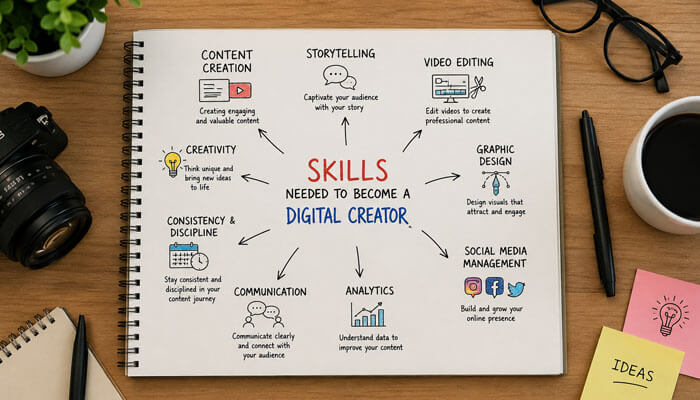
To become a digital creator, you do not need to master everything from day one. However, some skills are very helpful if you want to grow faster and create better content.
| Skill | Why It Matters | Beginner Tip |
| Content Writing | Helps with captions, scripts, blogs, newsletters, and storytelling | Practice writing short, clear posts daily |
| Video Recording | Important for YouTube, Reels, TikTok, and tutorials | Start with your phone camera |
| Editing | Makes content clean, engaging, and professional | Learn basic cuts, subtitles, and sound editing |
| SEO | Helps blogs and YouTube videos get discovered | Use keywords naturally in titles and headings |
| Social Media Strategy | Helps you grow on platforms | Study what works in your niche |
| Personal Branding | Makes your content recognizable | Use a consistent voice, message, and style |
| Research | Improves accuracy and depth | Use credible sources before creating content |
| Storytelling | Keeps people engaged | Use real examples and simple narratives |
| Analytics | Helps you understand performance | Track reach, saves, clicks, watch time, and engagement |
| Monetization | Helps turn content into income | Build multiple income streams slowly |
If your main question is What Is a Digital Creator, remember that skills matter more than expensive equipment. A beginner can improve by practicing content writing, editing, storytelling, SEO, and audience research.
Important Soft Skills for Digital Creators
Many new creators quit too early because they expect viral growth within weeks. In reality, most successful creators improve slowly through consistency, experimentation, and audience feedback.
Technical skills help you create content, but soft skills help you survive and grow as a creator.
A successful digital creator needs:
- Patience
- Consistency
- Creativity
- Adaptability
- Communication
- Discipline
- Confidence
- Curiosity
- Problem-solving
- Emotional resilience
Digital creation is not always easy. Some posts will perform well, and some will fail. Some videos may take hours to create but receive low views. Some brand deals may not work out. That is why patience and consistency matter.
Creators who treat content creation like a long-term skill usually grow better than those who expect overnight success.
Best Platforms for Digital Creators
A digital creator can use many platforms, but choosing the right platform depends on the content format and target audience.
| Platform | Best For | Creator Type |
| YouTube | Long videos, tutorials, reviews, education | Video creators |
| Reels, lifestyle, photos, personal brand | Social creators | |
| TikTok | Short videos, trends, entertainment, discovery | Short-form creators |
| Reels, groups, communities, broad audiences | Community creators | |
| Business, career, B2B, thought leadership | Professional creators | |
| Blog/Website | SEO traffic, guides, reviews, evergreen content | Writers and niche experts |
| Substack | Newsletters and paid writing | Writers and analysts |
| Podcast Platforms | Audio content and interviews | Podcasters |
| Patreon | Memberships and fan communities | Artists, educators, entertainers |
| Visual discovery, blogs, products | Bloggers, designers, lifestyle creators |
The best strategy is not to join every platform at once. Beginners should start with one main platform and one support platform. For example, a beginner can use YouTube as the main platform and Instagram Reels as the support platform. A writer can use a blog as the main platform and LinkedIn as the support platform.
How Digital Creators Make Money
One of the biggest questions after What Is a Digital Creator is: how do digital creators make money?
Digital creators can earn income in many ways. Some earn from platforms directly. Others earn from brands, products, consulting, services, or audience support.
| Income Stream | How It Works | Best For |
| Ad Revenue | Platforms share ad income with creators | YouTube creators, bloggers |
| Brand Sponsorships | Brands pay creators to promote products or services | Influencers, niche creators |
| Affiliate Marketing | Creator earns commission for sales through links | Review creators, bloggers, YouTubers |
| Digital Products | Creator sells e-books, templates, presets, guides, or courses | Educators, designers, experts |
| Online Courses | Creator sells structured learning content | Experts, teachers, coaches |
| Paid Subscriptions | Audience pays monthly or yearly | Newsletter creators, community creators |
| Memberships | Fans pay for exclusive content or access | Artists, educators, podcasters |
| Consulting | Creator sells expertise directly | Business, finance, marketing creators |
| Freelance Services | Creator offers content, editing, writing, or design services | Skilled beginners |
| Live Events | Creator hosts workshops, webinars, or paid sessions | Coaches, educators, niche experts |
| Merchandise | Creator sells branded products | Creators with loyal communities |
| UGC Content | Creator makes content for brands without posting it | Video creators, product creators |
Beginners should not assume income will come quickly. A smart digital creator focuses first on content quality, audience trust, and niche clarity before expecting high income.
Platform Monetization Eligibility Snapshot
Digital creator income depends heavily on the platform. Each platform has different monetization rules, and these rules can change over time. Creators should always check official platform requirements before relying on income.
| Platform | Common Monetization Options | Important Note |
| YouTube | Ads, Shorts revenue, memberships, Super Chat, Super Thanks, YouTube Premium revenue, Shopping | Monetization usually depends on subscriber count, watch time, Shorts views, policy compliance, and location eligibility |
| TikTok | Creator rewards, TikTok Shop, brand deals, live gifts, affiliate promotions | Eligibility can depend on followers, views, age, region, account standing, and original content |
| Reels, photos, Stories, text posts, content monetization, brand partnerships | Monetization depends on creator eligibility, content quality, and platform rules | |
| Patreon | Memberships, paid tiers, one-time purchases, community access | Creator earnings depend on audience loyalty, pricing, platform fees, and payment processing |
| Substack | Free and paid newsletters, podcasts, premium posts | Paid readership depends on niche authority, trust, and subscriber value |
This table gives a practical answer to What Is a Digital Creator from an income perspective. A creator is not only a content publisher but also someone who may build a monetization system around audience trust.
Digital Creator Income: How Much Can You Earn?
Digital creator income varies widely. Some creators earn nothing. Some earn part-time income. Some build full-time businesses. A small number become very wealthy.
Income depends on:
- Niche
- Audience size
- Audience trust
- Platform
- Content quality
- Engagement rate
- Monetization strategy
- Brand relationships
- Product quality
- Consistency
- Location and market demand
A creator with 10,000 loyal followers in a profitable niche may earn more than a creator with 100,000 followers but weak audience trust.
For example, a finance, business, software, real estate, or career creator may earn more per follower because the audience has stronger buying intent. A comedy creator may need a larger audience to earn similar income through ads or brand deals.
| Creator Level | Audience Size | Possible Income Type |
| Beginner | 0–5,000 followers | No income, small affiliate income, freelance work |
| Growing Creator | 5,000–25,000 followers | Small sponsorships, UGC, digital products, services |
| Micro Creator | 25,000–100,000 followers | Brand deals, affiliate income, subscriptions |
| Established Creator | 100,000–500,000 followers | Multiple income streams, courses, consulting, ads |
| Professional Creator | 500,000+ followers | Large sponsorships, product lines, agencies, media business |
These are general ranges, not guaranteed income numbers. A digital creator should treat income as a business outcome, not just a follower count.
Media Kit Checklist for Digital Creators
A media kit is a professional document that helps digital creators work with brands. It shows who the creator is, what audience they reach, and why a brand should collaborate with them.
A digital creator media kit should include:
- Creator name and short bio
- Niche and content categories
- Audience demographics
- Platform links
- Follower count
- Monthly reach or impressions
- Engagement rate
- Best-performing content examples
- Previous brand collaborations
- Services offered
- Pricing or package options
- Contact email
- Testimonials or case studies
| Package | What It Includes |
| Basic Sponsored Post | One post, one caption, one story mention |
| Short-Form Video Package | One Reel, TikTok, or YouTube Short |
| UGC Package | Product demo video for brand use |
| Blog Review Package | SEO blog review with images and links |
| Full Campaign Package | Video, post, story, newsletter, and blog mention |
This section helps readers understand that becoming a digital creator is not only about posting content. It is also about building a professional brand that businesses can trust.
Brand Deal and Sponsorship Checklist
Before accepting a brand deal, a digital creator should review the offer carefully. Not every paid collaboration is worth accepting.
Before saying yes to a brand deal, check:
- Does the product match your niche?
- Is the brand trustworthy?
- Will your audience find it useful?
- Are the payment terms clear?
- Who owns the final content?
- Can the brand reuse your content in ads?
- How long can the brand use your image or video?
- Are revisions included?
- Is exclusivity required?
- Is disclosure required?
- Are deadlines realistic?
- Is there a written agreement?
Professional readers who search What Is a Digital Creator often want to know how brand collaborations work. The safest answer is that creators should protect trust first and accept only deals that match their audience.
Digital Creator Contract Checklist
Once creators begin working with brands professionally, contracts become important for protecting both sides of a collaboration.
A digital creator should avoid starting paid brand work without a written agreement. A contract protects both the creator and the brand.
| Contract Point | Why It Matters |
| Deliverables | Defines exactly what content must be created |
| Deadline | Prevents confusion about posting dates |
| Payment Amount | Confirms the agreed fee |
| Payment Date | Explains when the creator will be paid |
| Usage Rights | Shows whether the brand can reuse the content |
| Exclusivity | Prevents the creator from working with competitors for a set period |
| Revision Limit | Controls how many edits the brand can request |
| Cancellation Terms | Explains what happens if the campaign is canceled |
| Disclosure Requirement | Helps follow advertising rules |
| Content Ownership | Clarifies who owns the final content |
This section improves trust because it gives practical business guidance instead of only explaining the meaning of a digital creator.
Best Niches for Digital Creators
Choosing the right niche is one of the most important decisions for a digital creator. A niche helps your audience understand what you are known for.
| Niche | Why It Works |
| Business and Startups | High demand from entrepreneurs and professionals |
| Finance | Strong audience interest in saving, investing, and money skills |
| Technology and AI | Fast-growing topic with high search demand |
| Education | Evergreen demand from students and learners |
| Career Development | Useful for job seekers and professionals |
| Health and Fitness | Large audience and strong product opportunities |
| Beauty and Fashion | Visual content performs well on social platforms |
| Food and Cooking | Easy to demonstrate through short videos |
| Travel | Strong visual appeal and affiliate opportunities |
| Parenting | High trust and community-based engagement |
| Productivity | Popular among professionals and students |
| Marketing | Useful for businesses and freelancers |
| Personal Development | Strong emotional and motivational appeal |
The best niche is not always the most profitable niche. The best niche is where your knowledge, interest, audience demand, and income opportunity meet.
How to Choose Your Digital Creator Niche
Before becoming a digital creator, ask yourself these questions:
- What topics do I enjoy learning about?
- What problems can I help people solve?
- What content can I create consistently?
- What skills or experiences do I already have?
- Is there audience demand for this topic?
- Can this niche be monetized later?
- Can I create content for this topic for at least one year?
- What makes my angle different?
For example, “fitness” is too broad. “Home workouts for busy mothers” is more specific. “Business” is too broad. “Startup marketing tips for first-time founders” is more focused.
A focused niche helps Google, social media algorithms, and audiences understand your content better.
Step-by-Step Guide: How to Become a Digital Creator
If you are asking What is a Digital Creator because you want to become one, follow this simple roadmap.
Step 1: Choose a Niche
Pick a topic you can create content about consistently. Your niche should match your interest, knowledge, and audience demand.
Examples:
- AI tools for small businesses
- Budget travel in India
- Startup marketing
- Home cooking
- Personal finance for beginners
- Fitness for office workers
- Career tips for freshers
Step 2: Define Your Target Audience
Do not create content for everyone. Create content for a clear group of people.
Ask:
- Who am I helping?
- What problems do they have?
- What content do they already watch or read?
- What result do they want?
- What language and tone do they prefer?
For example, if your audience is startup founders, your content should focus on growth, marketing, funding, productivity, business tools, and real startup lessons.
Step 3: Select Your Main Platform
Choose one main platform based on your content style.
- Choose YouTube if you like long videos.
- Choose Instagram or TikTok if you like short videos.
- Choose a blog if you like writing and SEO.
- Choose LinkedIn if your topic is business or career.
- Choose Substack if you want newsletter subscribers.
- Choose podcasting if you prefer speaking.
Step 4: Build a Simple Content Plan
A content plan prevents confusion and helps you stay consistent.
Your content plan can include:
- Educational posts
- How-to guides
- Mistakes to avoid
- Personal stories
- Product reviews
- Case studies
- Trend explanations
- Beginner tutorials
- Expert interviews
- Checklists
Step 5: Create Content Pillars
Content pillars are the main topics you repeat often.
| Content Pillar | Example Topic |
| Startup Ideas | How to validate a startup idea |
| Marketing | Low-budget marketing tips |
| Funding | How startup funding works |
| Tools | Best tools for founders |
| Mistakes | Common mistakes first-time founders make |
Step 6: Start Creating With Basic Tools
You do not need expensive equipment at the beginning. A smartphone, good lighting, clear audio, and simple editing tools are enough.
Beginner tools can include:
- Smartphone camera
- Natural light or ring light
- Basic microphone
- Canva for graphics
- CapCut for editing
- Google Docs for scripts
- Notion or Trello for planning
- Grammarly for writing
- Google Trends for topic research
- YouTube Studio or platform analytics
Step 7: Publish Consistently
Consistency is more important than perfection. Start with a realistic schedule.
For example:
- 3 short videos per week
- 1 blog post per week
- 2 LinkedIn posts per week
- 1 newsletter per week
A simple consistent plan is better than an aggressive plan that fails after two weeks.
Step 8: Study Analytics
Analytics show what your audience likes.
Track:
- Views
- Watch time
- Click-through rate
- Saves
- Shares
- Comments
- Follower growth
- Email signups
- Website traffic
- Sales or conversions
Use analytics to improve your content, not to judge your worth.
Step 9: Build Trust Before Selling
People buy from creators they trust. Before selling products, courses, or services, give value consistently.
Build trust by:
- Sharing honest opinions
- Avoiding fake claims
- Showing real examples
- Explaining your process
- Correcting mistakes
- Disclosing sponsorships
- Recommending only useful products
Step 10: Monetize Slowly
Start monetizing after you understand your audience. Beginner-friendly monetization options include affiliate marketing, UGC content, freelance services, templates, and small digital products.
30-Day Action Plan to Become a Digital Creator
| Day Range | Action |
| Days 1–3 | Choose your niche and target audience |
| Days 4–5 | Study 10 successful creators in your niche |
| Days 6–7 | Create 5 content pillars |
| Days 8–10 | Write 30 content ideas |
| Days 11–15 | Create and publish your first 5 posts or videos |
| Days 16–18 | Improve your profile bio, photo, and links |
| Days 19–21 | Test different hooks, captions, and formats |
| Days 22–24 | Study analytics and identify best-performing content |
| Days 25–27 | Repurpose top content into new formats |
| Days 28–30 | Build a simple portfolio or media kit |
This section makes the article more actionable for beginners searching What Is a Digital Creator because many readers want the next steps, not only the definition.
Digital Creator Content Strategy
A strong content strategy helps you create content with purpose instead of posting randomly.
1. Search-Based Content
Search-based content answers questions people are already searching for. For example, what is a Digital Creator, how to become a Digital Creator, Best Tools for Digital Creators, digital creator vs influencer, and how digital creators make money are strong search-based topics.
2. Problem-Solving Content
Problem-solving content helps the audience fix a challenge. Examples include how to create content when you have no ideas, how to record better videos at home, how to grow on Instagram without paid ads, and how to write better captions.
3. Authority Content
Authority content builds trust. Examples include case studies, personal results, research-backed posts, industry analysis, and expert interviews.
4. Engagement Content
Engagement content encourages comments and shares. Examples include polls, opinions, mistakes, myths, comparisons, and questions.
5. Conversion Content
Conversion content turns attention into income. Examples include product demos, testimonials, free resources, email signup offers, course launches, and service pages.
A smart digital creator uses all five types of content.
Digital Creator Metrics and KPIs
A digital creator should not only track followers. Followers are useful, but they do not always show real trust or income potential.
| Metric | What It Means | Why It Matters |
| Reach | Number of people who saw your content | Shows visibility |
| Impressions | Total views of your content | Shows repeated exposure |
| Engagement Rate | Likes, comments, saves, and shares | Shows audience interest |
| Watch Time | How long people watch videos | Important for video platforms |
| Click-Through Rate | Number of people clicking links or thumbnails | Shows content appeal |
| Saves | People saving content for later | Shows usefulness |
| Shares | People sharing your content | Shows value and virality |
| Email Subscribers | People joining your list | Builds owned audience |
| Conversion Rate | People taking action after seeing content | Shows business results |
| Revenue Per Post | Income generated by content | Helps measure monetization |
A creator with fewer followers but strong engagement, high saves, and good conversions may be more valuable than a creator with many inactive followers.
Best Tools for Digital Creators
Digital creators use tools to plan, create, edit, publish, and analyze content.
| Tool Category | Examples | Use |
| Writing | Google Docs, Grammarly, Notion | Scripts, blogs, captions |
| Design | Canva, Adobe Express, Figma | Graphics, thumbnails, templates |
| Video Editing | CapCut, Premiere Pro, DaVinci Resolve | Reels, YouTube videos, ads |
| Audio | Audacity, Riverside, Spotify for Podcasters | Podcasts and interviews |
| SEO | Google Search Console, Ahrefs, Semrush, Ubersuggest | Keyword research and ranking |
| Planning | Notion, Trello, Asana | Content calendar |
| Analytics | YouTube Studio, Instagram Insights, Google Analytics | Performance tracking |
| Substack, ConvertKit, Mailchimp | Newsletters | |
| Monetization | Patreon, Gumroad, Shopify, Teachable | Products and memberships |
Beginners should avoid buying too many tools. Start with free or low-cost tools and upgrade only when your content needs improve.
AI and Digital Creators in 2026
AI tools are changing how digital creators plan, write, design, edit, and publish content. A digital creator can use AI to save time, but AI should not replace originality, personal experience, and human judgment.
AI can help creators with:
- Topic research
- Script outlines
- Caption ideas
- Video editing
- Thumbnail ideas
- Grammar correction
- Content repurposing
- Email newsletter drafts
- Analytics summaries
- Content calendar planning
However, digital creators should avoid publishing low-value AI-generated content without adding personal insight, examples, research, or original experience. AI should support creativity, not replace it.
Best Practice for AI Use
A digital creator should use AI as an assistant, not as the final creator. The strongest content still comes from real experience, original thinking, audience understanding, and clear storytelling.
How to Build a Personal Brand as a Digital Creator
A digital creator needs a personal brand because audiences follow people they recognize and trust.
Your personal brand includes:
- Your niche
- Your voice
- Your values
- Your visual style
- Your content promise
- Your story
- Your expertise
- Your audience relationship
For example, two creators may both teach marketing. One may focus on simple marketing tips for small businesses. Another may focus on advanced paid ads for agencies. Their personal brands are different even though the broad topic is similar.
| Brand Element | Question to Ask |
| Niche | What topic do I want to be known for? |
| Audience | Who do I help? |
| Promise | What result do I help people achieve? |
| Tone | Am I friendly, expert, funny, direct, or motivational? |
| Visuals | Do my colors, fonts, and thumbnails look consistent? |
| Story | Why should people trust me? |
| Proof | What examples, results, or experience can I show? |
A strong personal brand makes your content easier to remember.
How to Grow as a Digital Creator
Growth takes time. However, you can improve your chances by following proven content principles.
-
Create for a Specific Audience
A clear audience helps your content feel more useful. Instead of saying “business tips,” say “business tips for first-time startup founders.”
-
Use Strong Hooks
The first few seconds or first few lines matter. A strong hook makes people stop scrolling.
Examples:
- “Most new creators make this mistake.”
- “Here is how I plan one month of content.”
- “What Is a Digital Creator? Here is the simple answer.”
- “You do not need millions of followers to earn online.”
Make Content Easy to Understand
Use simple language. Avoid unnecessary jargon. Break long ideas into smaller points.
Repurpose Content
One idea can become many content pieces.
A blog article can become:
- 5 Instagram posts
- 3 LinkedIn posts
- 1 YouTube video
- 1 newsletter
- 10 short videos
- 1 infographic
1. Collaborate With Others
Collaboration helps you reach new audiences. You can collaborate through interviews, guest posts, joint livestreams, podcasts, or content swaps.
2. Build an Email List
Social media platforms can change their algorithms. An email list gives you direct access to your audience.
3. Focus on Originality
Original content is becoming more important. Creators should avoid copying, reposting, or depending too much on low-effort content.
Digital Creator Monetization Strategy for Beginners
Beginners should not depend on one income stream. A smart income strategy grows in stages.
Stage 1: Build Skills and Portfolio
At the start, focus on learning:
- Writing
- Editing
- Design
- Posting
- Analytics
- Audience research
You can also create sample content to show your skills.
Stage 2: Offer Services
Before you have a large audience, you can earn through services.
Examples:
- Social media content creation
- Video editing
- Blog writing
- UGC videos
- Thumbnail design
- Short-form video editing
- Content strategy
- Copywriting
Stage 3: Use Affiliate Marketing
Once people trust your recommendations, you can promote useful tools or products and earn commission.
Stage 4: Create Digital Products
Digital products can include:
- E-books
- Templates
- Guides
- Checklists
- Notion dashboards
- Canva templates
- Mini-courses
Stage 5: Build Paid Community or Membership
If your audience wants deeper access, you can offer paid membership, a private community, exclusive content, or coaching.
Stage 6: Work With Brands
Brand sponsorships can be profitable, but creators should only promote products that match their audience and values.
Legal and Ethical Responsibilities of a Digital Creator
A digital creator has influence. That influence comes with responsibility.
Creators should:
- Avoid false claims
- Credit original sources
- Respect copyright
- Disclose sponsored content
- Avoid misleading thumbnails
- Follow platform rules
- Protect audience privacy
- Avoid promoting unsafe products
- Be careful with health, finance, and legal advice
- Use AI tools responsibly
If you earn income as a creator, you may also have tax responsibilities. Rules vary by country, so creators should check local tax laws or speak with a tax professional.
Accessibility Tips for Digital Creators
Accessibility helps more people understand and enjoy your content. It also improves user experience.
Digital creators should:
- Add captions to videos
- Use clear audio
- Avoid tiny text on images
- Use readable fonts
- Add alt text to images
- Explain visuals in the video when needed
- Avoid overly fast cuts in educational content
- Use simple language for beginner topics
- Structure blog posts with headings and short paragraphs
- Make links descriptive instead of using “click here.”
This section adds extra quality because it shows your article cares about real users, not only search engines.
Common Mistakes Digital Creators Make
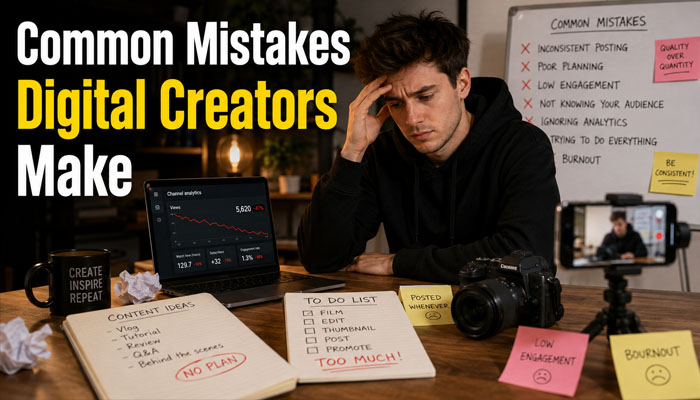
Many beginners fail not because they lack talent, but because they make avoidable mistakes.
Mistake 1: Choosing Too Many Niches
If you post about business today, food tomorrow, fashion next week, and fitness after that, your audience may feel confused. Start with one main niche.
Mistake 2: Copying Other Creators
Learning from others is fine. Copying their style, scripts, ideas, or content is not. Originality builds long-term trust.
Mistake 3: Focusing Only on Followers
Followers matter, but trust matters more. A smaller engaged audience can be more valuable than a large inactive audience.
Mistake 4: Ignoring SEO
SEO helps your content get discovered. Use keywords naturally in blog titles, YouTube titles, descriptions, headings, and captions.
Mistake 5: Posting Without Strategy
Random posting leads to random results. Every piece of content should have a purpose.
Mistake 6: Monetizing Too Early
Selling too early can damage trust. Give value first, then monetize naturally.
Mistake 7: Ignoring Analytics
Analytics show what works. Creators who ignore analytics often repeat weak strategies.
Mistake 8: Depending on One Platform
If one platform changes its algorithm, your reach may drop. Build an email list, website, or community to reduce risk.
Mistake 9: Poor Audio and Visual Quality
Content does not need to be perfect, but it should be clear. Bad audio, dark videos, and messy design can reduce trust.
Mistake 10: Burnout
Trying to post everywhere every day can cause burnout. Choose a sustainable schedule.
Digital Creator Career Opportunities
Digital creation can lead to many career paths.
| Career Path | Description |
| Full-Time Creator | Earns mainly from content, products, ads, and sponsorships |
| Freelance Creator | Creates content for clients and brands |
| UGC Creator | Produces social-style content for brand ads |
| Social Media Manager | Manages content for businesses |
| Video Editor | Edits creator or brand videos |
| Content Strategist | Plans content systems and campaigns |
| Influencer Marketer | Helps brands work with creators |
| Course Creator | Sells educational programs |
| Newsletter Writer | Builds paid or sponsored newsletter business |
| Podcast Host | Builds audio content and sponsorships |
| Community Builder | Runs paid or free online communities |
| Digital Product Seller | Sells templates, guides, and tools |
A digital creator can also turn into a founder. Many creators eventually launch agencies, software tools, product brands, communities, newsletters, or education businesses.
Is a Digital Creator a Real Job?
Yes, being a digital creator can be a real job if it produces income, serves an audience, and is managed professionally.
However, not every digital creator is a full-time professional. Some creators are hobbyists. Some are part-time creators. Some use content creation to support another business.
A digital creator becomes more professional when they:
- Follow a content strategy
- Build an audience
- Track performance
- Create income streams
- Manage brand deals
- Maintain a content calendar
- Understand platform rules
- Pay attention to legal and tax responsibilities
- Treat content creation like a business
The creator path is flexible. You can be a student creator, side-hustle creator, part-time creator, freelance creator, or full-time creator.
What Is a Digital Creator on Instagram?
On Instagram, a digital creator usually refers to someone who uses a creator or professional account to publish content, build an audience, and access creator tools. Instagram creator accounts are commonly used by public figures, content producers, artists, influencers, educators, and online personalities.
A digital creator on Instagram may post:
- Reels
- Stories
- Carousels
- Photos
- Lives
- Broadcast channel updates
- Product recommendations
- Educational posts
- Brand collaborations
Instagram can help creators build personal brands, share visual content, study audience behavior, and connect with communities.
What Is a Digital Creator on Facebook?
On Facebook, a digital creator may create Reels, videos, text posts, photos, Stories, and community content. Facebook can be useful for creators who want to build communities, groups, local audiences, family-friendly content, news-style pages, or broad-interest content.
If someone asks What Is a Digital Creator on Facebook, the answer usually refers to a person who creates videos, posts, Reels, or community content for a Facebook audience.
What Is a Digital Creator on YouTube?
A digital creator on YouTube creates video content. YouTube creators may publish tutorials, entertainment videos, product reviews, podcasts, Shorts, documentaries, educational videos, vlogs, or livestreams.
YouTube is one of the strongest platforms for long-term creator growth because videos can continue getting views through search and recommendations.
YouTube creators can earn through:
- Ads
- Channel memberships
- Super Chat
- Super Thanks
- Brand sponsorships
- Affiliate links
- Courses
- Merchandise
- Digital products
- Consulting
What Is a Digital Creator on TikTok?
A digital creator on TikTok usually creates short-form videos. TikTok creators often grow through trends, storytelling, educational clips, product demos, humor, lifestyle content, and niche communities.
TikTok is strong for discovery because new creators can sometimes reach large audiences quickly. However, creators should avoid relying only on trends. A long-term TikTok creator should build a clear niche, strong identity, and income strategy beyond views.
Digital Creator in India: Growing Opportunity
India is becoming one of the most active markets for digital creators. More people are building careers through YouTube, Instagram, Facebook, LinkedIn, podcasts, newsletters, and short-form video. Regional language content, mobile-first video, social commerce, and brand collaborations are creating more opportunities for Indian digital creators.
For Indian creators, popular niches include:
- Finance education
- Career tips
- Government exam guidance
- Beauty and fashion
- Food and travel
- Regional entertainment
- Startup and business content
- Tech tutorials
- AI tools
- Parenting and lifestyle
- Health and fitness
This section can help your article rank for additional searches such as digital creator in India, how to become a digital creator in India, and digital creator income in India.
Digital Creator Business Model
A serious digital creator should think like a business owner. Content is the front end, but the business model is what creates long-term sustainability.
| Business Layer | Purpose | Example |
| Content | Attract attention | YouTube videos, Reels, blogs |
| Audience | Build trust | Followers, subscribers, email list |
| Community | Deepen connection | Groups, memberships, live sessions |
| Offer | Generate income | Courses, templates, services |
| Partnerships | Expand revenue | Brand deals, affiliates, collaborations |
| Assets | Build long-term value | Website, email list, product library |
A creator who only depends on platform views may struggle if algorithms change. A creator who builds owned assets such as a website, email list, and digital products has more control.
Digital Creator Checklist for Beginners
| Checklist Item | Status |
| Choose one main niche | ☐ |
| Define target audience | ☐ |
| Select main platform | ☐ |
| Create content pillars | ☐ |
| Prepare 20 content ideas | ☐ |
| Set posting schedule | ☐ |
| Create basic branding | ☐ |
| Learn basic editing | ☐ |
| Track analytics weekly | ☐ |
| Build email list | ☐ |
| Research monetization options | ☐ |
| Follow disclosure and platform rules | ☐ |
| Create a basic media kit | ☐ |
| Understand usage rights before brand deals | ☐ |
Future of Digital Creators
The future of digital creators looks strong, but it will also become more competitive. AI tools, short-form video, social commerce, paid communities, and niche expertise will shape the next stage of the creator economy.
Digital creators who will perform well in the future are those who:
- Build original content
- Use AI tools responsibly
- Develop strong personal brands
- Create trust-based communities
- Diversify income streams
- Build owned platforms such as websites and email lists
- Understand audience problems deeply
- Focus on quality, not only quantity
- Stay updated with platform changes
AI can help creators write scripts, edit videos, generate ideas, repurpose content, and analyze data. But AI cannot fully replace real experience, personality, judgment, trust, and human storytelling. The strongest creators will use AI as a tool, not as a replacement for originality.
Pros and Cons of Becoming a Digital Creator
| Pros | Cons |
| Low startup cost | Income can be unpredictable |
| Creative freedom | Growth takes time |
| Flexible work style | High competition |
| Global audience reach | Algorithm changes can affect reach |
| Multiple income streams | Burnout risk |
| Personal brand growth | Public criticism |
| Career and business opportunities | Need for constant learning |
| Ability to work from anywhere | Legal and tax responsibilities |
| Long-term digital assets | Pressure to stay consistent |
| Strong networking opportunities | Monetization is not guaranteed |
Being a digital creator can be rewarding, but it requires discipline, patience, and business thinking.
Conclusion
So, What Is a Digital Creator? A digital creator is someone who creates and shares original content online to educate, entertain, inspire, inform, or influence an audience. Digital creators use platforms such as YouTube, Instagram, TikTok, Facebook, LinkedIn, blogs, podcasts, newsletters, and creator communities to build visibility and trust.
A digital creator can be a blogger, video creator, podcaster, educator, designer, influencer, UGC creator, course creator, or niche expert. The role is flexible, but success requires more than posting content. It requires strategy, consistency, creativity, research, audience understanding, platform knowledge, ethical monetization, and strong personal branding.
The creator economy is growing, but competition is also increasing. Beginners should focus on choosing a clear niche, creating useful content, building trust, learning analytics, improving skills, and developing multiple income streams.
In 2026 and beyond, the best digital creators will not be those who simply chase trends. They will be the creators who build original content, strong communities, real trust, and sustainable digital businesses.
What Is a Digital Creator? FAQs
1. What Is a Digital Creator?
A digital creator is someone who creates and publishes original content online. This content can include videos, blogs, podcasts, social media posts, newsletters, digital products, courses, graphics, or livestreams.
2. What Is a Digital Creator in Simple Words?
A digital creator is someone who creates original content for online platforms such as YouTube, Instagram, TikTok, blogs, podcasts, newsletters, or websites.
3. What Is a Digital Creator Job?
A digital creator job involves planning, creating, editing, publishing, and improving digital content for an online audience or brand.
4. What Is a Digital Creator on Instagram?
A digital creator on Instagram is someone who uses Instagram to create content such as Reels, Stories, photos, carousels, and Lives. Many creators use professional or creator accounts to access insights, growth tools, and monetization features where available.
5. What Is a Digital Creator vs. an Influencer?
A digital creator mainly focuses on creating content, while an influencer focuses on influencing audience decisions, opinions, or purchases. A person can be both a digital creator and an influencer.
6. What Is a Digital Creator Media Kit?
A digital creator media kit is a professional document that shows the creator’s niche, audience, content examples, analytics, collaboration options, and contact details.
