

What Does POV Mean? POV stands for “point of view.” In simple terms, it describes the position, perspective, or viewpoint from which a person sees, experiences, or tells something. You may come across POV in TikTok videos, Instagram Reels, YouTube Shorts, memes, text messages, movies, books, and everyday conversations. Dictionaries also recognize POV as an abbreviation for “point of view,” including a person’s opinion or the perspective used to tell a story.
If you spend time on social media, you have probably seen captions such as “POV: You just finished your final exam” or “POV: Your boss schedules a meeting at 4:55 p.m.” Here, POV asks you to imagine that you are inside the situation. This social-media meaning is slightly looser than the traditional meaning used in filmmaking and literature, but the basic idea is still perspective.
Understanding What Does POV Mean is useful because the abbreviation now appears in several different settings. Sometimes it describes a camera angle. Sometimes it tells you who is narrating a story. Other times, it simply introduces a funny or relatable online scenario. This guide explains all of these meanings with clear examples.
What Does POV Mean?
POV = Point of View.
It means the perspective from which something is seen, experienced, understood, or told.
Here is a quick comparison:
| Where You See POV | What It Usually Means | Simple Example |
| TikTok | Imagine yourself in this situation | POV: You are late for school |
| Instagram Reels | A scene shown from a certain perspective | POV: Your first day at a new job |
| YouTube Shorts | First-person or scenario-based video | POV: You’re exploring a new city |
| Texting | Someone’s opinion or perspective | “That’s just my POV.” |
| Movies | What a character sees | Camera acts like the character’s eyes |
| Books | Perspective of the narrator | First-person or third-person narration |
| Memes | A relatable imaginary situation | POV: Monday morning after a holiday |
The meaning therefore remains connected to perspective, even though people use POV differently depending on the context.
What Does POV Stand For?
POV stands for Point of View. The phrase existed long before TikTok or Instagram. Point of view is an established concept in writing, filmmaking, photography, and everyday language.
For example: “From my POV, the second option is easier.”
Here, POV simply means “from my perspective” or “in my opinion.”
But social media has expanded how people use the abbreviation. Instead of only describing a person’s viewpoint, POV: can now work as a short storytelling prompt that tells viewers what situation they should imagine.
What Does POV Mean on Social Media?
When people ask What Does POV Mean online, they are often talking about TikTok, Instagram, or other short-video platforms.
On social media, POV usually means “imagine you are in this situation.”
A creator places “POV:” before a short description and then acts out, films, or illustrates the scene.
For example:
POV: You walk into class and realize there is a test today.
The creator might then show a shocked or nervous reaction.
Another example could be:
POV: You finally get the job you’ve been waiting for.
The following video could show someone welcoming the viewer to the workplace.
The important detail is that modern social-media POV does not always use a technically correct first-person camera angle. The term is often used more broadly as a scenario-setting device. That distinction is important because traditional film POV has a more specific meaning.
What Does POV Mean on TikTok?
On TikTok, POV is a popular storytelling format. A creator usually starts with:
POV: + situation
The viewer is then encouraged to imagine being a person inside that scene.
Examples include:
- POV: It’s your first day at college.
- POV: Your crush finally texts you back.
- POV: You forgot your homework.
- POV: Your manager says, “Can we talk?”
- POV: You finally reach your dream destination.
A creator may look directly into the camera and speak as though the viewer is another character.
For instance:
POV: You are ordering coffee, but the barista already knows your order.
The creator might play the barista and speak directly to the camera. In this case, the viewer is effectively playing the customer.
This is one reason TikTok-style POV can initially seem confusing: the person shown on screen is not necessarily the person whose “point of view” the caption describes.
What Does POV Mean on Instagram?
On Instagram, POV has essentially the same basic meaning as it does on TikTok. You will see it most often in Reels, captions, memes, and Stories.
A travel creator might post:
POV: You wake up to this view in Bali.
A food creator might write:
POV: Your pizza finally arrives.
A business account could use:
POV: You finally finish everything on your Monday to-do list.
The format gives viewers immediate context without requiring a long introduction. Reportei notes that social-media POV content commonly combines a contextual caption with a short scene focused on identification, emotion, humor, or education.
What Does POV Mean on YouTube?
On YouTube, POV can have two closely related meanings.
In YouTube Shorts, it often works like TikTok POV:
POV: You have one minute left to finish the exam.
In longer videos, however, POV may describe an actual first-person camera perspective.
Examples can include:
- POV cycling videos
- POV driving videos
- POV walking tours
- POV cooking videos
- POV gaming footage
- POV travel experiences
In these videos, the camera tries to show approximately what the person performing the activity sees.
What Does POV Mean in Texting?
If someone uses POV in a message, the context matters. In ordinary conversation, it can simply mean opinion, viewpoint, or perspective. Cambridge Dictionary gives this general sense of POV as someone’s way of thinking about something.
For example:
Person A: “I think working from home saves a lot of time.”
Person B: “I understand your POV.”
Here, the second person means:
“I understand your point of view.”
People can also use the social-media style in messages:
“POV: You check your bank account after vacation.”
Here, the sender is setting up a humorous imaginary scenario rather than talking about an opinion.
What Does POV Mean in Memes?
POV memes usually put you into a funny, awkward, exaggerated, or highly relatable situation.
For example:
POV: You open the fridge for the fifth time hoping new food appeared.
The accompanying picture might show someone staring back at the viewer.
Another example:
POV: The teacher asks why you are laughing.
A funny reaction image completes the joke.
This format works because readers can understand the setup almost immediately.
What Does POV Mean in Movies and Videos?
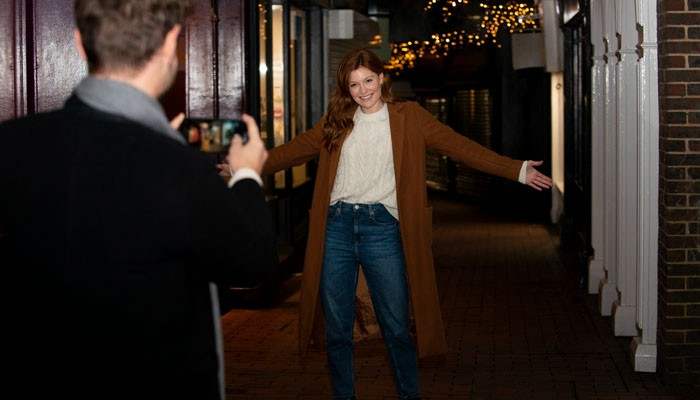
POV has a more precise technical meaning in filmmaking. A POV shot positions the camera so the audience sees approximately what a particular character sees. In other words, the camera temporarily works like that character’s eyes.
Imagine a movie character walking toward a closed door.
The sequence might show:
- The character looking at the door.
- The door from the character’s visual perspective.
- The character’s reaction after seeing what is behind it.
The middle shot can function as the POV shot.
Filmmakers may use this technique to create:
- Immersion
- Suspense
- Emotional connection
- Fear
- Curiosity
- A sense of realism
This traditional filmmaking definition helps explain where modern social-media POV storytelling gets its basic idea.
What Does POV Mean in Books and Writing?
In literature, point of view describes the perspective from which a story is told.
Three common forms are:
First-Person POV
The narrator is part of the story and usually uses words such as I, me, my, and we.
Example:
“I opened the door and immediately knew something was wrong.”
The reader experiences events through that narrator’s perspective.
Second-Person POV
The writer addresses the reader as you.
Example:
“You open the door and see a small box waiting outside.”
Second-person writing can make readers feel directly involved.
This style also helps explain many social-media POV captions because phrases such as “POV: You’re…” directly place the viewer inside the scene.
Third-Person POV
The narrator talks about characters using he, she, they, or their names.
Example:
“Maya opened the door and saw a small package outside.”
Third-person narration can be limited to one character’s knowledge or offer a broader view of several characters and events.
Traditional POV vs. Social Media POV
One of the biggest sources of confusion is that social-media users often apply POV more loosely than filmmakers or writers.
| Traditional POV | Social Media POV |
| Shows a defined perspective | Often establishes an imaginary situation |
| Common in books and film | Common on TikTok and Instagram |
| May literally represent what someone sees | Does not always show a literal first-person view |
| Follows storytelling conventions | Often prioritizes humor and relatability |
| Perspective is usually clearly defined | Perspective may intentionally be casual or exaggerated |
So, if you ask What Does POV Mean on TikTok, the most practical translation is often:
“Imagine you are in this situation.”
That is not always technically identical to a cinematic POV shot.
Examples of POV in Everyday Situations
The easiest way to understand the term is through examples.
School
POV: The teacher says the test is open-book.
Work
POV: Your boss cancels the Friday afternoon meeting.
Travel
POV: You finally arrive at the beach after a long flight.
Relationships
POV: Your crush sends the first message.
Food
POV: The waiter brings your food after you’ve been waiting forever.
Gaming
POV: You have one life left and your whole team is watching.
Shopping
POV: Your favorite product is finally back in stock.
Pets
POV: You come home five minutes late and your dog acts like you’ve been gone for a year.
Each example quickly gives the viewer a role and a situation.
How to Use POV Correctly on Social Media

Knowing What Does POV Mean is one thing. Using it effectively is another. A strong POV caption should make the situation clear immediately.
A useful formula is:
POV + viewer’s role + situation
For example:
POV: You’re a new employee arriving 20 minutes early on your first day.
Then create a video showing what that person might experience.
Good POV content usually has a few simple qualities:
- The situation is easy to understand.
- The viewer knows their role.
- The opening gets to the point quickly.
- The scene feels relatable, interesting, educational, or funny.
- The video matches the perspective promised by the caption.
You do not need expensive equipment. The idea and execution matter more than complicated production.
Common POV Mistakes
POV is often used casually online, so there are no universal “internet grammar police.” Still, some captions can confuse viewers.
1. The Perspective Does Not Make Sense
Suppose someone writes: POV: I’m eating pizza.
Then the video simply shows that creator eating pizza from across the room. The audience may understand the joke, but the perspective is unclear.
A clearer caption could be:
POV: You’re watching your friend eat the last slice of pizza.
2. The Caption Gives Too Little Context
POV: Monday
This may be too vague.
POV: Your alarm rings at 6 a.m. on Monday after a long weekend.
Now the viewer immediately understands the situation.
3. Copying a Trend Without Adding Anything
A trending format can attract attention, but copying another creator’s exact concept offers little value. Use the trend as a structure and add your own situation, humor, expertise, or experience.
4. Making the Setup Too Complicated
POV content works best when viewers understand the basic idea quickly. Keep the setup simple.
Why Is POV So Popular on Social Media?
POV fits naturally with short-form storytelling because the caption can establish a scene before much action happens. Social-media marketers also use the format for humorous, educational, behind-the-scenes, and audience-focused content.
Its popularity can be explained by several practical advantages:
- Fast context: The viewer quickly knows what is happening.
- Relatability: Everyday situations can feel familiar.
- Immersion: The audience becomes part of the scenario.
- Flexibility: POV works for humor, education, travel, food, fashion, gaming, business, and many other topics.
- Simple production: Many POV clips can be created with a phone.
- Storytelling: Even a very short clip can have a beginning, reaction, and payoff.
The strongest POV content is not successful merely because it contains the letters “POV.” The situation itself still needs to be interesting and relevant to the intended audience.
Is POV Always First Person?
No. This is one of the most important points to understand. In traditional filmmaking, a POV shot usually shows what a character sees from a first-person visual perspective.
On modern social media, however, POV is often used more loosely.
A video captioned:
POV: You’re meeting your girlfriend’s parents for the first time
might show actors playing the parents while looking directly into the camera.
The camera represents the viewer’s position, even though the viewer never appears.
Other creators use “POV” simply as another way of saying:
“Imagine this situation…”
Therefore, context matters more than trying to force every social-media post into the strict filmmaking definition.
How to Tell What POV Means From Context
If you are unsure What Does POV Mean in a particular post, ask what the content is doing.
If someone says:
“From my POV…”
they probably mean “from my perspective.”
If a TikTok begins:
“POV: You’re the new student…”
it means “imagine you’re the new student.”
If a film critic says:
“The director uses a POV shot…”
they mean the camera shows a character’s visual perspective.
If a teacher asks:
“What POV is this story written in?”
they are asking about the story’s narrative perspective.
The abbreviation stays the same. The context determines how it functions.
Conclusion
So, What Does POV Mean? The simple answer is Point of View—the perspective from which something is seen, experienced, understood, or told. The abbreviation has long been used in literature, film, and everyday conversation, but social media has given it a broader and more casual role.
On TikTok, Instagram Reels, YouTube Shorts, and memes, POV often means “imagine you are in this situation.” In texting, it may simply mean someone’s opinion or perspective. In filmmaking, a POV shot can show what a character sees, while in literature, point of view determines who tells the story and how readers experience it.
Once you understand the context, decoding POV becomes easy. Whether it appears in a book, movie, message, meme, or 15-second video, the core idea remains the same: whose perspective are we experiencing?
What Does POV Mean FAQs
1. What Does POV Mean?
POV stands for Point of View. It describes the perspective from which something is seen, experienced, understood, or told.
2. What does POV mean on TikTok?
On TikTok, POV commonly introduces a scenario that the viewer is supposed to imagine experiencing. For example, “POV: It’s your first day at a new school.”
3. What does POV mean on Instagram?
On Instagram, POV is commonly used in Reels, Stories, captions, and memes to place viewers into a particular situation or perspective.
4. What does POV mean in texting?
In texting, POV can mean someone’s perspective or opinion. For example, “I understand your POV” means “I understand your point of view.”
5. What does POV mean in slang?
As internet slang, POV often means “imagine you’re in this situation.” It comes from the traditional phrase “point of view.”
6. What does POV mean in a video?
A traditional POV video shows an experience from a particular person’s visual perspective. On social media, the term can also describe videos that simply ask viewers to imagine themselves in a scene.
7. What is a POV shot?
A POV shot is a filmmaking technique in which the camera shows approximately what a character sees, helping the audience experience the scene from that character’s perspective.
8. Is POV first person or third person?
POV itself does not mean only first person. In writing, stories can use first-, second-, or third-person perspectives. In filmmaking, a POV shot generally represents a character’s visual viewpoint.
9. Why do people say “POV” before a video?
It gives viewers quick context and tells them which role, perspective, or situation they should imagine while watching the video.
10. Is POV only used on TikTok?
No. POV appears on Instagram, YouTube, Facebook, memes, text messages, books, movies, photography, gaming, and everyday conversations.