


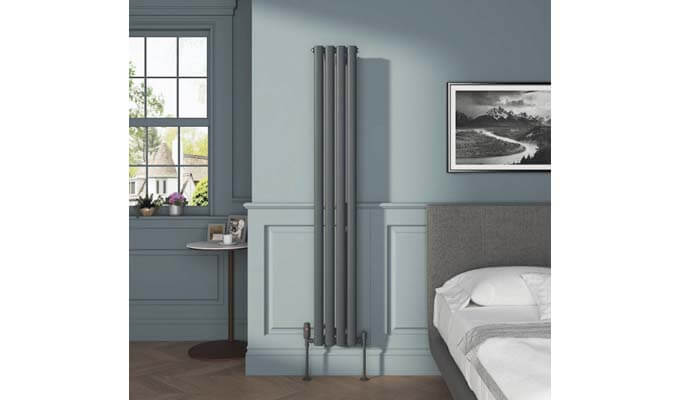

In recent years, there are multiple options in the market for modern designs of vertical radiators. These efficient radiators can be wall mounted upright as opposed to horizontally and thus make far better use of the available height of a wall. Vertical radiators are not only efficient but they also can make a great focal point in any room, available in a number of colors, finishes and sizes to fit in with both modern style homes and the more traditional homes.
We have also looked at the advantages and disadvantages of vertical radiators to help you decide if a vertical radiator could be for you.
The Pros of Vertical Radiators
1. Space-Saving Design
Benefits of Buying a Vertical Radiator, firstly there is the space-saving feature of a vertical radiator. Tall and thin they are perfect for rooms where a horizontal radiator wouldn’t fit. The benefits of a vertical radiator are especially great for small homes and apartments as well as kitchens and hallways where space on the walls is at a premium. Large windows and narrow walls are not a problem with a vertical radiator.
Large windows? Small wall space? No problem. Vertical Radiators can be supplied in a wide variety of sizes to match your room’s décor. With so many styles to choose from and a wide choice of finishes, we are confident that you will be able to find a radiator that meets your needs and ensures your room is decorated to the highest standard.
2. Modern Appearance
Our vertical radiators are designed to be stunning pieces of designer heating that can be a fantastic addition to any room. Many of our vertical designer radiators are available in a range of finishes including; anthracite, black, white and even chrome. These are a great way to add some character and individuality to your interior.
With many of the vertical radiator designs available today, they are often chosen as a feature in a room as they provide great heat within a stylish package.
3. Efficient Heating
A common myth surrounding vertical radiators is that they are not as efficient as horizontal radiators. However this is not true. A well sized well for a particular room and a vertical radiator will be able to provide a huge amount of heat to that room.
This is a common misconception that a vertical radiator will not distribute heat as effectively as a horizontal version. This is not true if you get the correct sized radiator for your room. As with any heating appliance, as long as it is the correct size for the space it will provide all the heat you need.
4. Flexible Installation
As a Vertical radiator can be installed in narrow walls, between windows, in corners of rooms or any other space where standard radiators cannot fit into, the beauty of the product is that you can design your room around it.
This means you can use your furniture to plan the rooms in your house and then fit the vertical radiator around it.
5. Wide Range of Styles
There are a number of different styles of designer Vertical Radiators that are available on the market, ranging from the very minimalist and modern, such as the flat panel designer heated radiator, to the more classic designs, such as column heated radiators. All types of heated radiators are now available to buy online from leading manufacturers and are designed to fit into any home or interior, to provide efficient heating all year round.
The Cons of Vertical Radiators
1. Higher Purchase Price
Many of the Designer vertical radiators are more expensive than their standard horizontal counterparts. They are more expensive because of the stylish appearance of the radiator and the high quality of finishes used in the design.
There are lots of affordable vertical radiators available on the market and in many cases, a stylish designer radiator can be picked up for a similar price to a conventional horizontal radiator. However, as with all things, you get what you pay for and if you’re looking for a designer radiator then you must expect to pay a little extra for a high quality product.
2. Installation Costs
Vertical radiators can be supplied with the vertical section fixed to the wall. This may mean that the item of piping that runs to the radiator needs to be extended or re-routed round a corner. The cost of any such work must be included in the overall purchase price of the radiator. This work is best carried out by a qualified tradesman to ensure that the finished article is safe and is functioning correctly.
We recommend that Designer Vertical Radiators are installed by a competent tradesperson to ensure correct and safe use of the product.
3. Limited Wall Options
You put a vertical radiator up on a wall of suitable height. Sloping ceilings, fitted wardrobes and tall windows can restrict the wall space for your vertical radiator. Measure up the possible wall space for your new radiator before you buy it.
Take measurements of the space on your walls where you intend to position the radiator before purchasing it to ensure it will fit.
4. Heat Distribution
There is a belief that the heat from a vertical radiator first warms the top of the room and then works its way down as it rises. However, because of modern design, the heat from a vertical radiator is spread across the entire surface.
It is the size of the radiator required for efficient heating of a room that is important, not the orientation of the radiator to the room.
Are Vertical Radiators Energy Efficient?
It also has to be said that much like other forms of radiators available Vertical radiators can be just as energy efficient given the right amount of sizing for the room. And like with other types of radiators other factors will also impact efficiency such as the quality of insulation within the room, the efficiency of your boiler, the quality of heating controls that you have and use and finally the BTU output of your chosen radiator.
By installing thermostatic radiator valves to your Vertical Radiators you can heat them individually and therefore stop them from being over heated when not required.
Where Do Vertical Radiators Work Best?
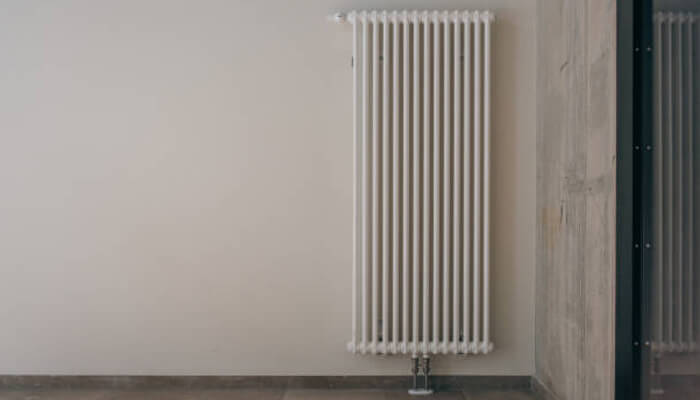
Vertical radiators are particularly well suited to:
- Living rooms
- Kitchens
- Hallways
- Dining rooms
- Bedrooms
- Home offices
They are especially useful in homes where wall space is limited or where homeowners want to create a more modern interior.
Should You Choose a Vertical Radiator?
We believe that Vertical radiators are an alternative to using space under your windows and they are fantastic for providing the best space saving properties, whilst also providing a range of designs to make a feature of your room.
However, if you use the wall space under the window for other items, then a high quality horizontal radiator could be the most cost effective option.
It is up to you to decide upon the best heating solution for your room, based upon your room’s configuration, your heating requirements and personal style.
Vertical radiators offer the best of both worlds. The slender format offers up a slim line fashionable heating solution that maximizes the use of wall space within your room. Unlike their horizontal counterparts, vertical radiators are often perceived to be more expensive initially, however for those properties with limited space within rooms and an emphasis placed on living space, they can prove to be an ideal long-term investment. Additional installation costs are occasionally incurred; however for many modern homes, this simply results in the superior design and energy efficiency that they offer.
