




Sustainability reports are full of energy targets and supply-chain promises, but they don’t tend to say much about what happens when a nursery closes at 10 a.m. or an employee needs two hours off for a school meeting. Family-friendly policies address these everyday workplace challenges by helping employees balance their professional responsibilities with family commitments. As businesses focus on long-term sustainability, supporting working families has become an essential part of creating resilient, productive, and inclusive workplaces.
Working families rarely fit a tidy policy category. An Atlanta parent going through separation, for example, may be juggling new care arrangements and conversations with a Georgia child custody attorney while trying to keep work steady. An employer does not need the private details, but they do need a sensible way for that person to ask for temporary flexibility.
Family-friendly policy belongs in sustainable business because companies depend on people over years. Designing work around employees with no caring responsibilities moves costs into missed shifts, poor handovers, burnout, stalled careers, and experienced staff leaving.
Social Sustainability Happens in an Ordinary Shift
The social side of sustainability can sound distant when described through reporting frameworks, but at work, it is quite practical. It deals with questions like:
- Can people earn a living and care for someone who depends on them?
- Are opportunities still open after parental leave?
- Does a warehouse worker receive enough notice of next week’s shifts to arrange childcare?
- Can a manager handle an emergency without inventing rules on the spot?
Care is also an economic issue on a vast scale. In 2023, an estimated 748 million people were outside the labor force because of unpaid care responsibilities, including 708 million women. That imbalance drains skills from labor markets and narrows the pool from which businesses can recruit and promote.
A company cannot repair the care economy by itself, but it controls what happens inside its walls.
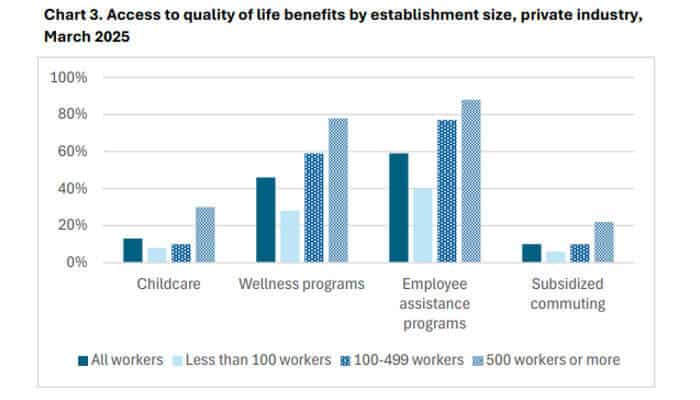
Formal childcare help is still unusual, too. In March 2025, childcare benefits were available to 13% of U.S. private-industry workers; access ranged from 8% in workplaces with fewer than 100 employees to 30% in those with 500 or more. Smaller firms may not fund a nursery, but predictable shifts and emergency flexibility can remove real friction at manageable cost.
Paid Leave Is Working Infrastructure
Good paid-leave design covers more than the weeks following a birth. Adoption, miscarriage, a child’s illness, elder care and the gradual return from longer leave all deserve thought. Eligibility should also reflect the families people actually live in, including single parents and employees sharing care across two homes.
Employees need to know how much notice to give, what happens in an emergency, which information stays confidential and how work will be handed over. Otherwise, warm handbook language collapses on contact with a busy quarter.
Make Flexibility Work Beyond the Home Office
Remote work receives much of the attention, but many jobs cannot follow an employee home. Nurses, drivers, shop workers, production staff and hospitality teams need different forms of control.
Useful options can include:
- Schedules published far enough ahead to arrange care
- Shift swaps through a simple, documented process
- Stable start and finish times where the role permits
- A small bank of paid emergency-care hours
- Temporary changes without full disclosure of a family situation
If a parent works from home but answers messages during the school run and makes up time after bedtime, the strain has merely moved. Core contact hours and clear cover for urgent work make the arrangement usable.
Fewer commutes may lower a company’s carbon footprint, but family flexibility is no emissions scheme. Any environmental gain is welcome if the organization measures it honestly and keeps workload and fairness in view.
Care Support Should Match the Workforce
Employers often reach for a headline benefit before asking whether staff can use it. Backup-care days cannot fix unaffordable regular fees.
A short, confidential review can show where care arrangements fail. Look separately at sites, job types and pay bands, as averages hide sharp constraints.
Staff need choices: a childcare contribution, access to vetted backup care, flexible-benefit credit or extra leave may serve different households. People without children should still have access to fair scheduling and time for other caring or personal needs. Family-friendly does not have to mean parent-only.
Managers Decide Whether a Policy Is Real
A generous handbook can be undone by one supervisor who treats every request as a lack of commitment, while the opposite problem occurs when sympathetic managers make informal deals that disappear after a promotion or team move.
Managers need a small set of usable rules:
- What can they approve themselves?
- When should HR step in?
- How quickly must they answer?
- Which facts are genuinely needed?
- How should workload be redistributed without quietly punishing the rest of the team?
Putting rules in place for when those decisions inevitably arrive exposes vague policy language before a real family pays the price.
Senior leaders have a part here as well. If an executive praises flexible work but sends late-night requests and rewards constant visibility, managers will copy the behavior they see. Culture is often clearest in looking at who feels safe enough to use the benefits already available.

Build From the Pressure Points
There is no need to launch a dozen benefits at once. Choose one or two changes that address the cause and test them with the employees affected.
Put the rules in plain language. Set a review date and budget for the cover needed to make the policy function. Check whether part-time and contract workers can use it, since a benefit reserved for office staff may deepen an existing divide.
Budget still matters, especially when paid leave creates cover costs. Plan those costs instead of pushing them onto teammates through permanent overtime. Temporary staffing arrangements and a modest contingency fund turn family support from a manager’s good intention into something the operation can carry.
Family-friendly policy will not remove the mess from family life, but it can keep that mess from becoming a career penalty or a recurring operational crisis. That is sustainable business in a form employees can feel: a company that keeps its promises because its people have enough room to keep theirs at home.
