INDIA: In order to boost startups, the government would consider a slew of policies that could, among other things, enable pension funds as well as insurance firms such as LIC to invest in start-ups, according to Department of Industrial Policy and Promotion (DIPP) Secretary Ramesh Abhishek.
“LIC and pension funds must step in (in the start-up segment). Employees’ Provident Fund Organisation had recently taken steps to increase their exposure in stock markets. So definitely their money needs to be leveraged (for start-ups),” Abhishek said at the World Economic Forum’s India Economic Summit 2016.
Mr. Abhishek, who is in charge of DIPP, the nodal Central government department for start-ups and its related policy ‘Start-up India’, said he has personally written to over 100 corporates to utilize their Corporate Social Responsibility funds for start-ups and incubators. He said the government has already set up a Rs 10,000 crore Fund Of Funds, which will in four years help mobilize private investments worth around Rs 50,000 crore for investments into start-ups.
Mr. Abhishek was responding to a grievance put forward by Seedfund India Managing Partner Mahesh Murthy that large insurance firms such as LIC invests mainly in stock markets and in big companies that are in sectors such as cigarettes but not in start-ups. Srivatsan Rajan, chairman, Bain & Company India, said though insurance and pension companies have a large pool of funds, it has so far been very difficult for start-ups to access that resource due to complicated government regulations. “We need to find a way to open it (pension & insurance funds) up for start-ups,” he added
Vijay Shekhar Sharma, founder and chief executive officer (CEO), Paytm India, said large Indian companies and investors have not been aggressive and proactive enough regarding funding India-based start-ups. Ritesh Agarwal, founder and CEO, OYO Rooms, India, said it was the responsibility of start-ups to proactively inform lawmakers and government officials regarding the need for reforms in laws to ensure that they are in sync with the latest developments in the start-up sector.
Mr. Abhishek said the Centre has been trying to sensitize states on the need for supporting start-ups and incubators through their respective policies. Besides, the commerce & industry ministry has asked all the other ministries to annually make public their overall goods and services requirements and procure from start-ups as well. He asked start-ups to focus on solving problems in agriculture and manufacturing sectors and help create employment in those areas in addition to their focus on services sectors.
On complaints that online companies are being harassed by regulators and inspectors, Abhishek said the DIPP has taken up such issues with the concerned authorities. Several such incidents are happening as the law and law-enforcement agencies have not kept up pace with the emerging digital businesses, he said.
The DIPP has taken up with several state governments complaints regarding local inspectors harassing e-pharmacy companies for selling medicines online even with doctors’ prescription, Mr. Abhishek said. Similarly, the ceiling on the number of taxi cars in certain cities have been troubling online taxi cab aggregating firms, he said, adding that such artificial restrictions need to be done away with to help start-ups in the segment flourish. “There should not be any regulations that will choke the start-up ecosystem,” Mr. Abhishek said.
Marketing Mix, a term coined by Neil Borden, is the ingredients that combine to capture and promote a brand or product’s unique selling points, those that differentiate it from its competitors. The ideas behind Borden’s model were refined over the years until E. Jerome McCarthy reduced them to 4 elements called “The Four Ps.” This proposed classification has been used by marketing companies, branding agencies, and web design companies throughout the world.
The Four Ps Model
1. Product –
The first of the Four Ps of marketing is the product. A product can be either a tangible good or an intangible service that fulfills a need or want of consumers. Whether you sell custom pallets and wood products or provide luxury accommodations, you must have. A clear grasp of exactly what your product is and what makes it unique before you can successfully market it.
2. Price –
Once a concrete understanding of the product offering is established we can start making some pricing decisions. Price determinations will impact profit margins, supply, demand, and marketing strategy. Similar (in concept) products and brands may need to be positioned differently based on varying price points, while price elasticity considerations may influence our next two Ps.
3. Promotion –
We’ve got a product and a price now it’s time to promote it. Promotion looks at the many ways marketing agencies disseminate relevant product information to consumers and differentiate a particular product or service. Promotions include elements like advertising, public relations, social media marketing, email marketing, search engine marketing, video marketing, and more. Each touchpoint must be supported by a well-positioned brand to truly maximize return on investment.
4. Place –
Often you will hear marketers saying that marketing is about putting the right product, at the right price, at the right place, at the right time. It’s critical then, to evaluate what the ideal locations are to convert potential clients into actual clients. Today, even in situations where the actual transaction doesn’t happen on the web, the initial place potential clients are engaged and converted is online.
How to Use the 4 Ps of Marketing?
We have developed a dedicated marketing process often used with our Cleveland web design and marketing clients. As part of this process, we incorporate the four Ps through a series of questions designed to help define each brand’s marketing mix. Here are just a few of the questions we use:
What do consumers want from your product or service?
How does your product meet those needs?
Where do potential buyers look for your particular product or service?
How do you differentiate yourself from your competitors?
What is the perceived value of your product or service?
What current interactions do you have with potential clients?
Of course, the list we use is more complete, but we hope the few questions listed above can give you a good starting point in understanding the four Ps.
There’s no shortage of event-finding apps for your smartphone. YPlan, Eventbrite, Songkick—the list goes on and on. Facebook’s dream of being your go-to event planner is no secret, and today it’s taking a huge swipe at its specialized competitors with a new, standalone app of its own. Available first on iOS, the aptly named “Events” gives you a filtered feed with all of your friends’ activity. So if they’ve said they’re “interested” in a nearby food market, you’ll see it immediately; there’s no need to trawl through the News Feed or hunt for the appropriate section inside the main Facebook Event app.
There’s a search tab too, which lets you filter events by time or location. An image-heavy carousel sits further down with suggestions, pulled presumably from your likes, history, and geographical whereabouts. Finally, there’s a search box if you want to get specific. The calendar tab, accessible at the bottom, will give you an overview of everything you’ve signed up for. It’s not a full calendar app, but if you’re struggling to keep up with your Facebook-related engagements, maybe this can help.
Events’ utility is obvious. Facebook has a massive audience, one that’s attracted almost every type of business and event organizer. That interest has led to a huge number of listings, which could appeal to an equally huge number of people online. Facebook’s job is to pair the two groups together—a simple challenge, you might think, but one that’s grown harder as the platform’s priorities have broadened. With video, live streaming, and friendship anniversary reminders, it’s easy for events to get lost amongst the rest of the social noise. A standalone app could bring them back to the fore.
While much of this is functionality you can get from the Events section of the main Facebook app or website, the Events app also features an interactive map so you can easily browse through events you may be interested in when you’re travelling.
The app is now available on Apple’s App Store and will be coming to Android “soon.”
Google’s self-driving car program Wednesday marked more than 2 million miles driven on public roads, a significant lap around traditional automakers’ efforts to develop autonomous vehicles.
Alphabet Inc.’s car program had nearly 60 self-driving vehicles on roads in four states as of August, collecting real-world experience as it learns to navigate the complex world of humans.
Google argues the city-driving experience of its fleet is much more valuable than just highway time. By providing opportunities to learn how to handle construction zones, bicyclists’ hand gestures, and police cars. Google’s self-driving car, loaded with cameras and sensors, is also gathering a greater array of detailed data.
“There are miles and then there are miles,” Dmitri Dolgov, the software lead on Google’s self-driving car program, said in an interview. “An even better way to think about it is not just in terms of miles or time, rather it’s the number of interactions that you have with the world and richness and complexity of those interactions.”
It has taken a little more than a year for the program to go from one million to 2 million miles. In that time, the field of autonomous driving has changed dramatically, suggesting a new era for transportation is about to emerge.
In June 2015, Google announced its one-million-mile threshold. The promise of Tesla Motors Inc.’s Autopilot, a semiautonomous feature that can control the car in certain conditions, was still on the horizon. The feature rolled out in October last year, further sparking interest in what was possible in self-driving vehicles.
General Motors Co., the nation’s largest automaker, acquired Cruise Automation Inc. The developer of self-driving car technology, in a deal valued at $1 billion earlier this year. The company also invested $500 million in Lyft Inc., a ride-hailing service that along with Uber Technologies Inc. is changing the notion of car ownership.
Other automakers have announced their own plans for self-driving cars within a few years, including Ford MotorCo., which is targeting 2021.
Uber’s self-driving car
Last month, Uber began testing its own self-driving cars on the streets of Pittsburgh. Apple Inc., too, is said to be working on its own self-driving car.
“Autonomous vehicle fleets will quickly become widespread and will account for the majority of Lyft rides within 5 years,” Lyft co-founder John Zimmer wrote last month on Medium. “By 2025, private car ownership will all but end in major U.S. cities.”
IHS Markit estimates global sales of autonomous vehicles will reach 21 million in 2035, while Boston Consulting Group estimates sales of autonomous features will generate $77 billion that year.
INDIA: Reliance Jio and Apple today announced a freebie deal for those who purchase any of the recent iPhone models, including the iPhone 7.
Under the offer, every customer purchasing a new iPhone 7, iPhone 7 Plus, iPhone 6s, iPhone 6s Plus or iPhone SE at Reliance Digital and selecting Apple Premium Resellers and Apple Authorized Resellers will get unlimited local, STD, and national roaming voice, unlimited text, 20 GB of 4G data, 40 GB of WiFi Data and Unlimited Night 4G data for 12 months.
They will also get an unlimited subscription to premium Jio applications. The total value of the bundle is about Rs 18,000, said the telecom provider.
“Today’s announcement brings together India’s best premium 4G network with the incredible iPhone experience,” said Mathew Oommen, President of Jio. “Jio is India’s 4G-only network, providing high-speed internet across India. The true power of iPhones can now be experienced by all Indian iPhone users on the Jio network.”
For the first time on a mobile network in India, iPhone customers on the Jio Network will be able to watch 300+ channels of LiveTV, have buffer-free FaceTime, and enjoy high-definition voice calling.
The service also includes free home delivery and activation of the SIM.
iPhone customers also get priority in SIM activation, which means that they don’t have to stand in the long queues if there are any.
In addition, all Enterprise customers can get an exclusive discount on a new iPhone 7, iPhone 7 Plus, iPhone 6s, iPhone 6s Plus, iPhone 6, or iPhone SE with special Jio tariff plans.
Both of the above offers are being sold under Reliance Retail rather than Jio.
The announcement follows Airtel’s move to offer 10 GB of free data per month for one year to all iPhone 7 buyers if they subscribe to any of Airtel’s Infinity Plans.
“iPhone 7 and iPhone 7 Plus users can enjoy 10 GB of free 4G/3G data per month for one year with any Airtel Infinity postpaid plan,” Airtel announced in the morning.
Bharti’s Infinity Plans, which offer unlimited calls within the country along with 2 GB of data per month, cost Rs 1,199 excluding tax.
Jio, on its part, offers unlimited calls and 4 GB of data to everyone for Rs 499 per month.
Back in 2013, Reliance Communications Ltd., run by Anil Ambani (brother of Jio’s promoter Mukesh), introduced what was then considered a revolutionary offer of unlimited calls and data with the iPhone.
According to a Zero Plan EMI scheme launched in 2013, the iPhone 4S was made available at a monthly EMI of Rs 2,499 with a 24-month contract along with true unlimited free calls, SMS, National Roaming, and 3G Data.
The plan was a big hit in zones like Mumbai and Delhi, where RCom had a strong 3G presence.
However, it didn’t make much of an impact in circles where the company had no, or weak, 3G networks.
Despite being one of the top two brands globally, Apple does not figure in the top five smartphone brands in India.
Similar schemes that last for 24 months have long been in existence in the iPhone’s home market of the US. These schemes, which offer the phone at very low prices, have been crucial to the penetration that the model enjoys in its home market.
The iPhone 7 128 GB is priced at Rs 70,000 in India.
South Africa is developing drones for the mining industry. For inspections, in potentially unsafe areas underground, removing the need to put humans in harm’s way, an industry conference heard on Thursday.
Fred Cawood, the director of the Mining Institute at Johannesburg’s University of the With Waters and, told the conference that drones were being developed to send to danger zones beneath the surface.
“It is to use the machine in areas where people should not be,” Cawood told Reuters on the sidelines of the conference.
South Africa’s mines are the deepest and among the most dangerous in the world. Safety is a huge concern for the government, unions, and boardrooms in the world’s top platinum producer.
Cawood mentioned that the team was actively working on a pioneering prototype that incorporated advanced video cameras into its design. The unique prototype, with a diameter of 40 cm (equivalent to 16 inches), was specifically engineered to accommodate these high-tech features. Remarkably, this innovative tool could effortlessly be managed remotely from a designated control room situated on the surface, showcasing the remarkable fusion of cutting-edge technology and realistic capability.
“It cannot be very big to operate in the tunnels,” he said.
Drones may be efficiently deployed to investigate the stop area immediately following blasting operations, serving the essential motive of verifying the safety conditions prior to recommencing work activities. Not only can drones assess and verify the absence of any ability risks, but they can also play a important role in determining out the feasibility of dispatching rescue groups inside the event of a disaster, ensuring that such efforts are finished in a secure and systematic manner.
Cawood, a key participant inside the field, noted that he become seeking to secure financial support to propel the commercialization of modern-day drone technology in collaboration with the respected South Africa’s Mine Health and Safety Council, showcasing a robust commitment to advancing protection and efficiency inside the mining industry.
Mining deaths in South Africa fell for 8 consecutive years and hit a document low of 77 in 2015, showcasing a fantastic trend inside the industry’s safety measures. However, a concerning spike in fatalities within the current year has precipitated heightened issues among government and industry stakeholders. The growth in deaths serves as a stark reminder of the continued demanding situations in ensuring the protection and well-being of mine people, emphasizing the want for continued vigilance and proactive measures to save you destiny incidents. The unexpected upward thrust in casualties also underscores the importance of keeping rigorous safety protocols and fostering a way of life of safety focus within the mining sector to prevent such tragic occurrences from happening in the future.
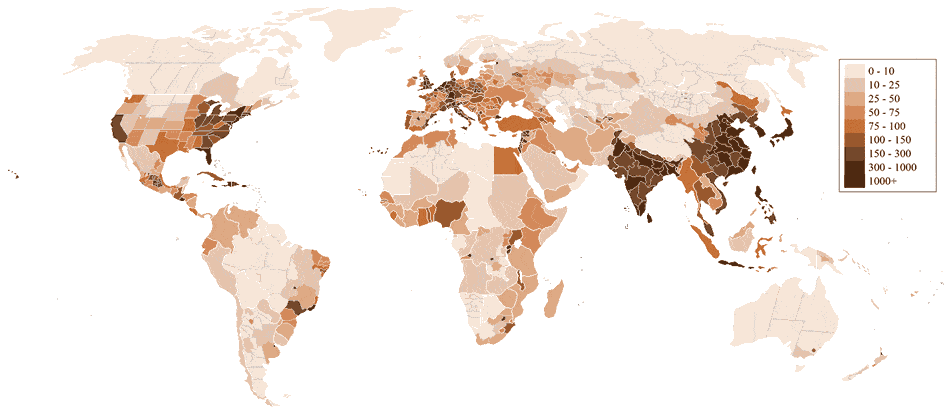
The population of the world is currently growing at a rate of around 1.13% per year. The current average world population change is estimated at around 80 million per year.
The annual growth rate reached its peak in the late 1960s, when it was at 2% and above. The rate of increase has therefore almost halved since its peak of 2.19 percent, which was reached in 1963.
The annual growth rate is currently declining and is projected to continue to decline in the coming years. Currently, it is estimated that it will become less than 1% by 2020 and less than 0.5% by 2050.
This means that the world population will continue to grow in the 21st century, but at a slower rate compared to the recent past. The world population has doubled (100% increase) in 40 years, from 1959 (3 billion) to 1999 (6 billion). It is now estimated that it will take a further 39 years to increase by another 50% to reach 9 billion by 2038.
Elaboration of data by United Nations, Department of Economic and Social Affairs, Population Division. World Population Prospects: The 2015 Revision. (Medium-fertility variant).
Elaboration of data by United Nations, Department of Economic and Social Affairs, Population Division. World Population Prospects: The 2015 Revision. (Medium-fertility variant).
World Population Milestones
10 Billion (2056)
The United Nations projects the world population to reach 10 billion in the year 2056.
8 Billion (2024)
According to the most recent United Nations estimates, the human population of the world is expected to reach 8 billion people in the spring of 2024.
CURRENT: 7.5 Billion (2016)
The current world population (the total number of humans currently living) is estimated at 7.5 billion as of October 2016 [1].
7 Billion (2011)
According to the United Nations, the world population reached 7 Billion on October 31, 2011.
The US Census Bureau made a lower estimate, for which the $7 billion mark was only reached on March 12, 2012.
6 Billion (1999)
According to the United Nations, the 6 billion figure was reached on October 12, 1999 (celebrated as the Day of 6 Billion). According to the U.S. Census Bureau, the $6 billion milestone was reached on July 22, 1999, at about 3:49 AM GMT.
Yet, according to the U.S. Census website, the date and time when 6 billion was reached will probably change because the already uncertain estimates are constantly being updated.
Previous Milestones
5 Billion: 1987
4 Billion: 1974
3 Billion: 1960
2 Billion: 1927
1 Billion: 1804
Summary Table
1–1804 (1803 years): 0.2 to 1 bil.
1804–2011 (207 years): from 1 billion to 7 billion
According to a recent study (based on the 2010 world population of 6.9 billion) by The Pew Forum, there are:
2,173,180,000 Christians (31% of the world population), of which 50% are Catholic, 37% are Protestant, 12% are Orthodox, and 1% are other.
1,598,510,000 Muslims (23%), of which 87-90% are Sunnis and 10-13% are Shia.
1,126,500,000 No religion affiliation (16%): atheists, agnostics, and people who do not identify with any particular religion. One in five people (20%) in the United States are religiously unaffiliated.
1,033,080,000 Hindus (15%), the overwhelming majority (94%) of whom live in India.
487,540,000 Buddhists (7%), of which half live in China.
405,120,000 Folk Religionists (6%): faiths that are closely associated with a particular group of people, ethnicity, or tribe.
58,110,000 Other Religions (1%): Baha’i faith, Taoism, Jainism, Shintoism, Sikhism, Tenrikyo, Wicca, Zoroastrianism, and many others.
13,850,000 Jews (0.2%), four-fifths of whom live in two countries: the United States (41%) and Israel (41%).
It was written during the 1970s that 75% of the people who had ever been born were alive at that moment. This was grossly false.
Assuming that we start counting from about 50,000 B.C., the time when modern Homo sapiens appeared on the earth (and not from 700,000 B.C. when the ancestors of Homo sapiens appeared, or several million years ago when hominids were present),.
Taking into account that all population data are a rough estimate and assuming a constant growth rate applied to each period up to modern times,. It has been estimated that a total of approximately 106 billion people have been born since the dawn of the human species, making the population currently alive roughly 6% of all people who have ever lived on planet Earth.
Others have estimated the number of human beings who have ever lived to be anywhere from 45 billion to 125 billion, with most estimates falling into the range of 90 to 110 billion humans.
World Population clock: sources and methodology
country population The world population counter displayed on Worldometers takes into consideration data from two major sources: the United Nations and the U.S. Census Bureau.
1. The United Nations Population Division of the Department of Economic and Social Affairs calculates, updates, and publishes estimates of total population every two years in its World Population Prospects series.
These population estimates and projections provide the standard and consistent set of population figures that are used throughout the United Nations system. The World Population Prospect: the 2015 Revision provides the most recent data available (released on July 29, 2015). Estimates and projected world population and country-specific populations are given from 1950 through 2100 and are released every two years.
The latest revision has revised the world population projections. Worldometers, as it is common practice, utilize medium fertility estimates. The data underlying the population estimates are national and sub-national census data and data on births, deaths, and migrants available from national sources and publications, as well as from questionnaires.
For all countries, census and registration data are evaluated. If necessary,the Population Division adjusted for incompleteness as part of its preparations for the official United Nations population estimates and projections.
2. The International Programs Center at the U.S. Census Bureau, Population Division, also develops estimates and projections based on analysis of available data (based on census, survey, and administrative information) on population, fertility, mortality, and migration for each country or area of the world.
According to the U.S. Census Bureau, the world population reached 7 billion on March 12, 2012. For most countries, adjustment of the data is necessary to correct for errors, omissions, and inconsistencies in the data.
Finally, since most recent data for a single country is at least two years old, the current world population figure is necessarily a projection of past data based on assumed trends.
As new data becomes available, assumptions and data are reevaluated, and past conclusions and current figures may be modified. For information about how these estimates and projections are made by the U.S. Census Bureau, see the Population Estimates and Projections Methodology.
Why Worldometer Clocks are the most accurate
The above world population clock is based on the latest estimates released on July 29, 2015, by the United Nations and will show the same number wherever you are in the world and at whatever time you set on your PC. Worldometers is the only website to show live counters that are based on U.N. data and that do not follow the user’s PC clock.
Visitors around the world visiting a PC clock-based counter see different numbers depending on where they are located, and in the past, they have seen other world population clocks, such as the one hosted on a United Nations website and on National Geographic, reach 7 billion whenever their locally set PC clocks reached 4:21:10 AM on October 31, 2011.
Obviously, the UN data is based on estimates and can’t be 100% accurate, so in all honesty, nobody can possibly say with any degree of certainty on which day the world population reached 7 billion (or any other exact number), let alone at what time. But once an estimate is made (based on the best data and analysis available), the world population clock should be showing the same number at any given time anywhere around the world.
Countries in the world by population (2016)
This list includes both countries and dependent territories. Data based on the latest United Nations Population Division estimates.
Click on the name of the country or dependency for current estimates (live population clock), historical data, and projected figures.
A payment gateway For Ecommerce service allows merchants to accept credit card and other forms of Internet transactions securely via your website. Remember, if the payment options on your e-store aren’t set up in the right manner, you could suffer loss of orders placed on your store. This means you’ll experience a significant drop in sales, because of unsatisfied customers. Implementing the right payment gateways, however, can prove a key to ensuring long-term success of your online business.
In most traditional transactions, payment processors involve the following parties:
the customer;
the merchant/business owner;
the payment processor;
the payment gateway — if not already combined with the processor;
the bank/credit card company of the customer; and
the bank of the business.
However, since there are hundreds of payment processing options, here are 10 of the best options to consider.
1. PayPal
For merchants who are looking for a low-volume payment processor, PayPal has proven to be a solid choice since it debuted in 1998. On top of having budget-friendly prices, PayPal operates in more than 200 countries and in 26 currencies and allows users to integrate PayPal checkout on their websites, process payments through a browser, app or reader and extend credit to customers.
2. Due
Due offers an end-to-end service that encompasses the entire billing and payment process for freelancers, small business owners and companies. Besides offering time tracking, project management and customized online invoicing options, the company recognizes that your business may cross the globe.
The invoicing and payment processing features include more than 100 languages, currencies and tax systems, as well as international credit card processing.
3. Stripe
There isn’t such a thing as a “one-size-fits-all” payment processor for online retailers. However, Stripe gets awfully close, thanks to being a customizable payment solution.
Stripe was designed for developers who can then tinker with the company’s APIs to create the product that best suits their needs. Stripe allows you to accept credit card, debit card and bitcoin payments from more than 130 different currencies. There’s also flexible billing and a modest 2.9 percent + 30¢ per successful card charge.
4. Flagship Merchant Services
If your site gets a high volume of credit card transactions, then Flagship Merchant Services is arguably your best option. As an all-in-one credit processor, the company offers low, flexible rates for businesses on a monthly basis, as opposed to signing a long contract.
Processing options include in-person, online and mobile credit card processing. Flagship also is known for its outstanding customer service and easy application process.
5. Payline Data
Payline Data is one of the most well-reviewed payment processors currently available. Besides giving merchants the chance to accept payments in-store, online and through a mobile app, Payline Data provides cash advances for merchants, customer insights, QuickBooks integration and an interchange-plus pricing structure that comes without a cancellation fee.
There’s also top-notch customer service whenever you need assistance.
6. Square
Square gives you the power to accept payments wherever you are, thanks to innovative products like its magstripe reader, contactless + chip reader and stand that converts your mobile device into a one-of-a-kind payment processor.
It is also customizable, which means that it has solutions for a wide range of businesses, including everything from restaurants to beauty professionals to transportation companies to professional services.
7. Adyen
Founded in 2006, Adyen is a global multichannel payment company based out of Amsterdam. The company allows users to accept and transfer money electronically in real time online, via mobile or in person.
Since this platform connects with some 250 payment methods in North America, Latin America, Europe and Asia, it’s one of the leading processors for anyone involved in global commerce.
8. BitPay
BitPay, which was founded in 2011, is one of the largest Bitcoin payment providers in the world. In fact, the company is responsible for more than $1 million in transactions every day.
BitPay gives users the opportunity to convert Bitcoin payments into their choice of nine currencies in 38 countries instantly to avoid volatility. The company also has partnered with PayPal and Merchant Acquirers such as Global Payments and Alternet Systems.
9. GoCardless
GoCardless is headquartered in the UK and is an online direct debit provider. With GoCardless, users can not only accept payments through an easy setup, but they can also automate payments, track the status of a payment and integrate the service into their site with their REST API.
Best of all? GoCardless is cheaper than PayPal, with 1 percent capped at £2.
10. CCAvenue
CCAvenue is one of the largest payment gateway in India, offering wide range of payment options. It offers 200+ payment options inclusive of 6 credit cards such as Amex, JCB, Diners Club, Mastercard, Visa and eZeClick. It also supports 27 major currency, thus enabling you to serve customers in some major global markets out of India. CCAvenue also allows Multilingual payment page in 18 major Indian and international languages.
CCAvenue settles payments on a weekly basis for all amounts over & above of Rs. 1000, which is the minimum amount required to be kept.
Hands down the quickest ways to make money (well, without breaking the law). Lots of students have genuinely made £100 from this technique. It’s completely legal, risk-free, and tax-free, and anyone can do it.
It works by taking advantage of free bets regularly offered by betting sites matching’ them at a betting exchange. Matched betting eliminates the risk (you are betting both for and against a certain outcome).
This leaves you able to squeeze out the free bet, which can be as much as £200! Multiply this by how many betting sites there are, and you can quite easily come away with a profit of a few hundred pounds.
Owen walks you through how to make your first £15 profit (using a real-life example) in this gem of a guide to matched betting. If you know of any better way to make £30 per hour sitting at home, please let us know!
2. Online surveys
Credit: Julio Marquez, Flickr.com
An increasingly popular way for students to make money is to fill out online surveys in their spare time. Research companies are always recruiting new members to answer surveys and test new products.
For a few minutes of form filling, you can make a couple of quid, which is paid as cash or rewards. You can bag up to £3 ($5) for some surveys!
3. Paid for searching the web
Interested in earning cash for doing what you already do online? This has to be one of the easiest methods of making money online without really any effort or change in your behavior.
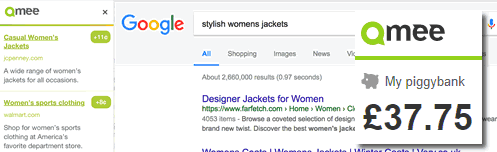
This innovative idea by Qmee.com rewards you for searching on Google, Bing, or Yahoo. You just install a simple add-on to your browser, and when you conduct a search, there may be a few sponsored results alongside your normal search.
Each Qmee result has a cash reward attached – if you are interested in it simply click on it and collect your reward.
The best thing is there is no minimum to cashout – our first one was just 72p wired to our Paypal account. You also have the option to donate it to charity.
4. Online market trading
The historically hard-to-break world of investing in stock markets and currencies has been cracked wide open. Today there is no need to be a fat cat or fund the yachts of Wolf of Wall Street-style stock brokers. You can do it all yourself with the help of online market trading platforms.
Having spent many hours researching this new opportunity, I’ve been experimenting with the two biggest platforms: Plus500 and eToro.com.
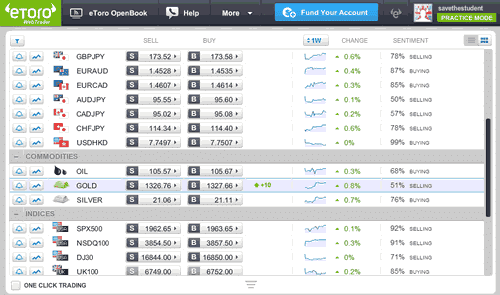
Both offer free practice accounts, and Plus500 also gives you a free £20(without depositing, terms apply) for their CFD service which is worth taking up. Overall I prefer eToro with over 4.5 million users worldwide. It was recently featured in the BBC 2 documentary “Traders: Millions by the Minute” and the Financial Times.
One of the best things on eToro is the CopyTrader feature. This lets you literally see, follow, and copy the investments of other top-performing traders.
Follow George’s complete guide to trading on eToro to learn more. I think $200 is a good amount to get the most out of the learning curve by trying out a few different markets. If nothing else you’ll learn a great deal about various investments and industries.
Disclaimer: CFD trading can be volatile and you can lose your entire capital, so don’t throw your life savings into it! Trading CFDs may not be suitable for you. Please ensure you fully understand the risks involved.
5. Review websites & apps for cash
Well, it seems like you’re pretty nifty with a web browser, so perhaps it’s time to turn pro and browse websites as a paid and fun job!
Introducing UserTesting.com – a new platform that pays everyday people to review all kinds of websites. Each review takes around 20 minutes and bags you $10 (£6.50) via Paypal.
6. The ‘Disney Vault’ secret
To keep demand high across generations, Disney Studios carefully restricts the supply of some home-release classics. They are locked away in the ‘vault’ for 8-10 years before being released for a short unspecified time.
Buy them in this window at normal retail price and you can turn a nice profit when they go off sale for another decade or so.
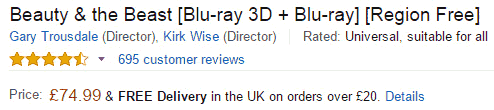
For example, in 2011 you could buy Beauty and the Beast on Blu-ray 3D for just £24.99. In just a couple of years, it was on Amazon for a staggering £74.99! Importantly, not all Disney releases are subject to the vault and only the true classics will maintain such demand.
7.‘Get Paid To’ sites
Similar to making money from online surveys, GPT sites reward you in cash and vouchers for completing various offers or activities online.
If you’ve ever seen the film The Social Network, then you’ve most likely had your brain spinning as to what website you can start up to make billions.
And of course, there are lots of stories out there about successful students who have started a site while at university or even bought a domain name and later sold it for £1000s.
In fact, Save the Student is one such example of a website started at university by Owen Burek in his first year, which has since grown into a full-time and successful enterprise.
Read Owen’s 4-step guide to setting up a website or this guide to making money as a blogger if you’re interested in finding out more. It’s really not that difficult to get started and there are plenty of opportunities to make money online.
9. Write and publish a Kindle eBook
If students are good at anything, it’s researching and writing. With the Amazon Kindle store, anyone can publish an eBook and make money.
And the Kindle app is now available on almost any device (laptops, iPads, smartphones and yes, Kindles) so your global market is huge!
List your book for £1.49 – £6.99 and you earn 70% of the sale. Considering Amazon is the ultimate selling machine (and remember people are looking to spend), that is a fantastic deal. The key to success with eBooks is to create value, and write non-fiction. Simply bundling information you have researched and complied on a common problem (eg. ‘secrets’ to finding a job) and then presenting it in an easy-to-digest format (an eBook) justifies someone spending a few quid on it.
Another big tip is to have a great cover designed so it stands out, and once your book is live on the Kindle store it’s really important to get some reviews so it shows up higher in results. Encourage readers to leave an honest review at the end of your boo
10. Affiliate marketing
If you’ve got a good presence on social media or perhaps you even have a blog or website, you can start bringing in money immediately by promoting all sorts of companies, products, services, and offers online.
Sign up to an affiliate network such as Affiliate Window, check their offers blog or browse the merchant listings to find something you think your friends would be interested in, grab your affiliate link, and share it. If someone buys (can be within up to 90 days) using your link you’ll make a nice commission.
11. Mobile phone recycling
See how much you can get for your old mobile phone using our in-house mobile phone price comparison tool! Maybe ask your parents if they have any lying around too.
You can get some good money and help the environment by recycling mobile phones with certain companies listed on the comparison tool. But be aware: you won’t always get the quoted cash since it depends on ‘condition’. We recommend Mobile Cash Mate for the fairest and highest payouts in most cases (they sent us a £203 cheque for an iPhone 5).
12. Become a ‘Clickworker’
The Clickworker.com concept is based on ‘internet crowd-sourcing’ where businesses advertise specific, scalable tasks they need to complete quickly. And for us, it’s an easy way to make fast cash from our couch.
There are a variety of tasks, but most commonly they involve mindless data entry, web research, or form filling. You are rewarded and paid in cash (via Paypal) for the work you do, and you can choose for what and when you work. Give it a go. [If you’re US-based, also try Amazon’s ‘Mechanical Turk‘].
13. Claim tax back
Many students work part-time or during the summer months, and others will be on placements or paid internships. More often than not, if you are a student working during the year, you will be overpaying income tax.
Why? Simply because few students reach the personal tax-free income allowance each year but are put on an emergency basic tax code by their employers meaning tax is being paid when it shouldn’t be.
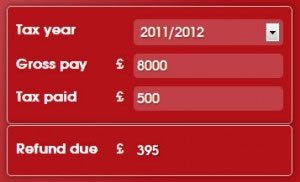
Use our student tax-back service to help you reclaim any tax you should not have paid. Just enter your details in the calculator here to work out what you may be owed. Otherwise, for more information read our guide on claiming tax back here.
14. Get cashback when shopping
I earned this much in 2 years
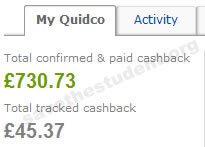
This is not only a way to make money but also to save money as a student. If you look at it in a different way then you are making money with every purchase you would have made anyway, whether it be 10% or 0.5% cashback.
There are a number of cashback sites out there that pay you the commission they otherwise would have earned.
We recommend signing up with Top Cashkaro India, Quidco.com&Swagbucks which are free and offer the best selection of retailers and exclusives.
15. A part-time job
A part-time job is the obvious first choice, opted for by most students looking to supplement their student loans. It provides a pretty steady flow of income and can enable you to gain valuable work experience.
However, depending on where you live, jobs are not always easy to find. Check local classifieds, our student job search, student job websites, and your university careers service for vacancies.
It’s also worth signing up with the Graduate Recruitment Bureau, a free service which will match you with both part-time jobs or graduate opportunities.
16. Gigs on Fiverr
Fiverr is now the world’s largest marketplace for people to make money selling small services (known as ‘gigs’).
What you offer could be absolutely anything, from writing and translating, social media posting, playing pranks, and teaching to creating music, voiceovers, and short video clips for people all around the world!
The default price is $5 (hence Fiverr), but you can attach extra services to gigs for more money. While it might not seem like much, it can quickly add up and there are plenty of examples of people making a really good living from the site. The key is to get a system in place that minimizes the time spent on each gig.
But there is another way to profit even more from Fiverr for potentially far less work. How? By simply reselling gigs elsewhere. For example, find a decent logo designer then reply to jobs on Upwork or even local classifieds. A $5 spend can easily become $50+, and it’s repeatable!
If you’re not interested in selling at all there’s SO much good stuff you can get done for yourself. Have a browse and get inspired!
17. Review music for money
If you love music, make it your business by reviewing unsigned bands and artists online for cash with Slicethepie.
It can take a while to build up your reputation but some users of the site have said that they earn £40 a month. This may not sound like much, but if it’s something you enjoy then it shouldn’t be hard work and is another thing for your CV. The money you earn will be in $US but anyone can sign up and review.
18. Sell your notes
If you don’t mind sharing your notes with other students it’s a great way to generate a little extra cash. There are sites out there that you can upload your notes to, along with your price, and then when another student downloads them you get paid.
Most of these sites like Stuvia & Notesale are free for you to list your notes but tend to take a cut of your profit in order to handle the marketing etc so that you don’t have to go out there and promote your notes yourself.
You will most likely have to upload PDFs but it’s worth it for the return and you can submit handwritten notes but you’re likely to make more money if they’re typed up.
19. Sell second-hand course books
One great way to make money is to buy other students’ textbooks at the end of the year, and then sell them just after freshers’ week – when the new intake of students knows that they need them!
You can either advertise on campus or list them online very easily on Amazon.co.uk Marketplace (just bear in mind they take a commission on books sold).
20. Competitions
Entering competitions of course comes with no guarantees, but there is a growing community of so-called ‘compers’ in the UK consistently making up to £50,000 a year through all sorts of competitions.
Types of competitions available to enter range from simple registration forms and Facebook page liking to answering questions correctly over the phone to being a TV game show contestant. Imagine you made it onto Deal or No Deal instead of just watching it!
Then head to our active competitions page to enter other free competitions that we have found. Just note that some of these sites may send you spam so use an alias email address and opt out of as many of the offers as possible.
21. Buy and sell domain names
A domain name is just a website address (eg. ‘savethestudent.org’ or ‘mysite.co.uk’) and there are lots of extensions (.com, .net, .co.uk, etc).
They cost as little as £1.99 to register with 123-reg.co.uk or GoDaddy.com yet premium domain names can fetch £1,000s if not millions when sold on. In 2007 VacationRentals.com went for a cool $35m!
Now you’re probably not going to come across anything like that, but you can still turn a quick profit with a bit of searching. The trick is to find available domain names that have some commercial value, snap them up and then list them for sale on a site like Sedo.com.
22. Mystery shopping
Today becoming a mystery shopper is easier than you think and you can get rewarded handsomely.
We’ve recently come across a really fun smartphone app called Roamler that pays you in cash for completing various tasks in your local area. So definitely check that out first!
23. Be an extra
Do you fancy yourself as a budding young actor or just that person who walks past in the background shot of an episode of Eastenders? It could be you if you apply to be an extra.
The pay isn’t bad either – £60-80 a day on average, and you hardly have to do anything!
You can apply at Be On Screen for a number of opportunities or 2020 casting is another agency (just know they take a cut from your earnings).
24. Sell all your old CDs, games, and movies
If you are looking to make a very quick buck, then selling your old bits and bobs that are cluttering up your room is a good idea.
The best thing about it is that you can rip all the songs and films onto your laptop or external hard drive before selling them. This means that you are only really selling the plastic and artwork!
You can earn anything from 10p to £20 per item, and the earnings can really add up if you have a large collection. Whilst you’re at it, see if your parents have any ‘clutter’ they’d be happy to see the back of.
You can also sell almost anything for free on Amazon Marketplace or Preloved and sites like MusicMagpie will pay you instantly for sending in unwanted items.
For more tips and places to sell check out our guide on selling DVDs, CDs, and games
25. Sell on your education!
Become a tutor to local GCSE or A-level students. There are now a few online tutor sites too, so you can go global without too much hassle.
You may feel as if you aren’t qualified to be a tutor, but seeing as you are at university you will most likely have the qualifications to tutor for GCSE or even A-Level. Some parents may feel that their child will react better to a younger tutor, and it can be a great experience, so why not give it a go?
You can advertise on SchoolsTrader or sign up with UK Tutors. You can expect to earn around £10 an hour. However, make sure you don’t have to do too much tutoring around your exams!
26. Sell your photos
If you think you’ve got a good shot and a little creativity, try uploading your photographs for free to stock websites. A good starting point is Fotolia or istockphoto.
Make more money selling photo subjects that people are demanding, and there’s a great resource to find this out here. It might be a good idea to test them out in print first yourself.
27. Rent out your car parking space
Some student accommodation comes with a drive or garage. If you aren’t using your parking space and you live in a busy area then you might be in luck. There are plenty of people who may work in the city center and are fed up with paying through the roof for daily parking.
‘Peer-to-peer’ lending is the future of banking. It cuts out the middleman, passing on higher interest rates to you and cheaper loans to borrowers. And it’s all managed online from the comfort of your sofa.
Founded in 2005, Zopa.com is the most established site lending around £1m every day. Right now you can expect to achieve up to 5% fixed return (before tax), depending on how long you choose to lend for.
As with any traditional bank, there is some risk attached to peer-to-peer lending. Zopa has gone a long way to mitigating this with its Safeguard feature, which effectively spreads your money across a wide range of borrowers (who are also credit-checked).
29. Work as a charity collector
Ok, so this job takes a certain kind of person, as you’ll have to take a lot of rejection and be persistent.
But if you are bubbly, personable and reckon you could sell ice to an Eskimo then this could actually be a great student money-making idea. You get paid a commission on new sign-ups (typically around £20).
Have a look at Wesser as well as charity websites like Oxfam.
30. Babysitting
It’s a classic money-maker, and for good reason. You get paid (well) to watch TV and not very much else!
Be warned that you will need a CRB (Criminal Records Bureau) check to look after small children, even though some parents may not ask for one. If you are wondering what to charge, look at local Gumtree ads, but you can expect to be paid over £8ph even if you aren’t trained in child care.
Aside from advertising yourself, you might want to try creating a profile on Findababysitter.com. It really is easy money (unless you get stuck with the child from hell!).
31. Dog walking & sitting
If babies ain’t your thing, then maybe canines are… looking after other people’s dogs is big business. Just think that as a student you’re likely to have free time during the day when others are out at work and worried about their pets at home.
You could bag around £7 per dog for an hour’s walk, and it’s also a great way to keep fit. Join Tailster who will match you up with dog owners. Alternatively, advertise your services locally with fliers or on classified websites such as Gumtree.
32. Rent out your house for filming
Directors for TV and film are always on the hunt for houses to film in. For instance, a scene for CoronationStreet was recently filmed in the student house one of the Save the Student editors used to live in!
Not only can you make good money but it’s crazy seeing your own place on TV. Start out by looking at this site.
33. Rent out your body
According to our recent survey, 7% of students use their body in some way to make a buck.
If you are comfortable taking off your kit then why not try life modeling? Sit there in the buff while budding artists capture your every curve (or pokey bits) in frightening detail! Try RAM, a website especially designed for this kind of job.
You could also get involved in clinical drug trials, but be sure you fully appreciate any risks attached.
Warning: Do not do anything you are not comfortable with, no matter how desperate you are for money! There has been an unhealthy rise in student prostitution in recent years – do not fall victim to it!
34. Freelance work
Perhaps you enjoy writing, managing Facebook pages or doing a little bit of graphic design in your spare time. There are so many freelance jobs out there that require simple skills or just time that someone else might not have.
And the best thing about freelancing is that you can work for clients in the UK and around the world with just an internet connection from home, to your own hours whilst developing valuable skills.
A great place to start is with the leading freelance site Upwork.com. Or try using our student job search to find freelance jobs closer to home.
35. Busking
If you can sing or dance then this is your time to shine baby! Did you know that Justin Bieber started off busking? That’s right, with a little work you can be as annoying as him.
There are really no tips for this except to choose a good spot with high footfall, make sure you are good, and play your heart out. Some buskers in the past have been known to make upwards of £20 an hour.
36. Sell clothes on eBay
Everyone’s best friend when it comes to getting rid of junk is eBay. Online auctions are a sure-fire way to turn that sleeveless jacket (which came in and out of fashion in a week) into hard cash.
Some eBay sellers look at trends and try to predict what will be big ahead of the market. If you are good and don’t mind taking a risk, then you can buy early in bulk and sell on when the craze hits. Sell your stories and videos
37. Sell your stories and videos
If you have an interesting story, then you could try selling it to the papers. It could be anything from sleeping with a professional footballer to getting caught in a clothes horse!
One of the Save the Student teams was unfortunate enough to have a pigeon fly through and smash their window at the university and they sold the story to The Sun for a tidy £50.
You could also film your friends at all times and send it to You’ve Been Framed to net yourself £250 and a few seconds of fame.
38. YouTube videos
According to recent stats, we now watch more videos on YouTube than searches on Google. And with the recently introduced YouTube Partner Program you can now profit from making and uploading videos. You will receive a percentage of the advertising revenue collected per 1,000 views.
Depending on how successful you are (virality, subscriber base, and topic), you can make a lot of money, and there are plenty of stories every week of more and more YouTubers making it their career.
39. Network marketing
Also known as multi-level marketing (MLM), this is a business model that allows you to generate ongoing income in two ways: by making a commission selling products and by recruiting other members who go on to sell. The latter allows you to make money from the sales made by those you have recruited.
Importantly, this is not a pyramid scheme (they are illegal) because there is an end goal that involves a customer buying a product or service of value.
It’s also not a ‘get rich quick’ scheme. You will have to work I’m afraid! However, with the growth of social media, network marketing is becoming easier and lots of people are now making a decent living from it.
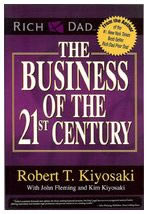
This is a serious way of making good money on your own terms and it’s well worth reading up on it. I recommend getting “The Business of the 21st Century” by Robert Kiyosaki.
40. Source property for wealthy investors
We all know how much money there is in property, but on the surface (with house prices as high as they are) you might be thinking this market is off-limits.
Truth is, lots of people make a great deal of cash simply sourcing suitable properties for wealthy investors who simply have no time.
The trick is to find properties below market value (BMV) by avoiding estate agents and instead flyering your area with your contact details offering to buy houses. Then approach investors with a no-brainer offer to pass on the details of cut-price property in exchange for a % of the sale value.
Most cities will have monthly networking events for landlords and property investors. Track these down, sign up, put on your best suit, and go along with lots of business cards. Or you could start on LinkedIn or even Twitter to build some initial contacts.
The researchers believe theirs is the first one-legged hopper that does not require a connection to an external motor or power source.
Though one-legged robots can only move by hopping, freeing them of tethers would open up new, non-research uses, said Joohyung Kim, associate research scientist at Disney Research. The highly efficient leg modules also can be combined to create multi-legged robots.
By concentrating on building a light, efficient robot, Kim and his collaborators, Katsu Yamane and Zachary Batts, developed a robot weighing a little less than five pounds and about one foot in height. As of now, the robot can maintain its balance for approximately seven seconds, or 19 hops, but the researchers anticipate an increase in on-board computing power could keep it upright far longer.
The researchers will present their tetherless hopper at the International Symposium of Experimental Robotics, ISER 2016, in Tokyo, Japan, Oct. 3-6.
To achieve the high-speed, high-force actuation necessary to make the robot hop using electrical power, the researchers designed a linear elastic actuator in parallel, or LEAP, to serve as the leg. The LEAP uses a voice coil actuator—a highly efficient actuator that operates the same way as a loudspeaker driver—paired with two compression springs.
This leg is connected to a torso that contains battery power, sensors, and other electronics. To keep this upper torso level during hopping, the angle of the leg is adjusted at each hop using two standard servo motors. The torso is only about twice as heavy as the leg, whereas most hoppers have torsos that are much heavier in relation to the leg, which helps them achieve dynamic balance.





 Each Qmee result has a cash reward attached – if you are interested in it simply click on it and collect your reward.
 One of the best things on eToro is the CopyTrader feature. This lets you literally see, follow, and copy the investments of other top-performing traders.
 Well, it seems like you’re pretty nifty with a web browser, so perhaps it’s time to turn pro and browse websites as a paid and fun job!
 To keep demand high across generations,
 Importantly, not all Disney releases are subject to the vault and only the true classics will maintain such demand.
 If you’ve ever seen the film The Social Network, then you’ve most likely had your brain spinning as to what website you can start up to make billions.
 The key to success with eBooks is to create value, and write non-fiction. Simply bundling information you have researched and complied on a common problem (eg. ‘secrets’ to finding a job) and then presenting it in an easy-to-digest format (an eBook) justifies someone spending a few quid on it.
 Sign up to an affiliate network such as Affiliate Window, check their offers blog or browse the merchant listings to find something you think your friends would be interested in, grab your affiliate link, and share it. If someone buys (can be within up to 90 days) using your link you’ll make a nice commission.


 Use our student
 A part-time job is the obvious first choice, opted for by most students looking to supplement their student loans. It provides a pretty steady flow of income and can enable you to gain valuable work experience.
 Fiverr is now the world’s largest marketplace for people to make money selling small services (known as ‘gigs’).

 Then head to our active competitions page to enter other free competitions that we have found. Just note that some of these sites may send you spam so use an alias email address and opt out of as many of the offers as possible.
 A domain name is just a website address (eg. ‘savethestudent.org’ or ‘mysite.co.uk’) and there are lots of extensions (.com, .net, .co.uk, etc).
 Today becoming a mystery shopper is easier than you think and you can get rewarded handsomely.
 If you are looking to make a very quick buck, then selling your old bits and bobs that are cluttering up your room is a good idea.
 You may feel as if you aren’t qualified to be a tutor, but seeing as you are at university you will most likely have the qualifications to tutor for GCSE or even A-Level. Some parents may feel that their child will react better to a younger tutor, and it can be a great experience, so why not give it a go?
 Some student accommodation comes with a drive or garage. If you aren’t using your parking space and you live in a busy area then you might be in luck. There are plenty of people who may work in the city center and are fed up with paying through the roof for daily parking.
 It’s a classic money-maker, and for good reason. You get paid (well) to watch TV and not very much else!
 Directors for TV and film are always on the hunt for houses to film in. For instance, a scene for CoronationStreet was recently filmed in the student house one of the Save the Student editors used to live in!
 According to our recent survey, 7% of students use their body in some way to make a buck.
 If you can sing or dance then this is your time to shine baby! Did you know that Justin Bieber started off busking? That’s right, with a little work you can be as annoying as him.
 Everyone’s best friend when it comes to getting rid of junk is
 Also known as multi-level marketing (MLM), this is a business model that allows you to generate ongoing income in two ways: by making a commission selling products and by recruiting other members who go on to sell. The latter allows you to make money from the sales made by those you have recruited.
 We all know how much money there is in property, but on the surface (with house prices as high as they are) you might be thinking this market is off-limits.

