Setting effective and achievable business goals is at the heart of any good business goal-setting strategy. While many people say they want to achieve success in business, not everyone has the wherewithal to follow through and do so.
What sets them apart?
The person versed in the art of goal setting, who can set effective goals and follow through with their achievement, understands just what it takes to do this. It’s no walk in the park. It takes true determination, effort, and persistence.
The problem?
Most people want to achieve their goals but don’t want to put in the work to do so. The cliche goes, “When the going gets tough, the tough get going.” But we all know just how few and far between the “tough” really are from those who have a tendency to simply give up.
It’s easy to throw in the towel, especially when there’s such a big mountain to climb. Most of us just want to have our cake and eat it too, right?
Well, you’re probably no stranger to setting business goals. But what does it take to actually achieve your goals in business? I wanted to put together the 10 best tips for actually following through with your business goals and achieving career success.
1. Set descriptive business goals
What the mind can’t visualize, the mind can’t achieve. Thoughts are things and the more time you spend describing and visualizing your goals, the better your chances are be to actually reaching them.
How does this work?
Grab a piece of paper and visualize your goals. Don’t just say you’re going to make more money next year or get that promotion you were hoping for. Go ahead and describe the exact amount of money you’re going to be making and the office you’ll be in when you get that promotion.
This might sound silly to some people, but there is real power in visualization. Take the time to thoroughly visualize and describe your goals in as much detail as you can. Use an entire sheet of paper to define just what your life will be like when you achieve that goal.
What type of house will you be living in when the business goal you set for yourself becomes a reality? What types of things will you be doing with your time in the morning? Who will be reporting to you at work? What will your daily schedule look like?
Be as detailed and descriptive as possible. The more meticulously you can do this, the more likely you’ll be to achieve your business goals.
2. Set achievable business goals
This doesn’t mean you can’t set lofty business goals, especially in the long term. This means you should set goals that you truly believe you can achieve. Regardless of what that goal is, ensure that you at least have a chance of achieving it.
This doesn’t mean you have to know just how you’re going to get there every step of the way. The founders of any successful startup can tell you that they never could have imagined all the steps that would have been necessary to get to where they are today.
Setting achievable business goals simply means that you believe in yourself wholeheartedly enough to see that goal through. It means that you’ll do whatever it takes to get there.
Find and set achievable business goals to ensure you experience both the short-term and long-term benefits that come along with career success.
3. Set time-focused business goals
Always set time-focused business goals. You can’t simply set a goal with no time element involved, or even an obscure one. For example, you don’t want to say that you’ll start a business sometime next year.
No, if you want to set a business goal for starting your own company, give an exact must-launch date. When will you cut the ties with your current employment? What specific date will you cast out on your own?
No matter what your business goal might be, you have to set a clear date on when you’ll achieve it. This will help to add some perspective as you reach your goals.
4. Create strong enough reasons
Do you have deep and profound reasons for wanting to achieve the business goals that you set for yourself? I’m not talking about superficial reasons. I’m talking about meaningful reasons.
Simply saying that you want to achieve your business goals so that you can drive a better car or have more money in the bank won’t help you, especially when you hit those all-too-often career plateaus.
What’s going to actually help you here is developing profound and meaningful reasons.
We don’t want to make a certain amount of money in business just so that we can collect random pieces of paper with deceased notables on them. We want to make more money because of what that money will bring to us.
Put some real thought and effort into why you’ve set the business goals for yourself that you’ve set. If you want to actually achieve them, make sure you associate a strong enough reason to do so.
5. Create milestones
Milestones are a great way to help create some stepping stones as you work your way towards achieving your business goals.
But what are milestones exactly?
Well, think about it this way. Let’s say you’ve set the business goal to become the top salesman in your company within 18 months. In order to do that, you’ll need to hit some milestones first.
So, what are some milestones you could create along the way?
For example, you could create a quarterly goal to contact a certain number of people or reach a certain dollar amount in sales. You could also set these as monthly goals, weekly goals, or even daily goals, that we could otherwise call milestones.
What’s important is to create milestones that will help you move in the right direction and ultimately see you achieving your business goals in the long term.
6. Make a plan and act on it
In order to achieve any business goal, we need a plan and we need to act on that plan. The plan is our roadmap towards our goals. How are you going to reach your business goals?
This isn’t something abstract or arbitrary exercise that’s done in the mind and tucked away in your mental filing cabinet. This is something that requires true mental fortitude, and that’s written out and planned in a meticulous fashion.
While you might not know every step you’ll need to take in order to reach your goals, you have to have a plan of attack. How will you launch your own business or increase sales for your employer and get that well-deserved promotion?
Whatever your business goals might be, the only way to achieve the ones that we set for ourselves, it to have some sort of plan that we act upon.
Of course, daily massive action is required once we do have our plan. Plan and act. Recycle and repeat. That’s the way to achieve your business goals.
7. Track and analyze
Reaching our business goals is next to impossible when we don’t have a system to track and analyze. Find a way to track your results on a daily basis, and create a spreadsheet.
By tracking and analyzing, you can also help to ensure that your plan is working in your favor. What are you doing on a daily basis that’s helping you to move closer to your goals? Are you moving further away?
Set up some metrics and systems for tracking and analyzing your progress toward your goals. You simply can’t achieve your goals without tracking and analyzing your efforts.
8. Adjust your plan when needed
Although we might set a plan to achieve our business goals at the outset and act on that plan, when we track and analyze our progress, and we see that we’re not getting the results we’re after, we have to adjust our plans.
Think about it this way. A plane is traveling from LAX to JFK. That plane has a plan to reach its goals. In general, it knows the overall speed, direction, and cruising altitude it wants to travel at.
However, along the way, things might arise. For example, the plane might experience turbulence at 33,000 feet, forcing it to climb higher or sink lower. The plane might also need to avoid a storm system, causing it to change directions to make its way around it.
Of course, the plane has to adjust its plan to arrive at JFK, but it doesn’t change its goal of arriving there. Similarly, you should adjust your plan when needed.
9. Focus on Keystone Habits
The instillation of keystone habits is a great way for us to achieve our business goals. Keystone habits are habits that act as cornerstones in our lives.
What exactly are they and how do they help?
Well, keystone habits help in the formation of other good habits. When we focus on good keystone habits, other good habits simply fall into place.
For example, working out for 30 minutes per day is considered a keystone habit. When someone works out for 30 minutes every day, they’re more inclined to eat right, drink plenty of water, and take their vitamins. Why? Because working out is a keystone habit.
Similarly, in business, there are plenty of keystone habits. Find the right keystone habits focus on those, and watch as other good habits that will help you reach your business goals, fall into place.
10. Leverage the 80/20-rule
The 80/20 rule, or the Pareto principle, says that 80% of the results come from 20% of the efforts. Anything that we measure, we’ll find that 80% of our results are coming from 20% of the work that’s put in.
When it comes to sales, this means that 80% of our sales are derived from 20% of our efforts. When it comes to our income, the same thing applies.
Your job?
Find the 20% of your efforts that are producing the 80% of your results, and amplify them. To do this, you have to ensure that you track and analyze all of the time that you spend on your work-related efforts throughout the day.
Learn to harness this principle, and watch as all the business goals that you set for yourself ultimately materialize as you slowly but surely achieve career success.
There is very little good CEO training out there. The best have learned by running a successful startup, while many of the failures seem to come from other senior jobs where they weren’t adequately mentored to understand what makes the CEO job really different. here are steps to become a successful CEO.
I think there are 15 elements of a successful CEO:
1. CEOs aren’t kings or queens.
This is one of the most common misperceptions of the CEO job. The perception that they are somehow all-powerful and able to wave their scepters and magically solve problems. This is widely held by rank-and-file employees, and the fact it is untrue is often a huge surprise to new CEOs.
Yes, they do have an unusual amount of power, but, and this is particularly true of public firms, they are surrounded by regulations that define what they do and they are offset by the CFO and board who collectively have more power. They run someone else’s company not their own and if they forget this they’ll likely find both investors and customers to be unforgiving.
2. Loyalty is their most powerful tool.
CEOs aren’t independent contributors. They depend on their folks to do what they ask of them and to have their backs. Loyalty isn’t unilateral, if they aren’t loyal to their people won’t be loyal to them. The best CEOs are often defined by the fact that their people would do anything for them voluntarily.
The worst CEOs are defined by employees who throw celebrations when they leave. Good CEOs must realize that part of being loyal to your employees means taking care of them when you leave, that means both assuring the firm is in good hands, not being worried your successor will outshine you, and if the departure puts one of your folks at risk making sure that risk is mitigated.
3. Salary and possessions don’t define success.
A lot of CEOs seem to think the important parts of success in the job are big expensive cars, big expensive houses, private jets, and near royal treatment. This focus on stuff often sets a foundation for failure because each of these things has to be managed, creates distractions, and creates an “I’m better than you” atmosphere that alienates employees, investors, and customers. The best CEOs live relatively modestly and they are defined by what they do not by the houses, yachts, cars, or even islands they own.
4. Understanding the products deeply.
One of the things that made Steve Jobs stand out was he basically husbanded the products himself. He had veto rights over everything and while that is likely a level of involvement most CEOs can’t reach he was considered the best CEO of the last decade. Understanding the products means understanding how they work and how they are created and maintained.
5. Understanding the market that the firm operates in
Every industry has regulations that surround it. This can tell you a lot about the risks the CEO is taking and whether they are reasonable. Increasingly, this means understanding not only local regulations but the regulations in the markets the company is considering.
7. Know all the business fundamentals well enough to know what questions to ask
The fundamentals are finance/accounting, manufacturing, operations (including IT and HR), marketing, and sales. A lack of basic understanding in any of these has led to some of the most damaging decisions I’ve ever seen, such as eliminating commissions or cutting demand generation spending.
8. Be data-driven and make sure that data isn’t compromised.
One of the most common mistakes CEOs make is to surround themselves with people who tell them what they want to hear rather than assuring unbiased information streams that tell them what they need to know. Uncompromised data is critical to making good decisions and this needs to be an absolute rule aggressively enforced.
9. Understand opportunity cost.
This is the cost of not doing something. You have choices that have far-reaching implications and often the choice of not doing something is higher than doing it. For instance, the cost of not licensing out the MacOS was Windows and the loss of PC market leadership for Apple.
10. Understand the collateral cost.
This is the cost of doing something not directly related to the effort. For instance, the cost of entering the smartphone market for Google was the loss of the Apple board seat and a war with their one-time mentor and strongest supporter. Steve Jobs went from mentor to the Google founders to mortal enemy who wanted to kill Google.
11. Realize layoffs are an indicator of failure and that people aren’t numbers on spreadsheets.
Layoffs are the result of some mistake and can badly damage a firm’s ability to execute severing relationships and sending key employees to competitors. Gateway was critically hurt when a laid-off employee ended up as a buyer at their largest customer and stopped buying Gateway products.
12. Don’t lie about your credentials.
There is a long list of ex-CEOs who are ex-CEOs because they, at one time, lied about where they went to school or what degree they ended up with. In a world of massive data access tools, keeping a secret like this is impossible so don’t do it.
I saw one executive gets fired by taking another executive to meet his friends and one friend, not realizing who the guy was, said something to the effect “Can you imagine how stupid some people are? Bill here convinced his firm he went to Harvard, and he didn’t even go to college!”
13. This job isn’t about making you famous.
I’ve seen CEOs put themselves onto TV shows (that failed), CEOs that took nude shots on horses, and CEOs that seemed to think that what they did off the job was no one else’s business (one guy actually chased pizza delivery boys with a tank, a real tank, he had bought).
You are the face of the company, and you are always on stage, if you become the story and the story is anything but the fact you are a great CEO that is a bad thing. By the way, this suggests that if you are bad at impulse control and not Donald Trump; you likely should stay off social media.
14. You can’t do it all yourself.
Understand your weaknesses and hire people to balance them. Put these folks on your executive staff and put them on your board to make sure your weaknesses are mitigated by their skills. Avoid hiring lots of superstars because they generally don’t work well with others. You want folks who will see you as the leader, will have your back, and will know how best to do what you don’t.
You need diversity in skills and capabilities, but consistency in loyalty, cooperation/collaboration, in ethics, and in key priorities. You want to build a team that is loyal to you and the company, and that can be far more than the sum of the parts. Of all of this, knowing how to do this is likely the most important part.
15. Finding a good mentor is crucial to CEO success
People often have a great deal of trouble pivoting from what they used to do into the job of CEO. Behaviors like self-promotion that worked so well when they came up through their organizations can assure their failure as CEO. The salary in and of itself can become a massive distraction if it results in the accumulation of a lot of stuff that ultimately becomes a distraction.
For a new CEO in particular, finding someone qualified to mentor them and who isn’t afraid to provide critical but necessary advice is perhaps the most important forgotten step in this process.
Understanding that you don’t have to do this alone, but that these elements aren’t multiple choice and that you have to cover all of them will likely make the difference between whether the new CEO is a success or failure.
Being a CEO isn’t for everyone. My old friend Steve Ballmer went from being a happy fun guy to being defined by his nearly constant anger when he took that job. With public companies, the stress and requirements on a CEO likely shorten the lives of folks who can’t handle this stress significantly.
Finally, and one last rule, maintain perspective over your work and home life. Often CEOs are defined not only by the jobs they have but by how screwed up their children are and kids that either grow up really messed up or hate them (often both) and end their days being faced with regrets over bad priorities. If the choice is between being a CEO and your family, then you shouldn’t become a CEO.
The Saudi Public Investment Fund (PIF) has indicated it could become a key investor in a multibillion dollar fund that is being created to make investments in technology around the world.
The SoftBank Group Corp (SBG) announced Friday that it will form the SoftBank Vision Fund. The Fund will be managed in the United Kingdom by a subsidiary of SBG and will deploy capital from SBG and investment partners. It will also aim to be one of the world’s largest of its kind.
Masayoshi Son, Chairman & CEO of SoftBank Group Corp, added: “With the establishment of the SoftBank Vision Fund, we will be able to step up investments in technology companies globally. Over the next decade, the SoftBank Vision Fund will be the biggest investor in the technology sector. We will further accelerate the Information Revolution by contributing to their development.”
SBG plans to invest at least $25bln over the next 5 years, the fund said in a statement released Friday.
Under a recent non-binding deal reached between SBG and PIF of Saudi Arabia, the PIF will consider investing in the fund and becoming the lead investment partner, with a potential value of up to $45bln over the next five years.
Masayoshi Son, Chairman & CEO of SoftBank and Saudi Arabian Deputy Crown Prince Mohammed bin Salman (Photo: Saudi Press Agency)
The Saudi Public Investment Fund was established in 1971 to provide financing support for projects of strategic significance to the national economy – its role has evolved to incorporate a number of different areas.
In addition, a few large global investors are in active dialogue to join SBG and PIF to participate in the fund. It’s hoped the overall size of the fund could reach $100bln.
Deputy Crown Prince Mohammed Bin Salman, Chairman of PIF said: “The Public Investment Fund is focused on achieving attractive long-term financial returns from its investments at home and abroad, as well as supporting the Kingdom’s Vision 2030 strategy to develop a diversified economy.
“We are delighted to sign this MOU with SBG given the long history, established industry relationships and strong investment performance of SBG and Masayoshi Son.”
SBG has engaged former Deutsche banker Nizar Al-Bassam and ex-Goldman partner Dalinc Ariburnu for the project.
These days, it’s hard to hear much about fundraising without also hearing a thing or two about the concept of crowdfunding. Thanks to the internet, crowdfunding has opened up a whole new world of possibilities for a variety of people that might not have had the same chance to put their projects in motion on a practical basis before. These include small business owners, independent artists, charity workers, and many others. The rising popularity of top crowdfunding and fundraising websites such as Kickstarter and IndieGogo has only helped to spread the popularity of crowdfunding as a modern fundraising solution.
At present, the concept on the whole has caught on to such an extent that it’s gone beyond simply being a tool specifically utilized by small businesses and independent entities to get a given project off the ground. Even larger businesses are now turning to crowdfunding as a way to obtain funds to develop products and concepts the public would like to see happen.
A Look At The History Of Crowdfunding
Although crowdfunding has officially reached a point where it’s here to stay, it’s something that rose to prominence relatively recently as far as the history of fundraising goes. Prior to 2012, it really only existed as small scale peer-to-peer lending in which isolated individuals who believed in what you were doing would help you move your project forward by lending money. The term “crowdfunding” itself dates back to 2006 in relation to fundraising efforts for a video blogging network launched by Michael Sullivan.
What we currently think of when we hear the term “crowdfunding” actually first began as a form of outsourcing known as “crowdsourcing”. Crowdsourcing is the practice of delegating the many tasks attached to a given project over a portion of the general public to help facilitate its speedy completion. People who choose to become involved in crowdsourced projects generally do so on a volunteer basis out of a genuine desire to be involved.
Crowdfunding operates on the same general principle, but with the addition of incentives to encourage contribution and increase amounts donated. People who choose to help crowdfund a given project generally do support the cause behind that project and wish to be involved in helping it come to fruition. However, many also wish to obtain the incentive attached to a particular size donation. The type of incentive involved is what determines the difference between reward-based crowdfunding and equity-based crowdfunding.
How Does Reward Based Crowdfunding Work?
Reward based crowdfunding is probably the most popular and widespread of the two campaign types. After determining the amount of money that needs to be raised for a successful project, the person or company behind the campaign then sets up suggested donation amounts. Each of these will come attached to a specific reward or incentive.
For instance, if an independent filmmaker decides to use reward based crowdfunding to raise money for his next independent film, he might offer people who donate $100 to the cause a mention in the film’s credits. Those who choose to donate $500 might receive a signed film poster, while people who donate $1000 might get to attend a meet-and-greet. The types of rewards that can come attached to a crowdfunding campaign can cover literally anything.
Some reward based crowdfunding campaigns require the entire target amount to be raised or exceeded for the business or individual to actually receive the funds. Others will simply allow them to collect whatever they manage to raise and put it toward the project in question. In cases where the sought-after benchmark needs to be met for any of the funds to be collected, people who donate have the added peace of mind that comes with knowing they’ll get their money back if there’s a possibility that enough wasn’t raised for the project to move forward as planned.
Crowdfunding and Fundraising Websites:
1. KICKSTARTER
The largest crowdfunding site with more than 13 million visitors every month, Kickstarter hosts crowdfunding campaigns from comics and crafts to technology and Theater. The site does not allow campaigns for social causes so you’ll need a product or event to promote.
The platform has helped nearly 80,000 projects get funded with a strong community of repeat backers. Nearly 300,000 people on Kickstarter have backed 10 projects or more. About the biggest drawback for Kickstarter is that it only offers the all-or-nothing funding model which means that if you do not reach your funding target, you get none of the funds pledged.
Fees:
Kickstarter collects a 5% fee for successfully funded projects. Payments are processed by Stripe which charges between 3% and 5% of the amount.
Average Backer Pledge Kickstarter
2. INDIEGOGO
Similar to Kickstarter, except that here, you can raise funds for any project (so long as it’s legal), including donation website for charity. This opens the crowdfunding site up to campaigns for personal finances, medical needs and just about anything. Kickstarter has gotten better about supporting international campaigns but I still hear from some campaigns that they prefer Indiegogo for raising money from international sources.
The flexibility and ease of international crowdfunding on Indiegogo has helped its popularity and campaign success is slightly higher at 44% compared to Kickstarter. The site receives upwards of nine million visitors per month.
Fees:
Under the flexible funding model, Indiegogo charges a 9% fee on the funds raised. If you reach your goal, you get 5.0% back, for an overall fee of 4%. Fees for the all-or-nothing model are a flat 4% of contributions. PayPal or credit card processing is available with fees ranging between 3% and 5% of the amount.
Indiegogo offers a 25% discount on their platform fees for any campaign raising funds for a nonprofit institution with a 501(c)(3) registration in the United States. Contributions for these campaigns are tax-deductible.
Kickstarter and Indiegogo Categories
Image courtesy of Simran Khosla at PandoDaily
3. ANGELLIST
AngelList is not necessarily a crowdfunding website but a platform for startups to meet investors, candidates and incubators. In the past, angel investing was one of the best forms of funding for startup companies, similar to venture capital, and was typically the first round of funding after friends and family. Angellist is an equity crowdfunding site where companies offer an ownership stake in exchange for funding. Click through to this post for more about how to find angel investors and raise money for your small business.
Syndicates – An angel or fund forms a syndicate, picking which investments it likes and wants to support. Private investors then support the syndicate to invest indirectly or directly in the separate projects.
Cost:
For Startups – No fees to receive an investment from a syndicate
For Backers – 5-20% carried interest per deal to the syndicated lead and 5% carried interest to AngelList
Out-of-pocket setup costs for each investment: $8K in the US and £8,300 in the UK
Self-syndication – Allows accredited investors the opportunity to make direct investment in individual campaigns.
Cost: Investors pay a 10% carried interest to AngelList and a fixed setup cost.
4. APPBACKR
Appbackr is one of the two popular crowdfunding websites for applications development. It aims to index the world’s apps, helping developers raise funding and to build attention around their apps and app ideas.
Developers can sign up and post their apps, whether they are still in development or currently for sale in a mobile app store. Backrs purchase wholesale copies on appbackr and makes a 26% profit when he backs an app. If the app is already available, funds are immediately transferred to the developer’s PayPal account. If the app is pre-launch, the funds will be available when the app is ready to be released.
As the app sells, appbackr counts the number of sales and pays the developer and the backrs when the mobile app store distributes the money.
appbackr crowdfunding website model
Products
AppBakr has three main products
Appscore, which provides incentives and rewards to developers based on a ratio between the appscore and its current market performance;
Xchange, which provides a platform to developers to receive offers from stores and platforms to port their apps; and
Marketplace, which has helped developers to crowdfund $1 Million to develop and market their new apps.
While it’s not necessarily a crowdfunding platform, Como.com is a great tool for app publishing and can be used with some of app crowdfunding platforms. After you’ve raised money developing your app, you’ll want to launch it to a larger audience with some of the features on Como.com like scratch cards and in-app coupons.
5. ROCKETHUB
RocketHub is one of the more popular crowdfunding sites after Kickstarter and Indiegogo and has a great support system with the crowdfunding site’s Success School series. The platform offers the flexible funding model where you keep any pledges made whether you meet the funding goal or not.
RocketHub has partnered with A&E Project Startup for a huge potential boost to campaigns. Campaign owners have the chance to be featured on television and on the A&E website, as well as featured in the channel’s bi-annual magazine.
Fees:
If you reach your goal, 4% commission fee + 4% credit card handling fee. Fees for flexible funding if you don’t reach your goal are higher at 8% plus the 4% processing fee.
RocketHub Crowdfunding Success School
6. CROWDRISE
CrowdRise allows you to create a fundraiser online for your favorite cause. The fundraising website runs on the flexible funding model where you keep all pledged donations. The site is one of the largest for social cause crowdfunding and used by some of the largest non-profits including the Red Cross, UNICEF and the Boston Marathon. Crowdrise offers a unique point system that helps track the impact charities are making through their reporting numbers.
Edward Norton co-founder Crowdrise fundraising website
CrowdRise offers three pricing plans for crowdfuding:
The Basic Plan has no annual fee but charges 5% plus credit card fees of 2.9% + $0.30 for each transaction
The Featured Plan includes a $49 per month fee but reduces the donation fee to 4% plus credit card fees.
The Royale Plan charges $199 per month but lowers the donation fee to 3% plus credit card fees.
7. FUNDABLE
Fundable is one of the few crowdfunding platforms to offer both equity crowdfunding and rewards-based crowdfunding. One of the most interesting features on Fundable is that it charges no fee associated with how much your campaign raises, i.e. the 5% fee on Kickstarter. This means you keep any money pledged and makes the site more attractive to those looking to raise a large amount.
Two ways to Fundraise – Equity-based Fundraising and Rewards-based Fundraising.
Pricing and Fees:
Fundable charges $179 per month plus a merchant processing fee of 3.5% + $0.30 per transaction for rewards-based crowdfunding.
The site charges $179 per month for equity crowdfunding campaigns.
8. SEEDINVEST
SeedInvest is a platform that enables equity-based crowdfunding by accredited investors in startups. Crowdfunding campaigns must reach their funding goal to receive any funds. Companies should expect to take a minimum of 60 – 90 days to complete equity crowdfunding.
SeedInvest Equity Crowdfunding Website Model
The crowdfunding site charges no investor fees and allows you to invest alongside with institutional investors.
Costs:
5% placement fee, to be charged on the value of the fundraising upon successful completion.
Between $3,000 and $5,000 in due diligence, escrow, marketing and legal expense reimbursements.
9. WEFUNDER
WeFunder is another equity crowdfunding site but offers lower minimums for investment. You still have to be an accredited investor but can invest as little as $100 for an individual company.
Startups receive most of the funds committed, minus an admin fee. Investors also pay a $10-$75 admin fee on top of their investment.
Fees:
WeFunder charges 10% carried interest, and a nominal admin fee between $2,000 to $4,000 upon the successful close of the funding.
Wefunder Equity Crowdfunding Platform
10. CROWDCUBE
CrowdCube is a U.K. crowdfunding website backed by Balderton Capital and more than 400 private investors who have collectively invested more than £1.8M across multiple rounds of funding. You can find investment opportunities in a variety of industries or raise funds for your business. Currently, they only support British businesses.
Equity – Raise investment in exchange for an equity stake in your business.
Mini-bonds – Give the crowd the opportunity to lend you expansion capital and share in your growth.
Fees:
Success fee – 5% (VAT Exempt) of total funds processed
Administration – £1,250 (ex. VAT)
Corporate services – £1,250 (ex. VAT)
Payment Processing Fees: 2.4% of the funds processed + £0.20 per transaction
11. GOFUNDME
GoFundMe is one of the most popular fundraising websites for personal fundraising causes. The platform offers a little more personalization in campaigns and three models for fundraising: personal campaigns, charity fundraising and all-or-nothing campaigns.
Under the personal campaign model, you set up your campaign and request donations. This is a good option for those looking to fund medical expenses, memorials, and travel because you don’t have to offer rewards. For personal campaigns, you do not have to set a deadline or funding goal.
The charity model allows you to choose one of the non-profit organizations listed on the site and promote it through your social network. Crowdfunding promotion is one of the toughest parts of crowdfunding so it’s nice to have another option.
The all-or-nothing campaign model is similar to Kickstarter where you create a crowdfunding campaign and offer rewards for backer contributions.
In the United States, GoFundMe deducts a 5% fee plus a processing fee of about 3% and $0.30 from each donation you receive. International fees range from 6.9% to 7.9% depending on the country. Charities pay a 5% platform fee and a 4.25% fee to FirstGiving.
If you do go with a non-rewards based fundraising website like GoFundMe, make sure you check out our mega-resource of 33 expert ideas to boost fundraising ideas and crowd campaigns.
12. YOUCARING
YouCaring offers crowdfunding for personal and charitable causes and charges no fee to fundraising organizations. The site specifically offers categories of Medical and healthcare costs, Memorial & funeral costs, Education & tuition fundraising, Family & adoption costs, Faith-based service projects, Pet & animal expenses, Community or Cause.
YouCaring Free Fundraising Website
YouCaring does not permit fundraising for legal defense, litigation, bail bonds or other legal matters.
Fees:
YouCaring does not charge admin or service fees though donors are given the option to donate to the website to support operations. PayPal and WePay offer third-party payment processing and charge 2.9% plus $0.30 per transaction.
13. GIVEFORWARD
GiveForward is an online fundraising website that claims to be the #1 crowdfunding platform to start a medical fundraiser and the only site with fundraising coaches providing guidance. Specific categories include medical bills, veterinarian bills and funeral expenses.
Each fundraiser is assigned a personal coach that is available to answer questions and provide advice via phone or email. Besides the personal coach, an attractive feature is that the fundraising campaign can distribute funds to the recipient any time and in chunks or all at once.
Fees:
Giveforward charges 5% for the platform plus 2.9% + $0.50 goes to their online payment service provider.
GiveForward Fundraising Platform Coaches
14. PATREON
Patreon was launched to enable fans to support their favorite creators and is geared towards ongoing projects of music, video and other creative projects. The site offers a really unique model in that backers pledge to support creators on an ongoing basis, usually for each project, until the backer cancels the promise. Pledges are generally for smaller amounts than the one-time donations on other crowdfunding sites but can grow over time with multiple projects.
Patreon can be a great way for those in the creative space to fund their ongoing projects without having to constantly worry about raising money for each individual campaign. Rewards are offered but are usually only deliverable one time.
Fees:
Patreon charges 5% on pledges with credit card processing adding another 4% off the donation. Beyond these fees, creators also pay billing partners for payment processing between 2% and 5% of the amount.
15. ALUMNIFUNDER
AlumniFunder aims to help build deeper relationships between students and alumni by providing a platform to fund creative and innovative projects within the university community.
People who register on AlumniFunder are divided into two groups: Students and alumni looking to create a project (“Doers”) and Alumni and the general public who are looking to browse and fund these projects (“Alumni”). Crowdfunding campaigns run for a limited time (30-60 days) and operate on the all-or-nothing model. As of this writing, there were no active projects listed on the site.
The idea of an alumni networking crowdfunding platform makes a lot of sense as alumni have been strong supporters of campaigns on other sites.
16. APPSTORI
AppStori is a crowdfunding and fundraising platform connecting mobile app consumers and developers before an app becomes available on an app store.
Developers can raise funds, find beta testers, build an audience, advertise their needs and wants and create a “Stori”, essentially allowing friends, family and consumers to be part of the team that brings the app to the market.
When consumers find a team or an app they would like to support, they can make a contribution. Depending on the amount, each team offers different rewards to supporters/backers. Payments are facilitated with Amazon Payments.
Fees:
AppStori deducts 7% of total collected funds
Amazon Payments deduct 2-3% for credit card processing.
17. CIRCLEUP
CircleUp is an equity crowdfunding platform that connects accredited investors with innovative consumer and retail companies. Companies must typically have substantial revenue (> $500,000 annually) or other indicators of potential success and are evaluated by private equity investors before being allowed on the site. Average funding time is between two and three months and funds can be raised through convertible debt or equity. Companies pay a commission to FundMe Securities LLC, a wholly owned subsidiary of CircleUp.
Minimum investment size is $1,000 and up, depending on the offering. There are no fees for investors and your investment is returned if the company fails to meet their target funding.
An interesting feature of CircleUp is the ability to follow “circles” based on an affiliate company, usually a private equity analyst or an investment firm. The affiliate publishes their opinion on deals and investors are allowed to co-invest through a fund managed by the affiliate. Investors pay carried interest to be a part of the fund.
18. CAUSEVOX
CauseVox is another fundraising platform developer with tools to create your own website for online fundraising. The fundraising site tool works similar to WordPress with custom themes and templates available.
At the time of this writing, Causevox was offering development with no monthly fees until you raise $5,000 online. At that point, the site offers three pricing plans.
Starter plans carry no monthly fee but charge 5% on each transaction and limited features.
Impact plans charge $49 per month but charge only 4.25% per transaction. Users can develop an unlimited number of fundraising sites and have access to more features.
Pro plans charge $129 per month and a 4% transaction fee with unlimited sites and full access to features.
Payment processing is available through Stripe or PayPal and will amount to another 3% fee per transaction.
causevox fundraising websites
While some crowdfunding sites or fundraising websites may allow multiple types of campaigns, I’ve tried to offer some kind of classification below to help you pick the best for your fundraising campaign or crowd project. This is only a guide to make it a little easier but in no way absolute. Read through the descriptions of crowd and fundraising sites and consider talking to other campaigns to find the best for you.
Best Crowdfunding sites for rewards-based campaigns
Kickstarter and Indiegogo are by far the largest crowdfunding websites in terms of traffic and popularity. That can go a long way in attracting a crowd to fund your campaign. Kickstarter only accepts rewards-based campaigns while Indiegogo is a little more lenient on requirements. It’s a good idea to check one of these two out unless another crowdfunding site has a specific feature in which you’re really interested.
RocketHub is also a popular rewards-based crowdfunding site though not quite as trafficked as Kickstarter or Indiegogo. The crowdfunding platform has developed a great program with A&E TV so might be able to offer huge exposure if you can get noticed by the site.
Patreon offers a unique crowdfunding model for people with recurring funding needs like artists, writers and others that create multiple projects regularly. If you’ve got an active group of people that regularly follow and support your work, this site is definitely worth checking out.
Best Crowdfunding sites for equity crowdfunding and angel investing
Even before the SEC clears non-accredited investors to invest in crowdfunding projects, equity crowdfunding has become a great source for business funding. As with traditional angel and venture capital funding, you sell an ownership stake in the company for funding.
Fundable offers rewards-based crowdfunding as well but one of the rewards-specific platforms would probably be better suited for a non-equity campaign. The upside to equity crowdfunding on Fundable is that you pay only a monthly fee instead of a percentage of funds raised.
SeedInvest, CircleUp and WeFunder are also equity crowdfunding websites with fees slightly lower on WeFunder. CircleUp has a strong investor community and has developed the investing circles concept on its platform. This might help to reach larger investors and influencers for your equity campaign.
For those business owners in the U.K., CrowdCube is a good choice for equity crowdfunding. The opportunity to raise money through equity funding or through bonds helps to match investor needs and risk appetite.
Best Crowdfunding sites for Apps
Appbackr and AppStori are both crowdfunding websites for application developers and look fairly similar. You can raise money for app development as well as sell your app through the sites. I’ve never used either and would love to hear from people that have used the sites and can help with feedback.
Best Fundraising websites for non-profit fundraising
Fundraising websites and platforms account for a little over a quarter of total crowdfunding pledges each year. A few fundraising sites have become the standard for the group while others offer special features.
Crowdrise and GoFundMe are the two most popular crowdfunding fundraising websites. As co-founder of Crowdrise, Edward Norton has done a lot of press on the cause and really helped to bring the spotlight to the site. GoFundMe doesn’t have the boosters but has the most campaigns and higher visitor traffic.
YouCaring does not charge a project fee, making it one of the low-cost fundraising site options, but still charges payment processing. The fundraising coaches at GiveForward are a nice feature though I have never used the service.
CauseVox is a fundraising website developer and not necessarily a fundraising site where you can directly raise money. If your non-profit is an ongoing organization with regular funding needs, you might consider creating your own fundraising site for the purpose.
Choosing the best crowdfunding site or fundraising website is only one step of the process you’ll need to be successful. Crowdfunding sites have opened up a whole new world for small business and non-profit fundraising but you need to learn the process of promoting and managing your campaign to meet your goals.
In any traditional business, there’s a certain way of doing things so that operations flow in a predictable and orderly way. Entrepreneurship is so far from that. It’s a fast-paced and highly uncertain environment. So what do you do if you’re interested in becoming an entrepreneur? How do you make the switch? Here are the ways successful entrepreneurs think differently when they adopt an entrepreneurial mindset.
To steal a line from one of my favorite, and oft misunderstood entrepreneurs, Steve Jobs – entrepreneurs “think different”.
All entrepreneurs have a different mindset that contributes to their success. When figuring out what will work best for you as you face the challenges of entrepreneurship, it can help to learn from the experiences of others.
Mindset to Become a Successful Entrepreneur
So today, I want to share seven ways I adapted my mindset to become a successful entrepreneur.
1) Forget About Rules
Everything is new when you’re an entrepreneur. So, there are no precedents or right or wrong ways to do things.
To enjoy the phenomenal freedom and the high that comes from creating your own destiny, forget about the rules. Instead, make the best decisions you can in each moment and always look for a better way to do it the next time.
2) Do the Illogical
We are creatures of habit, and we’re used to doing things a certain way—the logical way. However, you can’t use the same logic when you’re in a totally different environment and you need different results.
As an entrepreneur, you’ve got to change your paradigm. Develop a mantra, “Do the illogical,” to help you step outside of your box to do things in a bigger, better and faster way.
3) Go with Your Gut
You will often have to make decisions with very limited information, sometimes with as little as 10% of what you need to know. You can’t just sit there and wait until you have enough information—that will never happen. You’ve got to keep things moving so you’ve got to act now, and you do that by trusting your gut.
When I first started working with Bob Proctor, it was really challenging for me to do this. However, now I go with my gut all the time, and it has led to amazing things.
4) Be Willing to Lose It All
Most everyone is afraid of failing and losing what they have. However, as an entrepreneur, if you’re not willing to go out there and fail, you’re probably not going to do much of anything. So, realize that, at one point or another, you will fail.
Develop the mindset of, “If I fail, I’m going to get up and I’m going to get stronger. If I created it once, I can create it again.” It’s a very freeing idea that leads to more creativity and often unexpected results.
5) Act with Fear
Fear and growth go hand in hand. Don’t ever let fear stop you—embrace it and move through it. When you face the fear, you automatically experience the growth.
6)Don’t Second Guess Yourself
You’re constantly coming up with new ideas and developing concepts when you’re an entrepreneur. Once you’ve decided something, don’t debate it in your head. Go with it.
Bob Proctor taught me this years ago when I was afraid to send an email to all of my law clients letting them know I was closing the practice. He said, “HIT SEND!” So, I did, and the payoff was huge.
7) Strive for Excellence
Set and maintain a standard of excellence—be obsessed with quality. The pursuit of excellence brings the very best of you to whatever you are doing.
We’re here to help you succeed in any way we can. So, tell us, which entrepreneurial mindset did you find the most inspiring, and which would you like more help with? We’re all ears.
E-commerce business owners have many choices when it comes to shopping carts or Ecommerce platforms — almost all of which claim to be easy to deploy and manage. In reality, however, most business owners wind up hiring a designer and a Web developer to help them create the perfect eCommerce site.
The first step when starting out is the eCommerce platform and the number of such platforms and content management systems available has grown over the years. In such a scenario, figuring out which platform to use when you’re looking to build your online store can be a fairly confusing task – especially if you aren’t from a technical/e-commerce background. This post intends to make your research work easier by helping you choose the platform best suited for your needs.
Managed e-commerce platforms vs. Content Management Systems (CMS)
There are two options available for building an e-commerce website – one can either use managed (hosted) e-commerce platforms like Shopify and BigCommerce or open-source Content Management Systems (CMS) like Magento.
As the name indicates, a hosted eCommerce platform is hosted on a server that you will not have access to, while CMS-based websites are self-hosted on server space (such as Bluehost) you will have to purchase. Which option to choose will depend a lot on your specific needs as well as your level of technical involvement. Below is a list of benefits of both which could help you make a choice between the two based on your business’s current requirements:
Benefits of using Hosted eCommerce platforms
1. Lower development and maintenance – There is no coding expertise required, thereby eliminating the need for a development team. Also, the hosting is shared, which lowers the server costs.
2. Better technical support – Most online store creators have a strong tech-support team to assist users with any issues that may arise.
3. Less complex to work with – The back-end for most of these platforms is user-friendly and is built for ease of use keeping in mind users with limited technical knowledge.
Benefits of using a CMS
1. Better functionality – A multitude of plugins, add-ons and themes available for content management systems allow the addition of advanced functionalities that would not be possible in the case of self-hosted platforms.
2. Better customizability – Content management systems allow the freedom of adding/modifying features as well as building a customized design unique to one’s brand. They also allow for constant improvements and enhancements to the user experience on the site, which plays a major role in today’s highly competitive e-commerce space.
3. Can support large stores and sophisticated websites – Content Management Systems, being self-hosted do not have a limit to the number of products or categories allowed, so they can handle much larger stores as well as sophisticated websites.
The server can also be an important aspect of how your e-commerce site is built and we usually use the Linux-based servers being provided by Bluehost or Amazon Web Services. We usually refrain from using Windows-based servers.
You could use this flowchart below (Click on the flowchart to enlarge) to help you arrive at a decision on whether you should go ahead with a hosted e-commerce platform or with a CMS, based on your requirements:
Once you’ve made your choice on going ahead with either of the two platforms, here is a list of the 5 best options you could explore in each niche:
5 Best Content Management Systems
If you’ve decided that a CMS is what will suit your needs best, then below are the 5 best e-commerce CMSs available in the market at the moment. The most important factors that will come into consideration when zeroing in on the CMS would be the availability of extensions, availability of support, functionality, customizability and the cost of development and maintenance. All of them are open source and have free community versions and paid enterprise versions.
Top 100,000 websites using E-commerce technologies – Source: Builtwith.com
1. Magento:
With nearly 21% of the world’s top 100,000 e-commerce sites built on the Magento platform*, it is by far the most popular and one of the best e-commerce CMS being used today. Its biggest advantages are the large number of plugins and extensions available which allow the addition of any new functionality, the ease of availability of experienced developers as well as a lower overall development and maintenance cost.
Pros:
Robust platform with a high level of functionality and customizability
A large number of marketplace extensions are available
Highly active community for assistance with tutorials and troubleshooting options
More SEO-friendly as compared to most other platforms
It is highly scalable – no need would arise to upgrade to another platform while scaling up in the future
Easy Integration with emailing platforms such as Mailchimp so that you can stay in touch with your customers
Cons:
It requires sufficient server space to operate efficiently at high speeds. Smaller servers may cause speed and other related issues
Might be too complex for businesses that are too small
2.WooCommerce:
WooCommerce is a WordPress plugin used for building e-commerce websites on the WordPress platform. A large number of WordPress themes have the WooCommerce functionality built-in. The plugin provides almost all the features that are available in the other open-source CMS’ listed here. WooCommerce might work out more user-friendly and cost-effective for smaller businesses as well as for those familiar with WordPress.
Pros:
Easy setup – WordPress requires very little time to get familiar
Runs on Wordpess – so does not have powerful server requirements
A good number of lower-priced add-ons and themes are available
Huge WordPress support community
Easy Integration with emailing platforms such as Mailchimp so that you can stay in touch with your customers
Cons:
Might not work for mid and large-size businesses or for businesses looking to scale up soon..
3.OsCommerce:
osCommerce is a fairly popular platform as well, with about 11% of the top 100,000 sites built on open-source technologies using osCommerce. Being one of the earliest open-source platforms available, it has a huge support base and a very active forum, though some users find that updates to the platform have not kept up with the times.
Pros:
Easy installation and an easy-to-use interface
Active forum with a large support base
A large number of plugins and add-ons allowing the addition of most functionalities
Cons:
Some users find that the software updates and designs have not kept up with the times and remain slightly outdated
Top 100,000 ecommerce websites using Open Source technologies – Source – Builtwith.com
4. Drupal Commerce:
Drupal is the second most-used open source website content management system after WordPress and Drupal commerce is the plugin for ecommerce sites built on this platform. Its seamless integration with Drupal makes creating a blog or forum much more convenient than most other ecommerce content management systems.
Pros:
Seamless integration with the Drupal CMS framework gives it an edge over other platforms when it comes to blog integration and content marketing
The support community/forum is not as large or active as Magento or osCommerce.
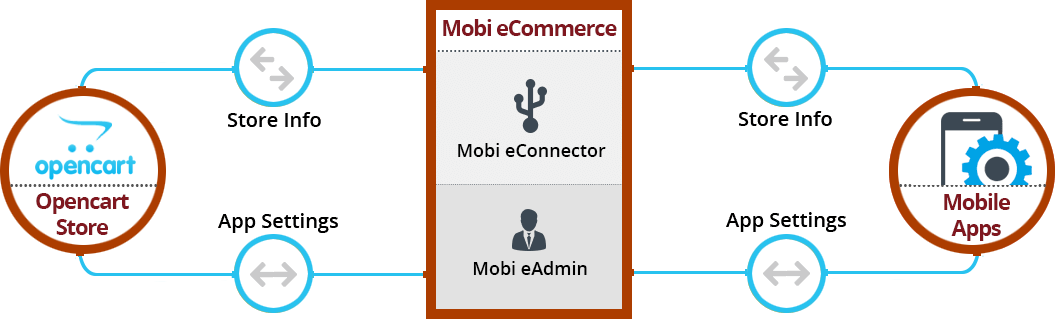
5. Opencart:
Opencart is another open-source CMS for ecommerce. Though it has one of the easiest to use backends, its support systems are not as comprehensive as compared to the other platforms listed.
Pros:
Easy-to-use back-end
Feature-rich with a large number of plug-ins
CSS can be edited from within the admin
Cons:
Some users report difficulty in the installation of some themes
Support documentation is not comprehensive enough
Magento vs Woocommerce vs Drupal Commerce vs Opencart vs osCommerce
A new study has found that new craters are forming on the surface of the moon more frequently than scientists had predicted. The discovery raises concerns about future moon missions, which may face an increased risk of being hit by falling space rocks.
The moon is dotted with many craters, some billions of years old. Because the moon has no atmosphere, falling space rocks don’t burn up like they do on Earth, which leaves the moon’s surface vulnerable to a constant stream of cosmic impacts that gradually churn the top layer of material on its surface. You can see a before-and-after video of a new moon crater here.
Previous studies of lunar craters shed light on how they formed and on the past rate of cratering, which in turn yielded insights into the age of various features of the moon’s surface. However, less was known about the contemporary rate of lunar crater formation, which could give insight on the risk of bombardment that any mission to the moon might face.
To find out more about the present lunar crater formation rate, a group of scientists analyzed more than 14,000 pairs of before-and-after images of the moon’s surface, taken by NASA’s Lunar Reconnaissance Orbiter (LRO). These images covered 6.6 percent of the lunar surface — about 960,000 square miles (2.49 million square kilometers) — and could reveal when a spot was crater-free and when it later had a crater. The time gaps between observations spanned between 176 and 1,241 Earth days.
“When looking at just a single image, many of the newly formed features are indistinguishable from their surroundings,” said study lead author Emerson Speyerer, a planetary scientist at Arizona State University at Tempe. “It’s only with these detailed comparisons with previous images that we can separate out these small surface changes.
The researchers discovered 222 craters on the moon that appeared on the surface after the first LRO images were taken — that is 33 percent more than predicted by current models. These were at least 32 feet (10 meters) across and ranged up to about 140 feet (43 meters) wide.
The scientists also found broad zones around these new craters that they interpreted as the remains of jets of debris following impacts. They estimated that this secondary cratering process is churning the top 0.8 inches (2 centimeters) of lunar dirt, or regolith, across the entire lunar surface more than 100 times faster than thought.
“I’m excited by the fact that we can see the regolith evolve and churn—a process that was believed to take hundreds of thousands to millions of years to occur—in images acquired over the past several years,” Speyerer told Space.com.
These new findings also suggest that a number of young features on the moon’s surface, such as recent volcanic deposits, “may in fact be even a bit younger than previously thought,” Speyerer said.
Although the odds of something on the lunar surface suffering a direct hit by asteroidal or cometary debris are very small, Speyerer noted that these new findings illustrate the potential dangers the rocks kicked up by these impacts pose.
“For example, we found an 18-meter (59-foot) impact crater that formed on March 17, 2013, and it produced over 250 secondary impacts, some of which were at least 30 kilometers (18.6 miles) away,” Speyerer said. “Future lunar bases and surface assets will have to be designed to withstand up to 500 meter per second (1,120 mph) impacts of small particles.”
The top image shows a low-reflectance splotch, while the bottom image shows a high-reflectance splotch that was created by a small impactor or secondary ejecta from a larger impact. In either case, the top few centimeters of the regolith (soil) was churned.
Credit: NASA/GSFC/Arizona State University
Speyerer said that NASA recently approved a two-year extended mission for the Lunar Reconnaissance Orbiter that can help collect more before-and-after images of the lunar surface.
“As the mission continues, the odds increase of finding larger impacts that occur more infrequently on the moon,” Speyerer said. “Such discoveries will enable us to refine the impact rate further and investigate the most important process that shapes planetary bodies across the solar system.”
A business proposal is written to persuade your prospective client. It is meant to answer all their questions on why you are the best and should be chosen. In order for your business proposal to answer your client’s questions, you must know your client’s questions and expectations beforehand. Hence the first step to writing an irresistible business proposal is to know all your client’s expectations. Writing a business plan for investors isn’t as difficult as you think.
And no, you don’t have to hire a professional for that—you can handle it yourself. Here’s how to write a business plan that will impress investors and prompt them to fund your business.
Top 7 Components to do Before You Write a Business Plan
1. A Summary of Business Plan
This should be brief, no more than two to five pages. It includes your contact details (such as name, address, and telephone number). The purpose for requesting the investment and the amount required. Include a brief description of your company as well as your proposed products or services, required facilities and equipment, and so on.
Your summary should also include a brief description of your target market, competition, sales strategies, management team, and their expertise and background. A description of how you will use the funds, and a short paragraph about the company’s goals.
The summary is a condensed version of the more detailed proposal. It is intended to give a reader a quick overview and encourage a thorough overview of the proposal.
2. Company overview
This section will include the formal name of the company, its legal structure, ownership details, the industry, and the products and services to be offered. Describe your role in the business and those others who might also be involved. Also, you should give details of your own investment in the business.
3. Products and services
Provide detailed information about the products or services you intend to offer. Include inventories in stock to be purchased, the cost of the inventories, estimated production costs, selling prices, and sales forecast for the next three years.
4. Use of proceeds
This section describes how you will use the funds you get. Give full details of each of your expenses. Include your cash flow projections to demonstrate how the investor will get back their money.
5. Marketing
This section will detail your marketing, advertising, and sales plans as well as your unique selling proposition. Include any marketing research and analysis data that will support your sales projections. Be honest and reasonable in your forecasts and forger about blowing figures out of realistic limits.
7. Management
Discuss the company’s management, individual responsibilities, employment histories, qualifications, skills, and experience. Describe how each member will contribute to the growth of the business. Describe any additions in management that you’re planning for the near future. Don’t forget to include details of the salaries for at least three years plus any other forms of compensation intended.
Other components that should go into your business plan include the following:
Technology
Employees
Facility and equipment
Business financials
Most importantly, keep your business plan simple and free of jargon. Take your time to eliminate all grammatical and typographical errors. And make your proposal very presentable.
Samsung working with relevant regulatory bodies to investigate the recently reported cases involving the Galaxy Note 7. Because consumer safety remains our top priority, will ask all carrier and retail partners globally to stop sales and exchanges of the Galaxy Note7 while the investigation is taking place.
Recalling every phone it had sold around the world and permanently ceasing production just six weeks after it went on sale. Thus ends a saga that included reports of overheating, burning, and even exploding phones, followed by a massive recall that failed to solve the problem.
What exactly went wrong remains unclear. The company is investigating, as are regulators in multiple countries. As Verge points out, every lithium-ion battery-powered device comes with some risk of a short circuit if it isn’t designed or put together properly. (See: hoverboards.) That’s why the cellphone industry has a well-documented history of exploding batteries. But a flaw this debilitating is rare. Samsung received more than 100 reports of Galaxy Note 7 batteries catching fire in less than two months, even after a September recall. Last week, a Southwest Airlines flight was evacuated after one of the new, supposedly safe handsets began emitting plumes of smoke.
Samsung is now instructing anyone with a Note 7 to shut it down immediately and return it to the store where they bought it for an exchange or refund.
When did this crisis start?
Samsung Galaxy Note 7 was launched on August 2 and first went on sale in the US and South Korea in mid-August. The phone was supposed to be launched in India by the end of August, but that never happened.
By September 2, Samsung recalled the phone, as reports emerged of Note 7 devices overheating, catching fire, and even exploding. Samsung promised it would fix the issue in newer versions of the phone. In the US, over 92 cases of Note 7 catching fire were reported.
Samsung Galaxy Note 7 Unboxing & Features
The replacement phones came with a green battery indicator to show they were safe. They went on sale by the end of September, but just a couple of days into October, the problems recurred. While they were being charged, Note 7 devices managed to burn down a jeep and a garage in two separate incidents in the US. The most serious case: A replacement Galaxy Note 7 smartphone caught fire inside a Southwest Airlines flight from Baltimore to Louisville, US, and passengers had to be evacuated. Since then, five other cases of replacement phones catching fire in the US have been reported, besides cases in South Korea as well.
Does Samsung know what went wrong with Galaxy Note 7?
The Note 7 appeared to have an issue with its battery. Like all premium smartphones these days, this one also came with a non-replaceable lithium-ion battery. As has been reported recently, any fault in the manufacturing process can lead to the phone overheating, leading to fires.
Samsung is also the world’s largest manufacturer of lithium batteries. But the South Korean firm doesn’t yet know what exactly went wrong with the phones. A report in the New York Times says Samsung engineers are still trying to figure out the problem. In the company’s own labs, they’ve been unable to get a Galaxy Note 7 to explode. The report also says the engineers were under pressure to fix the problem. So the conclusion they hastily arrived at was that defective batteries from one particular factory caused the issue in the first case. After this, sales resumed by the end of September, only for the problem to return.
How does this affect Samsung?
The Note 7 was its new flagship device. For Samsung, 2016 started on a great note thanks to its S7 and S7 Edge, which did very well and helped the company’s mobile division report big profits. The Note 7 was supposed to boost all of this, and Samsung was expected to sell 14 million of these devices.
With reports of the fires in replacement phones and news of production coming to a halt, Samsung’s stock has taken a beating in the market. The company has lost nearly $17 billion in market share since the replacement Galaxy Note 7s started exploding. Now Samsung has cut profit estimates for its third quarter by 2.6 trillion won, or nearly $2.3 billion. So yes, for Samsung, the Note 7 was an important phone, one that would have helped it continue its profits in the crucial holiday quarter. With Google launching its own premium Pixel and Pixel XL and Apple’s iPhone 7 Plus now out, Samsung has lost control of the crucial premium segment of smartphones.
In hindsight, how well did Samsung handle the replacement of the Note 7s?
Not too well. Even in early September, when the first fires and explosions began to be reported, the company hesitated in issuing ‘an official recall’ and was criticized by the US watchdog group, Consumer Reports.
Even when the replacement phones started catching fire, the company didn’t stop sales immediately. It was only on October 10, four days after a Note 7 caught fire inside a plane, that sales and exchanges for older phones were stopped.
More so, emails from consumers have shown that the replacement process was confusing. In an email to the US tech website, The Verge, a customer writes how the Samsung team had very little clarity about the replacement process. The email also said the team has “limited information on a lot of processes at the time”.
For now, Samsung is working with the US Consumer Product Safety Commission (CPSC), asking all customers to power down their phones and return them.
The flames may be subsiding, but the business fallout is just beginning—and it won’t be limited to Samsung. Here’s a speculative preview of how the company’s disaster could affect the industry.
1. Samsung Takes a Beating
The company’s shares plummeted 8 percent in South Korea on Tuesday, wiping some $17 billion off the company’s market capitalization. And that was before it announced that it was killing the phone. How bad things will ultimately get for Samsung depends on its response to the crisis, including its ability to pinpoint the problem and reassure people that it is confined to the Galaxy Note 7. With the holiday shopping season approaching and rivals such as Apple and Google launching direct competitors, the timing could hardly be worse.
That said, Samsung has a long track record of making relatively reliable products, and it has established itself as the global leader in Android phones by a wide margin. The Note 7 was significant because it represented Samsung’s best effort to beat Apple on quality and features at the high end of the market. But it served a relatively small if dedicated, niche of smartphone users who like to use a stylus.
For everyone else, Samsung has other flagship phones capable of competing with the iPhone 7 and Google Pixel, such as the Galaxy S7 Edge. If it can convince the majority of its existing customers to stick with the brand, it should be able to come out with another stylus-equipped device in relatively short order.
Even in the best case, this is a serious setback for Samsung’s aspiration to compete with the iPhone on quality. Simon Blanchard, a consumer psychology expert at Georgetown’s McDonough School of Business, compared it to Toyota’s sticky-pedal recalls (which, incidentally, Malcolm Gladwell recently argued were overblown). But Blanchard said Samsung could recover more quickly if it can show transparency and accountability in its handling of the investigation. On the other hand, fortunes rise and fall quickly in the handset business. Nokia was the industry’s dominant force in 2007, when it issued the largest battery recall in history. That was just one of a series of snafus that led to its decline, and today it barely exists as a cellphone company.
2. Apple, Google, and Maybe HTC Profit
An obvious beneficiary of Samsung’s missteps is archrival Apple, whose stock rose to its highest price of the year on Tuesday morning before settling back to a more modest gain. Apple competes largely on quality and prestige, so the failure of Samsung’s most expensive phone plays into its hands. On the other hand, Apple’s phones run a different operating system, so those who prefer Android may prefer to stick with the software they know.
For that reason, the most direct beneficiary may be Google, which just announced its new Pixel smartphone. It’s Google’s attempt to reset after its struggles with the Nexus and Motorola brands, and some think it could be a legitimate alternative to the iPhone and Galaxy lines. The timing is almost perfect for Google, but not quite: The Pixel XL will be available beginning Oct. 20, meaning Note 7 owners would have to go phoneless for at least a week or two.
A quieter beneficiary could be HTC, the Taiwanese smartphone maker. HTC’s fortunes have flagged in recent years, but it offers a viable Note 7 alternative in the HTC 10 and competes in several of the same key markets. Meanwhile, HTC has been revealed as Google’s manufacturing partner on the Pixel. The phone carries no HTC branding, but the company still stands to gain if the Pixel can capture some of Samsung’s market share.
3. The Insane Smartphone Hype Race Finally Slows Down
Smartphones these days are judged almost immediately by an influential cadre of tech reviewers before they even go on sale. Consumer reaction comes swiftly thereafter, with word of mouth helping to either build or rein in momentum from the launch. They’re judged on their appearance, their features, their speed, and their price, among other criteria. But one important factor is almost entirely absent from the equation that determines a phone’s failure or success in the marketplace: its reliability. By the time people realize that a particular phone falls apart or degrades more quickly than expected, it’s often just about time to buy a new one, and the manufacturer can simply pledge to address those problems with the next release.
We don’t know exactly what led to Samsung’s batteries exploding. We do know, however, that smartphone makers have been pushing lithium-ion batteries’ capabilities to the limit. Samsung in particular has developed a reputation for jamming as many features as possible into a single handset, and it now seems that it may be rushing its devices to market in an attempt to win the hype battle. It never even produced a Galaxy Note 6—it skipped straight from the 5 to the 7, perhaps in part because it feared that the Note 6 would sound like it was a generation behind Apple’s iPhone 7.
That race may now ease a bit. In the wake of Samsung’s misfortune, smartphone executives both at Samsung and elsewhere may listen a little more closely when their engineers warn them of the potential drawbacks to implementing a given feature or performance benchmark. They might think twice about the incentives they’re passing on to suppliers when they set tight production deadlines. They might call for a little more testing and quality control before pushing a phone to market.
We might look back on Samsung’s battery meltdown as an inflection point in the history of the industry when the frantic push for smartphone makers to launch “revolutionary” new devices every year or two finally ran up against the physical limits of the form, and the lithium-ion battery in particular. Or maybe we’ll keep pushing, and phones will keep exploding. But in that case, we might want to rethink the idea of strapping them to our faces.
Dubbed Asgardia after a mythical city in the sky ruled by Odin in Norse mythology, the country will consist of at least one satellite launched into orbit as early as next year, according to those aiming to create the world’s newest member.
The project’s website states the floating nation “will offer an independent platform free from the constraint of a land-based country’s laws.”
The project is led by Russian nanoscientist and businessman Igor Ashurbeyli, who believes the celestial state will one day join the United Nations.
He founded the Aerospace International Research Center in Vienna and is currently the chairman of UNESCO’s Science of Space committee — credentials that no doubt go a long way to allay understandable skepticism of the project, which even he adurbeyli, the chief backer of Asgardia,.
Igor Ashurbmits sounds a little kooky.
Igor Asheyli, the chief backer of Asgardia.Source: Supplied
At a press conference in Paris on Wednesday local time he said, “the scientific and technological component of the project can be explained in just three words: peace, access, and protection.”
Others aligned with the consortium include space experts and researchers from universities in Canada, the United States and Russia.
The unusual plan is about opening up space to the world’s global citizens and prompting a discussion about the regulations underpinning space activity. The team behind the idea also wants to ensure that humanity has an independent “country” that prioritizes scientific advancement over political or commercial ambitions.
But the loftiest goal harbored by those behind the project is the creation of a “state-of-the art protective shield” defending Earth from cosmic threats such as asteroids, solar flares and space debris. Such a goal is a pie-in-the-sky idea at the moment, however, given that the world’s top space agencies have yet to figure out how to prevent their satellites colliding, let alone stop a massive space rock from hitting Earth.
The organization has not disclosed its current level of funding but it’s understood that Mr Ashurbeyli has put a substantial amount of capital forward to launch the project. It is unclear where the enormous amount needed to sustain the mission into the future will come from.
While the initiative remains somewhat vague, its most immediate intent is to reshape the legal framework that governs space.
“The ultimate aim is to create a legal platform to ensure protection of planet Earth and to provide access to space technologies for those who do not have that access at the moment,” Mr Ashurbeyli told The Guardian.
An artist’s impression of an Asgardia shield protecting the Earth. Picture: James Vaughan
An artist’s impression of an Asgardia shield, protecting the Earth. Picture: James VaughanSource:Supplied
Currently, the 1967 Outer Space Treaty is the predominant international legal document that underpins the rules for space activity but it has become increasingly outdated and ignored by world governments.
The treaty states that responsibility and liability for objects launched into space rest with the national government of the state (or company) that sent them into orbit. However, the Asgardia team wants to establish a new precedent that sees the responsibility for the satellite lie with the people who join the Asgardia nation—fforging a new entity that lies outside the current system of nation-states.
Steven Freeland is a professor of international law at Western Sydney University and recently completed a review of Australia’s Space Activities Act 1998, which governs civil space activities in Australia.
He knows a number of the consortium members “very well” and said, “The people involved are of the highest caliber and quality.”
Due to a lack of details, he was reticent to speak about the viability of the mission but seemed unsure of the ambitious timeline.
However, Prof Freeland said the project could usher in much-needed changes to the ad-hoc nature of international space law, pointing to the International Space Station as a prime example.
“Different national laws apply depending on where you are in the space station,” he said. “When you’re in the Japanese part, Japanese law applies and when you’re in the US part, US law applies.”
International law is typically reactionary and as yet, we don’t have a robust legal framework for when humans permanently populate space.
“Ultimately people will get married in space, have babies in space and murder each other in space,” Prof Freeland said.
Ambitious projects such as Asgardia and others like the Mars One mission highlight the need for a genuine legal framework for when that time comes.
“You need concrete proposals and I think a project like this helps that along,” he said.
If you want to join, it’s as easy as signing up online, and theoretically, you can become a citizen of Asgardia without ever leaving home. At least in the beginning, people won’t actually reside on the satellite.
“Physically, the citizens of that nation-state will be on Earth; they will be living in different countries on Earth, so they will be citizens of their own country, and at the same time, they will be citizens of Asgardia,” Mr. Ashurbeyli said.
The director of the Institute of Air and Space Law at Canada’s McGill University, who is among those involved with the project, said eventually people will be able to live on Asgardia.
“We’ll start small, and eventually people will be going there, working, and having their own rules and regulations,” he said.
At the time of writing, more than 1400 people have already signed up to join the space nation, and once that number reaches 100,000, it can apply to join the UN, the project’s chief backer says.
For the time being, the project is running competitions to decide on important things like a flag and a national anthem for the future space nation.
So far, the technical details are scarce, but a spokesperson for the consortium said the Asgardia group will continue to reveal information and believes it will be able to launch its first satellite into space within 18 months.
There are some prominent people behind Project Asgardia, but for now, it remains to be seen if the idea, or the satellite, ever takes off.


 Kickstarter and Indiegogo are by far the largest crowdfunding websites in terms of traffic and popularity. That can go a long way in attracting a crowd to fund your campaign. Kickstarter only accepts rewards-based campaigns while Indiegogo is a little more lenient on requirements. It’s a good idea to check one of these two out unless another crowdfunding site has a specific feature in which you’re really interested.