



Learning how to remove plaque from teeth can help protect your teeth, gums, and overall oral health. Dental plaque forms continuously, even when your teeth appear clean. When it remains undisturbed, it can contribute to bad breath, cavities, inflamed gums, bleeding, and gum disease.
When learning how to remove plaque from teeth, remember that soft plaque can usually be removed at home through effective brushing and daily cleaning between the teeth. However, plaque that has hardened into tartar—also called dental calculus—normally requires professional removal by a dentist or dental hygienist.
This guide explains how to remove plaque from teeth with nine safe methods, how to distinguish plaque from tartar and tooth decay, which home remedies to avoid, and when professional dental treatment is necessary.
Quick Answer: How to Remove Plaque From Teeth
The safest way to remove plaque from teeth is to brush for approximately two minutes twice a day with a soft-bristle toothbrush and fluoride toothpaste. Clean between your teeth once daily using floss, interdental brushes, a water flosser, or another dentist-recommended interdental cleaner.
When deciding how to remove plaque from teeth more effectively, a powered toothbrush, plaque-disclosing product, or therapeutic mouthwash may provide additional support. However, these products should supplement—not replace—careful brushing and interdental cleaning.
When a deposit feels hard, rough, or firmly attached to a tooth, it may be tartar rather than soft plaque. Do not scrape it off yourself. Arrange a professional dental cleaning instead.
Key Takeaways
- Plaque is a sticky bacterial film that continually develops on teeth.
- Soft plaque can usually be removed through brushing and interdental cleaning.
- Plaque that remains on teeth may harden into tartar.
- Established tartar cannot normally be removed with brushing or flossing.
- Brush twice daily for about two minutes with fluoride toothpaste.
- Use a soft-bristled manual or powered toothbrush.
- Clean between your teeth once every day.
- Mouthwash may help, but it does not replace mechanical cleaning.
- Never scrape teeth with metal tools, pins, fingernails, or household objects.
- Persistent bleeding, swelling, bad breath, loose teeth, or hard deposits require professional assessment.
Plaque Removal Cheat Sheet
| Problem | Best Solution |
|---|---|
| Soft plaque | Brushing + flossing |
| Plaque between teeth | Floss or interdental brushes |
| Plaque around braces | Interdental brushes + water flosser |
| Plaque around implants | Implant-safe cleaning |
| Hard tartar | Professional cleaning |
| Bleeding gums | Improve plaque removal + dental evaluation |
What Is Dental Plaque?
Before learning how to remove plaque from teeth, it helps to understand that dental plaque is a sticky biofilm containing bacteria and other substances. It develops on tooth surfaces, along the gumline, and in areas that toothbrush bristles may not easily reach.
Bacteria within plaque use sugars and fermentable carbohydrates from foods and drinks to produce acids. Repeated acid exposure can weaken tooth enamel and contribute to tooth decay. Plaque around the gumline can also cause inflammation, redness, swelling, tenderness, and bleeding.
Because plaque is often colorless or pale, people researching how to remove plaque from teeth may not notice every area missed during brushing.
It commonly collects:
- Along the gumline
- Between neighboring teeth
- Behind the lower front teeth
- Around crowded or overlapping teeth
- On the chewing surfaces of back teeth
- Around braces, wires, and brackets
- Besides crowns, bridges, and implants
- Around fixed retainers
- Beneath removable dental appliances
- Around partially erupted wisdom teeth
Plaque begins forming again after it has been removed. Effective plaque control, therefore, depends on a consistent daily routine rather than an occasional intensive cleaning.
How Fast Does Plaque Form?
Plaque begins forming on teeth within hours after cleaning. Even after a thorough brushing session, bacteria naturally start rebuilding the plaque biofilm. This is why brushing twice daily and cleaning between the teeth every day is necessary for long-term plaque control.
Plaque that remains undisturbed for extended periods can harden into tartar, making professional removal necessary.
Plaque vs. Tartar: What Is the Difference?
Understanding the difference between plaque and tartar is essential when learning how to remove plaque from teeth.
| Feature | Dental plaque | Tartar or calculus |
| Texture | Soft, sticky, or filmy | Hard, rough, and firmly attached |
| Typical color | Clear, white, or pale yellow | Yellow, brown, or darker |
| Can brushing remove it? | Usually, when brushing is thorough | Generally no |
| Can floss remove it? | Floss can disrupt plaque between teeth | Floss cannot remove established tartar |
| Common location | Tooth surfaces and gumline | Above or below the gumline |
| Recommended removal | Daily home oral care | Professional dental cleaning |
| Main risks | Cavities, bad breath, and gum irritation | Continued plaque retention and gum disease |
A deposit that remains after careful brushing and interdental cleaning may be tartar. Trying to force it off can injure the gums or damage a tooth, exposed root, filling, crown, or implant.
Is It Plaque, Tartar, a Stain, or Tooth Decay?
Not every visible mark on a tooth is plaque. Color and appearance alone are not always enough to identify the problem.
| Finding | Possible appearance or texture | Can brushing remove it? | Recommended response |
| Soft plaque | Sticky, fuzzy, pale, or nearly invisible film | Often | Improve brushing and interdental cleaning |
| Tartar | Hard, rough, yellow, brown, or darker deposit | No | Arrange for professional removal |
| Surface stain | Discoloration from foods, drinks, or tobacco | Sometimes partly | Ask about professional cleaning before whitening |
| Tooth decay | White, brown, or dark area; a pit may develop | No | Obtain a dental examination |
| Food debris | Material trapped around or between teeth | Usually | Remove gently with a suitable interdental cleaner |
Do not diagnose a cavity, tartar, or gum disease solely from its color. A persistent dark or white patch, hole, hard deposit, pain, or unexplained sensitivity should be examined by a dentist.
What Causes Plaque Buildup?
Understanding why buildup forms can make it easier to decide how to remove plaque from teeth. Everyone develops plaque, and its presence does not automatically mean that a person has poor oral hygiene. The amount and location of buildup can be affected by cleaning habits, tooth position, saliva, diet, dental appliances, health conditions, and manual dexterity.
Common causes and contributing factors include:
- Brushing for less than two minutes
- Missing the gumline or back teeth
- Not cleaning between teeth
- Using a worn or frayed toothbrush
- Crowded, rotated, or overlapping teeth
- Frequent sugary snacks or drinks
- Dry mouth or reduced saliva production
- Wearing braces, aligners, retainers, or dentures
- Gum recession or periodontal pockets
- Difficulty cleaning around bridges, crowns, or implants
- Limited hand movement
- Smoking or other tobacco use
- Poorly fitting dental appliances
- Irregular professional dental care
The goal when learning how to remove plaque from teeth is not to remove every bacterium from the mouth. It is to regularly disrupt the plaque biofilm before it damages enamel, irritates the gums, or hardens into tartar.
Signs of Plaque Buildup
Recognizing the signs is an important part of understanding how to remove plaque from teeth before the buildup hardens. Possible signs include:
- Teeth that feel fuzzy or sticky
- A pale film close to the gumline
- Persistent bad breath
- An unpleasant taste
- Red or swollen gums
- Bleeding during brushing or flossing
- Gum tenderness
- Food repeatedly becomes trapped
- Increasing tooth sensitivity
- Visible yellow deposits
- Rough areas that remain after brushing
Bleeding is not always caused by brushing too hard. It may indicate that plaque has irritated the gums. Persistent, spontaneous, or heavy bleeding should be assessed by a dental professional.
Gingivitis vs. Periodontitis
People researching how to remove plaque from teeth should also understand that plaque can affect more than the visible surfaces of the teeth. When it remains close to the gumline, it may cause gingivitis, the earliest stage of gum disease.
Gingivitis
Gingivitis is gum inflammation without the destructive bone loss associated with periodontitis.
Possible signs include:
- Red or swollen gums
- Bleeding while brushing or cleaning between teeth
- Gum tenderness
- Persistent bad breath
- A visible line of plaque near the gums
Plaque-related gingivitis can often improve when people understand how to remove plaque from teeth through effective daily oral hygiene and professional removal of hardened deposits.
Persistent bleeding should not be ignored or treated only with a stronger mouthwash. Mouthwash may reduce certain bacteria, but it cannot replace the physical removal of plaque.
Periodontitis
Knowing how to remove plaque from teeth at home does not replace periodontal care when gum disease progresses and spaces called periodontal pockets form between the teeth and gums. Plaque and tartar can collect inside these pockets, where ordinary brushing and flossing cannot fully reach.
Possible signs include:
- Receding gums
- Deep spaces around teeth
- Persistent bleeding
- Pus near the gumline
- Ongoing bad breath
- Changes in the bite
- Loose or shifting teeth
- Pain or discomfort when chewing
- Loss of supporting bone
Damage caused by periodontitis cannot generally be reversed through home care alone. However, professional treatment and continuing maintenance can help slow or control the condition.
Early Warning Signs Most People Ignore
Many people focus only on visible plaque. However, early warning signs often appear before large deposits become obvious.
Common overlooked signs include:
- Bad breath that returns quickly
- Gums that bleed during flossing
- Teeth that feel fuzzy after waking up
- Food becoming trapped more frequently
- Increasing tooth sensitivity
- A rough feeling near the gumline
Recognizing these symptoms early may help prevent plaque-related complications.
Can Plaque Below the Gumline Be Removed at Home?
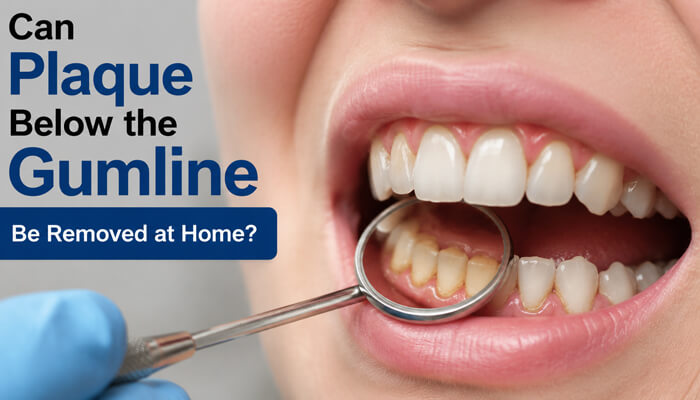
When considering how to remove plaque from teeth below the gumline, plaque close to the edge of healthy gums may be disrupted through careful brushing and interdental cleaning. Deposits located inside deep periodontal pockets cannot be reliably seen or completely removed at home.
Tartar can also develop beneath the gumline. This is known as subgingival calculus and may remain hidden from view.
Possible warning signs include:
- Bleeding that continues despite improved cleaning
- Gum recession
- Persistent bad breath
- Tender or swollen gums
- Loose teeth
- Pain when chewing
- Pus between a tooth and the gum
- A change in how the teeth meet
Never insert sharp instruments beneath your gums. A dentist or dental hygienist can examine the tissues, measure periodontal pockets, locate hidden deposits, and recommend suitable treatment.
Best Plaque Removal Methods Ranked
| Method | Effectiveness |
|---|---|
| Brushing + Flossing | Excellent |
| Interdental Brushes | Excellent |
| Water Flosser | Very Good |
| Powered Toothbrush | Very Good |
| Plaque-Disclosing Tablets | Good |
| Therapeutic Mouthwash | Helpful Support |
| DIY Remedies | Limited |
| Scraping Tools | Not Recommended |
How to Remove Plaque From Teeth: 9 Safe Methods
The following recommendations explain how to remove plaque from teeth safely by targeting soft plaque before it hardens into tartar. Most people need an effective brushing method and a suitable method for cleaning between the teeth. You do not necessarily need every product listed.
1. Brush Twice Daily With a Soft-Bristled Toothbrush
Thorough brushing is the foundation of how to remove plaque from teeth. Brush twice daily for approximately two minutes with a soft-bristled manual or powered toothbrush.
Soft bristles can clean effectively without requiring excessive pressure. Hard brushing does not necessarily remove more plaque and may irritate the gums or wear exposed tooth surfaces.
How to brush effectively
- Divide your mouth into four sections.
- Spend approximately 30 seconds in each section.
- Position the bristles close to the gumline.
- Angle the brush slightly toward the gums.
- Use gentle, short movements.
- Clean the outer, inner, and chewing surfaces.
- Tilt the brush vertically behind the front teeth.
- Brush carefully around fillings, crowns, implants, and braces.
- Spit out the excess toothpaste when finished.
Pay particular attention to the gumline and the inner surfaces of the lower front teeth, where plaque and tartar frequently accumulate.
How much pressure should you use?
Use enough pressure for the bristle tips to contact the tooth and gumline without flattening the brush head.
Pressing too hard can bend the bristles away from the tooth surface and may contribute to gum irritation, recession, or tooth sensitivity. A powered toothbrush with a pressure sensor may help people who regularly brush too aggressively.
When should you replace your toothbrush?
Replace a manual toothbrush or powered brush head approximately every three to four months, or sooner when the bristles become bent, frayed, or matted.
A visibly worn brush may not clean tooth contours effectively.
2. Use Fluoride Toothpaste Correctly
A key part of how to remove plaque from teeth is combining mechanical brushing with fluoride toothpaste, which helps protect enamel against tooth decay and supports the repair of early mineral loss.
Choose a fluoride toothpaste appropriate for your age and oral-health needs. Some formulations contain additional ingredients designed to reduce sensitivity, gingivitis, staining, or new tartar formation.
How to use toothpaste effectively
- Use an age-appropriate amount.
- Brush every tooth surface for approximately two minutes.
- Spit out excess toothpaste.
- Avoid swallowing it.
- Follow the product label.
- Follow any personalized instructions from your dentist.
After brushing, avoid immediately rinsing your mouth with water. Spitting without rinsing allows fluoride to remain in contact with the teeth for longer.
Mouthwash is generally better used at a different time of day because using it immediately after brushing can wash away concentrated fluoride from the toothpaste.
Can tartar-control toothpaste remove existing tartar?
No. Tartar-control toothpaste may help reduce the formation of new deposits in some people, but it cannot detach established calculus.
Existing tartar requires professional removal.
3. Clean Between Your Teeth With Floss
Anyone learning how to remove plaque from teeth must also clean the surfaces that a toothbrush cannot reach between neighboring teeth. Floss can disrupt plaque where the teeth touch and close to the gumline.
Floss gently. Snapping it forcefully into the gums can cause pain or injury.
Correct flossing technique
- Break off a manageable length of floss.
- Guide it gently between two teeth.
- Curve it into a C shape around one tooth.
- Move it up and down against the tooth surface.
- Clean slightly below the gum edge without forcing it.
- Repeat against the neighboring tooth.
- Use a clean section for each space.
- Clean the back surface of the final tooth on each side.
The purpose is not merely to remove trapped food. Floss should wipe plaque from the sides of the teeth.
Why do gums bleed when flossing?
Bleeding may occur because the gums are inflamed, the technique is too forceful, or interdental cleaning has not been performed consistently.
Mild bleeding may improve as plaque control improves. Persistent, spontaneous, heavy, or unexplained bleeding requires professional advice.
Do not permanently stop cleaning an area because it bleeds once. Use a gentle technique and arrange an examination if the bleeding continues.
4. Use Interdental Brushes for Wider Spaces
For wider spaces, learning how to remove plaque from teeth may involve interdental brushes designed to clean between teeth. They may be particularly useful for:
- Wider gaps
- Gum recession
- Braces and orthodontic wires
- Dental bridges
- Areas around implants
- Spaces where floss is difficult to control
- People with reduced hand dexterity
Interdental brushes are available in different sizes. A suitable brush should contact the tooth surfaces without needing to be forced through the space.
How to use an interdental brush
- Insert it gently between the teeth.
- Keep it aligned with the natural space.
- Move it slowly back and forth.
- Do not force it through a tight contact.
- Rinse it after use.
- Replace it when the bristles become worn.
A dentist or hygienist can help select the correct size. Different parts of the mouth may require different sizes.
Floss may work better in tight contacts, while interdental brushes may be more effective in open spaces. The most suitable option depends on your teeth and gums.
5. Consider a Water Flosser
For people who find floss difficult, how to remove plaque from teeth may include a water flosser that directs a controlled stream around the gumline and between teeth. It may be useful for people who find string floss difficult, particularly those with:
- Braces
- Bridges
- Dental implants
- Limited hand movement
- Orthodontic appliances
- Complex dental work
A water flosser may help reduce plaque or gum inflammation when used correctly, but it does not replace toothbrushing.
How to use a water flosser safely
- Start with a low-pressure setting.
- Lean over the sink.
- Place the tip inside your mouth before switching it on.
- Direct the stream along the gumline.
- Pause briefly between teeth.
- Follow the manufacturer’s cleaning instructions.
Ask your dentist when to begin using a water flosser after oral surgery or periodontal treatment.
6. Switch to a Powered Toothbrush When Helpful
When comparing tools for how to remove plaque from teeth, both manual and powered toothbrushes can remove plaque when used correctly. A powered toothbrush may be helpful for people who struggle with timing, movement, pressure, or consistency.
It may be particularly useful for:
- People with arthritis or limited hand movement
- Individuals who brush too aggressively
- People wearing braces
- Children who need supervised assistance
- Anyone who repeatedly misses the gumline
- People who benefit from timers and reminders
Certain powered-brush designs may provide modest improvements in plaque and gingivitis control. Technique still matters, however. Moving a powered brush quickly around the mouth without allowing it to contact each tooth reduces its effectiveness.
Useful features include:
- A two-minute timer
- Thirty-second section reminders
- A pressure sensor
- A small brush head
- Soft replacement bristles
- An easy-to-grip handle
7. Use Plaque-Disclosing Tablets or Solutions
Because plaque is often difficult to see, disclosing products can help people check how to remove plaque from teeth more thoroughly. Disclosing tablets or liquids contain a temporary dye that stains remaining plaque and reveals areas missed during brushing.
They do not remove plaque themselves. They show where your technique needs improvement.
How plaque-disclosing products are used
Instructions vary, but the usual process may involve:
- Brushing and cleaning between the teeth.
- Chewing a tablet or applying the solution.
- Moving the saliva around the mouth.
- Spitting it out.
- Checking stained areas in a mirror.
- Recleaning the missed surfaces.
The dye can temporarily stain the tongue, lips, clothing, towels, or sink. Follow the product instructions carefully.
Disclosing products may be useful for:
- Children learning to brush
- People with braces
- Individuals who develop tartar repeatedly
- Anyone with crowded teeth
- People beginning gum disease treatment
- Those uncertain about their brushing technique
8. Use a Suitable Therapeutic Mouthwash
Mouthwash can support a routine for how to remove plaque from teeth, but it does not replace brushing or cleaning between the teeth. The attached plaque still requires mechanical disruption.
Some therapeutic mouthrinses contain antimicrobial ingredients that may help reduce plaque or gingivitis when combined with daily cleaning.
| Type of mouthwash | Main purpose |
| Cosmetic rinse | Temporarily freshens breath |
| Fluoride rinse | Helps strengthen enamel and reduce cavity risk |
| Antimicrobial rinse | May help control plaque and gingivitis |
| Prescription rinse | Used for a specific condition under professional direction |
A fresh taste does not prove that plaque has been removed. Cosmetic rinses may mask bad breath without treating its cause.
Mouthwash safety tips
- Select a product suited to your needs.
- Follow the label exactly.
- Do not swallow it.
- Keep it out of children’s reach.
- Use it at a different time from brushing when advised.
- Do not use prescription rinses longer than directed.
- Ask a dentist before using mouthwash after oral surgery.
- Stop using it and seek advice if persistent irritation occurs.
Chlorhexidine may be prescribed for certain conditions. Incorrect or prolonged use can cause tooth or tongue staining and changes in taste.
9. Get Professional Cleaning for Hardened Plaque
The final lesson in how to remove plaque from teeth is knowing when home care is no longer enough: once plaque mineralizes into tartar, brushing, flossing, mouthwash, baking soda, and water flossers will not reliably remove it.
A dentist or dental hygienist uses professional instruments to remove plaque and tartar above and, when necessary, below the gumline.
What happens during a professional cleaning?
Depending on your oral health, the dental professional may:
- Examine your teeth and gums
- Measure periodontal pockets
- Identify plaque and tartar deposits
- Remove deposits with specialized instruments
- Polish selected tooth surfaces
- Assess bleeding and gum inflammation
- Demonstrate brushing or interdental technique
- Recommend suitable products
- Create a follow-up or maintenance schedule
People with periodontitis may need scaling and root planing rather than a routine preventive cleaning.
Routine cleaning vs. deep cleaning
| Treatment | Main purpose | Areas cleaned | Commonly recommended for |
| Routine preventive cleaning | Removes accessible plaque, stains, and tartar | Mainly visible tooth surfaces and around the gumline | People without active advanced gum disease |
| Scaling and root planing | Treats deposits associated with periodontitis | Above and below the gumline, including periodontal pockets and roots | People diagnosed with periodontitis |
| Periodontal maintenance | Controls recurring deposits after gum treatment | Areas affected by previous periodontal disease | People who have completed active periodontal treatment |
A deep cleaning is not simply a more intensive cosmetic cleaning. Scaling and root planing is a clinical treatment recommended when an examination identifies periodontal disease.
Temporary gum tenderness or tooth sensitivity may occur afterward. Follow the dentist’s instructions rather than applying harsh products to make the teeth feel cleaner.
Why DIY tartar removal is unsafe
Using sharp instruments at home may:
- Cut or puncture the gums
- Push bacteria below the gumline
- Scratch tooth or root surfaces
- Damaged fillings and crowns
- Injured exposed roots
- Create rough areas that retain more plaque
- Delay the diagnosis of gum disease
When a hard deposit does not move during normal brushing and interdental cleaning, stop trying to remove it and arrange a dental appointment.
Which Plaque-Removal Method Should You Choose?
The best approach to how to remove plaque from teeth depends on your tooth spacing, dental restorations, manual dexterity, gum health, and professional recommendations.
| Situation | Suitable starting approach |
| Tight contacts between teeth | Soft toothbrush and floss |
| Wider spaces or gum recession | Soft toothbrush and interdental brushes |
| Braces | Orthodontic brushing and interdental brushes; a water flosser may help |
| Dental bridge | Floss threader, specialized floss, or dentist-recommended brush |
| Dental implants | Implant-safe brushing and professionally recommended interdental cleaning |
| Limited hand movement | Powered toothbrush and easy-grip interdental tool |
| Repeatedly missed plaque | Plaque-disclosing tablet or solution |
| Gingivitis | Improved mechanical cleaning and professional evaluation |
| Hard yellow or brown deposits | Professional dental cleaning |
| Dry mouth | Dental assessment and a tailored preventive routine |
Do not force a particular product simply because it is popular. The best tool is one that fits safely between your teeth, reaches the problem areas, and can be used consistently.
A Simple Daily Plaque-Removal Routine
People searching for how to remove plaque from teeth at home often encounter routines involving numerous products. In practice, consistency and technique matter more than owning many tools.
Morning routine
- Brush for approximately two minutes.
- Use fluoride toothpaste.
- Clean the outer, inner, and chewing surfaces.
- Focus on the gumline and back teeth.
- Spit out excess toothpaste without immediately rinsing.
- Clean removable appliances as directed.
Evening routine
- Clean between the teeth using floss, an interdental brush, or another suitable tool.
- Brush for approximately two minutes.
- Concentrate on areas commonly missed.
- Spit out the excess toothpaste.
- Avoid sugary snacks after the final brushing.
The evening cleaning is particularly important because plaque and food debris should not remain undisturbed on the teeth overnight.
Weekly technique check
Once or twice a week, check:
- Whether brushing lasts two minutes
- Whether the gumline is reached
- Whether the same places repeatedly bleed
- Whether the brush bristles are worn
- Whether plaque remains behind the lower front teeth
- Whether interdental tools fit correctly
- Whether braces or retainers trap debris
A plaque-disclosing product can help identify repeatedly missed areas.
Should You Brush Immediately After Eating?
Timing matters when learning how to remove plaque from teeth: brushing twice daily is essential, but brushing immediately after acidic foods or drinks may not be ideal.
Acidic items include:
- Soft drinks
- Sports and energy drinks
- Citrus fruit and juice
- Sour sweets
- Wine
- Vinegar-containing foods
- Drinks containing added acids
After consuming something acidic:
- Rinse your mouth with plain water.
- Do not hold or swish the acidic drink around your teeth.
- Wait at least 30 minutes before brushing.
- Brush gently with fluoride toothpaste.
- Seek dental advice if acid reflux or repeated vomiting affects your teeth.
This waiting period relates to acid exposure and enamel erosion. It does not mean that twice-daily brushing should be skipped.
How Long Does It Take to Remove Plaque?
When asking how to remove plaque from teeth quickly, remember that soft plaque can begin to come away during one thorough brushing and interdental-cleaning session. Inflamed gums and persistent buildup may take longer to improve.
The result depends on:
- How much plaque is present
- Whether tartar has formed
- Brushing technique
- Interdental cleaning
- Existing gum disease
- Tooth crowding
- Dry mouth
- Tobacco use
- Dental appliances
- Consistency of care
The fuzzy feeling on the teeth may disappear immediately after cleaning. Gum redness or bleeding may take longer to settle.
Seek a dental assessment if bleeding or swelling continues, because home care cannot remove hardened deposits inside deep periodontal pockets or treat advanced gum disease by itself.
Do Home Remedies Remove Plaque or Tartar?
People searching for how to remove plaque from teeth often encounter online remedies that promise to dissolve plaque or remove tartar quickly. Most cannot replace established oral-hygiene methods.
| Remedy | What it may do | Important limitation |
| Baking soda | May help clean surface debris when used in formulated toothpaste | Homemade mixtures lack predictable fluoride protection and cannot remove tartar |
| Hydrogen peroxide | Used in some professionally formulated dental products | Household peroxide may irritate tissues and does not replace brushing |
| Salt-water rinse | May temporarily soothe tissues when professionally advised | Does not mechanically remove attached plaque |
| Oil pulling | May leave the mouth feeling cleaner | Evidence is limited, and it does not replace fluoride brushing or interdental cleaning |
| Mouthwash | May reduce bacteria or gingivitis, depending on the ingredients | Cannot reliably wash away all attached plaque |
| Sugar-free gum | Stimulates saliva and helps neutralize plaque acids | Does not remove plaque from tooth surfaces |
| Lemon juice or vinegar | No safe plaque-removal advantage | Acids may erode enamel |
| Activated charcoal | May remove some surface stain | Excess abrasion may wear teeth and increase sensitivity |
Use properly formulated dental products rather than concentrated homemade mixtures.
Can You Scrape Plaque Off Your Teeth?
Although people may ask how to remove plaque from teeth by scraping, soft plaque may sometimes be wiped away, but intentionally using sharp tools is unsafe. A firm deposit is more likely to be tartar.
Never use:
- Metal tartar scrapers
- Pins or needles
- Fingernails
- Tweezers
- Knives
- Forks
- Hard wooden toothpicks
- Improvised dental tools
A dental professional can distinguish deposits from enamel, exposed roots, gum tissue, fillings, crowns, and implants.
Home Plaque-Removal Trends to Avoid
1. Acidic DIY mixtures
Avoid repeatedly applying lemon juice, vinegar, citric acid, or acidic fruit mixtures. These substances may soften or erode enamel.
2. Harsh abrasive powders
Activated charcoal, coarse salt, and undiluted powders may wear tooth surfaces or irritate exposed roots when used aggressively.
3. Household chemicals
Never put household bleach, disinfectants, bathroom cleaners, or non-dental cleaning chemicals in your mouth. They can cause poisoning and serious chemical burns.
4. Excessive brushing
Brushing harder or far more frequently is not necessarily better. Aggressive brushing may contribute to:
- Gum recession
- Root sensitivity
- Tooth-surface wear
- Gum irritation
- Frayed toothbrush bristles
Improve the accuracy and duration of brushing rather than applying more force.
Foods, Drinks, and Habits That Affect Plaque
Diet is part of understanding how to remove plaque from teeth and prevent it from returning, although food choices cannot replace brushing.
Plaque bacteria use sugars and fermentable carbohydrates to produce acids. Frequent exposure gives the mouth less time to recover.
Helpful habits include:
- Limiting frequent sugary snacks
- Drinking water instead of repeatedly sipping sweetened drinks
- Eating sweets with meals rather than throughout the day
- Avoiding sugary foods after the final brushing
- Drinking water after eating while brushing is not possible
- Addressing persistent dry mouth professionally
- Chewing sugar-free gum when appropriate
- Avoiding tobacco
Foods marketed as healthy can still affect teeth. Dried fruit, juice, sweetened yogurt, flavored milk, sticky snack bars, energy drinks, and sweetened tea may expose teeth to sugars or acids.
Frequency matters as well as quantity.
Plaque Control With Braces
For people with braces, how to remove plaque from teeth requires extra attention because brackets and wires provide additional surfaces where plaque can collect.
A braces-friendly routine may include:
- Brushing above and below each bracket
- Angling the brush around the wire
- Cleaning the gumline carefully
- Using an interdental brush beneath the wire
- Using orthodontic floss or a floss threader
- Adding a water flosser when suitable
- Using plaque-disclosing products when recommended
- Attending regular dental and orthodontic appointments
White marks around brackets can indicate areas where enamel has been repeatedly exposed to plaque acids. Improving cleaning early may help prevent permanent damage.
Plaque Control Around Dental Implants
When learning how to remove plaque from teeth around implants, remember that implants cannot develop cavities like natural teeth, but plaque can inflame the surrounding tissues.
Implant care may include:
- A soft-bristled toothbrush
- Implant-safe interdental brushes
- Specialized floss
- A water flosser is recommended
- Regular professional monitoring
- Prompt evaluation of bleeding or swelling
An implant is artificial, but the surrounding gum and bone still require careful cleaning.
Cleaning Retainers, Aligners, and Dentures
Understanding how to remove plaque from teeth also includes cleaning retainers, aligners, dentures, mouthguards, bridges, and other appliances where plaque can accumulate.
An unclean removable appliance may hold debris and bacteria against freshly brushed teeth.
General care principles include:
- Remove and rinse the appliance as instructed.
- Clean your natural teeth before reinserting them.
- Use only products approved for the appliance.
- Avoid very hot water, which can distort some materials.
- Do not use bleach or household cleansers.
- Clean the storage case regularly.
- Replace damaged or poorly fitting appliances.
- Take the appliance to dental visits when requested.
Cleaning instructions vary by material. Toothpaste may be too abrasive for some retainers or dentures, while certain soaking products may damage metal components.
Fixed retainers
A bonded wire behind the front teeth can trap plaque and tartar. Floss threaders, interdental brushes, or another recommended tool may help.
Contact a dentist or orthodontist if the wire becomes loose, bent, painful, or difficult to clean.
Plaque Removal for People With Dry Mouth
For people with dry mouth, learning how to remove plaque from teeth requires extra care because saliva normally helps wash away debris, neutralize acids, and control harmful organisms. Reduced saliva increases the risk of cavities and oral infections.
Dry mouth may be linked to:
- Certain medicines
- Dehydration
- Medical conditions
- Cancer treatment
- Mouth breathing
- Tobacco or alcohol use
- Salivary-gland disorders
People with persistent dry mouth should not simply brush harder. A dentist or healthcare professional may recommend additional fluoride protection, hydration strategies, saliva substitutes, sugar-free gum, medication review, or more frequent dental monitoring.
Who May Need Extra Plaque-Control Support?
1. People with diabetes
Diabetes is associated with a higher risk of periodontal disease. Control plaque carefully, manage blood glucose as advised, and seek dental help for bleeding, swelling, dry mouth, or slow-healing sores.
2. People who use tobacco
Smoking and other tobacco use increase the risk of gum disease and tooth loss. Smoking may also make gum bleeding less noticeable, so a lack of visible bleeding does not guarantee healthy gums.
3. Pregnant people
Hormonal changes during pregnancy may make gums more prone to redness, inflammation, and bleeding. Continue gentle brushing and interdental cleaning, and seek care for persistent symptoms.
4. People with reduced dexterity
Arthritis, disability, tremors, and other movement limitations can make plaque control difficult.
Helpful adaptations may include:
- A powered toothbrush
- A larger or modified handle
- A floss holder
- Interdental brushes
- A water flosser
- Assistance from a caregiver
A dentist or hygienist can recommend tools suited to the person’s abilities.
5. Children
Young children may not have the coordination needed to clean every surface. Parents or caregivers should supervise or assist with brushing, use age-appropriate fluoride toothpaste, and follow guidance from a dentist or recognized health authority.
When Should You See a Dentist?
Arrange a dental appointment if you notice:
- Hard deposits that do not brush away
- Gums that repeatedly bleed
- Red, swollen, or painful gums
- Persistent bad breath
- Gum recession
- Pus near the gumline
- Loose or shifting teeth
- Pain when chewing
- Increasing sensitivity
- A persistent dark or white area
- A broken filling or crown
- Difficulty cleaning around dental work
- Plaque buildup despite consistent care
Seek urgent dental or medical attention for:
- Severe facial swelling
- Difficulty breathing or swallowing
- Uncontrolled bleeding
- Fever with dental swelling
- A spreading infection
- Significant dental trauma
How Often Should You Get a Professional Cleaning?
There is no universal cleaning schedule for everyone. Dental professionals recommend recall intervals based on factors such as:
- History of cavities
- Gum condition
- Rate of tartar formation
- Tobacco use
- Diabetes
- Dry mouth
- Dental implants
- Orthodontic treatment
- Manual dexterity
- Previous periodontal disease
- Quality of home plaque control
Some people require professional cleaning or periodontal maintenance more frequently than others. Follow the personalized schedule recommended after your dental examination.
Common Plaque-Removal Mistakes
- Brushing for less than two minutes.
- Cleaning only the visible front surfaces.
- Missing the gumline.
- Ignoring the inner surfaces of teeth.
- Skipping the back molars.
- Brushing too aggressively.
- Using a worn toothbrush.
- Flossing only when food becomes trapped.
- Using mouthwash instead of interdental cleaning.
- Assuming bleeding gums should not be cleaned.
- Trying to scrape tartar off at home.
- Expecting whitening products to remove plaque.
- Using acidic homemade mixtures.
- Failing to clean retainers or aligners.
- Delaying care when hard deposits are visible.
Correcting one repeated mistake may provide more benefit than buying several additional products.
Common Plaque Removal Myths
Myth: Mouthwash removes all plaque.
Reality: Plaque must be physically disrupted through brushing and interdental cleaning.
Myth: Harder brushing removes more plaque.
Reality: Aggressive brushing may damage gums and tooth surfaces.
Myth: Lemon juice dissolves plaque safely.
Reality: Acidic products may damage enamel.
Myth: Tartar can be removed safely at home.
Reality: Hardened tartar usually requires professional removal.
Myth: Bleeding gums mean you should stop flossing.
Reality: Persistent bleeding often indicates inflammation and should be evaluated professionally.
Final Thoughts
Understanding how to remove plaque from teeth starts with recognizing the difference between soft plaque and hardened tartar. A safe plan for how to remove plaque from teeth combines daily home care with professional treatment when deposits have hardened. Soft plaque can usually be controlled through two-minute brushing with fluoride toothpaste and daily cleaning between the teeth.
Floss, interdental brushes, water flossers, powered toothbrushes, plaque-disclosing products, and therapeutic mouthwash can improve plaque control when selected and used correctly. However, none of these methods should involve scraping hard deposits, applying acids, or using household chemicals.
When deposits have hardened, bleeding continues, bad breath persists, or teeth become loose or painful, professional dental care is the safest next step. A consistent home routine combined with personalized dental advice provides the strongest protection against plaque-related cavities and gum disease.
Professional Advice for Long-Term Plaque Prevention
The most effective plaque-control strategy is consistency rather than intensity.
Dentists commonly recommend:
- Brushing twice daily.
- Cleaning between teeth once daily.
- Replacing toothbrushes regularly.
- Limiting frequent sugary snacks.
- Attending routine dental examinations.
- Seeking early treatment for bleeding gums.
Small daily habits generally provide better long-term results than occasional intensive cleaning sessions.
How to Remove Plaque From Teeth FAQs
1. What is the fastest way to learn how to remove plaque from teeth?
The fastest safe approach to how to remove plaque from teeth is to brush for about two minutes with fluoride toothpaste and then clean between the teeth using floss or an interdental brush. Hard deposits that remain may be tartar and require professional dental cleaning.
2. Can you follow methods for how to remove plaque from teeth in one day?
Yes, effective methods for how to remove plaque from teeth can eliminate much of the soft plaque during one thorough brushing and interdental-cleaning session. However, plaque begins forming again quickly, so consistent daily oral care is essential.
3. Is an electric toothbrush better for how to remove plaque from teeth?
An electric toothbrush can make how to remove plaque from teeth easier for people who struggle with brushing pressure, timing, movement, or reaching the gumline. However, both electric and manual toothbrushes can remove plaque effectively when used with the correct technique.
4. How can I tell whether methods for how to remove plaque from teeth will still work?
Home methods for how to remove plaque from teeth work best when the buildup is soft and sticky. If a deposit feels hard, rough, firmly attached, or remains after brushing and flossing, it may be tartar and should be removed by a dentist or dental hygienist.
5. What happens if I do not learn how to remove plaque from teeth properly?
Failing to understand how to remove plaque from teeth properly can allow buildup to contribute to bad breath, cavities, gingivitis, bleeding gums, and tartar. Long-term plaque accumulation may also increase the risk of periodontitis, gum recession, and tooth loss.
