



Key Takeaways
- Choose a venue based on the event’s purpose, not photos alone.
- Check the usable layout, guest access, and complete cost before booking.
- Walk through the entire guest experience, from arrival to departure.
- Get policies, vendor rules, weather plans, and timing details in writing.
A venue does much more than provide a backdrop for an event. In San Antonio, it can shape how easily guests arrive, whether they stay comfortable during a warm afternoon, how food service moves, where photographs are taken, and whether the schedule feels relaxed or rushed. The right setting supports the occasion’s purpose while giving guests a clear sense that the gathering was thoughtfully planned.
Hosts comparing wedding venues San Antonio can look to the San Antonio Botanical Garden for a useful example of a setting that balances natural character with event planning needs. The Garden’s private event rentals page covers weddings, corporate occasions, birthday parties, and educational gatherings at its 39-acre urban garden minutes from downtown San Antonio. As a local botanical garden that hosts community experiences and private events across several distinct spaces, San Antonio Botanical Garden offers a relevant perspective for anyone considering a garden-based celebration in the San Antonio area.
Define the Event Before Comparing Venues
Start with the event itself. A formal wedding reception, a company workshop, a family birthday party, and an educational program each require different spaces and pacing. Write down the expected guest count, preferred date, budget range, desired atmosphere, and the activities guests will actually do. Will they dine at tables, watch presentations, dance, mingle outdoors, or move between several areas?
This step keeps the search focused. A venue can be beautiful but still be a poor match if it lacks room for a buffet, a quiet conversation area, accessible paths, or equipment for speeches. Decide what guests should remember most, then look for spaces that make that experience easier to deliver.
Match the Space to the Guest Count
Do not rely only on a venue’s maximum capacity. That number may not reflect the layout you need for seated dining, a dance floor, a stage, a bar, a photo area, gift tables, or vendor equipment. A room that is technically large enough can still feel crowded once furniture and service areas are in place. On the other hand, an oversized room may make an intimate gathering feel scattered.
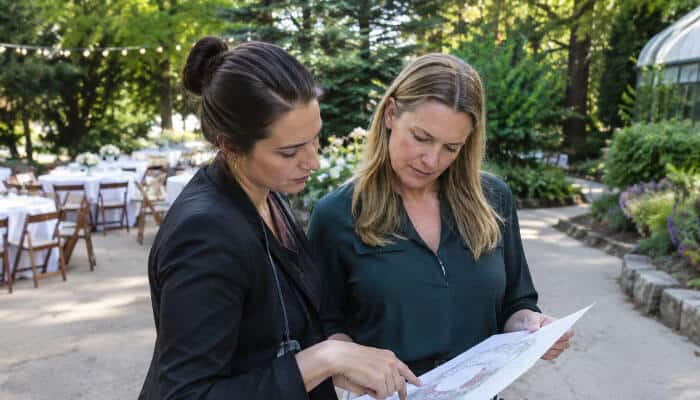
Estimate attendance as a range rather than one fixed number. Then ask the venue to show how both the lower and higher ends of that range would work in the planned setup. Floor plans are especially helpful because they turn a capacity claim into a practical picture of movement and seating.
Check Location, Parking, and Guest Access
Guest experience begins before anyone reaches the entrance. Consider driving distance for local attendees, access from major roads, nearby hotels, parking availability, and rideshare pickup points. For evening events, ask whether the route from the parking to the entrance is well-marked and comfortably lit.
Accessibility should be part of the first conversation, not an afterthought. Confirm accessible entrances, routes between event areas, restrooms, seating options, and any assistance guests may need. A centrally located San Antonio venue can reduce travel stress, but it still needs to be easy to navigate once guests arrive.
Look Beyond the Main Room
Tour the venue as a guest would. Notice the check-in point, restrooms, waiting areas, dining space, outdoor routes, and places where people may gather between scheduled moments. Small transition areas matter. A narrow doorway, unclear path, or distant restroom can slow the event and make a polished plan feel less organized.
Also, ask where caterers, musicians, photographers, and other vendors will work. A venue may need loading access, prep areas, power sources, storage, and a separate route for staff. When those operational details are handled well, guests are less likely to notice the work happening behind the scenes.
Visit at the Right Time of Day
An in-person tour can reveal details that listing photos cannot show, including ambient noise, shade, traffic patterns, restroom conditions, and realistic walking distances. A site-visit checklist for event planners is a useful reminder to walk the space and picture how the program will fit from beginning to end.
Whenever possible, visit around the same time of day as the event. For a San Antonio outdoor celebration, note where the sun falls, where guests can cool down, and how easily they can move indoors if conditions change. Take photos from the guest’s eye level, not only from the most attractive angles.
Review Services, Rules, and Vendor Policies
Ask for a clear list of what the rental includes. Tables, chairs, linens, setup time, cleanup, security, staffing, sound equipment, and basic lighting may be included, available for an added fee, or left to outside vendors. Confirm rules for caterers, bar service, live music, candles, decorations, hanging installations, and insurance.
Vendor flexibility can affect both the budget and the final feel of the event. If a venue requires particular providers, ask for the complete policy before committing. Request all important terms in writing, including deposits, payment dates, cancellation conditions, and the name of the primary event-day contact.
Build a Budget Around the Full Event
The base rental fee is only one part of the decision. Build an all-in estimate that includes:
- Food, beverages, service charges, and staffing.
- Furniture, decor, entertainment, and audiovisual equipment.
- Transportation, parking, security, permits, and insurance when applicable.
- Set up and teardown time, plus a reserve for last-minute needs.
A lower rental rate is not automatically the better value if it requires extensive outside rentals or has restrictive service rules. Comparing total estimated costs keeps the decision grounded in what the event will actually require.
Plan for Weather and Unexpected Changes
For outdoor events, a weather backup plan should be part of the initial comparison. Ask whether the alternative space holds the same number of guests, when the final weather decision must be made, and who is responsible for tents, fans, heaters, flooring, or additional power. Confirm that guests can move safely between indoor and outdoor areas if plans change.
Good planning also accounts for late arrivals, fluctuating guest counts, delayed vendors, and technical problems. A venue team that answers practical questions clearly is often as valuable as a striking view or dramatic architectural feature.
Conclusion
The best San Antonio event venue is not necessarily the largest or most elaborate option. It is the one that fits the guest list, supports the event’s purpose, welcomes people comfortably, and gives the host a clear plan for practical details. A careful tour, realistic budget, written policies, and dependable backup plan can turn a memorable setting into an event that runs smoothly from the first arrival to the final goodbye.
