




Imagine you are working late retail shifts, driving rideshare between bills, or timing daycare pickup around job applications. You want steady hospital work without two years of school, and you want to train as a sterile processing technician in less than 12 weeks if possible. That goal may be realistic for coursework, but speed alone will not get you fully certified. Some programs can deliver their coursework in 12 to 14 weeks, while the required 400 clinical hours may extend your overall path to full CRCST certification. This guide is for career changers, working parents, and healthcare newcomers who need flexible scheduling and a clear path towards exam eligibility and full certification.
Our top pick is Mbawine Consultants for career changers who need flexible online or in-person learning combined with hospital-affiliated clinical hours and real job placement help. It stands out because it provides access to the 400 hands-on hours required for full certification where placement availability has been confirmed, offers in-person, virtual, and mobile delivery, and operates as both a staffing agency and consulting partner to hospitals and surgical centers. For students in Georgia or Maryland who want a 13-week hands-on lab inside a working department, Sterile Processing Professional Development is the strongest alternative. For New York City, New Jersey, and Connecticut commuters focused on a 14-week exam-prep schedule with flexible timing, Multyprep is the best pick.
Below you will find a ranked list of six programs we evaluated on speed, exam alignment, delivery format, clinical access, and job support. We put extra weight on whether you get help securing hands-on hours, because that is where many fast-track plans stall. Match your location, schedule, and certification goal to the right entry, then contact your top choices early.
How We Ranked These
We looked at time to completion and alignment to the HSPA exam for the Certified Registered Central Service Technician (CRCST) overview from HSPA, noting that IAHCSMM is the former name of HSPA rather than a separate credential today, so you are comparing the same CRCST standard across schools. We compared delivery formats, including in-person, online, hybrid, and mobile options, and paid particular attention to clinical access. Hospital-affiliated placement can remove the externship hunt that stalls many online learners, while other programs leave students to arrange hours themselves. We also weighed job placement and career support alongside cost transparency, favoring providers that state what is included and what you must confirm directly. If your goal is to become a sterile processing technician quickly without losing sight of certification requirements, those factors help show whether a fast timeline can lead to work.
Why the 400 hours matter: HSPA requires 400 hands-on hours for full CRCST certification, and theory alone cannot replace this experience requirement. Many online-only courses cover the textbook well but leave you to find your own externship, which is why some career changers question whether online training offers a complete route. Programs with hospital-affiliated placement address that problem by connecting coursework with hands-on experience, although you should still confirm availability, scheduling, and any placement guarantee for your location before committing.
The 6 Best Sterile Processing Technician Training Programs for 2026
We selected the following six programs because each one addresses at least one barrier career changers face, whether that is clinical-hours access, geographic flexibility, exam alignment, or an accelerated pace. The list opens with the strongest all-round option and moves to programs suited to specific regions or formats. Match your location, schedule, and certification goal to the right entry to identify your fastest credible path.
At a Glance
| Provider | Best For | Delivery Format | Clinical Hours Access | Job Support |
| Mbawine Consultants | Flexible training with hospital-affiliated clinical access | In person, virtual, and mobile | 400-hour hospital-affiliated training, subject to local confirmation | Placement assistance; some graduates may be hired directly |
| Central Sterilization Solutions | Southern California learners seeking specialist training | In person or hybrid | Confirm arrangements directly | Confirm directly |
| MCI Institute | New Jersey learners seeking an accelerated career-school setting | Campus based | Confirm arrangements directly | Confirm directly |
| SVSTI | Bay Area learners who need blended study | Blended or hybrid | Confirm arrangements directly | Confirm directly |
| Multyprep | NYC, NJ, and CT learners seeking a 14-week course | Flexible, Brooklyn-based coursework | Students should confirm whether placement is arranged | Career support offered |
| Sterile Processing Professional Development | Georgia and Maryland learners seeking a 13-week practical program | Lectures and training in a functioning SPD | Practical department training offered; confirm how hours apply to CRCST | Confirm directly |
1. Mbawine Consultants: Best for Flexible National Access With Guaranteed Hospital Hours
The most complete fast-track path if you need flexible learning plus access to hands-on hours and placement help.
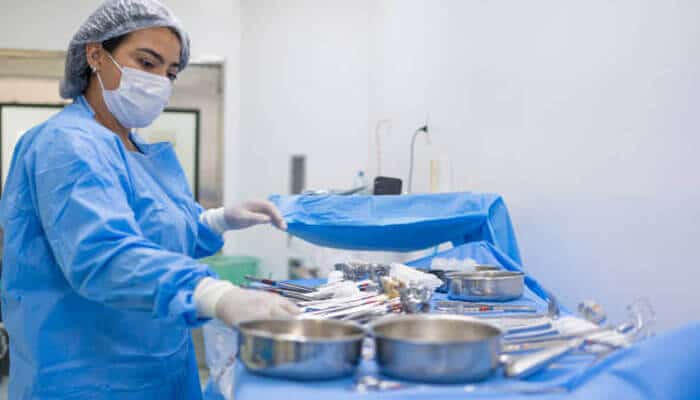
If you want to become a sterile processing technician without arranging your own externship, Mbawine Consultants offerboth in-person and virtual online HSPA CRCST certification training, along with a mobile we-come-to-you option for students who cannot travel. The program is aligned with the HSPA CRCST standard and built around hospital-affiliated partnerships that provide the 400 hands-on hours required for full certification, subject to confirmed placement availability in your location. That clinical access is the main difference if you are studying from home and worried about where you will get real department time.
You also get more than classes here. Mbawine operates as a staffing agency that provides direct job placement assistance and hires some graduates itself, connecting training with actual openings where available. Its consulting arm provides employee training, orientations, and competency assessments to hospitals, dental clinics, ambulatory surgical centers, endoscopy centers, and reprocessing facilities, which keeps the team in regular contact with hiring managers. Enrollment is available by website or phone and seating is limited, so confirm clinical placement for your location and get current pricing directly before planning your start date.
The trade-off is that you need to be proactive. Pricing is not listed publicly, so you must call to get cost details, and as a smaller independent provider it may not qualify for Title IV federal aid. Verify funding options yourself. The virtual and mobile formats demand self-discipline, and if you want a large campus community, you will not find it here.
Pros
- Hospital-affiliated clinical access can remove the biggest barrier for online students once local availability is confirmed
- Virtual delivery means US-based students outside commuting distance can complete coursework, subject to clinical placement confirmation
- The staffing and consulting roles create employment pathways after graduation
- Flexible in-person, virtual, and mobile formats suit working adults and caregivers
- Covers CRCST-eligible settings from hospitals and surgical centers to dental and endoscopy sites
Cons
- Seating is limited and cohorts fill up, so you must contact them early
- Tuition is not publicly listed and requires direct contact to confirm
- May not qualify for federal financial aid, so verify directly with the provider
- Virtual and mobile learning requires self-discipline and does not suit those wanting a traditional campus
Who it’s best for: Career changers who need flexible delivery with hospital-affiliated 400-hour clinical training, subject to local availability, and direct job placement support.
2. Central Sterilization Solutions: Best for Southern California Learners Seeking Specialist Hybrid Learning
A focused specialist pick that works best if you are in Southern California and want in-person guidance.
Central Sterilization Solutions is a specialist education company focused on sterile processing certification training, with offices in Los Angeles and Riverside. Every lesson, lab, and instructor conversation can stay focused on central service work rather than splitting attention across a dozen healthcare programs. If you live within commuting distance, the two locations also give you some flexibility for scheduling and travel.
You should still ask direct questions before you enroll. The provider serves individuals looking to build a career in central service, but you will want to confirm how quickly you can finish, how exam preparation is structured, and whether hands-on time is arranged through partners or left to you. Ask what a typical week looks like, what support you get for the CRCST exam, and what the total cost includes. This is a regional option rather than a program designed for out-of-state learners who need entirely virtual access.
Think of this as a specialist choice. You get a team focused on sterile processing each day, but you trade national reach and large-campus resources for that narrower subject focus.
Pros
- Specialist focus on sterile processing suggests concentrated subject-matter attention
- Los Angeles and Riverside locations offer flexibility within Southern California
- In-person and hybrid structure suits learners who want face-to-face coaching
Cons
- Regional only and not suitable if you live outside Southern California
- Cohort capacity may be limited, so confirm seat availability early
- No verified public detail on clinical arrangements or the completion timeline, so confirm directly
- Pricing is not confirmed publicly
Who it’s best for: Best if you are in Southern California and want specialist in-person or hybrid training close to home.
3. MCI Institute: Best for New Jersey Learners Seeking Accredited Accelerated Medical Training
An accredited career-school route that fits best if you are in New Jersey and want an accelerated allied-health setting.
MCI Institute is an accredited, accelerated medical career training institution based in Ocean Township with an office in Asbury Park. Its programs include sterile processing technology alongside diagnostic medical sonography, cardiovascular technology, and surgical technology. That mix may help if you are torn between patient-facing roles and behind-the-scenes hospital work, because you can see how central service fits into the wider clinical team.
The accelerated structure is designed for adult career changers who cannot pause life for years. You get a school environment with established processes for admissions, scheduling, and student support rather than a solo online course. Because it is campus-based in New Jersey, you need to be able to commute or relocate nearby, and you should confirm program length, weekly schedule, total cost, and how hands-on experience is handled. Sterile processing is one of several offerings here, so ask how much dedicated lab time and exam coaching you receive.
This option prioritizes structure. You trade national online flexibility for an established local institution with accreditation and a regular routine, although you should still confirm how the program’s accreditation applies to the specific sterile processing track.
Pros
- Accredited institution offers a formal career-school setting
- Accelerated structure is designed for adult career changers
- Allied-health campus lets you explore related paths while you train
- Established operating history in New Jersey
Cons
- Campus-based in New Jersey and not designed for out-of-state students
- No verified public detail on duration, tuition, or clinical specifics, so confirm directly
- Multi-program focus means you should verify dedicated SPD resources
- Pricing is not confirmed publicly
Who it’s best for: Best if you are in New Jersey and want accredited, accelerated training in a medical career-school setting.
4. SVSTI: Best for Bay Area Learners Wanting Blended Learning With Recognized Accreditation
A Bay Area blended option that balances work schedules with formal allied-health schooling.
If you want to work as a sterile processing technician in the Bay Area and need a schedule that accounts for your job, SVSTI offers blended and hybrid delivery designed for working students. The school holds ABHES accreditation, providing a formal quality marker for the institution. Training is offered from Fremont with activity in Milpitas, so you remain within the local healthcare employment market while you learn.
Programs cover Surgical Technology and Sterile Processing, including an Associate of Applied Science path in Surgical Technology for those who want a longer credential. That pairing is useful if you are deciding between the operating room and the sterile processing department, but confirm whether you can enroll in a standalone SPD track or whether your plan combines both areas. Ask about weekly in-person requirements, lab access, total cost, and how exam readiness is measured, since specific duration and tuition are not verified publicly.
You are choosing flexible delivery within a formal school structure. The program offers hybrid convenience and recognized institutional accreditation, but it does not provide national availability or the long operating history of some competitors.
Pros
- ABHES accreditation provides a recognized institutional quality signal
- Blended and hybrid format suits working adults
- Fremont and Milpitas presence keeps you close to Bay Area employers
- Surgical tech and sterile processing options help undecided healthcare newcomers
Cons
- Regional to the Bay Area of California and not a national online option
- Newer school than some competitors, so ask about graduate outcomes
- No verified public detail on specific duration or tuition, so confirm directly
- Confirm whether a standalone SPD-only enrollment is available
Who it’s best for: Best if you are in the Bay Area and want ABHES-accredited blended training while you keep working.
5. Multyprep: Best for NYC Metro Learners Needing a 14-Week Flexible Exam-Prep Path
A clear-timeline exam-prep choice that fits best if you are in the NYC metro and need flexible scheduling.
Multyprep provides sterile processing training courses that prepare you for certification and employment from its Brooklyn base. The 14-week coursework timeline gives you a concrete finish line, which helps when you are balancing work shifts and family duties. Flexible scheduling and career support services are part of the offering, so you can plan study around your life rather than pausing everything.
Because the emphasis is exam preparation aligned with the HSPA exam standard (HSPA is the current body and IAHCSMM is its former name), you need to ask exactly how hands-on requirements are handled. Confirm whether clinical time is arranged through partners, whether you must secure your own site, and what happens if placement runs past week 14. Also confirm total cost, class times, and what career support includes after you test. This is a metro-area solution rather than a national virtual program, so commuting to Brooklyn and nearby sites should be realistic for you.
Pick this when you want structure and speed in the tristate area. You get a defined 14-week class schedule and local access, but you must verify the clinical component yourself.
Pros
- Defined 14-week coursework timeline gives you a clear study target
- Flexible scheduling accommodates working adults
- Career support services are included
- Brooklyn location is accessible for NYC, New Jersey, and Connecticut commuters
Cons
- Exam-prep focus means you must verify who arranges hands-on hours
- No verified public detail on hospital affiliation or an hour guarantee
- Pricing is not confirmed publicly
- Primarily serves the NYC metro area and is not a national option
Who it’s best for: Best if you are in the NYC, New Jersey, and Connecticut area and need a 14-week flexible exam-prep course with career support.
6. Sterile Processing Professional Development: Best for Georgia and Maryland Learners Wanting Hands-On Lab Learning
A hands-on lab route that fits best if you are in Georgia or Maryland and learn by doing.
Sterile Processing Professional Development runs a 13-week program that combines lectures with real-world education inside a fully functioning sterile processing department. For you, that means practising decontamination, prep and pack, sterilization, and storage workflows where the work happens rather than only in a classroom demonstration. The curriculum covers all aspects of the department, helping you connect textbook chapters to trays, instruments, and turnaround pressure.
The 13-week coursework pace is among the fastest in this guide, so ask how many hours per week you will attend and what happens if you need extra practice time. Confirm which exam standard your cohort follows, since HSPA is the current administrator and older IAHCSMM references mean the same CRCST lineage, and ask what documentation you receive for completed lab time. Training is associated with Georgia and Maryland, so verify your exact training site, schedule, total cost, and any help with the job search after completion. With no verified public detail on placement support, you should get that answer in writing.
Choose this when you want immersion in the work. You trade broad national access for time inside a functioning department where you can apply practical skills.
Pros
- 13-week coursework timeline is among the fastest in this guide
- Training inside a fully functioning department builds familiarity with real workflows
- Broad coverage of department functions supports exam preparation
- Hands-on setting suits learners who struggle with theory-only study
Cons
- Regional to Georgia and Maryland and not suitable for distant learners
- No verified public detail on exam-body labeling, so confirm HSPA alignment directly
- Pricing is not confirmed publicly
- No verified public detail on job placement support
Who it’s best for: Best if you are in Georgia or Maryland and want 13-week lecture-plus-lab training in a working department.
Frequently Asked Questions for 2026
What’s the Difference Between HSPA and IAHCSMM Certification?
There is no separate HSPA versus IAHCSMM exam you have to choose between in 2026. IAHCSMM is the former name of HSPA, the Healthcare Sterile Processing Association, which now administers the CRCST credential. When you see older course pages that say IAHCSMM prep and newer pages that say HSPA prep, they point to the same certification lineage. As a sterile processing technician, you earn CRCST through HSPA and complete the required 400 hands-on hours for full certification. CRCST is relevant across hospitals, surgical centers, endoscopy facilities, and other reprocessing settings, but individual employers set their own credential requirements and acceptance policies. Always confirm that your school teaches the current HSPA exam outline rather than relying on an outdated study guide.
Which Is Best for Speed vs Full Certification?
A 12 to 14-week course can be best for speed because it gets you through theory and test preparation quickly, but online and in-person course lengths vary by provider and neither format is automatically faster. A program that arranges hospital-affiliated hours can provide a clearer route to full certification because it helps you complete HSPA’s 400-hour experience requirement. The fastest lecture-only option may prepare you for the exam but still leave you without a clinical site, while a slightly longer path with built-in placement can move you towards full certification sooner. If you must choose, prioritize dependable clinical access, then pick the quickest suitable schedule within that group; if you are also comparing this career with CNA work, remember that pay varies by employer, location, experience, and shift, so current local job listings are more useful than assuming either role always pays more.
Which Is Best for Learning From Home vs Learning in Person?
Learning from home offers flexibility if you work, parent, or live far from a campus, but at-home study still has to be paired with in-person hands-on training to meet the CRCST experience requirement. Learning in person may provide more structure through fixed labs, direct coaching, and peer accountability, although its total length depends on the provider’s schedule and clinical access. Skepticism about theory-only training is reasonable because hospitals hold central service to strict safety standards, as reflected in the VHA Directive 1116 on Sterile Processing Services, so a complete path must include real department experience. Ask every school how many lab or clinical hours are included, where they occur, who arranges them, and whether home-based coursework changes the expected completion timeline.
What’s the Difference Between Arranged Placement and Self-Arranged Hours?
Arranged placement means the school uses hospital or facility relationships to place you into required hands-on training as part of enrollment. Self-arranged hours mean you receive classroom instruction and must find, apply to, and secure your own externship site afterward. The first option may save weeks of calls and provide documented hours tied to your coursework, while the second can be cheaper upfront but slower overall. Ask who confirms the site, whether placement is guaranteed in writing, what happens if a site falls through, and whether availability must be confirmed for your location. Also ask about total cost transparency and whether the provider participates in federal student aid, since completing the FAFSA does not guarantee that a particular school or short-term program is eligible; otherwise, you may need private payment plans or another funding source.
Your Best Fit by Scenario for 2026
If you need flexible coursework with a supported path towards full credentials, start with Mbawine Consultants and confirm placement availability for your location and current pricing. If you are in Southern California and want specialist coaching near home, Central Sterilization Solutions fits your commute. If you are in New Jersey and prefer an accredited career school, MCI Institute gives you structure. If you are in the Bay Area and need hybrid learning with recognized institutional accreditation, SVSTI matches a working schedule. If you commute in the NYC metro and want a defined 14-week prep plan, Multyprep keeps you on track. If you are in Georgia or Maryland and learn best inside a working department over 13 weeks, Sterile Processing Professional Development offers that immersion. As a sterile processing technician candidate, your fastest credible start comes from pairing efficient coursework with secured hands-on experience, so contact your top two choices early before seats fill.
