



Electric vehicles (EVs) have become a practical business tool for many UK companies in recent years. With the rising cost of fuel and growing environmental expectations, small business owners are reviewing how they use their vehicles.
If you rely on cars or vans to visit customers and clients or transport equipment, switching to electric vehicles (EVs) could reduce running costs and help you meet longer-term business goals. The right approach depends on how your business operates, which is why careful planning often delivers better results.
Are Evs Right For Your Business?
Before you move to EVs, it’s important that you have a full oversight of your current operational patterns. This will help you establish how this shift can be beneficial for your business while meeting sustainability targets.
Begin by auditing daily mileage, route variationsand payload requirements for every vehicle. It’s important that you’re aware of how much energy is required. For instance, delivery vans operating exclusively on standard urban routes require less battery capacity than heavy-duty engineering vehicles carrying weighty equipment across multiple counties.
From there, you can identifywhere you can bring EVs into your operations. Prioritise shorter, predictable routes to begin with, as these allow drivers to return to base before depleting their batteries. A phased roll-out keeps your cash flow steady while your team gets used to the new technology.
When sourcing your new vehicles, look beyond traditional main dealer showrooms. While contract hire or direct purchases might suit some SMEs, you can find quality, lower-cost commercial alternatives through specialised channels like car auctions. Buying at auctioncan substantially reduce how much you spend while giving you access to recent, well-maintained models.
Understanding The Costs, Tax Reliefs And Financial Incentives
While the initial price of an electric van often exceeds its diesel equivalent, drastically lower servicing and running costs rapidly balance out the cost. Electricity costs per mile sit significantly lower than diesel, especially if you charge your vehicles during cheaper overnight windows.
You are in a better position when it comes to tax too. Under current capital allowance rules, your business can claim a 100% first-year allowance on qualifying brand-new zero-emission vehicles. This incentive allows you to deduct the entire cost of the vehicle from your pre-tax profits in the very first year of purchase.
Also, VAT that businesses pay when charging EVs can be recovered on the business use of those vehicles. This applies where the vehicles are chargedat work or at a public charging point.
It’s worth noting that there is a new pay-per-mile charge for EVs and some hybrid cars that’s set to come into play in April 2028. It’s important to factor this into financial forecasts.
Planning Charging Infrastructure For Employees And Fleet Vehicles
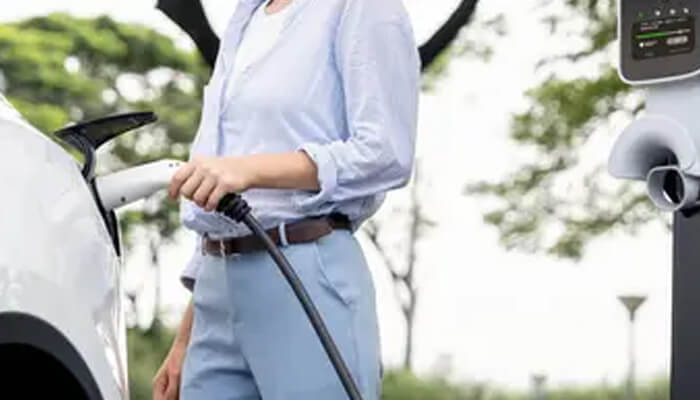
Another key consideration is how your EVs will maintain their charge. Upgrading your commercial premises with dedicated charging infrastructure requires an assessment of your building’s electrical capacity. Speak with your Distribution Network Operator (DNO) early to confirm whether your local grid connection can handle the increased electrical load of multiple rapid chargers.
It’s also worth considering the government’s Workplace Charging Scheme. This provides businesses with vouchers covering up to 75% of purchase and installation costs, capped at £500 per socket for up to 40 sockets.
Managing Evs Day-to-day
As well as the practicalities of moving from diesel, you’ll also need to think about how you train up your team. You’ll need transparent policies for situations where your employees take company vans home overnight. For instance,implement a clear system to reimburse them for the business electricity they use.
Your accounting team must keep accurate mileage logs to separate business travel from personal use. When your drivers charge vehicles at public rapid hubs, ensure they use dedicated business fuel cards so your company can claim back theVAT on public charging.
