


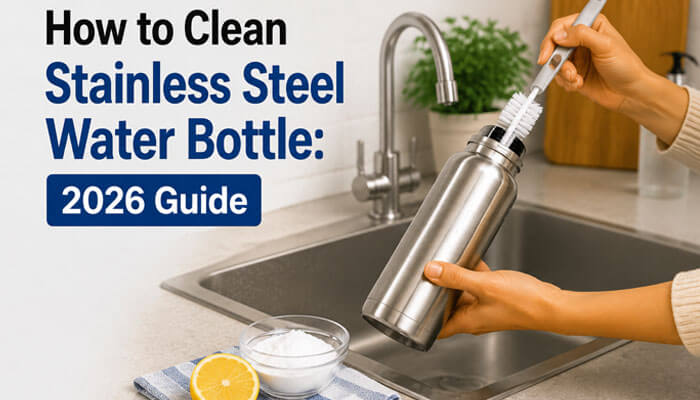

Knowing how to clean stainless steel water bottle properly is important if you use a reusable bottle every day. A bottle may look clean from the outside, but the inside, lid, straw, gasket, mouthpiece, and cap threads can collect saliva, moisture, minerals, drink residue, and germs over time.
A stainless steel water bottle is durable, reusable, and often easier to maintain than many plastic bottles. However, it is not self-cleaning. If you only rinse it with water and close it while damp, odor, stains, slime, and mold can still develop. That is why a proper cleaning routine helps protect taste, freshness, hygiene, and long-term bottle quality.
Reusable bottle contamination can depend on the bottle material, refill frequency, beverage type, and cleaning habits. The outside of the bottle can also collect germs because it touches hands, bags, desks, cup holders, gym surfaces, refill stations, and kitchen counters. This guide explains how to clean stainless steel water bottle safely, remove odors and stains, clean lids and straws, and keep your bottle fresh for daily use.
Quick Answer: How to Clean Stainless Steel Water Bottle
The best way to clean a stainless steel water bottle is to wash it daily with warm water, mild dish soap, and a bottle brush. Remove the lid, straw, rubber gasket, and silicone parts if possible. Scrub the inside, clean the mouthpiece, rinse well, and let every part air-dry fully before closing the bottle.
For weekly water bottle deep cleaning, use white vinegar, baking soda, or a manufacturer-approved cleaning tablet. Avoid steel wool, harsh scrubbers, strong chemicals, and bleach unless your bottle manufacturer clearly says they are safe. If you want a simple routine for how to clean stainless steel water bottle, remember this: wash, scrub, rinse, and dry completely.
Why People Search for How to Clean Stainless Steel Water Bottle in 2026
People searching for how to clean stainless steel water bottle usually want more than a simple rinse. Most readers want to know how to remove bad smells, clean hidden mold, wash the lid, remove coffee stains, clean straw caps, and understand whether vinegar, baking soda, bleach, or a dishwasher is safe.
Reusable bottles are used in offices, schools, gyms, cars, travel bags, outdoor activities, and refill stations. Because they touch hands, mouths, desks, bags, and bottle refill points, they need a proper cleaning routine. A complete cleaning guide should explain the bottle body, lid, straw, gasket, mouthpiece, drying method, stains, smells, and safety mistakes.
Some bottle designs are harder to clean than others. Bottles may include straws, built-in filters, narrow openings, rubber seals, flip caps, or hidden grooves. Wide-mouth bottles are easier to scrub, while narrow-mouth bottles can make interior cleaning more difficult.
Cleaning vs Sanitizing a Stainless Steel Water Bottle
Cleaning and sanitizing are not the same thing. Cleaning means using water, soap, and scrubbing to remove germs, dirt, and residue. Sanitizing reduces germs to safer levels, while disinfecting kills many remaining germs after cleaning.
For daily use, a stainless steel water bottle usually needs proper cleaning with warm water, mild dish soap, and a brush. Sanitizing may be useful when the bottle has visible mold, a strong smell, old drink residue, or after someone has been sick.
Surfaces should be cleaned before sanitizing or disinfecting because dirt, residue, and buildup can make disinfecting less effective. Most readers usually need cleaning first, not strong disinfecting chemicals.
Simple rule: clean daily, deep clean weekly, and sanitize only when needed and only if your bottle manufacturer says the method is safe.
| Method | Purpose | When to Use |
|---|---|---|
| Cleaning | Removes residue and dirt | Daily |
| Deep Cleaning | Removes odors and stains | Weekly |
| Sanitizing | Reduces germs | After illness or mold concerns |
| Part Replacement | Fixes persistent contamination | When seals or straws remain damaged |
Why Cleaning a Stainless Steel Water Bottle Matters
A reusable water bottle clean can collect bacteria, saliva residue, minerals, and biofilm. Biofilm is a thin layer of microorganisms that can stick to wet surfaces. It can form inside bottles, lids, straws, and mouthpieces if they are not cleaned well.
The lid is often one of the dirtiest parts because it has grooves, seals, hinges, straws, and drinking spouts. If you only wash the bottle body and ignore the lid, bad smell and mold can return. This is one reason bottle care should always include lid and straw cleaning.
Bottles used for coffee, tea, soda, sports drinks, juice, flavored water, or protein shakes need extra care. These drinks can leave sugar, stains, oils, acids, or residue that plain water cannot remove properly.
What You Need to Clean a Stainless Steel Water Bottle
Before you start, gather the right tools. The best cleaning method does not require expensive products. Most people only need warm water, mild soap, a bottle brush, and proper drying time.
| Cleaning Item | Best Use | Notes |
| Mild dish soap | Daily cleaning | Safe for most stainless steel bottles |
| Warm water | Loosens residue | Avoid boiling water unless the brand allows it |
| Bottle brush | Scrubs the inside | Best for tall or narrow bottles |
| Straw brush | Cleans straws and spouts | Important for straw-lid bottles |
| Soft sponge | Cleans the outside surface | Avoid metal scrubbers |
| White vinegar | Odor and mineral buildup | Useful for weekly deep cleaning |
| Baking soda | Smell and light stains | Use as a paste or soak |
| Clean towel or drying rack | Air drying | Helps prevent trapped moisture |
Wash a New Stainless Steel Bottle Before First Use
Before using a new stainless steel bottle, wash it properly even if it looks clean. New bottles may contain factory dust, packaging residue, or a slight metallic smell from storage and shipping.
For the first time, start with a basic first-use wash. This helps remove hidden residue and improves the taste of your first drink.
First-Use Cleaning Steps
- Remove the lid, straw, gasket, and removable parts.
- Wash the bottle with warm water and mild dish soap.
- Scrub the inside with a soft bottle brush.
- Clean the lid grooves and mouthpiece carefully.
- Rinse everything well.
- Let all parts air-dry fully before closing the bottle.
This first wash improves taste and helps remove hidden residue before your first drink.
Daily Cleaning Method for Stainless Steel Water Bottles
This is the best routine for everyday bottle use. If you want to know how to clean stainless steel water bottle without damaging it, daily cleaning should be simple, gentle, and consistent.
Step 1: Empty the Bottle
Pour out old water, tea, coffee, lemon water, juice, or sports drink. Do not leave leftover liquid sitting for days because it can increase odor, residue, and bacterial growth.
Step 2: Take Apart the Bottle
Remove every part that can safely come off:
- Lid
- Straw
- Silicone gasket
- Rubber seal
- Flip cap
- Mouthpiece
- Handle attachment
Small parts are often the biggest source of odor and mold. If your bottle has a hidden rubber ring, remove it carefully only if the brand instructions allow it.
Step 3: Add Warm Water and Dish Soap
Fill the bottle halfway with warm water and add a few drops of mild dish soap. Avoid strong fragrance cleaners, harsh chemicals, and abrasive powders for daily cleaning. This gentle method is usually the safest answer for how to clean stainless steel water bottle at home.
Step 4: Scrub the Inside
Use a bottle brush to scrub the bottom, walls, neck, and lower corners of the bottle. Residue often settles at the bottom, especially after coffee, tea, flavored water, or sports drinks.
Step 5: Clean the Lid and Straw
Use a small brush, straw brush, or clean toothbrush to scrub:
- Drinking hole
- Straw opening
- Lid threads
- Silicone seal
- Rubber gasket
- Flip-top area
- Around the mouthpiece
Tight bottle parts need extra care because straws, nozzles, gaskets, and hard-to-reach areas can collect residue and germs. A guide on how to clean stainless steel water bottle is incomplete if it does not explain the lid, straw, and gasket.
Step 6: Rinse Very Well
Rinse the bottle and all parts with clean water until no soap smell remains. Soap left inside the bottle can affect the taste of water.
Step 7: Air-Dry Completely
Place the bottle upside down on a clean drying rack. Keep the lid off until every part is fully dry. Closing the bottle while damp can trap moisture and cause odor again.
Weekly Deep Cleaning Method
Daily washing keeps the bottle fresh, but weekly deep cleaning helps remove stubborn smell, stains, residue, and mineral buildup. Weekly deep cleaning is also helpful for anyone searching how to clean stainless steel water bottle after using it for coffee, tea, juice, or gym drinks.
| Problem | Best Deep Cleaning Method |
| Bad smell | Baking soda soak or vinegar rinse |
| White mineral marks | White vinegar soak |
| Tea or coffee stain | Baking soda paste |
| Slimy feeling | Warm soapy scrub plus vinegar rinse |
| Mold around lid | Disassemble lid and scrub carefully |
| Metallic taste | Soap wash, full rinse, and air drying |
Method 1: How to Clean Stainless Steel Water Bottle With White Vinegar
White vinegar can help remove odor and mineral buildup. It is useful when the bottle smells stale or has white mineral marks from hard water.
How to Use Vinegar
- Add 1 part white vinegar and 3 to 4 parts warm water.
- Close the bottle and shake gently.
- Let it sit for 15 to 30 minutes.
- Scrub with a bottle brush.
- Rinse several times with clean water.
- Air-dry fully with the lid off.
Do not use vinegar too often on painted finishes or sensitive parts unless the brand allows it. When using vinegar for how to clean stainless steel water bottle, always rinse well so the bottle does not keep a sour smell.
Method 2: How to Clean Stainless Steel Water Bottle With Baking Soda
Baking soda is useful for bad smells and light stains. It is gentle, easy to find, and helpful for bottles that smell musty after being closed while damp.
How to Use Baking Soda
- Add 1 to 2 tablespoons of baking soda to the bottle.
- Add warm water.
- Let it sit for 30 minutes or overnight for strong odors.
- Scrub the inside with a bottle brush.
- Rinse very well.
- Leave open to dry.
For stains, mix baking soda with a little water to make a paste. Apply it to the stained area, scrub gently, and rinse well. This is one of the easiest ways to explain how to clean stainless steel water bottle without using harsh chemicals.
Method 3: Clean the Lid, Straw, and Rubber Gasket
Many people learn how to clean stainless steel water bottle bodies but forget the lid. This is a common mistake because the lid touches your mouth most often.
Lid Cleaning Steps
- Remove the straw and gasket if possible.
- Soak small parts in warm soapy water for 10 to 15 minutes.
- Scrub grooves with a small brush.
- Push a straw brush through the straw.
- Rinse until no soap remains.
- Dry each part separately.
If you see black spots on the gasket or inside the lid, clean it immediately. If the mold does not come off after careful cleaning, replace the gasket or lid.
How to Clean Different Types of Stainless Steel Water Bottles
Not every bottle should be cleaned the same way. A wide-mouth bottle is easier to scrub, while narrow-mouth bottles, straw lids, and flip caps need more detailed cleaning. This section makes how to clean stainless steel water bottle more useful for different bottle designs.
| Bottle Type | Main Cleaning Problem | Best Cleaning Method |
| Wide-mouth stainless steel bottle | Bottom residue | Use warm soapy water and a bottle brush |
| Narrow-mouth bottle | Hard-to-reach bottom | Use a long bottle brush or vinegar rinse |
| Straw lid bottle | Hidden buildup inside straw | Use a straw brush every time |
| Flip-top bottle | Mold around mouthpiece | Scrub lid grooves with a small brush |
| Insulated flask | Odor from trapped liquid | Use baking soda soak or vinegar rinse |
| Coffee or tea bottle | Brown stains and smell | Use baking soda paste and rinse well |
| Sports drink bottle | Sticky sugar residue | Wash immediately after use |
Bottle design matters. Straws, filters, narrow mouths, silicone rings, and hidden lid grooves can make cleaning harder, so those parts need more attention than a simple bottle rinse.
How to Clean a Stainless Steel Bottle After Coffee, Tea, or Sports Drinks
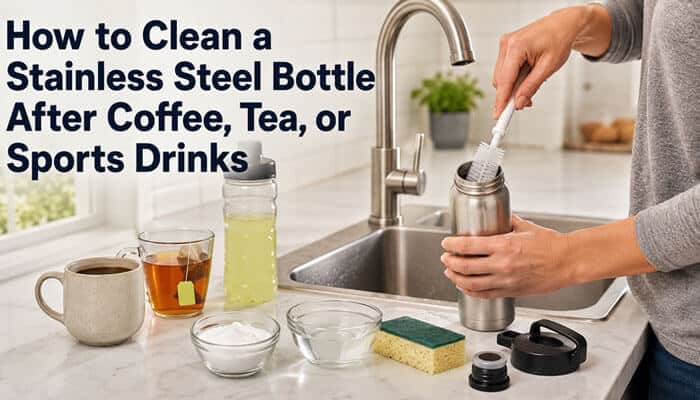
If you use your bottle for anything other than plain water, clean it as soon as possible. Coffee, tea, lemon water, juice, electrolyte drinks, and protein shakes can leave odor, stains, sugar, or residue inside the bottle.
1. For Coffee or Tea Stains
Mix baking soda with a small amount of water to make a soft paste. Apply it to the stained area, scrub gently with a bottle brush, and rinse well.
2. For Sports Drinks or Juice
Use warm water, dish soap, and a bottle brush immediately after use. Sugary drinks should not sit inside the bottle overnight because sticky residue can remain in corners, lids, and straws.
3. For Protein Shakes or Milk-Based Drinks
Wash the bottle immediately. These drinks can smell bad quickly and may leave residue in the lid, gasket, and threads.
These cleaning tips are useful for bottles used with coffee, tea, sports drinks, juice, flavored water, or protein shakes. They also help readers understand how to clean a stainless steel water bottle after drinks that leave stains or odors.
How to Clean the Outside of a Stainless Steel Water Bottle
Many cleaning guides focus only on the inside, but the outside of the bottle also needs attention. The exterior touches hands, gym bags, desks, cup holders, refill stations, and sometimes floors.
Exterior Cleaning Steps
- Wipe the outside daily with a damp cloth and mild soap.
- Clean around the neck and cap threads.
- Wash the bottom if it touches floors, gym surfaces, or outdoor areas.
- Avoid steel wool or harsh scrubbers because they can scratch the finish.
- Dry the outside before storing it in a bag.
Cleaning the outside is especially important if you carry the bottle to the gym, office, school, public refill stations, or outdoor places. A complete answer to how to clean stainless steel water bottle should include both inside and outside cleaning.
Can You Put a Stainless Steel Water Bottle in the Dishwasher?
Some stainless steel bottles are dishwasher-safe, but not all of them. Always check the bottom of the bottle, packaging, or brand care page before using a dishwasher.
A dishwasher may clean the bottle body, but narrow openings, lid grooves, straws, and gaskets may still need hand scrubbing. Bottle finishes, vacuum insulation, plastic lids, and silicone parts can vary by brand.
| Bottle Part | Dishwasher Safe? | Best Advice |
| Stainless steel body | Sometimes | Check manufacturer instructions |
| Plastic lid | Sometimes | Use top rack if allowed |
| Straw | Usually, but check | Use a straw brush first |
| Silicone gasket | Sometimes | Remove and clean separately |
| Painted exterior | Depends on brand | Handwashing may protect finish |
| Vacuum-insulated bottle | Depends on brand | Never assume it is dishwasher-safe |
If you are researching how to clean stainless steel water bottle because you want the fastest option, the dishwasher may help only when the bottle label says it is safe.
Should You Use Bleach on a Stainless Steel Water Bottle?
Bleach is a sensitive topic because general household cleaning guidance and bottle-brand care instructions may differ. Bleach solutions can disinfect many hard surfaces when used correctly, but bleach should be handled carefully, used with good ventilation, and never mixed with vinegar, ammonia, or other cleaners.
For stainless steel water bottles, the safer advice is this: do not use bleach unless your bottle manufacturer clearly says it is safe. Some bottle brands warn that harsh chemicals may damage seals, finishes, or bottle parts.
A better everyday approach is warm water, dish soap, a bottle brush, baking soda for odor, and vinegar for mineral buildup. For most people, this is the safer way to handle how to clean stainless steel water bottle without damaging parts.
What Not to Use on Stainless Steel Water Bottles
Avoid these cleaning mistakes because they can damage the bottle, leave residue, or affect taste.
| Avoid | Why |
| Steel wool | Can scratch stainless steel |
| Harsh abrasive powder | Can damage the finish |
| Strong chemical cleaners | Can leave unsafe residue |
| Bleach without brand approval | May damage seals or bottle parts |
| Closing the bottle while wet | Traps moisture and odor |
| Ignoring the lid | Allows mold and smell to return |
| Sharp scraping tools | Can scratch the bottle interior |
How Often Should You Clean a Stainless Steel Water Bottle?
A common question related to how to clean stainless steel water bottle is how often it should be washed. The answer depends on what you drink and how often you use it.
| Use Case | Cleaning Frequency |
| Plain water only | Wash daily or very regularly |
| Lemon water | Wash after each use |
| Tea or coffee | Wash after each use |
| Juice or sports drink | Wash after each use |
| Protein shake or milk drink | Wash immediately after use |
| Gym or outdoor use | Wash after each use |
| Shared bottle | Wash after each use |
| Sick days | Deep clean before reuse |
Bottles used for coffee, tea, soda, sports drinks, and other flavored beverages need more careful washing because residues and sugars can remain inside the bottle and lid.
How to Clean a Stainless Steel Water Bottle After Being Sick
Clean your bottle carefully after a cold, flu, stomach illness, or throat infection. Germs can transfer from your mouth and hands to the lid, straw, and mouthpiece.
After-Sickness Cleaning Method
- Take apart the bottle completely.
- Wash the bottle, lid, straw, and gasket with warm soapy water.
- Scrub all drinking areas with a small brush.
- Rinse very well.
- Deep clean with vinegar or baking soda if odor remains.
- Let every part dry fully before reuse.
If your bottle has a straw lid or silicone gasket, clean those areas carefully because moisture can stay trapped there. After illness, how to clean stainless steel water bottle should focus on the drinking spout, straw, gasket, and mouth-contact areas.
How to Remove Bad Smell From a Stainless Steel Water Bottle
Bad smell usually comes from trapped moisture, old liquid, bacteria, or a dirty lid. If your main reason for searching how to clean stainless steel water bottle is odor, start with soap, then use baking soda if needed.
Best Odor Removal Method
- Wash the bottle with warm soapy water.
- Add 1 tablespoon of baking soda.
- Fill with warm water.
- Let it sit for a few hours.
- Scrub the inside and lid.
- Rinse well.
- Air-dry completely.
If the smell remains, use a vinegar rinse the next day. Do not mix vinegar and bleach.
How to Remove Tea, Coffee, or Hard Water Stains
Tea and coffee can leave brown stains inside stainless steel bottles. Hard water can leave white mineral marks. People often search how to clean stainless steel water bottle when rinsing no longer removes these marks.
For Tea or Coffee Stains
Use baking soda paste:
- Add 1 tablespoon baking soda.
- Add a few drops of water to make a paste.
- Scrub gently with a bottle brush.
- Rinse well.
For White Mineral Marks
Use vinegar:
- Add diluted white vinegar.
- Let it sit for 15 to 30 minutes.
- Scrub gently.
- Rinse several times.
Do not use sharp tools to scrape stains because they can scratch the stainless steel surface.
How to Clean Mold From a Stainless Steel Water Bottle
Mold usually appears around the lid, straw, gasket, or mouthpiece. The bottle body may be stainless steel, but the lid often has plastic and silicone parts where moisture can hide.
If you are learning how to clean stainless steel water bottle because you found mold, focus on removable parts first. Mold often hides in the lid, not just inside the bottle.
Mold Cleaning Steps
- Take the bottle apart.
- Wash all parts with warm soapy water.
- Scrub moldy areas with a small brush.
- Soak removable parts in vinegar water if the brand allows it.
- Rinse thoroughly.
- Dry every part completely.
- Replace any gasket that still looks stained or smells bad.
If mold keeps coming back, the lid design may be trapping moisture. Replacing the lid, gasket, or straw may be safer than continuing to use parts that do not clean properly.
When Should You Replace the Lid, Straw, or Gasket?
Sometimes cleaning is not enough. If the rubber gasket, straw, or lid has deep stains, cracks, bad smell, or mold that does not come off, replace that part. A helpful guide on how to clean stainless steel water bottle should also tell you when cleaning is no longer enough.
Replace Bottle Parts When:
- The gasket has black spots that remain after cleaning.
- The straw smells bad even after washing.
- The lid has cracks or hidden buildup.
- The mouthpiece feels sticky or slimy.
- The bottle leaks because the seal is damaged.
- The cap no longer dries properly.
Many brands sell replacement lids, straws, and gaskets. Replacing small parts can extend the life of the bottle and keep drinking water fresher.
How to Keep Your Stainless Steel Bottle Fresh Longer
Good cleaning is important, but prevention is easier. Once you know how to clean stainless steel water bottle, simple daily habits can stop odor and mold from coming back.
- Empty old water daily.
- Do not store the bottle closed when wet.
- Keep the lid off while drying.
- Wash after flavored drinks.
- Use a bottle brush, not just rinsing.
- Clean the lid as carefully as the bottle.
- Replace damaged straws, seals, and gaskets.
- Avoid leaving the bottle in a hot car.
- Do not share bottles without washing them.
Why Bottles Become Dirty Faster Than People Expect
Many bottle owners assume that reusable water bottles stay clean because they only contain water. However, every sip introduces saliva, moisture, and environmental exposure. Bottles regularly contact hands, desks, gym equipment, vehicle cup holders, bags, and refill stations, creating multiple opportunities for contamination if cleaning is inconsistent.
Common Myths About Cleaning Stainless Steel Water Bottles
Some advice about how to clean stainless steel water bottle is confusing or incomplete. These common myths can lead to odor, mold, or damage.
Myth 1: Plain Water Is Enough to Clean the Bottle
Plain water may remove loose liquid, but it does not properly remove residue, odor, or biofilm. Use soap and scrubbing.
Myth 2: Stainless Steel Bottles Never Grow Germs
Stainless steel is durable and easy to clean, but any reusable bottle can collect germs if it is left wet or unwashed.
Myth 3: Only the Inside of the Bottle Matters
The lid, mouthpiece, straw, gasket, threads, and outside surface also need cleaning.
Myth 4: Dishwasher-Safe Means Always Perfectly Clean
A dishwasher may help, but narrow openings and hidden lid parts may still need hand scrubbing. Not every stainless steel bottle is dishwasher-safe, so always check the label or brand care guide.
Myth 5: Strong Chemicals Clean Better
Strong chemicals can damage seals, coatings, or bottle parts. Mild dish soap, a brush, baking soda, and vinegar are safer for most daily cleaning needs.
Common Mistakes People Make
Even after reading about how to clean stainless steel water bottle, many people make small mistakes that allow smell and mold to return.
Mistake 1: Only Rinsing With Water
Rinsing removes loose liquid, but it does not remove mouth residue, biofilm, or hidden buildup. Use soap and a brush.
Mistake 2: Forgetting the Lid
The lid is often the dirtiest part because it touches your mouth and hands. Always clean it separately.
Mistake 3: Closing the Bottle Too Soon
A clean bottle can still smell bad if it is closed while damp. Let it dry fully.
Mistake 4: Using Harsh Scrubbers
Steel wool and rough scrubbers can scratch the inside of the bottle. Scratches can hold residue and make cleaning harder.
Mistake 5: Assuming Every Bottle Is Dishwasher-Safe
Some modern bottles are dishwasher-safe, but others are not. Always check brand instructions first.
Best Cleaning Routine for Busy People
If you do not have much time, this simple routine explains how to clean stainless steel water bottle without making the process complicated.
| Time | What to Do |
| Morning | Fill only after checking that the bottle smells fresh |
| After use | Empty leftover liquid |
| Evening | Wash with warm water, soap, and brush |
| Weekly | Deep clean with vinegar or baking soda |
| Monthly | Inspect gasket, straw, and lid for mold or damage |
This routine keeps your stainless steel bottle fresh without making cleaning complicated.
Is Stainless Steel Better Than Plastic for Cleaning?
Stainless steel is usually durable, odor-resistant, and less likely to hold smells than many plastic bottles. However, every reusable bottle still needs regular cleaning.
Plastic bottles may scratch more easily, and scratches can make cleaning harder. Stainless steel is often easier to maintain, but it still needs daily washing, lid cleaning, and complete drying. This is why how to clean stainless steel water bottle is still important even though stainless steel is a strong material.
Sources Used
- CDC cleaning and disinfecting guidance
- Reusable water bottle contamination research
- Manufacturer care instructions from stainless steel bottle brands
What Hygiene Experts Recommend
Regular cleaning is one of the most effective ways to maintain reusable bottle hygiene. Public-health guidance consistently emphasizes cleaning frequently touched drinking surfaces, allowing items to dry completely, and removing residue that can support bacterial growth. Consistent cleaning habits are generally more important than using harsh chemicals.
This guide was developed using reusable bottle maintenance practices, hygiene recommendations, manufacturer care instructions, and cleaning methods commonly recommended for stainless steel drinkware. The goal is to provide practical, safe, and easy-to-follow cleaning guidance for everyday bottle users.
Final Thoughts
Learning how to clean stainless steel water bottle properly helps keep your drink fresh, your bottle odor-free, and your daily hydration routine safer. A stainless steel bottle may look clean from the outside, but the inside, lid, straw, gasket, and mouthpiece need regular care to prevent stains, smells, mold, and residue buildup.
The best routine is simple: wash your bottle daily with warm water, mild dish soap, and a bottle brush. Clean the lid and small parts separately, rinse everything well, and let each part air-dry completely before closing the bottle. For deeper cleaning, use baking soda for bad smells, vinegar for mineral buildup, and gentle scrubbing for coffee, tea, or sports drink stains.
Avoid harsh chemicals, steel wool, and closing the bottle while it is still wet. Once you know how to clean stainless steel water bottle the right way, your reusable bottle can stay fresh, safe, and long-lasting for years.
How to Clean Stainless Steel Water Bottle FAQs
1. How often should I clean my stainless steel water bottle?
You should clean it daily if you use it every day. If you are researching how to clean stainless steel water bottle because you use it for coffee, tea, juice, lemon water, sports drinks, or protein shakes, wash it after each use.
2. Can I clean a stainless steel water bottle with vinegar?
Yes, diluted white vinegar can help remove odor and mineral buildup. For how to clean stainless steel water bottle with vinegar, use diluted vinegar, rinse very well, and let the bottle dry completely.
3. Can I use baking soda to clean my stainless steel bottle?
Yes, baking soda is useful for bad smells and light stains. If you want to know how to clean stainless steel water bottle with baking soda, mix it with warm water for a soak or make a gentle paste for stains.
4. Why does my stainless steel water bottle smell bad?
Bad smell usually comes from bacteria, trapped moisture, old liquid, or a dirty lid. The best answer to how to clean stainless steel water bottle for odor is to clean the bottle, lid, straw, and gasket, then let everything air-dry fully.
5. Should I use bleach to clean a stainless steel water bottle?
It is better to avoid bleach unless your bottle manufacturer clearly says it is safe. For everyday how to clean stainless steel water bottle routines, mild soap, baking soda, and vinegar are usually safer choices.
