




If your garage doubles as a place to build birdhouses, fix bikes, and store the lawn mower, space gets tight fast. Many benches look too small, too flimsy, or too expensive. Choosing gets easier when you start with your actual room and the work you do most often. This guide covers size, height, materials, storage, mobility, lighting, power, and safety.
Quick Checklist: How To Choose Smart
- Measure your space first, including the walkway room and car door swing.
- Set a comfortable height for your body, not just a spec sheet number.
- Match the top material to your main tasks, such as woodworking, repairs, or auto work.
- Decide whether you need fixed or adjustable height, and stationary or mobile legs.
- Plan lighting, power access, and basic storage before you commit.
- Check the load rating, and remember it usually means evenly distributed weight.
Step 1: Measure Your Space And Set Target Dimensions
Before you choose a bench, grab a tape measure. Most problems come from buying something that fits the wall but blocks a car door, cabinet, or walkway. Many benches are 20 to 25 inches deep, with lengths from compact 2-foot units to 8-foot models. A 48-inch bench can suit a corner, while a 72- or 96-inch bench gives you more room to spread out. Open the car door and check where it swings before you buy.
Open the car door and check where it swings before you buy. If you are rethinking the whole space, not just the bench, these ideas for car repairs are a useful companion.
Get The Height Right For Your Body
Comfort matters more than any single measurement. Typical bench heights land between 32 and 36 inches. Try the thumb-knuckle test: with your arms relaxed at your sides, the top should sit near your first thumb knuckle. Go lower for hand-planing and taller for close-up work. If you use a table saw, matching the outfeed height can help.
Capacity Basics
Load ratings usually assume weight is spread evenly across the top. Capacities vary by model, so check the specific listing before buying.
Step 2: Pick Your Top And Frame Materials
The top is where the work happens, so choose it for your main projects rather than look alone.
Wood vs Plywood, MDF, or Steel
Solid wood tops are forgiving and hold clamps and vises well, which makes them strong for woodworking. Plywood or MDF is budget-friendly and easy to replace; a thin hardboard sheet can serve as a sacrificial layer. Steel tops handle grease, sparks, and hammer blows better, so they fit metalwork and auto tinkering. There is no single best choice, only the best fit for your tasks.
Storage Built-ins Vs A Minimalist Top
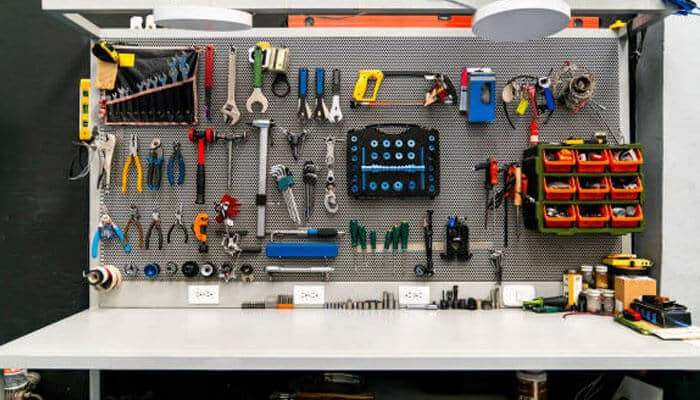
Some benches come with drawers, shelves, and a pegboard back, while others keep open space underneath. Built-ins are handy, but heavy drawers can reduce the usable load rating for the surface, so check both drawer and top ratings. If you are in New Zealand and compare sizes, materials, shelving, and add-on options, you can shop workbenches in NZ and see configurations with pegboard backs, caster wheels, and medium- or industrial-duty builds.
Step 3: Fixed Vs Adjustable Height, Stationary Vs Mobile
This decision is easier when you focus on how often the bench needs to move or change height.
Adjustable Height Pros And Cons
Adjustable benches help when more than one person uses the space or when you switch between standing and seated work. Check the height range, weight rating, and adjustment method. On some models, changing height takes enough effort that it is better treated as a set-it-once feature.
Mobility Tradeoffs
Casters let you roll the bench to the car or move it out of the way in a shared garage. The tradeoff is possible loss of load capacity or stability. Look for lockable casters, and choose a stationary setup if you plan to pound, plane, or clamp with real force.
Step 4: Light your Bench Area
Good light is one of the cheapest upgrades you can make, and it is easiest to plan before tools take over.
Ambient vs Task lighting
A garage needs general lighting so you can move around safely, but the bench also needs focused task lighting. For detailed work, daylight-style bulbs around 5000K can make colors, edges, and small parts easier to see. Avoid relying on one ceiling fixture behind you, since your body and hands may cast shadows over the surface.
Add-on Task Lights
Add a light directly over the bench, and angle it so your hands do not block the beam or create glare on a steel or glossy top. For small fasteners or close-up repairs, a clamp-on or articulating task light is often worth the space.
Step 5: Safety and Power Made Simple
A little planning here keeps the setup comfortable and reduces avoidable risks.
Dust and Air
Sawdust is not harmless. It can irritate skin and lungs, especially during sanding. A basic shop vacuum connected to your sander, or a small local dust collection setup, can make a big difference. Wear a respirator for dusty work, and improve airflow by opening a door or window when conditions allow.
Power Access
Mounting a surge-protected power strip under the bench lip can keep cords off the floor. Electrical rules vary by area, so verify local code requirements and consider GFCI protection near bench areas. When in doubt, ask a licensed electrician rather than guessing.
Real-world Picks By Space And Task
Use these examples as starting points, then adjust them to your room and projects.
In a one-car garage, try a 48 by 24-inch adjustable bench with a pegboard back and a 5000K LED fixture. For a wood-first setup, set the bench lower for planing, add a face vise, and connect dust capture to your main sander. For auto tinkering, go a little taller, choose a steel or hardwood top, add drawer storage, and match a stool height so you can sit for longer jobs.
Conclusion
Choosing a workbench gets simpler when you take the decisions in order. Start with the space and a height that feels right for your body. Then pick a top material that suits your main projects, and only after that focus on storage, lighting, mobility, and add-ons.
You do not have to get everything perfect on day one. Measure your garage, sketch a simple layout, and choose a bench that fits how you actually work.
FAQs
What height should my garage workbench be?
Most benches sit between 32 and 36 inches, but comfort matters most. Try the thumb-knuckle rule, then go lower for hand-planing or taller for detail work.
Is adjustable height worth it for a home workshop?
It can be, especially if several people share the bench or you switch between standing and seated tasks. Just check how easy the adjustment is.
What benchtop material is best for general DIY?
Solid wood or thick plywood is a useful all-rounder because it grips clamps and takes wear well. Choose steel mainly for metalwork or greasy auto jobs.
How much weight should my bench hold?
Match the rating to your heaviest task, and remember most ratings assume weight spread evenly across the top.
