



This guide gives Australian studio owners a decision-first path: match flooring type and thickness to how each zone is used, confirm slip and fire requirements, plan for noise, then choose materials that suit your brand, cleaning routine, and budget.
The quick verdict for most small studios
For a typical personal training, small group, or strength studio, a sensible default is 15 mm interlocking tiles for the main floor, with a thicker build-up or platform in drop zones. Before ordering, confirm required fire performance, slip-resistance triggers on ramps or stairs, and your cleaning plan.
That default suits many fit-outs, but not all. A ground-floor strength gym and an upper-level pilates studio in a mixed-use building have different acoustic and compliance needs.
Know your materials
Three rubber options dominate Australian studios, along with a choice between rolls and tiles.
- Recycled rubber (SBR): durable and good value, but usually more porous and more likely to hold odour.
- EPDM: lower-odour and smoother, which can make it easier to sanitise. It is a common pick for boutique studios where cleanliness is part of the member experience.
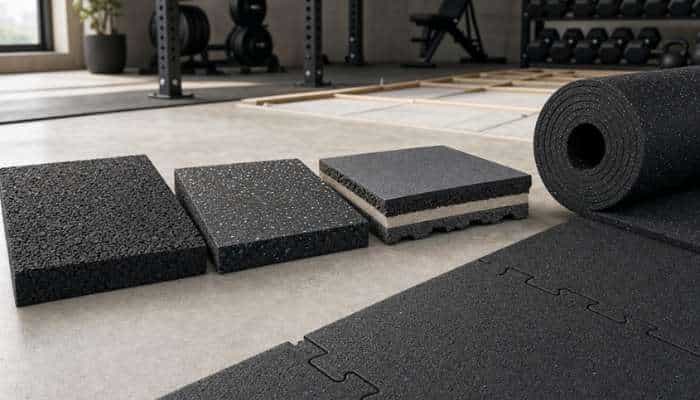
- Composite-top tiles: a denser, compressed top layer over a rubber base. Kinta’s composite gym tile pairs a roughly 3 mm compressed top with a 12 mm dense base to improve durability and cleaning compared with standard rubber.
- Rolls vs tiles: rolls have fewer seams but are trickier to install; interlocking tiles are easier to lay yourself and simpler to replace if one section wears.
Three rubber options dominate Australian studios, along with a choice between rolls and tiles. To find the right fit for your studio, compare options for best rubber gym flooring in Australia to understand the differences between material types, durability, and cost.
Map your space by usage
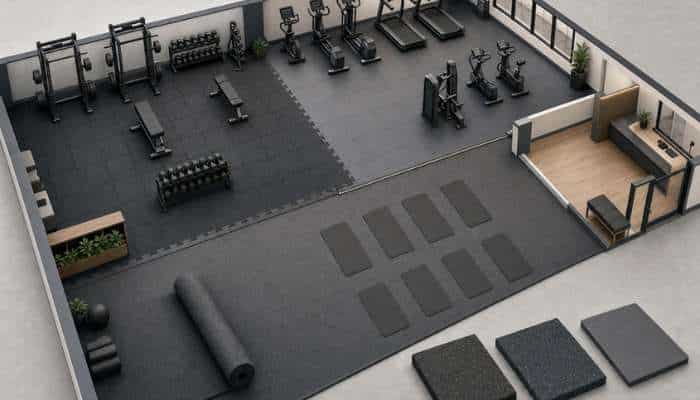
Before choosing a thickness, sketch your floor plan and label the zones: free weights, machines, and class or open-floor areas. Thickness should follow the load each zone takes.
| Zone | Typical use | Suggested thickness |
| Heavy lifting | Racks, barbells, dumbbell drops | 15 to 20 mm rubber |
| General and cardio | Machines, light weights, classes | 8 to 12 mm rubber |
| Olympic lifting | Cleans, snatches, repeated drops | Dedicated lifting platform |
A practical Australian approach is to use 10 mm rubber for cardio and light weights, 15 mm and above for free weights and racks, and platforms for Olympic lifting zones. On upper floors, plan extra isolation or platforms where heavy loads land.
Compliance, the Australian part
Two areas matter most: fire performance and slip resistance. Standards set the test methods, but your building class, sprinkler status, and layout decide what actually applies. Confirm requirements with your certifier, builder, or council before you buy.
Fire performance
Under NCC 2022 clause S7C3, floor coverings must meet a minimum critical radiant flux (CRF) that varies by building class and sprinkler status. Many areas require 2.2 kW/m² without a compliant sprinkler system, or 1.2 kW/m² where one is in place. For buildings without compliant sprinklers, the NCC also caps smoke development at 750 percent-minutes. Results are measured under AS ISO 9239.1.
Slip resistance
Slip resistance for ramps, stair treads, and certain landings is commonly verified to AS 4586. NCC guidance may list required classifications such as P4 or P5 depending on wet or dry conditions. Most flat training floors are not the trigger; ramps, stairs, and landings usually are.
Noise and neighbours
In a mixed-use building, dropped weights and group classes can travel to the units or businesses below. Resilient underlays, floating systems, and dedicated lifting platforms can reduce impact noise, but the right combination depends on the structure. Bring in acoustic advice early, especially for upper-floor studios, rather than reacting to complaints after opening.
Thickness, durability, and installation
Translate your training style into a clear specification. Barbell and dumbbell drops call for more protection than HIIT or pilates. Often, two layers or a platform in the drop zone works better than one very thick tile across the whole floor because you only pay for added protection where loads actually land.
Tile mass matters for loose-lay stability. A typical 15 mm, 1×1 m Australian gym tile weighs about 14 kg, which helps it stay put without adhesive in many small installs. Kinta advises that floating, no-glue installs with tight-fitting 15 mm interlocking tiles can suit many gym settings, though you should confirm against your own site conditions.
For installation, loose-lay interlocking works well in many smaller spaces, while adhesive suits large areas, high-traffic zones, or rolls. Either way, prepare a clean, dry, level subfloor, let tiles acclimatise, and lay them in a brick pattern for a tighter fit.
Cleaning and hygiene
Rubber floors last longer with the right routine. Manufacturers commonly recommend pH-neutral cleaners and, for larger areas, auto-scrubbers. Avoid chlorinated or harsh chemicals, which can degrade the surface. Smoother EPDM and composite tops tend to hold less residue and clean faster, which is one reason they are popular in studios where presentation matters.
What to avoid
- Mats too thin for the drops they will take.
- Ignoring building class and sprinkler status when selecting fire-tested tiles.
- Buying porous tiles for spaces where smell and cleanliness shape member perception.
- Underestimating acoustic complaints in mixed-use buildings.
Where to buy and what to look for
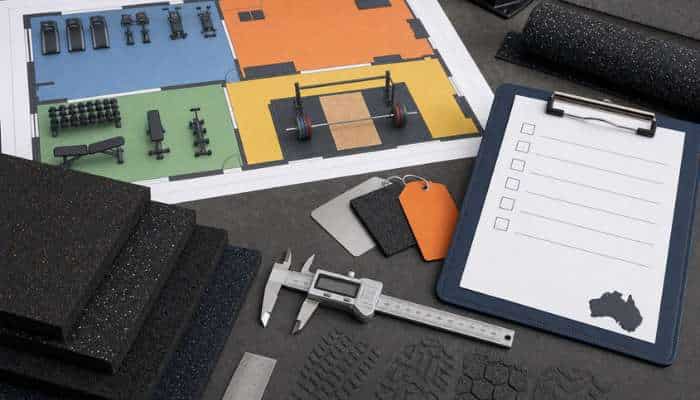
Once you know your zones, compliance needs, and cleaning plan, comparing products gets much simpler. Use a specification checklist rather than headline pricing, since discounts and bulk pack deals vary by supplier and may not suit every fit-out.
- Tile size (1×1 m is common) and thickness per zone.
- Tile weight, which affects loose-lay stability.
- Slip and fire test documentation to AS 4586 and AS ISO 9239.1.
- Warranty terms and availability of bulk packs.
If you are comparing interlocking tiles, composite-top options, and bulk packs for an Australian studio, review the best rubber gym flooring in Australia options to see 1×1 m, 15 mm tiles and composite variants. Kinta’s product details can help you cross-check thickness, tile weight, slip data, and fire test reports against your building’s needs, but treat product documentation as a starting point for your certifier’s review.
