


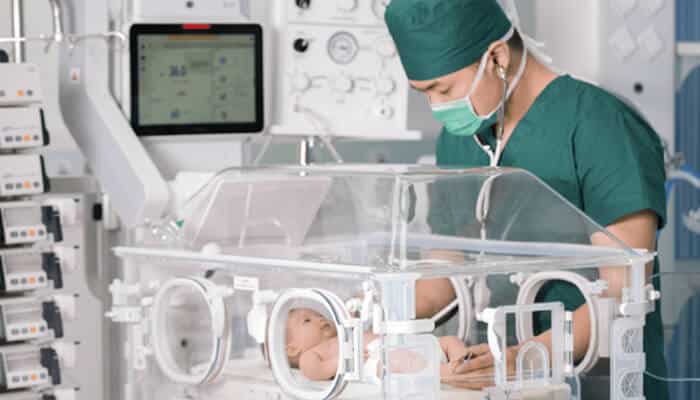

Premature and critically ill newborns face three challenges: infection control, thermoregulation challenge, and developmental stress. A baby incubators is designed to stabilize these risks by providing a controlledenvironment. It is the primary protective system during the first days or weeks of life.
The demand for reliable hospital incubators is increasing. Take the US as an example, according to the 2025 March of Dimes Report, about 380,000 babies were born preterm in 2024 (1 in 10 births).[1] Many of these infants require specialized thermal and infection-protected environments immediately after birth.
So what should hospitals consider when ordering a baby incubator?
What is an Infant Incubator?
An infant incubatoris a medical device designed to create a controlled, protective microenvironment for premature infants and vulnerable newborns.
By offering precise control over temperature, humidity, and oxygen concentration, etc., this vital equipment supports underdeveloped bodies, shields fragile neonates from environmental pathogens, and manages sound and light exposure to foster healthy neurodevelopment.
To meet varying clinical requirements, manufacturers engineer these neonatal incubators into three primary configurations:
1. Open Box Incubator
Commonly known as a radiant warmer, it utilizes an overhead heating element to deliver a stable thermal environment. It allows medical staff direct access to the infant for emergency resuscitation, surgical interventions, and intensive procedures in delivery rooms or acute NICU areas.
2. Closed Box Incubator
A closed system is the standard incubator in hospital NICU environments. It provides a sealed chamber with controlled airflow, temperature, and humidity. This type significantly reduces infection exposure and improves thermoregulation stability.
3. Portable Incubator
Engineered for intra-hospital or inter-hospital transport, a portable incubator for baby care features a compact, rugged design with four wheels.
How to Buy Baby Incubators for Your Hospital?
If you are searching for high-performance infant incubators, it’s crucial to consider the following:
1. Closed Incubator Design
A closed incubator structure is now standard in NICU environments.
- For infection control, the enclosed chamber limits exposure to airborne contaminants, which is crucial for premature infants with underdeveloped immune systems.
- A closed structure also maintains a more stable internal temperature and humidity level with reducedexternal airflow interference.
- An enclosed, quieter environment reduces sensory stimulation, helping lower developmental stress for newborns sensitive to light, sound, and frequent disturbances.
However, this closed design needs a lifting canopythat allows for an instant transition from incubator mode to radiant warmer mode, facilitating clinical access.
2. Ease of Disinfectingand Cleaning
Healthcare-associated infections remain a major risk factor in neonatal intensive care units, especially among low birth weight infants.
For this reason, a neonatal incubator should be designed for efficient and thorough cleaning.
Smooth internal surfaces, detachable components, and minimal structural gaps help reduce bacterial accumulation. Materials must also tolerate repeated chemical disinfection without degrading over time.
3. Temperature Control
Premature infants lose body heat rapidly because of immature skin barriers, low fat storage, and limited metabolic regulation. That is why temperature regulation is one of the core functions of a modern incubator for premature babies.
Hospitals should prioritize rapid warmth startup, real-time servo temperature control, and multi-temp sensors monitoring for fast response adjustment. This creates a stable and even thermal environment.
4. Humidity Control
Humidity control works closely with temperature regulation.Newborns with underdeveloped skin experience high transepidermal water loss, which can quickly lead to dehydration and heat instability.
Therefore, the infant incubator should be equipped with a humidity generator to support rapid humidification inside the chamber, achieving effective humidity levels of over 95%, which can meet the needs of even lowbirthweight infants.
5. Noise and Vibration Isolation
Ventilators, staff activity, and equipment movement continuously expose infants to sensory stimulation. Excessive noise can affect neonatal sleep quality, heart rate stability, and neurological development.
For this reason, hospitals should evaluate how well a hospital incubator minimizes internal noise and vibration.
Look for models equipped with motorized, touchless electronic adjustments or advanced mute damping doors that drop down quietly without harsh mechanical latches.
6. Light Regulation
Bright lighting in NICUs may interfere with infant sleep cycles and increase stress responses. Therefore, the incubator foryour hospital settings should include adjustable lighting features or shielding systems.
A mood light helps simulate a more natural environment and supports developmental care.
7. Safety Alarms and Monitoring Systems
What alarms and monitoring functions you will need are temperature deviations, humidity abnormalities, power interruptions, and fan failures.
Some advanced systems also integrate:
- ExNeo® ECG technology
- Adap-DSP® self-adapt NIBP technology
- Masimo SpO2
- Apnea self-rescue technology
- Oxygen concentration detection function
These reliable alarm and monitoring systems support fast clinical response.
8. Ease of Operation
User-friendly interfaces and easy of operation are also essential factors during infant incubator procurement. They alleviate nursing workloads.
High-resolution LED touchscreens (such as 12 inches or larger) that slide, tilt, and adjust easily allow seamless data visualization. Features like motorized bed lifting systems controlled by foot pedals and automated one-button electronic mattress tilting streamline workflows, allowing nursing staff to focus on baby care.
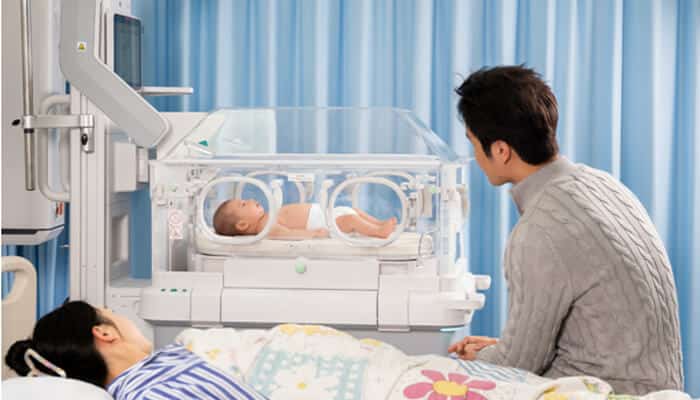
Get High-Quality Hospital Incubators
Comen offers advanced neonatal incubatorsfor hospitals looking to enhance their care forpremature and critically ill newborns!
- B8/B6Neonatal Incubator:Integrates advanced neonatal monitoring, including ExNeo® ECG technology, Adap-DSP® self-adapt NIBP technology, Masimo SpO2, Apnea self-rescue technology, and oxygen concentration detection function. The symmetrical dual air circulation system and a variable heating tube ensure a highly stable environment. A 12.1 inches LED touchscreen simplifies operation.
- B103-in-1 Trinity Incubator:Amulti-function neonatal system combining incubator, radiant warmer, and transport functions. It supports precise servo temperature control, high-efficiency humidity regulation, and noise-reduction design, while also adding neurodevelopmental support such as mood light and sound management, helping reduce developmental stress in NICU environments.
Comen incubator for premature babies are designed to address infection control, thermoregulation challenge, and developmental stress at the same time.
Contact Comen now if you have any needs!
References
[1] US Earns D+ for Fourth Year in March of Dimes 2025 Report Card. Available at: https://www.marchofdimes.org/about/news/us-earns-d-fourth-year-march-dimes-2025-report-card (Accessed: 20 May 2026)
