


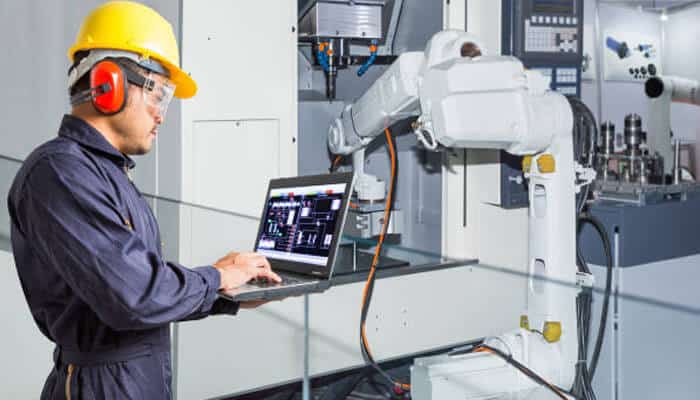

Industrial manufacturing operates on a razor-thin edge of efficiency and productivity, where Industrial Equipment Failures can quickly disrupt operations. When production lines suddenly halt, the impact cascades rapidly through the entire supply chain. Missed shipments, idle labour, and ruined in-process materials create significant challenges for any modern facility. Official economic research on manufacturing efficiency highlights that the US discrete manufacturing sector experiences substantial losses due to preventable maintenance issues, with machinery downtime identified as a major contributing factor. The same research also indicates that adopting predictive maintenance can significantly improve operational performance and reduce the impact of unexpected equipment failures.
Transitioning from Reactive to Predictive Maintenance
Historically, many plant operators relied on time-based maintenance schedules or simply ran machinery until it failed. In modern continuous-duty manufacturing environments, this reactive approach is no longer financially viable. Facility managers quickly realise that modern heavy infrastructure requires proactive, continuous monitoring to prevent severe operational failures. High-stakes industrial facilities simply cannot afford the cascading effects of unexpected outages. Predictive maintenance programmes completely change this dynamic by addressing problems at the microscopic level. By detecting tiny structural flaws before they cause catastrophic mechanical failure, businesses can avoid unplanned shutdowns entirely. In fact, research indicates that adopting predictive testing protocols can cut unexpected machinery downtime by up to 50 percent compared to traditional run-to-failure schedules.
Evaluating Assets Without Halting Production

One of the biggest hurdles in industrial maintenance has always been the physical inspection process itself. In the past, assessing the structural integrity of a pipeline or pressure vessel meant draining hazardous fluids, erecting dangerous scaffolding, and halting active production lines. Today, next-generation non-destructive evaluation methods allow engineers to examine internal materials while the machinery continues to operate normally. A prime example of this critical methodology is Ultrasonic Testing, an approach that currently dominates the global diagnostic industry by using high-frequency sound waves to measure material thickness and locate hidden flaws. Technicians routinely apply these sound wave diagnostics to actively operating piping systems carrying high-temperature fluids. This modern approach completely bypasses the massive financial drain of a total operational shutdown while keeping personnel safe.
Key Innovations Transforming Industrial Reliability
The global non-destructive testing market reached an estimated valuation of over 24 billion dollars in 2026. This rapid market growth is driven by several advanced engineering technologies that integrate seamlessly into modern smart factories. The most impactful technological advancements currently deployed include:
- Phased Array Systems: These advanced devices utilise multiple sound wave elements and real-time beam steering. This creates highly detailed, cross-sectional internal images of complex machinery parts and structural welds without ever dismantling the equipment.
- Automated Magnetic Crawlers: Remote-controlled, battery-operated bots can scale hazardous environments to map pipe corrosion and measure material thickness. This completely eliminates the need for human scaffolding or production halts in dangerous zones.
- The Total Focusing Method (TFM): This technique represents a major technological leap for industrial diagnostics. It utilises full matrix capture to dynamically focus on every microscopic point within an inspection zone for unprecedented structural flaw detection.
- Artificial Intelligence Integration: AI is increasingly integrated into diagnostic platforms to automate defect recognition. This drastically reduces data processing times and significantly minimises the risk of human error during critical integrity evaluations.
- Continuous Cloud Monitoring: Permanently installed structural health sensors now feed live acoustic emission data directly into cloud-based dashboards. This setup allows maintenance and engineering teams to track asset health in real time from anywhere in the world.
Aligning with Environmental and Safety Standards
Beyond direct financial savings, predictive maintenance technologies offer substantial environmental benefits. Industrial facilities that operate efficiently consume significantly less energy and produce fewer carbon emissions. By eliminating catastrophic mechanical breakdowns, companies also avoid the hazardous spills and environmental contamination often associated with sudden pipeline or vessel ruptures. This proactive stance aligns perfectly with modern corporate social responsibility goals, allowing businesses to meet strict environmental regulations while safeguarding their public reputation.
The Future of Industrial Asset Management
Major safety organisations across the globe, including aviation and nuclear regulatory agencies, are actively tightening their material compliance rules. Regulatory bodies are legally cementing non-destructive evaluations as a mandatory operational baseline rather than discretionary spending. For example, recent updates to the American Society of Mechanical Engineers codes now mandate more frequent and comprehensive examinations for critical industrial assets like high-pressure vessels. For industrial business leaders seeking reliable manufacturing equipment solutions, this regulatory shift presents an excellent opportunity to refine their overall operational strategies.
Ultimately, the shift toward next-generation engineering technologies proves that industrial maintenance is no longer just a necessary overhead cost. Integrating AI-driven diagnostics and predictive maintenance strategies into manufacturing environments can reduce overall maintenance costs by up to 30 percent. By leveraging smart diagnostic tools, continuous cloud monitoring, and high-tech asset evaluation, modern manufacturers can ensure non-stop operations, protect their workforces, and secure long-term business profitability.
