


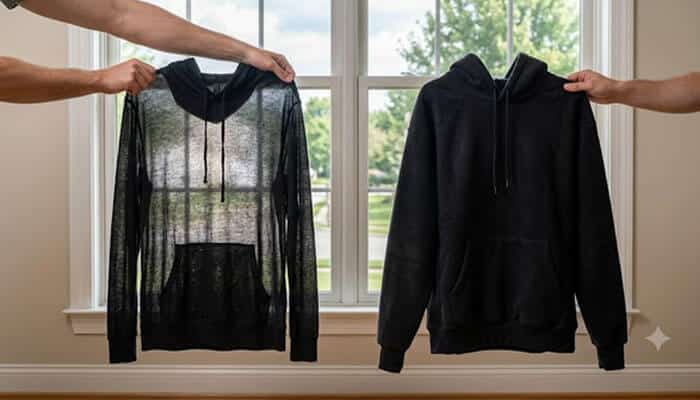

Almost every clothing brand calls its pieces “premium” and “heavyweight” now. The words have been used so often that they’ve stopped meaning anything, which is exactly the problem. Two hoodies can carry identical descriptions and feel like completely different products in your hands, and you only find that out after paying. A genuinely dense cole buxton hoodie and a thin one dressed up in the same marketing language look identical on a screen. So the skill worth building isn’t reading descriptions better, it’s testing the claims yourself. Once you know what to check, you stop overpaying for words and start paying for fabric. Let’s break down exactly how to do that.
Why “Premium” Stopped Meaning Anything
Words like premium, heavyweight, and quality have no legal definition in clothing, which means any brand can use them about anything. There’s no standard a piece must meet before it earns those labels, so they get slapped onto 240 GSM blanks as freely as onto genuinely dense fleece. That’s not fraud, exactly. It’s just marketing filling a gap where regulation doesn’t exist. The result lands on you, though. You’re reading language designed to convert rather than inform, and the two purposes pull in opposite directions. A description wants you to click buy, not to accurately predict how the fabric will feel or how long it’ll last. So the more polished the copy, the less you should trust it on its own. What actually matters sits underneath the adjectives, in numbers and construction details that most listings either bury or skip entirely. My honest opinion? The brands worth trusting are the ones that give you specifics instead of adjectives, because a number can be checked and an adjective can’t. When a listing tells you the exact fabric weight, the fiber breakdown, and the measurements, it’s handing you tools to judge for yourself. When it just says “luxuriously soft premium heavyweight cotton,” it’s hoping you won’t ask. Learn to notice which kind of listing you’re reading, and half the work is already done before you touch a single test.
The One Number That Cuts Through Everything
If you learn to check one thing, make it GSM, which stands for grams per square meter. It’s the single most honest measure of fabric density, and it’s a number, so it can’t be spun. Higher GSM means denser, heavier fabric packed with more fiber. A thin tee sits around 140 GSM and feels papery. A solid one hits 200 or above and feels substantial in your hand. Hoodies work the same way, where anything under 300 GSM tends to feel flimsy while 350 to 500 GSM gives you that structured drape that actually looks good and lasts. So when a listing publishes its GSM, you can judge the piece before it arrives. When it doesn’t, that silence tells you something too, because brands proud of their fabric weight usually advertise it. The reason GSM matters so much is physical rather than aesthetic. Weight comes from longer, denser fibers packed tightly, and those long fibers stay anchored in the weave under stress rather than working loose and pilling. So a 400 GSM fleece and a 250 GSM one aren’t just different on day one, they’re on completely different aging paths from the first wash. The heavy one softens over years. The light one degrades within months. That’s why GSM predicts not just how a piece feels now but how it’ll look after fifty wears, which is the thing you actually care about and the thing no adjective will ever tell you.
How to Test a Claim Step by Step
You can verify most fabric claims in about two minutes, whether you’re in a store or judging from photos. Work through this sequence in order:
- Check the listed GSM first, treating anything under 350 for fleece or 200 for tees as an immediate red flag
- Read the fiber content, looking for high cotton percentages rather than mostly polyester blends
- Hold the piece up to a light source and watch how much passes through the fabric
- Stretch a cuff outward an inch and release, checking whether the ribbing snaps back or hesitates
- Turn it inside out and inspect the seams, especially where the sleeve joins the body
The light test in step three is the one that exposes everything, and it’s my favorite because it can’t be faked. Genuine heavyweight fleece blocks light almost completely, staying solid and dark when held against a window. A thin blank glows through visibly at the shoulders and chest, no matter how confident the description was. It takes two seconds and no product photo will ever show it to you, which is exactly why brands relying on thin fabric never include it. When shopping online, ask the seller for a photo held against a window, and pay attention to whether they’ll send one. Refusal is an answer. Run this whole sequence and you’ll separate real claims from marketing faster than any amount of description-reading ever could.
The Tricks Brands Use to Sound Better Than They Are
Once you know what to look for, the sleight of hand becomes obvious, and it repeats across the whole industry. The most common trick is stacking adjectives to fill the space where a number should be. A listing that says “ultra-premium luxury heavyweight brushed cotton” and never mentions GSM is hiding behind words, because five adjectives can’t substitute for one honest figure. Another trick is quoting fiber content selectively, saying “100% cotton” while staying silent on weight, since a thin piece can be pure cotton and still fall apart fast. Cotton content is good, but it’s only half the story without density. Some brands lean hard on the word “oversized” to distract from thin fabric, hoping the roomy cut reads as substantial when the fabric itself is flimsy. Volume isn’t weight. A big thin hoodie is still a thin hoodie. Photography does a lot of quiet work too, since flattering studio light hides the way cheap fabric clings and drapes limply, which is why real customer photos and light tests matter so much more than the styled shots. Price is the sneakiest signal of all, because people assume expensive means dense, and brands exploit that assumption constantly. Here’s the honest truth: a high price tells you about demand and hype, not about fabric weight, and expensive pieces fail the light test regularly while modest ones pass. So test the garment, never the tag. One honest limitation worth stating: even a perfect GSM number can’t fully capture how a fabric feels, since two pieces at identical weight can differ in softness and hand depending on the yarn and finishing. Weight is the best single predictor, not a complete one.
What Genuine Quality Actually Includes

Real quality is a bundle of specific traits, not a single number, and knowing the full list protects you:
- Fabric weight above 350 GSM for fleece, the foundation that everything else builds on
- High cotton content, since natural fibers soften and age better than mostly synthetic blends
- Firm ribbing at cuffs and hem that snaps back instantly when stretched and released
- Reinforced or doubled stitching at the shoulders and cuffs, where garments take the most stress
- A garment-washed finish, meaning the piece is washed before shipping so shrinkage already happened
That last point separates careful makers from careless ones. A garment-washed piece has already been through its shrinkage before it reaches you, so the softness is there on day one and the fit won’t change dramatically after your first wash. Cheaper operations skip that step to save time, and you pay for it with a piece that shrinks unpredictably. Ribbing deserves the cuff test every single time, since slack ribbing on day one becomes a floppy, finished-looking cuff within six months. Stitching tells the durability half of the story, because a single row of loose thread where the sleeve meets the body will fail under years of arm movement no matter how nice the fabric is. A brand like hellstar that leans into heavyweight cotton and structured construction is competing on exactly these traits rather than on adjectives, which is what you want to see. Check all five and you’ve judged the whole garment, not just one flattering angle of it.
Where Testing Matters Most
Some categories reward this scrutiny far more than others, so aim your attention where it pays off. Hoodies and sweatshirts top the list, since fleece is where the biggest weight differences hide and where thin fabric disappoints fastest. A hoodie is a piece you’ll wear constantly through cold months, so its fabric weight affects you more than almost anything else you own. Tees come next, because a thin tee goes transparent and shapeless within a season while a heavy one develops a soft, lasting hand. Tracksuits deserve testing too, since a matching set in thin fabric pills and sags in a way that ruins the coordinated look you paid for. Denim and outerwear matter less for the light test but more for construction, where the seams and hardware carry the durability. Here’s the hands-on detail I’ve learned from years of handling pieces: the underarm and inner-elbow areas reveal thin fabric first, because that’s where friction and stretch concentrate, so check there before anywhere else when you’re judging weight. My preference is testing fleece almost obsessively and relaxing a little on structured pieces, because fleece is where the money gets wasted most often and where the marketing language runs thickest.
Making It a Habit
The whole point is that this stops being effort once it’s routine. At first you’ll consciously run through GSM, fiber, light, ribbing, and seams every time you shop. Within a few weeks it collapses into a quick scan you do without thinking. That habit is what protects your money over years, not any single smart purchase. So build the checks into how you browse. Before reading a single adjective, scroll for the GSM number, and if it isn’t there, treat the listing with suspicion from the start. Ask sellers direct questions and judge them by whether they answer with specifics or deflect with more marketing. Keep a light test in mind for anything fleece, in person or by requesting a photo. Slow down, too, since the whole online system is built to rush you past exactly these questions with countdown timers and low-stock warnings. Putting a day between wanting a piece and buying it gives you time to actually check the claims rather than trusting them. Do this consistently and you’ll stop being the person who overpaid for a thin hoodie with great copy, and start being the person who quietly buys pieces that last. The words on the listing were never the product. The fabric is, and now you know how to read it.
Final Words
“Heavyweight” and “premium” are just words until you test them, and testing is faster than most people expect. Check the GSM first, read the fiber content, hold the piece to a light, and stretch the cuffs. Ignore the adjectives and the price, since neither predicts fabric weight, and trust the number and the light test instead. Aim your scrutiny at fleece, where the differences hide and the money gets wasted. Build these checks into a two-minute habit and you’ll never again pay premium money for a thin piece dressed up in good marketing. The claim is easy to make. Now you know how to make brands prove it.
FAQs BLOCK
Q: What GSM counts as genuinely heavyweight?
A: For fleece, 350 GSM and above, ideally closer to 400. For tees, 200 GSM or higher. Below those, the fabric drapes poorly and wears out fast, regardless of what the description calls it.
Q: How do I test fabric weight without buying first?
A: Ask the seller for a photo of the piece held against a window. Heavyweight fleece blocks the light; thin fabric glows through at the shoulders. Also look for a published GSM number rather than adjectives.
