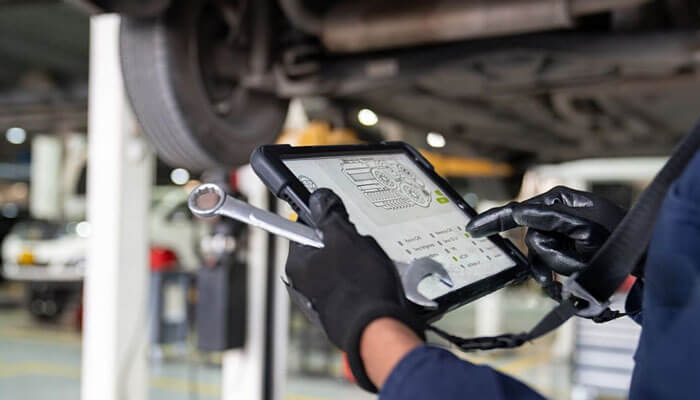
Paper has had its day in the auto repair shop. For decades, clipboards, carbon copies, and handwritten tickets were the heartbeat of daily operations. Mechanics scribbled notes in the margins. Advisors shuffled stacks of forms between desks. Customers signed off on estimates that sometimes got lost before the job even began.
It worked, until it didn’t.
In today’s fast-paced industry, paper is slowing businesses down. Smudged notes, missing forms, and delays in approvals don’t just look unprofessional. They cost real money. A single misplaced ticket can snowball into hours of wasted labor, frustrated technicians waiting on information, and customers questioning your shop’s reliability.
Meanwhile, costs are climbing, margins are tight, and customers expect faster turnarounds than ever. Shops running on paper are fighting uphill battles against inefficiency they can’t always see.
This is why digital work orders aren’t just a nice upgrade; they’re a complete shift in how auto repair gets done. They trade confusion for clarity, delays for speed, and blind spots for full control.
For shop owners competing in an era where every dollar and every customer counts, going digital isn’t just a smart move. It’s survival.
Why Does Paper Slow You Down?
Paperwork orders aren’t just old-fashioned. They’re costly.
Every handwritten form creates room for errors, such as:
- Wrong VINs
- Unreadable notes
- Misplaced approvals
One lost ticket can mean hours of wasted labor, delays in billing, and frustrated customers asking, Why is my car still here?
Paper also makes it harder to track technician productivity. You don’t know exactly
- How long a job took
- What slowed things down
- Where bottlenecks are forming
Without that visibility, small inefficiencies pile up until they eat into margins.
Digital Work Orders: A Smarter Alternative

Digital work orders cut through the noise. They provide real-time updates, standardize documentation, and eliminate any guesswork. Instead of chasing missing papers, shop owners get instant access to job status, technician notes, and part details, all stored securely in the cloud.
For technicians, it means fewer interruptions. For managers, it means accurate records. And for customers, it means transparency at every step.
This is where auto repair work order software proves its value. With built-in features like:
- Digital signatures
- Parts tracking
- Automatic time stamps
Shops can keep operations running smoothly without worrying about human error. Instead of juggling piles of paperwork, owners can focus on maintaining bays full and ensuring customer satisfaction.
How Shops Are Benefiting in the Long Run?
Early adopters are already seeing results. Shops that switched to digital report:
-
Faster Turnaround Times
Because approvals, estimates, and updates happen instantly.
-
Higher Accuracy
Fewer errors on labor hours and invoices.
-
Improved Technician Morale
Less time wasted on paperwork means more time doing actual repair work.
-
Stronger Customer Trust
Clients can see clear, detailed updates instead of vague explanations.
The productivity boost alone often offsets the cost of implementation within months.
Common Myths About Going Digital
Some owners hesitate, thinking, My team won’t adapt, or It’ll be too complicated. The truth is, modern platforms are built with simplicity in mind. If your staff can use a smartphone, they can use digital work orders.
Another myth? “Paper is cheaper.” On the surface, maybe. But when you factor in errors, delays, and inefficiencies, paper costs more than any software subscription ever will.
Paper vs. Digital: A Quick Look
Here is a quick look at the main differences between paper and digital work orders.
| Paper Work Order | Digital Work Orders |
| Easily lost or damaged | Securely stored and backed up |
| Handwriting errors, smudges | Standardized digital entries |
| Delays in approvals | Instant e-signatures and updates |
| Hard to track technician time | Automatic time-stamping |
| Slows customer communication | Real-time status sharing |
The difference is clear: paper creates problems, digital solves them.
The Bigger Picture: Data-Driven Decisions
Digital work orders don’t just replace paper; they unlock insights.
With the right system, you can track repair trends, technician efficiency, and parts usage over time. This data gives you the power to forecast labor needs, spot recurring issues, and price services more accurately.
It’s no longer about Did the job get done? But rather, how efficiently did it get done, and what can we learn from it?
The Competitive Edge
Customers have more choices than ever. If one shop leaves them waiting, they’ll move on.
Digital work orders help you stay ahead by delivering speed and transparency.
You’re not just fixing cars. You’re providing a modern customer experience. And that’s what sets successful shops apart today.
Final Thoughts: The Shift is Here
Auto repair is evolving, and the winners are those who embrace change. Digital work orders are more than a tool—they’re a new standard of doing business. They bring accuracy, speed, and customer trust together in one platform.
If your shop is still running on paper, the question isn’t Should I switch? How much is staying the same already costing me?
The future belongs to shops that move from paper to productivity. Will yours be one of them?