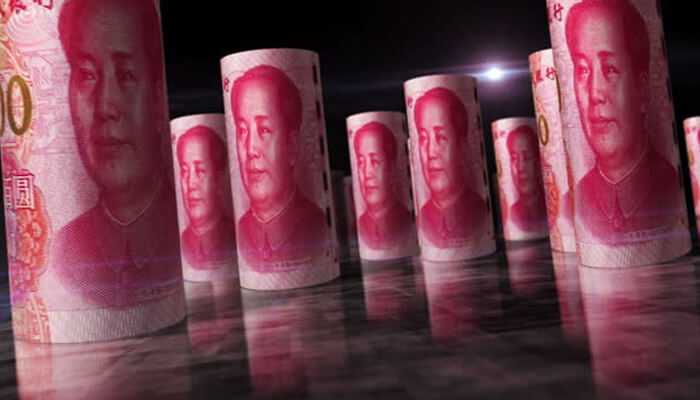
There is currently widespread concern that China’s economy is in worse health than previously assumed. Key figures on Chinese manufacturing, retail sales, and investment have all recently come in lower than expected. The country is not recovering as quickly as expected under rigorous zero-COVID measures. And it’s all tied up in a mountain of China’s Debt that local governments are facing.
China historically relied on local government spending to boost the economy, but that strategy is fading.
Analysts say China is taking drastic steps to address local government debt risks, but systemic risks in the state-dominated financial system remain.
Analysts have cautioned that the costs might be enormous if Beijing does not act quickly to settle the real estate market problem, which has implications for local governments and has already put the banking system under pressure.
Chinese policymakers should limit financial sector spillovers to avoid systemic risk from a real estate bubble, says Alicia Garcia-Herrero.
“The price will be higher the longer they wait to do so.”
Beijing urged for a quick “comprehensive solution” for local government debt.
According to Wang Tao of UBS, delayed or ineffective policy support to the economy poses risks.
Wang cited the issue of how to deal with local governments’ wasteful expenditures when they already make up 90% of China’s fiscal resources.
The government should guide the economy away from property-led growth and toward a sustainable model, said Wang recently. These structural challenges include an ageing population and limitations on access to advanced technology from abroad.
“The internal deliberation may require time and cause delays in delivering efficient policy responses,” the statement reads.
China’s central bank might create an emergency liquidity tool to provide low-cost, longer-term funding to local government financial vehicles (LGFVs).
Since the global financial crisis in 2008, LGFVs—hybrid companies that are both public and private—have multiplied to get around constraints on local government borrowing.
Local governments struggle to repay LGFV China’s Debt due to weak real estate market affecting land sale income. Despite this, many have continued to borrow money to pay for expensive infrastructure projects to spur growth.
The proposal is “very early and a small step,” according to Logan Wright of Rhodium Group.
Still, he said, this strategy would raise market risks for underfunded provinces or regions.
According to the US-based Rhodium Group, as of July, LGFV loans made up 20 to 25% of all bank loans in China, while LGFV bonds made up 51% of all business bonds and LGFV credit accounted for roughly 13% of all financial assets across the system.
Domestic investors own the majority of China’s local government debt, and the banking industry is thought to have a sizable exposure to LGFVs.
According to Rhodium Group, all debt resolutions will cause China’s banking and nonbank institutions to bear most of the losses.
Global payments generated 2.5 trillion dollars in revenue from roughly 3.6 trillion transactions in 2024, and McKinsey expects that figure…
Many businesses still rely on assumptions when making decisions about marketing, websites, or customer experiences. While intuition has value, relying…
In the hot and dusty climate of Arizona, maintaining outdoor surfaces can be a challenge, especially artificial lawns that are…
As businesses continue to accelerate digital transformation, the demand for DevOps professionals keeps growing. Organizations are looking for engineers who…
Gel manicures are popular because they provide a long-lasting, chip-resistant finish that can keep nails looking polished for weeks. However,…
There is absolutely no denying the fact that building a new home is one of the most exciting investments that…