As the education landscape evolves in response to digital transformation, technology has become the catalyst for building more effective, adaptive, and equitable learning models. By 2026, educational institutions will no longer simply adopt digital tools—they are re-engineering the entire learning ecosystem to better support students, educators, and outcomes through innovation.
This article explores how technology is directly enhancing learning models and why these developments matter for the future of education.
Transforming Learning Models Through Technology in 2026
Replacing Static Testing with Dynamic Assessments
One of the most significant shifts is the move from traditional exams to intelligent, technology-driven assessments. Rigid testing models offer limited insight into student understanding and are often divorced from real-world application. In contrast, digital assessments enable real-time feedback, flexible delivery, and nuanced data analysis that shape future instruction.
For example, institutions are increasingly adopting online assessment solutions that provide greater accessibility, faster grading, and built-in academic integrity features. These systems allow educators to analyse performance trends and adjust teaching approaches quickly, making assessment an integral part of learning, not a standalone endpoint.
Driving Personalised Learning at Scale
Technology is also reshaping learning models by enabling personalisation at scale. Instead of delivering the same content to all students, platforms in 2026 adapt based on individual performance, pace, and preferences. These adaptive learning systems rely on algorithms to curate content pathways that meet each learner’s unique needs.
This tailored approach increases engagement, reduces frustration, and promotes mastery. Students who struggle receive targeted support, while those who excel move ahead—creating a more inclusive and efficient model. Such personalisation would be unfeasible in traditional settings without digital infrastructure.
Enhancing Teacher Insight Through Data in Learning Models
In 2026, better learning models depend not only on how students learn, but also on how educators teach. Technology is equipping teachers with deeper visibility into student progress through learning analytics dashboards. These tools consolidate data across activities, assessments, and interactions to offer actionable insights.
With this information, educators can identify at-risk students earlier, adjust lesson strategies, and provide informed feedback. Far from replacing teachers, these tools empower them to make more precise, evidence-based decisions that improve student outcomes.
Promoting Continuous Learning Through Modular Learning Models
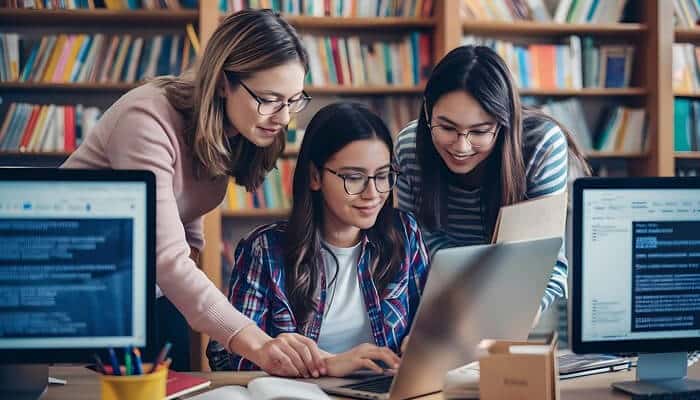
Education is no longer limited to set curricula or physical classrooms. Technology is supporting modular, flexible learning pathways that align with individual goals and evolving career demands. Whether through micro-credentials, online courses, or self-paced modules, students in 2026 have the tools to learn continuously—on their terms.
These modular learning models are particularly valuable for lifelong learners and professionals seeking to upskill. Institutions are adopting competency-based education frameworks, where progress is measured by demonstrated mastery rather than time spent in class, enabling a more outcome-focused approach.
Building More Inclusive and Accessible Classrooms
Better learning models also prioritise inclusion and accessibility, and technology plays a pivotal role. Tools such as text-to-speech software, real-time translation, and screen readers ensure students with disabilities or language barriers have equal access to content.
Moreover, cloud-based platforms eliminate geographical and socio-economic limitations, allowing students from diverse backgrounds to engage in high-quality education. This democratisation of access is essential in building a more equitable global education model.
Strengthening Academic Integrity in the Digital Age
As digital learning grows, so too does the importance of trust in the assessment process. By 2026, institutions will be deploying advanced tools like AI-based proctoring, biometric authentication, and plagiarism detection to uphold academic standards.
These solutions integrate seamlessly into learning environments without disrupting the student experience. They ensure fairness while maintaining the credibility of digital credentials—a crucial factor for institutional reputation and student confidence.
Fostering Real-World Skills Through Simulation and Immersion
Beyond theoretical knowledge, better learning models also cultivate real-world skills. Technologies such as virtual reality (VR) and augmented reality (AR) are increasingly being used to simulate complex environments—from engineering labs to historical settings—where students can apply learning in context. These immersive experiences not only help bridge the gap between classroom learning and real-life application but also enhance visualization, engagement, and comprehension in ways that traditional instructional methods cannot. Research shows that AR/VR technologies have significant potential to improve learning experiences and promote deeper engagement by creating immersive environments that support interactive and experiential learning.
Such immersive simulations foster critical thinking, collaboration, and practical problem-solving—competencies that are increasingly essential in the modern workforce. The ability to practice skills in realistic, yet controlled settings helps learners build confidence and competence before encountering real-world challenges.
Turning Technological Advances into Tangible Progress
The learning models of 2026 are not just digital versions of old systems—they are fundamentally different in design, intent, and impact. By replacing outdated testing methods, personalising content, empowering teachers, and fostering lifelong skills, technology is reshaping education into something more dynamic, inclusive, and effective.
As institutions look to the future, those who embrace these tools strategically will be best positioned to meet the changing needs of learners and society.