



Green Mountain National Forest is one of Vermont’s most rewarding destinations for hiking, camping, mountain scenery, waterfalls, ponds, fall foliage and backcountry travel. Spread across more than 400,000 acres of central and southwestern Vermont, the forest combines developed recreation areas with rugged mountain terrain and federally protected wilderness.
Visitors to Green Mountain National Forest can hike to Lye Brook Falls, climb Bromley Mountain, follow sections of the Long Trail and Appalachian Trail, camp near Silver Lake, paddle at Grout Pond or explore quiet Forest Service roads away from Vermont’s busier tourist centers.
The variety is one of the biggest reasons to visit. A single Green Mountain National Forest trip can include easy family walks, demanding summit hikes, drive-in camping, primitive backpacking, fishing, paddling and scenic fall drives.
This 2026 guide covers the best Green Mountain National Forest hikes, campgrounds, dispersed camping rules, RV options, wilderness areas, fall foliage, pets, bear safety, maps, seasonal conditions and current visitor information.
Quick Answer: Green Mountain National Forest
Green Mountain National Forest is best for visitors looking for hiking, camping, waterfalls, mountain views, fall foliage, backpacking, paddling and quieter outdoor recreation in Vermont.
Popular hikes include Lye Brook Falls, Bromley Mountain, Deer Leap, Mount Abraham, Killington Peak, Little Rock Pond and the Robert Frost Interpretive Trail.
For camping in Green Mountain National Forest, visitors can choose Silver Lake, Hapgood Pond, Moosalamoo, Chittenden Brook, Greendale and Grout Pond, as well as permitted dispersed camping locations.
For most travelers, late May through October provides the widest selection of hiking and camping opportunities.
Key Takeaways
- Green Mountain National Forest covers more than 400,000 acres in Vermont.
- Eight federally designated wilderness areas lie within the forest.
- Sections of the Appalachian Trail and Vermont’s Long Trail cross National Forest land.
- Hiking ranges from short family walks to difficult 4,000-foot summit routes.
- Developed, hike-in and dispersed camping are available.
- Bear-safe storage of food and scented items is required.
- Several campgrounds accommodate smaller RVs, but full hookups are uncommon.
- Cell service may be weak or unavailable in remote parts of the forest.
- Late September into October is a popular period for fall foliage.
- Visitors should verify current trail, campground and road conditions before traveling.
Green Mountain National Forest at a Glance
| Feature | Details |
| Location | Central and southwestern Vermont |
| Size | More than 400,000 acres |
| Best known for | Hiking, camping, mountains, ponds and fall foliage |
| Major trails | Long Trail and Appalachian Trail |
| Wilderness areas | 8 |
| Camping | Developed, hike-in and dispersed |
| Best general season | Late May through October |
| Fall foliage | Usually late September into October |
| RV camping | Available at selected campgrounds |
| Full hookups | Generally not available |
| Bears | Black bears are present |
| Winter activities | Snowshoeing and skiing |
| Cell coverage | Limited in many remote areas |
For travelers deciding whether Green Mountain National Forest is worth visiting, this combination of mountain terrain, wilderness, campground access and recreation makes it one of Vermont’s most versatile outdoor areas.
Where Is Green Mountain National Forest?
Green Mountain National Forest occupies portions of central and southwestern Vermont rather than forming one single block of protected land.
National Forest parcels are mixed with private property, towns, state lands, highways and local roads. This is different from visiting a compact national park where most travelers enter through one gate.
Popular gateway communities for Green Mountain National Forest include:
- Manchester
- Peru
- Weston
- Killington
- Rochester
- Brandon
- Ripton
- Middlebury
- Lincoln
Because the forest is so widely distributed, it is usually better to choose your trail, campground or recreation area first and then plan your driving route.
Why Visit Green Mountain National Forest?
The biggest strength of Green Mountain National Forest is variety.
Travelers can hike to a waterfall in the morning, climb a summit the following day, paddle across a forest pond and spend the night at a primitive campsite.
Outdoor activities include:
- Hiking
- Backpacking
- Camping
- Fishing
- Paddling
- Swimming
- Mountain biking on designated routes
- Wildlife viewing
- Scenic driving
- Hunting
- Snowshoeing
- Cross-country skiing
This makes Green Mountain National Forest suitable for weekend trips, family vacations, fall foliage road trips and longer backcountry adventures.
Best Hikes in Green Mountain National Forest
The best Green Mountain National Forest hikes range from short forest walks to demanding mountain climbs.
| Hike | Approx. Distance | Difficulty | Best For |
| Robert Frost Interpretive Trail | 1.2 miles | Easy | Families and easy walks |
| Lye Brook Falls | 4.6 miles round trip | Moderate | Waterfalls |
| Deer Leap | 3.5 miles | Moderate | Views and fall foliage |
| Bromley Mountain | 6 miles round trip | Moderate | Summit scenery |
| Little Rock Pond | 4 miles round trip | Moderate | Pond scenery |
| Mount Abraham | 5.2 miles round trip | Difficult | Vermont 4,000-footer |
| Killington Peak via Bucklin Trail | 7.2 miles round trip | Difficult | Summit challenge |
Distances can vary slightly depending on the exact trailhead, route selection, trail changes and GPS measurement.
Lye Brook Falls
Lye Brook Falls is one of the best-known waterfall hikes in Green Mountain National Forest.
The route is approximately 4.6 miles round trip and passes through a wooded landscape before reaching a dramatic series of cascades.
It is a particularly good choice for visitors who want a moderate hike without committing to a difficult all-day summit.
After periods of rainfall, the waterfall can be especially impressive, but rocks around the falls can become extremely slippery.
Stay on established paths and avoid climbing wet rock faces.
Bromley Mountain
Bromley Mountain is one of the most popular moderate summit hikes associated with Green Mountain National Forest.
The approximately six-mile round trip follows part of the Long Trail/Appalachian Trail and reaches the 3,260-foot summit.
The open summit provides broad views across the surrounding Green Mountains.
During autumn, Bromley is especially attractive because large areas of surrounding hardwood forest turn red, yellow and orange.
For travelers looking for a classic Green Mountain National Forest fall foliage hike, Bromley deserves a place near the top of the list.
Deer Leap
Deer Leap near Killington provides a shorter hike with a substantial scenic payoff.
The full route is approximately 3.5 miles but gains more than 1,200 feet, so it is more demanding than the mileage might suggest.
The rocky overlook provides views across Sherburne Pass and the surrounding mountains.
Visitors who want a half-day hike while exploring Green Mountain National Forest may prefer Deer Leap over a longer summit route.
Mount Abraham
Mount Abraham is one of Vermont’s well-known 4,000-foot peaks.
The route from Lincoln Gap covers approximately 5.2 miles round trip and reaches a summit elevation of about 4,006 feet.
The upper trail becomes rocky and includes sections where hikers may need to use their hands.
Mount Abraham is an excellent choice for experienced hikers seeking a more challenging Green Mountain National Forest hiking experience.
The summit area also contains fragile high-elevation vegetation, so visitors should remain on established trail surfaces and exposed rock.
Killington Peak via Bucklin Trail
Killington Peak is one of the toughest popular day hikes in Green Mountain National Forest.
The Bucklin Trail route covers approximately 7.2 miles round trip and gains more than 2,500 feet before reaching the 4,235-foot summit.
The final section is particularly steep and may require scrambling.
Visitors should allow extra time for rocky terrain and changing mountain weather.
For experienced hikers, Killington provides one of the most challenging summit experiences in the forest.
Little Rock Pond
Little Rock Pond offers a quieter Green Mountain National Forest hike for travelers who prefer forest and water scenery over exposed summit views.
The approximately four-mile round trip follows part of the Appalachian Trail/Long Trail to a peaceful mountain pond.
Because the elevation change is more moderate than major summit hikes, this route can work well for intermediate hikers.
Robert Frost Interpretive Trail
The Robert Frost Interpretive Trail provides one of the easiest ways to experience Green Mountain National Forest.
The approximately 1.2-mile route passes through woods and old fields while displaying poetry connected with Robert Frost.
It is particularly suitable for:
- Families
- Casual walkers
- Literary travelers
- Visitors seeking an easier hike
- Travelers combining multiple attractions in one day
This trail helps broaden the appeal of Green Mountain National Forest beyond strenuous mountain recreation.
Long Trail and Appalachian Trail
The Long Trail is one of Vermont’s most important hiking routes and an essential part of the Green Mountain National Forest experience.
The trail extends roughly 272 miles along Vermont’s Green Mountains.
Its southern section overlaps with the Appalachian Trail for approximately 100 miles before the Appalachian Trail turns east toward New Hampshire.
Visitors do not need to complete a thru-hike to enjoy this trail system.
Many popular Green Mountain National Forest hiking routes use portions of the Long Trail or Appalachian Trail to reach summits, ponds, shelters and scenic viewpoints.
Backpackers can also use the network of shelters and campsites located along the trail system.
Important Trail Conditions in 2026
Trail conditions can change quickly because of storms, bridge work, erosion, mud and maintenance.
Visitors planning longer hikes through Green Mountain National Forest should check current Green Mountain Club and Forest Service trail alerts immediately before departure.
This is especially important for backpackers, because a washed-out bridge or closed trail section can significantly change a planned route.
Wilderness Areas in Green Mountain National Forest
There are eight federally designated wilderness areas within Green Mountain National Forest:
- Big Branch Wilderness
- Breadloaf Wilderness
- Bristol Cliffs Wilderness
- George D. Aiken Wilderness
- Glastenbury Wilderness
- Joseph Battell Wilderness
- Lye Brook Wilderness
- Peru Peak Wilderness
These areas offer a more primitive form of recreation than developed campgrounds and heavily visited trailheads.
Anyone exploring Green Mountain National Forest wilderness areas should expect:
- Fewer developed facilities
- Limited signs
- Rougher terrain
- Reduced cell coverage
- Greater responsibility for navigation
- Slower emergency response
Motorized recreation and bicycles are generally prohibited within federally designated wilderness.
For experienced backpackers looking for solitude, the wilderness areas are among the most distinctive parts of Green Mountain National Forest.
Best Camping in Green Mountain National Forest
Camping is one of the major reasons people visit Green Mountain National Forest.
Options range from easy drive-in campgrounds to hike-in tent sites and completely primitive dispersed camping.
| Campground | Camping Style | Best For |
| Silver Lake | Hike/bike-in | Quiet lake camping |
| Hapgood Pond | Drive-in | Families |
| Moosalamoo | Drive-in | Recreation access |
| Chittenden Brook | Drive-in | Small RVs and tents |
| Greendale | Drive-in | Quiet forest camping |
| Grout Pond | Walk-in/drive-in | Paddling and camping |
Camping fees vary depending on the campground and campsite.
Visitors should check Recreation.gov before their trip because fees, availability and seasonal operations can change.
Silver Lake Campground
Silver Lake is one of the most distinctive Green Mountain National Forest camping options.
The campground has 15 sites.
Seven can normally be reserved in advance, while eight operate on a first-come, first-served basis.
There is no direct vehicle access to individual campsites.
Visitors must hike approximately 0.6 mile or bicycle around 1.5 miles while carrying their equipment.
Each site includes:
- Picnic table
- Fire ring
- Bear-resistant food locker
Vault toilets are available.
Water from the campground spring should be treated or boiled before drinking.
Because campers must carry their equipment into the campground, Silver Lake provides a more primitive experience than typical roadside camping.
Hapgood Pond
Hapgood Pond is one of the best family-oriented Green Mountain National Forest campgrounds.
Located east of Manchester, the recreation area combines camping with:
- Swimming
- Canoeing
- Kayaking
- Fishing
- Hiking
- Picnicking
Some campsites are reservable, while others may operate on a first-come basis.
The combination of water recreation and easier campground access makes Hapgood Pond particularly suitable for families and first-time National Forest campers.
Moosalamoo Campground
Moosalamoo Campground provides road-accessible camping within the wider Moosalamoo recreation area.
The campground offers approximately 18 overnight sites and gives visitors access to hiking, mountain biking, fishing and other outdoor activities.
For travelers who want to explore central Green Mountain National Forest, Moosalamoo can make a convenient base.
Chittenden Brook Campground
Chittenden Brook is a smaller campground suited to tents and smaller recreational vehicles.
The campground has approximately 17 overnight sites.
It is a useful option for visitors seeking quieter Green Mountain National Forest camping without the higher activity levels of family recreation areas.
Potable water availability should be checked before departure.
Greendale Campground
Greendale provides a simple wooded campground experience.
The campground has approximately 11 sites and is better suited to travelers who want basic forest camping than visitors seeking extensive amenities.
There are no standard electric, water or sewer hookups at the campsites.
The nearby Greendale Loop also provides a moderate forest hike.
Grout Pond Campground
Grout Pond is one of the best places to combine Green Mountain National Forest camping with paddling.
The area offers both walk-in and drive-in campsites, along with hiking, fishing and non-motorized water recreation.
Important Grout Pond 2026 Update
Visitors planning a late-2026 trip need to check current construction conditions.
The Pond Loop Trail serving walk-in campsites 1 through 11 is scheduled to remain closed from September 16 through late November 2026 while accessibility improvements are completed.
Campsites 1–11 and the lower parking area are affected.
Visitors should verify the latest status before traveling because construction schedules can change.
Can You Disperse Camp in Green Mountain National Forest?
Yes.
Green Mountain National Forest dispersed camping is permitted in many general forest areas outside developed campgrounds unless local rules or closure orders say otherwise.
Dispersed camping typically provides no:
- Toilets
- Drinking water
- Trash collection
- Picnic tables
- Electricity
- Formal campsite services
Visitors should use previously disturbed campsites where possible rather than clearing vegetation to create new sites.
Some recreation areas restrict camping to designated locations, so it is important to check specific rules.
Green Mountain National Forest Dispersed Camping Stay Limit
The general dispersed camping stay limit is important for longer trips.
A campsite may generally be occupied for no more than 14 days.
After that period, campers must move at least three miles.
Camping is also limited to a total of 28 days within a 60-day period under the applicable Forest Service guidance.
Visitors planning extended Green Mountain National Forest camping should still check for local restrictions because individual areas may have stricter rules.
How to Disperse Camp Responsibly
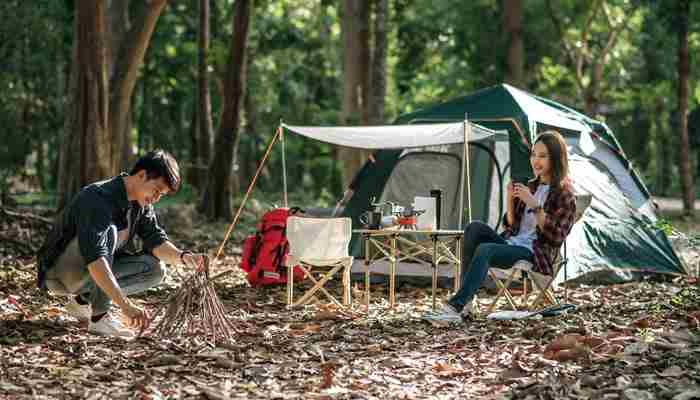
Responsible dispersed camping protects the forest and keeps primitive sites available.
Campers should:
- Use existing disturbed sites where possible.
- Avoid cutting live vegetation.
- Pack out all garbage.
- Treat natural water.
- Keep waste away from streams and ponds.
- Follow current fire restrictions.
- Store food properly.
- Respect private property boundaries.
- Check road closures before driving into remote areas.
A campsite shown on an old map does not guarantee that the access road remains open.
Bear Safety in Green Mountain National Forest
Black bears live throughout Green Mountain National Forest.
Food storage is therefore an essential part of trip planning.
Food, garbage, cookware, toiletries and other scented items should be secured using an approved method.
Possible storage options include:
- Bear-resistant canisters
- Bear boxes
- Locked vehicles
- Properly hung bear bags
Do not store food or scented products inside a tent.
At some developed campgrounds, such as Silver Lake, bear-resistant food lockers are provided.
Following bear rules protects both campers and wildlife.
Do You Need a Permit to Visit Green Mountain National Forest?
There is no single main gate or universal admission ticket for ordinary Green Mountain National Forest visitation.
Most day hikers do not need to purchase a forest-wide entrance pass.
Instead, fees depend on the activity or recreation site.
Developed campgrounds charge their own campsite fees.
Certain organized, commercial or specialized activities may require additional permits or Forest Service authorization.
Visitors should check the exact activity rather than assuming one permit rule applies everywhere.
Should You Reserve Camping?
Reservations are recommended when available, especially during:
- Summer weekends
- Holiday periods
- Peak foliage season
- Larger group trips
- Trips where no backup campground is available
Some Green Mountain National Forest campgrounds also include first-come sites.
Those sites can be useful for flexible travelers, but availability is never guaranteed.
Is Green Mountain National Forest Good for RV Camping?
Yes, but Green Mountain National Forest RV camping is generally better suited to smaller RVs, camper vans and trailers.
Many Forest Service campgrounds do not provide:
- Electrical hookups
- Water hookups
- Sewer connections
- Large paved RV pads
- Full-service dump facilities
Chittenden Brook and selected Grout Pond sites can accommodate smaller recreational vehicles.
Anyone traveling with a large motorhome should verify the exact campsite length limit before booking.
Travelers who need full hookups may be more comfortable at a commercial RV campground outside National Forest land.
Are Dogs Allowed in Green Mountain National Forest?
Dogs are allowed at many trails, campgrounds and recreation areas within Green Mountain National Forest, although exact rules differ by location.
Some campgrounds require dogs to remain leashed.
Responsible pet owners should:
- Follow posted leash requirements.
- Keep pets under control.
- Prevent wildlife chasing.
- Remove pet waste.
- Carry enough water.
- Use visible gear during hunting season.
Always confirm the rules for your specific destination.
Accessible Recreation
Much of Green Mountain National Forest contains steep and rugged terrain, so accessibility varies considerably.
Easier trails and developed recreation sites can provide alternatives to difficult mountain hikes.
The Robert Frost Interpretive Trail is one option for visitors who want shorter, gentler terrain.
Grout Pond is also receiving accessibility improvements during 2026.
Visitors who require accessible facilities should check current conditions before traveling because construction, erosion, mud and weather can affect access.
Best Time to Visit Green Mountain National Forest
The best time to visit Green Mountain National Forest depends on what you want to do.
| Season | Conditions | Best For |
| Spring | Wet and muddy | Waterfalls, quieter visits |
| Summer | Warm and green | Hiking, camping, swimming |
| Early Fall | Cooler and colorful | Hiking and camping |
| Peak Fall | Strong foliage | Photography and scenic drives |
| Late Fall | Cold and quieter | Solitude |
| Winter | Snow and seasonal roads | Skiing and snowshoeing |
Green Mountain National Forest in Spring
Spring can be one of the most sensitive seasons for trails.
Snowmelt and rainfall create mud, which makes mountain trails vulnerable to erosion.
Walking around muddy sections often widens trails and damages vegetation.
Visitors should choose durable lower-elevation routes when mountain trails remain saturated.
Green Mountain National Forest in Summer
Summer generally provides the broadest access to hiking, campgrounds, paddling and swimming.
June through August also offers longer daylight for mountain hikes.
However, summer visitors should prepare for:
- Mosquitoes
- Ticks
- Humidity
- Thunderstorms
- Sudden rain
- Rapid temperature changes at elevation
Starting major summit hikes early in the day can provide a larger safety margin.
Green Mountain National Forest Fall Foliage
Fall foliage is one of the biggest reasons travelers visit Green Mountain National Forest.
Color usually begins developing at higher elevations before spreading into lower valleys.
Late September into October is generally the highest-interest period.
However, foliage timing changes every year because of rainfall, temperature, wind, elevation and tree species.
Travelers planning a photography-focused Green Mountain National Forest fall foliage trip should check Vermont’s current foliage report shortly before departure.
Popular viewpoints can become significantly busier during peak weekends.
Green Mountain National Forest in Winter
Winter brings snowshoeing, Nordic skiing and cold-weather hiking opportunities.
However, many Forest Service roads become seasonal or receive limited winter maintenance.
A road displayed on GPS should not automatically be assumed open, plowed or suitable for an ordinary passenger vehicle.
Check road conditions before traveling into remote parts of Green Mountain National Forest during winter.
Scenic Drives in Green Mountain National Forest
Visitors do not need to climb a mountain to experience Vermont scenery. Forest roads travel through valleys, stream corridors, hardwood forest and mountain passes. Scenic driving can be particularly attractive during fall foliage.
However, road conditions can change because of:
- Heavy rainfall
- Flooding
- Culvert damage
- Snow
- Fallen trees
- Maintenance
- Seasonal gates
Check official road information before driving deep into Green Mountain National Forest, particularly with a low-clearance vehicle.
Hiking During Hunting Season
Hunting is permitted on National Forest land.
Hikers visiting Green Mountain National Forest during Vermont hunting seasons should improve their visibility.
Useful precautions include:
- Wearing blaze orange or another bright color.
- Keeping dogs visible and controlled.
- Remaining on established trails.
- Checking Vermont’s current hunting calendar.
- Avoiding interference with lawful hunting activity.
Fall foliage and hunting seasons can overlap, so several types of visitors may be using the same landscape.
Paddling in Green Mountain National Forest
Paddling is an excellent alternative to hiking.
Hapgood Pond and Grout Pond provide opportunities for canoeing and kayaking.
A Green Mountain National Forest trip that combines a morning hike with an afternoon paddle can provide much more variety than hiking alone.
Always use an appropriate personal flotation device and remember that mountain water can remain cold even during pleasant weather.
Fishing in Green Mountain National Forest
Streams, ponds and lakes provide fishing opportunities throughout the region.
National Forest ownership does not replace Vermont fishing laws.
Anglers should verify current:
- License requirements
- Fishing seasons
- Species rules
- Catch limits
before fishing in Green Mountain National Forest.
Mountain Biking
Mountain biking is permitted on designated routes and many Forest Service roads.
However, not every hiking trail allows bicycles.
Bicycles are generally prohibited inside federally designated wilderness areas.
Cyclists should check official route designations rather than assuming every Green Mountain National Forest trail is open to bikes.
Maps, GPS and Cell Service
Remote parts of Green Mountain National Forest may have weak or nonexistent cell service.
Before leaving for a remote trail or campsite:
- Download offline maps.
- Carry a paper map.
- Check trail alerts.
- Check road closures.
- Tell someone your route.
- Record your trailhead.
- Share your expected return time.
- Carry sufficient food and water.
GPS can show a Forest Service road that is gated, washed out or unsuitable for your vehicle.
Always compare digital navigation with current official information.
What to Pack for Green Mountain National Forest
For a normal day hike, consider carrying:
- Hiking footwear
- Rain jacket
- Warm layer
- Water
- Food
- First-aid supplies
- Headlamp
- Map
- Sunscreen
- Insect repellent
- Tick protection
- Emergency whistle
For an overnight Green Mountain National Forest camping trip, add:
- Tent or shelter
- Sleeping bag
- Sleeping pad
- Cooking equipment
- Water treatment
- Additional warm clothing
- Bear-compliant food storage
Mountain weather can change quickly even when nearby towns have comfortable conditions.
Which Green Mountain National Forest Area Is Best for You?
| If You Want… | Best Option |
| Waterfall hike | Lye Brook Falls |
| Moderate summit | Bromley Mountain |
| Short viewpoint hike | Deer Leap |
| Vermont 4,000-footer | Mount Abraham |
| Difficult summit | Killington Peak |
| Pond hike | Little Rock Pond |
| Easy walk | Robert Frost Interpretive Trail |
| Family camping | Hapgood Pond |
| Hike-in camping | Silver Lake |
| Quiet forest camping | Greendale |
| Small-RV camping | Chittenden Brook |
| Camping and paddling | Grout Pond |
| Long-distance hiking | Long Trail/Appalachian Trail |
| Wilderness experience | Breadloaf, Lye Brook or Glastenbury |
| Fall foliage | Bromley and higher mountain viewpoints |
Two-Day Green Mountain National Forest Itinerary
Day 1: Lye Brook Falls and Southern Vermont
Begin your Green Mountain National Forest trip near Manchester.
Hike Lye Brook Falls in the morning.
After the hike, explore the surrounding southern forest region before camping at Hapgood Pond, Greendale or another suitable campground.
This first day combines waterfall scenery with an accessible camping experience.
Day 2: Bromley Mountain
Spend the second day hiking Bromley Mountain.
Its approximately six-mile round trip provides wide summit views without requiring the more demanding climb of Killington Peak.
Travelers seeking a shorter hike can substitute Deer Leap.
Three-Day Green Mountain National Forest Itinerary
Day 1: Waterfall Hiking
Explore Lye Brook Falls and the Manchester area.
Day 2: Mountain Views
Climb Bromley Mountain before driving farther north through Green Mountain National Forest.
Day 3: Choose Your Difficulty
Experienced hikers can attempt Mount Abraham or Killington Peak.
Travelers seeking an easier final day can choose Little Rock Pond, the Robert Frost Interpretive Trail or Hapgood Pond.
Common Green Mountain National Forest Trip-Planning Mistakes
Assuming Every Forest Road Is Open
Roads can be seasonal, gated, washed out or temporarily closed.
Always verify current road information.
Depending Only on Your Phone
Cell coverage can disappear in mountain valleys.
Carry offline navigation.
Arriving Without Drinking Water
Not every Green Mountain National Forest campground provides potable water.
Check facilities before your trip.
Ignoring Bear Food Storage
Food storage rules are important throughout bear country.
Do not leave food or scented items unsecured.
Choosing Hikes Only by Mileage
Short Vermont trails can still involve steep elevation gain and rocky terrain.
Research elevation and difficulty, not just distance.
Expecting Full-Service RV Camping
Most Forest Service campgrounds are much more basic than commercial RV parks.
Using Old Trail Information
Storms, construction and maintenance can quickly make older trip reports inaccurate.
Green Mountain National Forest vs a National Park
Green Mountain National Forest is managed by the U.S. Forest Service rather than the National Park Service.
National forests are managed for multiple purposes, including recreation, wildlife habitat, watersheds and forest resources.
For visitors, an important practical difference is that Green Mountain National Forest does not operate through one central entrance.
Travelers move independently between:
- Trailheads
- Campgrounds
- Ponds
- Wilderness areas
- Forest roads
- Nearby Vermont communities
That freedom is appealing, but it also requires more independent trip planning.
Leave No Trace in Green Mountain National Forest
Responsible recreation helps protect heavily visited trails, campsites and mountain ecosystems.
Visitors should:
- Stay on established trails.
- Avoid widening muddy paths.
- Use existing campsites where possible.
- Pack out garbage.
- Protect streams and ponds.
- Store food safely.
- Respect wildlife.
- Avoid damaging trees and plants.
- Follow campfire rules.
- Leave natural and historic objects where they are.
Protecting Green Mountain National Forest helps maintain the same landscapes for future hikers, campers and local communities.
Conclusion: Green Mountain National Forest
Green Mountain National Forest offers far more than a collection of hiking trails. Across more than 400,000 acres of Vermont, visitors can explore mountain summits, waterfalls, ponds, wilderness areas, scenic roads, long-distance trails and several styles of camping.
First-time visitors to Green Mountain National Forest can begin with Lye Brook Falls, Bromley Mountain, Deer Leap, Little Rock Pond, Hapgood Pond or Silver Lake.
Experienced hikers can explore Mount Abraham, Killington Peak, longer sections of the Long Trail or remote wilderness areas.
Camping options range from family-friendly drive-in sites to quiet hike-in campgrounds and primitive dispersed sites. Successful Green Mountain National Forest camping requires attention to bear safety, water availability, campground rules, seasonal roads and changing trail conditions.
Before any Green Mountain National Forest 2026 trip, check the latest Forest Service, Recreation.gov, Green Mountain Club and Vermont travel information. Construction, storms, seasonal gates and trail maintenance can change access quickly.
With proper preparation, Green Mountain National Forest can support everything from an easy family outing and fall foliage weekend to a challenging summit hike or multi-day Vermont backcountry adventure.
Green Mountain National Forest FAQs
