




Commercial burglary tends to be opportunistic. Most break-ins aren’t the work of skilled operators studying a target for weeks. They’re the result of someone noticing an unlocked back door, a dark loading area, or a window that hasn’t been reinforced since the building went up.
That opportunism is good news for business owners, because it means basic improvements deter a large share of attempts. Burglars generally move toward the easiest available target, and making a property meaningfully harder to enter than the one next door does most of the work.
Locks Are the First Thing to Address
Locks are the single most common failure point in commercial security, largely because they get inherited rather than chosen. A business moves into a space, receives a set of keys, and never considers how many copies exist or who holds them.
According to IBISWorld, the market size of the locksmiths industry in the United States is $3.0bn in 2025. An industry that size reflects steady demand from businesses upgrading, rekeying, and replacing hardware that no longer serves them.
Commercial-grade deadbolts with a minimum one-inch throw belong on every exterior door. Strike plates should be secured with three-inch screws that reach the framing rather than the doorjamb alone, since a short screw makes even an excellent lock easy to kick through. Doors themselves matter too: hollow-core exterior doors defeat any lock installed in them.
Rekeying should follow any staffing change involving key holders. Master key systems allow controlled access across a building while limiting how far a single lost key extends.
Lock Replacement Is Faster Than Most Owners Expect
Businesses frequently postpone lock upgrades because they assume the work will disrupt operations.
According to AFC Home, it takes 30 to 60 minutes to change locks. That timeframe means most businesses can address the issue before opening or after closing without affecting a single customer interaction.
The same logic applies to related hardware. Adding door reinforcement plates, upgrading strike plates, and installing secondary locks on rear entrances are all short jobs relative to their protective value.
Electronic access control takes longer to install but eliminates the key problem. Codes and credentials can be revoked instantly when an employee leaves, and access logs record who entered and when. For businesses with frequent turnover, that capability often justifies the upfront cost within a year.
Perimeter Barriers Set the Tone
For properties with yards, lots, or exterior equipment, fencing is the first line of defense and often the most visible deterrent.
According to Forbes, a security fence should be at least eight feet high. Lower fencing is easy to scale, and anything a person can clear without equipment functions as a boundary marker rather than a barrier.
Construction matters alongside height. Chain link offers visibility for cameras and patrols but provides handholds for climbing. Solid panels prevent climbing more effectively but block sightlines, which can shield an intruder once they’re inside. Many properties benefit from a combination based on which side faces public view.
Gates deserve as much attention as the fence itself, since they’re the weakest section by design. Heavy hinges, secure latching, and locks matched to the fence’s protection level keep the whole system consistent.
Lighting Removes the Cover Burglars Need
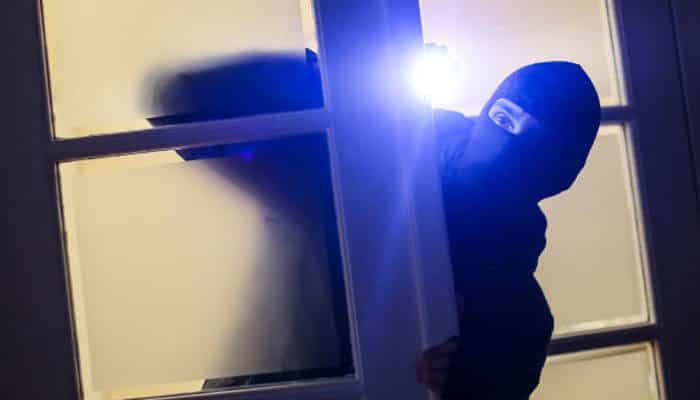
Darkness is the most reliable asset an intruder has, and lighting is among the least expensive countermeasures available.
Exterior lighting should cover entrances, loading areas, parking lots, and any exterior wall with windows or utility access. Motion-activated fixtures draw attention to movement rather than providing steady illumination someone can work around, though continuous lighting at primary entrances is worth maintaining.
Placement beats brightness. Lights mounted high and angled downward eliminate shadows, while poorly aimed fixtures create dark pockets directly beneath them. LED fixtures have made continuous operation cheap enough that cost is rarely a reason to leave areas dark.
Interior lighting matters too. Leaving some illumination on overnight allows passing patrols and neighbors to see inside, and it eliminates the assumption that nobody would notice movement.
Windows and Secondary Entry Points
Front doors get attention. Back doors, side windows, roof hatches, and utility access points frequently don’t.
Ground-floor windows benefit from security film, which holds glass together when struck and turns a quick smash into a prolonged, noisy effort. Bars or grilles offer stronger protection where appearance permits. Windows that don’t need to open should be secured permanently.
Rear and side entrances deserve equal or greater hardware investment than the front, since they’re less visible from the street and therefore more attractive to anyone attempting entry. Loading dock doors, often the largest opening in a building, need locking mechanisms that match their size.
Roof access points get overlooked routinely. Skylights, hatches, and HVAC openings all provide entry to determined intruders, and ladders or dumpsters left against a building make them reachable.
Alarms and Cameras Serve Different Purposes
Monitored alarm systems create the response element that physical barriers can’t. Door and window contacts, interior motion detection, and glass-break sensors cover the common entry methods, and visible signage deters attempts before they start.
Cameras serve a distinct function. They deter, they document, and they support recovery and prosecution afterward. Placement should cover entrances, cash-handling areas, storage rooms, and exterior approaches. Recording quality matters more than camera count, since footage too grainy to identify anyone provides limited value.
Operational Habits Close the Remaining Gaps
Hardware only works when procedures support it.
Closing checklists should confirm that all doors are locked, alarms are armed, safes are secured, and cash is removed or minimized. Keeping minimal cash on site and advertising that fact reduces the incentive for entry altogether.
Employee practices matter as well. Propped doors during deliveries, shared alarm codes, and keys left in accessible locations undo substantial hardware investment. Regular staff reminders keep these habits from drifting.
Most commercial burglaries succeed because something basic was left undone. Addressing the fundamentals consistently prevents far more losses than any single expensive upgrade.
