


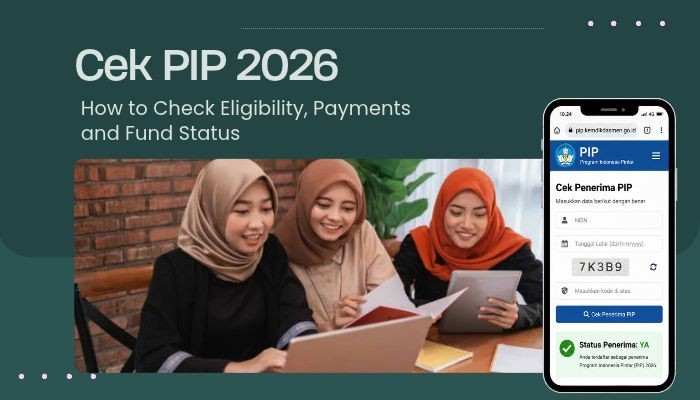

Cek PIP 2026 gives students and parents a clear way to verify PIP recipient status, payment amounts, and bank-account information through the official system.
Several PIP rules changed in 2026, including semester-based payments, preschool coverage, school-led recipient proposals, and a new determination process for Semester 2. This guide explains how to cek PIP, confirm eligibility, and track your fund status correctly.
Quick Answer
To cek PIP 2026, open the official SIPINTAR PIP website, select Cari Penerima PIP, and enter the student’s NISN and NIK. Complete the verification and check the recipient status.
If the result is unclear, parents can also ask the student’s school to verify the PIP information through SIPINTAR.
Key Takeaways
- Cek PIP is available through the official SIPINTAR website using the student’s NISN and NIK.
- PIP supports eligible students from poor or economically vulnerable households.
- Major 2026 changes include semester-based payments and expanded coverage for TK students.
- Continuing-grade students may receive two semesters of assistance, while entry and final grades generally receive one.
- From Semester 2 of 2026, SK Penetapan Penerima PIP replaces the older SK Nominasi and SK Pemberian structure.
- Previous PIP receipt does not guarantee eligibility again in 2026.
- An active SimPel account is important for accessing funds after you cek PIP status.
- PIP processing should not involve unauthorized fees or deductions.
What Is Program Indonesia Pintar?
Program Indonesia Pintar, or PIP, is an Indonesian government education-assistance program that helps eligible students from poor or economically vulnerable households cover personal education costs and remain in school.
Under Permendikdasmen No. 11 of 2026, eligible students generally must be Indonesian citizens, be actively recorded in Dapodik, and meet the applicable economic criteria. Families can cek PIP through SIPINTAR to confirm recipient information and current status.
Because eligibility can change as student and household data are updated, it is important to cek PIP using the latest official information rather than relying on a previous year’s result.
What Changed in PIP for 2026?
PIP rules changed significantly in 2026, affecting eligibility, payment amounts, recipient selection, and account handling.
The main updates come from Permendikdasmen No. 11 of 2026, Persesjen Kemendikdasmen No. 17 of 2026, and Kepmendikdasmen No. 171 of 2026.
For anyone using cek PIP, the biggest changes include:
- PIP coverage expands to TK or preschool students from the 2026/2027 academic year.
- Assistance amounts are now structured per semester.
- Schools have a stronger role in verifying and proposing eligible students.
- Semester 2 of 2026 introduces SK Penetapan Penerima PIP.
- The older SK Nominasi and SK Pemberian structure is being replaced.
- Accurate Dapodik, NISN, and NIK data are increasingly important for recipient verification.
- Bank-account activation remains important for accessing PIP funds.
- Receiving PIP in a previous year does not automatically guarantee eligibility again in 2026.
PIP Expands to Preschool Students
Beginning with the 2026/2027 academic year, PIP expands to preschool, including Taman Kanak-Kanak or TK. This means families using cek PIP may now find eligible students from TK through SD, SMP, SMA, SMK, special education, and equivalent programs.
The general age range now runs from age 5 until before age 22, with different provisions applying to students with special needs.
Schools Can Propose Eligible Students More Directly
Schools now have a stronger role in identifying and proposing eligible recipients. When families cek PIP, the result can depend heavily on whether the student’s Dapodik data has been properly updated and verified.
Schools review student records, verify eligibility through SIPINTAR, prepare a priority list, and submit it for validation before Puslapdik makes the final determination.
PIP Amounts Are Now Calculated Per Semester
Under Kepmendikdasmen No. 171 of 2026, PIP assistance is now specified per semester, making payment amounts easier to interpret when students cek PIP status.
| Education Level | Amount Per Semester | Two-Semester Total |
|---|---|---|
| TK, SD, SDLB, Paket A | Rp225,000 | Rp450,000 |
| SMP, SMPLB, Paket B | Rp375,000 | Rp750,000 |
| SMA, SMK, SMALB, SMKLB, Paket C | Rp900,000 | Rp1,800,000 |
The semester-based structure also helps explain why some students receive only one payment period while others qualify for two.
One Semester vs Two Semesters
Not every recipient receives two semesters of assistance. Students in entry and final grades generally receive one semester, while continuing-grade students and eligible TK students can receive two, so families should consider grade level when they cek PIP payment amounts.
A lower total does not automatically mean that funds were deducted.
SK Nominasi and SK Pemberian Are Changing
Older PIP guidance often refers to SK Nominasi and SK Pemberian.
Under the previous system:
- SK Nominasi generally referred to recipients whose accounts still needed activation.
- SK Pemberian generally referred to recipients with active accounts who had moved further through the payment process.
From Semester 2 of 2026, the updated system uses SK Penetapan Penerima PIP for verified recipients, including those with active or inactive accounts.
This change is important because older PIP articles may still describe terminology that no longer reflects the latest 2026 process.
Cek PIP: How to Check PIP 2026 Online
Use the official SIPINTAR website to cek PIP safely.
- Open the official SIPINTAR PIP portal.
- Find Cari Penerima PIP.
- Enter the student’s NISN.
- Enter the student’s NIK.
- Complete the verification question.
- Click Cek Penerima PIP.
- Review the student’s recipient and status information.
Always cek PIP through the official government system and avoid unofficial websites that request unnecessary personal or financial information.
What Information Do You Need for Cek PIP?
Before you cek PIP, prepare the correct student information:
- NISN
- NIK
- Correct personal details
- Internet access
- Official SIPINTAR portal
An incorrect NISN or NIK can prevent the student’s record from appearing.
Who Is Eligible for PIP in 2026?

Under Permendikdasmen No. 11 of 2026, eligible students generally must be Indonesian citizens, actively recorded in Dapodik, and from poor or economically vulnerable households. When families cek PIP, recipient status reflects the official verification and determination process.
Priority consideration can also apply to certain vulnerable groups, including orphans, disaster-affected students, students at risk of dropping out, and eligible social-assistance households.
Meeting a priority condition does not automatically guarantee PIP assistance.
Can Students Apply for PIP Directly Online?
The public cek PIP service is a recipient-status checker, not a direct application form.
Under the updated 2026 process, schools verify eligible students, prepare priority proposals, and submit them through the official education system.
Dapodik data → School verification → Priority list → Education-office validation → Puslapdik determination → Account processing → Payment
Students who appear eligible but are not listed should first contact their school.
Why Accurate Dapodik Data Matters
Accurate Dapodik records are important when families cek PIP because NIK, NISN, date of birth, mother’s name, parents’ occupations, and household income can affect recipient matching.
For the 2026 budget year, the official Dapodik cutoffs are:
| PIP Proposal Phase | Dapodik Cutoff |
|---|---|
| Phase 1: January–July 2026 | January 31, 2026 |
| Phase 2: August–December 2026 | August 31, 2026 |
Schools were instructed to keep mandatory student information complete, valid, and up to date before these cutoffs.
Why Did I Receive PIP Last Year but Not in 2026?
If you cek PIP and no longer appear as a recipient, it does not necessarily mean there is an error. PIP recipients are reassessed each year using updated Dapodik information matched with DTSEN socioeconomic data.
Possible reasons include:
- Household circumstances have changed
- The student is no longer in the current priority group
- NIK or other identity information is incorrect
- Dapodik information is incomplete
- Government datasets do not match
- The student was not included in the latest recipient determination
Receiving PIP in an earlier year does not guarantee assistance in 2026.
How PIP Payments Work in 2026
After you cek PIP and confirm recipient status, the assistance still passes through government and banking stages before the student can access the funds.
The simplified process is:
Recipient confirmed → Account processed → Funds transferred → Recipient accesses funds
A SimPel account must meet the required activation conditions for the funds to be accessed normally.
When Is PIP 2026 Paid?
There is no single nationwide payment date for every PIP recipient.
Payment timing can vary based on:
- Recipient determination
- Education level
- Semester eligibility
- Account activation
- Data verification
- Bank processing
Students can therefore receive funds at different times. A classmate receiving PIP earlier does not automatically mean another student’s payment has a problem.
How to Check PIP Fund Status
When you cek PIP, separate recipient status, account activation, and fund transfer because each represents a different stage of the payment process.
1. Has the Student Been Determined as a Recipient?
Confirm whether the student has been officially included as a PIP recipient.
2. Is the Student’s Bank Account Active?
An active SimPel account is important for receiving and accessing PIP funds.
3. Has the Money Reached the Account?
Recipient status does not always mean the money is immediately available for withdrawal. Payment timing can vary between students.
Understanding PIP Statuses in 2026
When families cek PIP, they may encounter older and newer terminology because the recipient system changed in Semester 2 of 2026.
| Status or Term | Meaning |
|---|---|
| SK Nominasi | Older designation generally used when an account still needed activation |
| SK Pemberian | Older designation generally used for recipients with active accounts |
| SK Penetapan Penerima PIP | New recipient determination used from Semester 2 of 2026 |
| Rekening Aktif | Student account is active |
| Rekening Belum Aktif | Account still requires activation |
| Dana Disalurkan | Funds have entered the distribution process |
| Data Tidak Ditemukan | No matching record is currently shown |
The new SK Penetapan Penerima PIP replaces the previous SK Nominasi and SK Pemberian split under the updated Semester 2 mechanism.
PIP Bank Accounts and Account Activation
After you cek PIP and confirm recipient status, check whether the student’s SimPel account is active because it is used to receive PIP assistance.
| Education Level | Designated Bank |
|---|---|
| SD, SMP, Paket A, Paket B | BRI |
| SMA, SMK, Paket C | BNI |
| Covered education levels in Aceh | BSI |
These bank arrangements were reaffirmed by Kemendikdasmen in its 2026 account-activation guidance.
How to Activate a PIP Account
If cek PIP shows that activation is required, the general process is:
- Confirm the student is a PIP recipient.
- Obtain the required activation letter from the school.
- Visit the designated bank with the required documents.
- Complete SimPel account activation.
- Wait for the updated status to appear in the PIP system.
Activation should normally be completed by the student or parent/guardian. If a school represents the recipient, proper authorization is required.
Why Does SIPINTAR Still Say My Account Is Not Active?
Even after activation, cek PIP may temporarily show the old status because official guidance says activation data is updated periodically, around twice per month.
If the status has not changed:
- Keep proof of activation.
- Check SIPINTAR again later.
- Ask the school to verify the record.
- Contact official support if the problem continues.
What Happens If the PIP Account Is Not Activated?
If cek PIP shows an inactive account, complete activation before the deadline set by Puslapdik. Under the new Semester 2 mechanism, funds linked to accounts that remain unactivated can eventually be returned to the state treasury.
Recipients should follow the deadline shown in their current PIP information rather than relying on dates from older articles.
Important Note About the February 28, 2026 Deadline
The February 28, 2026 deadline applied specifically to the extended activation period for 2025 PIP accounts, not automatically to all 2026 recipients.
Documents Needed to Withdraw PIP Funds
After you cek PIP and confirm the funds are available, common withdrawal documents include:
- Copy of the Kartu Keluarga (KK)
- Copy of the parent’s KTP
- SimPel savings book
Requirements can vary by student and banking situation, so confirm the latest requirements with the designated bank before visiting a branch.
How Can PIP Money Be Withdrawn?

After you cek PIP and confirm the funds are available, money can generally be withdrawn through the designated bank or an eligible SimPel debit card.
Bank Teller
Recipients with an active SimPel account and the required documents can withdraw funds through the designated bank teller.
Debit Card or ATM
Students with an eligible SimPel debit card may withdraw funds through an ATM or participating banking channel.
Authorized Banking Channels
Other approved withdrawal options may be available depending on the bank.
Always follow current bank rules and never share an ATM PIN, password, or OTP with anyone offering to process PIP assistance.
Why Does Cek PIP Show “Data Not Found”?
A Data Tidak Ditemukan result when you cek PIP does not automatically mean the student is permanently ineligible.
Possible reasons include:
- Incorrect NISN
- Incorrect NIK
- Incomplete Dapodik information
- Identity-data mismatch
- PIP records still being updated
- Recipient determination not yet completed
- Student not included in the current recipient list
Puslapdik confirms that invalid NIK, NISN, birth-date, or other identity information can prevent an otherwise eligible student from being matched successfully.
How to Fix an Incorrect NISN or NIK
If cek PIP does not show the expected record, ask the school operator to verify the student’s official data before using unofficial websites.
Check:
- NISN
- NIK
- Full name
- Date of birth
- Mother’s name
- Dapodik status
Incorrect or unsynchronized information may need correction in the education system or alignment with Dukcapil records.
After corrections are processed, allow time for the systems to synchronize before checking SIPINTAR again.
Why Has My PIP Money Not Arrived?
A successful cek PIP result does not always mean the money is immediately available because recipient determination, account activation, data verification, and bank processing can occur at different times.
Account Activation Is Incomplete
The SimPel account may still require activation or the activation update may not yet appear in SIPINTAR.
Student Data Does Not Match
Incorrect NIK, NISN, birth-date, or other identity information can interrupt the PIP process.
Recipient Processing Is Still Underway
Being potentially eligible is different from being officially determined as a PIP recipient.
Payment Is Being Processed in Stages
Students can receive funds at different times, so another student’s earlier payment does not automatically indicate a problem.
The Student Is Eligible for Only One Semester
Entry- or final-grade students may receive a different total from continuing-grade students under the 2026 semester-based system.
What Can PIP Funds Be Used For?
After families cek PIP and receive the assistance, the money should be used for the student’s personal education needs.
Approved uses include:
- Books and stationery
- School or practice uniforms
- Shoes, bags, and school supplies
- Transportation to school
- Student pocket money
- Additional courses or tutoring
- Additional practice costs
- Internship or work-placement expenses
These uses are listed in official Puslapdik PIP guidance.
What Should PIP Funds Not Be Used For?
When families cek PIP, they should remember that the assistance is intended for the recipient’s education needs rather than unrelated expenses or unauthorized collections.
PIP funds should not be diverted through improper fees, deductions, or other uses that conflict with program rules.
Can a School Deduct PIP Money?
After you cek PIP and confirm the approved amount, the school or another party must not take unauthorized fees or deduct part of the assistance.
Kemendikdasmen states that the PIP application and distribution process is free, and unauthorized deductions or taking recipient funds are prohibited.
Can a School Keep a PIP ATM Card or Savings Book?
A student’s ATM card and savings book remain the recipient’s property even after families cek PIP status.
Kemendikdasmen states that schools must not retain these items without authorization from the student, parent, or guardian.
How to Report PIP Misuse
If cek PIP information suggests possible misuse, families can report issues such as:
- Unauthorized deductions
- Administration or processing fees
- Misuse of student data
- Unauthorized retention of an ATM card or savings book
- Suspected improper access to PIP funds
Provide a clear explanation of what happened and attach supporting evidence such as documents, photos, or records when available. Kemendikdasmen says complaints can be forwarded to Puslapdik or the Inspectorate General for review.
The official PIP portal currently lists:
Hotline: 177
Email: pengaduan@kemendikdasmen.go.id
Complaint service: ULT Kemendikdasmen
Never publish NISN, NIK, bank information, ATM PINs, passwords, or OTP codes publicly when requesting assistance.
How to Avoid Fake Cek PIP Websites
A cek PIP search requires sensitive student information, so use the official SIPINTAR portal and avoid websites that imitate government services. The official recipient checker uses NISN, NIK, and a verification question.
Be cautious if a website asks for:
- Online banking passwords
- ATM PINs
- OTP codes
- Advance payments
- Fees to “unlock” PIP
- Unrelated financial information
Official PIP services do not guarantee eligibility simply because a student enters personal details.
Does Having KIP Automatically Mean You Receive PIP?
No. An older KIP card does not automatically prove that a student is a current PIP recipient. When families cek PIP, they should rely on the latest SIPINTAR status rather than an older physical or digital card.
Under the updated Semester 2 of 2026 mechanism, Puslapdik states that PIP recipients will no longer receive KIP in physical or digital form.
PIP vs KIP Kuliah
PIP Dikdasmen and KIP Kuliah are separate programs.
PIP Dikdasmen supports eligible students in preschool, primary, secondary, special, and equivalent education.
KIP Kuliah is a higher-education assistance program for eligible students entering or attending university. Its 2026 system has its own registration and eligibility process.
Graduating SMA or SMK students should not assume that PIP automatically continues as KIP Kuliah.
Important PIP Terms Explained
After you cek PIP, these terms can help you understand the information shown in official systems.
| Term | Meaning |
|---|---|
| PIP | Program Indonesia Pintar |
| SIPINTAR | Sistem Informasi Program Indonesia Pintar |
| NISN | National Student Identification Number |
| NIK | Population Identification Number |
| Dapodik | Indonesia’s Basic Education Data system |
| DTSEN | Data Tunggal Sosial dan Ekonomi Nasional |
| SimPel | Simpanan Pelajar student savings account |
| Puslapdik | Education Financing Service Center |
| SK | Formal government determination or decision |
| SK Penetapan Penerima PIP | Recipient determination used under the Semester 2 2026 mechanism |
The official name of DTSEN is Data Tunggal Sosial dan Ekonomi Nasional.
Why Cek PIP Matters for Family Financial Planning
PIP can help families cover approved education costs, but it should not be treated as guaranteed recurring household income.
Recipient status can change as student and household information is reassessed. Families should budget around PIP only after the current recipient, account, and payment status has been confirmed.
What to Do After Checking PIP
Once you cek PIP, use the result to decide what action is needed next.
| PIP Result | Recommended Action |
|---|---|
| Student listed and account active | Monitor fund status and follow bank instructions |
| Student listed but account inactive | Complete activation before the applicable deadline |
| Account activated but SIPINTAR not updated | Recheck later because status updates may take time |
| Data not found | Verify NISN, NIK, and Dapodik data with the school |
| Received PIP previously but not now | Ask the school to review current eligibility and data |
| Payment amount seems lower | Check one-semester versus two-semester eligibility |
| Money appears to be deducted | Report suspected misuse through official channels |
Conclusion
Cek PIP 2026 is no longer just about confirming whether a student appears on a recipient list. The 2026 reforms make accurate Dapodik data, semester eligibility, account activation, and payment status equally important.
For families, the practical takeaway is simple: verify current information, follow official SIPINTAR updates, and treat PIP as targeted education support rather than guaranteed annual income. Using cek PIP through official channels also reduces the risk of outdated information, payment confusion, and misuse of personal data.
With preschool coverage expanding, payments moving to a semester-based structure, and recipient determination changing from Semester 2 of 2026, staying current with official PIP information matters more than relying on previous-year records.
Frequently Asked Questions
1. Can I use Cek PIP 2026 on a mobile phone without an app?
Yes. Cek PIP 2026 can be accessed through the official SIPINTAR website using a smartphone browser, so no separate app is required.
2. Do I need a SIPINTAR account for Cek PIP 2026?
No. The public Cek PIP 2026 recipient checker can be used without a personal SIPINTAR login. Enter the student’s NISN, NIK, and verification answer.
3. Which NIK should I use for Cek PIP 2026?
Use the student’s NIK, together with the student’s NISN, when using Cek PIP 2026.
4. Can I use Cek PIP 2026 for more than one child?
Yes. Run a separate Cek PIP 2026 search for each child using that student’s own NISN and NIK.
5. Does Cek PIP 2026 show whether funds have been disbursed?
Yes. Cek PIP 2026 can provide available recipient and disbursement information through SIPINTAR, although payment timing can differ between students.
6. Can private-school students appear in Cek PIP 2026?
Yes. Eligible private-school students can appear in Cek PIP 2026 records. Official SIPINTAR data includes PIP recipients from private schools.
7. What if Cek PIP 2026 shows the wrong school information?
Ask the current school operator to check the student’s Dapodik record. After corrections are synchronized, check Cek PIP 2026 again.
8. Does Cek PIP 2026 update immediately after a data correction?
Not necessarily. Cek PIP 2026 may take time to reflect corrected or synchronized education data, so recheck after the school confirms the update.
