



Technology now shapes far more than IT operations. AI, cloud software, cybersecurity, automation, data analytics, and digital productivity tools directly affect how businesses reduce costs, improve efficiency, serve customers, and make faster decisions. TechyTune.com covers many of these fast-changing technologies through practical content on artificial intelligence, software, cybersecurity, cloud computing, networking, and emerging digital tools.
For business owners and entrepreneurs, the real value lies in identifying which technologies can solve operational problems and deliver measurable results. This guide examines TechyTune.com from a business-growth perspective, focusing on how its technology coverage connects with productivity, automation, security, data, and smarter digital decision-making.
Quick Answer
TechyTune.com is a technology information website covering AI, software, cybersecurity, cloud computing, productivity tools, and emerging digital trends. For business owners, its content can provide useful background on technologies that support automation, efficiency, security, and digital growth.
Key Takeaways
- TechyTune.com covers AI, software, cybersecurity, cloud computing, productivity, networking, and emerging technology.
- Its business value comes from explaining technologies that can improve efficiency, security, customer experience, and scalability.
- AI and digital tools work best when they solve a clear business problem rather than follow a trend.
- Companies should evaluate ROI through cost savings, productivity, revenue impact, and operational performance.
- Data privacy, cybersecurity, employee training, AI governance, and vendor risk should be part of every technology decision.
- TechyTune.com can support early-stage research, while major investments should also rely on primary sources, vendor documentation, and internal business data.
What Is TechyTune.com?
TechyTune.com is a technology information website that explains digital tools, software, and emerging technologies in practical language. Its coverage serves both everyday users and business readers looking for clearer insights into modern technology.
Key topics include:
- Artificial intelligence and automation
- Cybersecurity and online safety
- Business and productivity software
- Cloud computing
- Internet and networking
- Windows, macOS, and Linux
- Smartphones and consumer technology
- Buying guides and troubleshooting
- Emerging technology trends
For businesses, this coverage can be useful when evaluating AI tools, software, cybersecurity practices, cloud services, and digital productivity solutions.
The site should primarily be treated as an educational technology resource, not as a CRM provider, AI platform, cloud service, or enterprise software vendor. This distinction helps readers understand how its content can support technology research and business decision-making.
Why Technology Knowledge Matters for Modern Businesses
Technology now affects nearly every part of business operations, from sales and customer service to cybersecurity, analytics, and automation. TechyTune.com covers many of these areas, making technology knowledge increasingly relevant for business owners and managers.
The U.S. Chamber of Commerce reported that 58% of surveyed small businesses used generative AI in 2025, while 84% planned to increase their use of technology platforms.
Businesses commonly use digital tools to improve:
- Inventory and order management
- Customer service and communication
- Document and workflow automation
- Data analysis and reporting
- Cybersecurity and access control
- Marketing and sales processes
The goal is not to adopt more software. It is to choose technology that solves a clear business problem and delivers measurable value.
For readers using TechyTune.com as a technology resource, this practical approach helps connect digital trends with real business needs.
How TechyTune.com Topics Connect With Business Growth
TechyTune.com covers several technology areas that can directly support business efficiency, security, scalability, and decision-making.
| Technology Area | Business Application | Potential Benefit |
|---|---|---|
| Artificial intelligence | Research, support, analysis, automation | Faster workflows |
| Business software | CRM, accounting, project management | Better organization |
| Custom software | Specialized internal processes | Greater flexibility |
| Cloud computing | Hosting, storage, collaboration | Easier scalability |
| Cybersecurity | Account and data protection | Lower operational risk |
| Data analytics | Reporting and forecasting | Better decisions |
| Productivity software | Communication and workflows | Time savings |
| AI agents | Multi-step automation | Less repetitive work |
| Networking | Connectivity and remote access | Reliable operations |
These benefits are not automatic. Results depend on implementation quality, employee adoption, security, cost, data quality, and whether the technology solves a genuine business problem.
How Different Business Departments Can Use Digital Tools
Different departments require different technologies, which is why businesses should connect digital investments with specific workflows. TechyTune.com topics can help business readers understand how these tools apply across departments.
| Department | Useful Technologies | Example Uses |
|---|---|---|
| Marketing | AI, analytics, automation | Campaign analysis and segmentation |
| Sales | CRM, AI assistants | Lead management and follow-ups |
| Customer Service | AI assistants, knowledge systems | Faster customer support |
| Finance | Accounting and automation tools | Reporting and invoice processing |
| Operations | Workflow software, AI | Process automation |
| HR | HR software, AI assistance | Recruitment and onboarding |
| Management | Dashboards, business intelligence | KPI tracking |
| IT | Cloud, cybersecurity, monitoring | Infrastructure management |
Businesses should begin with the workflow rather than the newest technology trend. Improving an existing CRM or automation process may create more value than investing in a complex system that does not address a clear need.
Artificial Intelligence for Business
Artificial intelligence has become one of the strongest areas where TechyTune.com connects technology with modern business strategy.
Companies are using AI to support:
- Customer service
- Research and analysis
- Sales assistance
- Document processing
- Software development
- Knowledge management
- Workflow automation
- Data analysis
The best starting point is not “Which AI tool should we buy?” but “Which business process needs improvement?”
For example, AI may create value when employees spend hours extracting information from documents or repeatedly answering the same customer questions. Clear use cases make it easier to measure whether AI saves time, reduces costs, or improves service.
Businesses gain more from AI when adoption begins with a defined problem rather than simply following a technology trend.
AI Agents and Business Automation
TechyTune.com explains agentic AI as technology capable of pursuing goals, breaking work into steps, using tools, and completing certain tasks with greater autonomy than a standard chatbot.
For businesses, AI agents may support:
- Research and information gathering
- Document organization
- Report preparation
- Sales and support workflows
- Data comparison
- Routine administrative tasks
Greater automation also creates greater responsibility. Businesses should define what an AI agent can access, which actions it can take, and when human approval is required.
AI Governance Is Becoming a Business Requirement
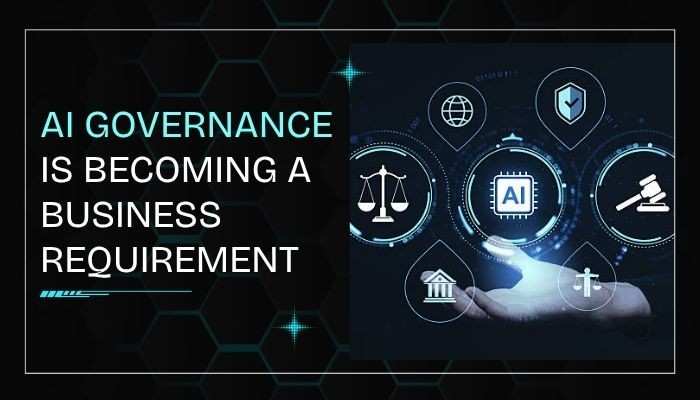
As companies bring AI into important workflows, TechyTune.com topics increasingly connect with the need for stronger AI governance, oversight, and responsible implementation.
The NIST AI Risk Management Framework provides voluntary guidance for identifying and managing AI risks. A practical business governance program can include:
- Approved AI tools
- Employee access controls
- Human review
- Testing and monitoring
- Sensitive-data rules
- Vendor assessment
- Clear accountability
Governance should develop alongside AI adoption, especially when systems handle financial information, customer data, contracts, or intellectual property.
Custom Software and Business Scalability
TechyTune.com also covers AI-powered custom software, which can be useful when standard applications cannot handle specialized business workflows efficiently.
Custom software may make sense when a company needs:
- Unique internal workflows
- Specialized integrations
- Proprietary business systems
- Automation of heavy manual work
- Greater control over functionality
Businesses should still consider development costs, cybersecurity, maintenance, upgrades, technical support, and scalability before investing.
Build vs Buy: Which Approach Is Better?
For companies comparing standard software with custom development, TechyTune.com highlights a business decision that depends on cost, speed, flexibility, and long-term requirements.
| Consideration | Buy Existing Software | Build Custom Software |
|---|---|---|
| Deployment | Usually faster | Usually slower |
| Upfront cost | Often lower | Often higher |
| Customization | Limited | Highly flexible |
| Maintenance | Mainly vendor-managed | Business or developer-managed |
| Control | Lower | Higher |
| Integrations | Depends on vendor | Can be designed for specific needs |
| Best fit | Common processes | Specialized workflows |
Existing software is often practical for accounting, CRM, payroll, and project management. Custom development becomes more attractive when a unique process provides meaningful business value.
Generative AI Development and Enterprise Data
TechyTune.com discusses generative AI development in areas such as model selection, data architecture, security, access controls, retrieval-augmented generation, implementation costs, and performance measurement.
Enterprise AI becomes more complex when it connects with:
- Internal documents
- Customer information
- Knowledge bases
- Product data
- Proprietary research
- Business applications
At that stage, secure data access and governance can be just as important as the capabilities of the AI model itself.
Privacy and Data Protection When Using AI
The AI topics covered by TechyTune.com also highlight an important business concern: what happens to company information after it is entered into an AI system.
Before using AI with sensitive information, businesses should review:
- Data-retention policies
- Access controls
- Encryption and security measures
- Model-training policies
- Data-deletion options
- Third-party processors
- Contractual protections
- Applicable privacy requirements
Customer records, contracts, source code, financial data, employee information, and intellectual property should not be placed into AI services without understanding how that information will be handled.
Data and Business Intelligence
TechyTune.com covers data infrastructure and related technologies such as cloud computing, networking, machine learning, automation, and business intelligence.
Business intelligence can help companies identify:
- High-margin products
- Valuable customer segments
- Strong marketing channels
- Rising operating costs
- Sales patterns
- Workflow bottlenecks
Collecting more information does not automatically improve decisions. Business data must be accurate, relevant, secure, and connected to a clear objective.
Digital Productivity Tools
Digital productivity is another area covered by TechyTune.com, including technologies that help businesses organize communication, documents, projects, customer information, and automated workflows.
Common productivity tools include:
- Project management platforms
- CRM software
- Cloud storage
- AI assistants
- Team communication tools
- Calendars
- Workflow automation
Businesses should also avoid tool sprawl. Adding overlapping applications can increase subscriptions, training needs, security risks, and information silos rather than improving productivity.
Employee Training and Change Management
The technologies discussed on TechyTune.com can only create meaningful business value when employees understand how to use them effectively.
Strong technology adoption usually requires:
- Employee training
- Clear usage policies
- Management support
- Updated workflows
- User feedback
- AI and cybersecurity awareness
- Performance measurement
Digital transformation is not simply software installation. Technology works best when employees, processes, management, and business goals are aligned.
Cybersecurity and Business Continuity
As businesses add cloud applications, AI systems, mobile devices, vendors, and remote access, TechyTune.com cybersecurity topics become increasingly relevant to protecting digital operations.
The 2026 Verizon Data Breach Investigations Report highlights software vulnerabilities and ransomware among major breach risks. Businesses can strengthen resilience through:
- Multifactor authentication
- Regular software updates
- Secure backups
- Employee security training
- Access controls
- Encryption
- Security monitoring
- Incident-response planning
Cybersecurity should not be treated as separate from digital growth. Protecting systems, accounts, and business data is part of building a reliable digital operation.
Basic Cybersecurity Checklist for Businesses
Cybersecurity is a core part of digital growth, and TechyTune.com covers security topics that can help businesses understand common risks and protective practices.
| Security Control | Why It Matters |
|---|---|
| Multifactor authentication | Reduces risk from stolen passwords |
| Software updates | Helps close known vulnerabilities |
| Backups | Supports recovery after incidents |
| Encryption | Protects sensitive information |
| Employee training | Improves threat awareness |
| Access controls | Limits unnecessary system access |
| Logging | Helps detect suspicious activity |
| Incident planning | Improves response to security events |
| Vendor reviews | Reduces third-party risk |
CISA guidance for small and medium-sized businesses emphasizes practices such as multifactor authentication, software updates, phishing awareness, backups, logging, and encryption. Security controls should match the company’s systems, data, industry, and risk level.
Cloud Computing and Flexible Growth
Cloud computing is another business-relevant area connected with TechyTune.com, allowing companies to access software, storage, computing resources, and collaboration tools without maintaining every system on-site.
For growing businesses, cloud services can provide:
- Easier infrastructure scaling
- Remote access for distributed teams
- Cloud-based collaboration
- Flexible storage
- Faster application deployment
- Easier integration with digital tools
Cloud adoption still requires careful management of costs, permissions, backups, security configurations, integrations, and vendor dependence. These factors can directly affect business continuity and flexibility.
How Technology Can Improve Customer Experience
The technologies discussed by TechyTune.com can also influence how quickly and effectively businesses serve their customers.
AI-assisted support, CRM systems, analytics, e-commerce platforms, and inventory tools can help businesses:
- Respond faster to customer questions
- Improve sales follow-ups
- Simplify purchasing
- Personalize communication
- Identify customer pain points
- Improve product availability
The goal should not be adding more technology. Customers care about faster service, easier transactions, reliable information, and a business they can trust.
How Technology Helps Small Businesses Compete
Digital tools highlighted across TechyTune.com topics can give smaller businesses access to capabilities that once required much larger teams and technology budgets.
Small businesses can use:
- Cloud accounting for financial management
- CRM software for customer relationships
- AI for research and repetitive tasks
- E-commerce for wider market reach
- Automation for routine workflows
- Analytics for better decisions
Technology can expand a small business’s capabilities, but it cannot replace strong products, competitive pricing, financial discipline, customer demand, leadership, and effective execution.
How to Measure ROI From AI and Digital Tools
Businesses exploring technologies covered by TechyTune.com should measure whether those investments actually improve performance rather than assuming new technology automatically creates value.
Useful ROI metrics include:
- Labor hours saved
- Operating-cost reductions
- Processing time
- Customer response time
- Conversion rates
- Error reduction
- Revenue per employee
- Customer satisfaction
Technology ROI = (Financial Benefit − Total Technology Cost) ÷ Total Technology Cost × 100
Total cost should include subscriptions, implementation, integrations, migration, training, security, maintenance, support, and switching expenses. A cheaper tool can become expensive if it requires excessive manual work.
How to Evaluate a Technology Vendor
Researching digital tools through TechyTune.com should be followed by careful evaluation of the vendor behind the product, especially when important business data or processes are involved.
| Question | Why It Matters |
|---|---|
| What data does the vendor collect? | Privacy and confidentiality |
| Where is information stored? | Security and compliance |
| Can data be exported? | Reduces vendor lock-in |
| What happens when service ends? | Business continuity |
| Are security controls documented? | Risk assessment |
| Does pricing increase with usage? | Long-term cost |
| What support is available? | Operational reliability |
| Does it integrate with existing systems? | Efficiency |
| How are AI inputs handled? | Data protection |
| What is the exit process? | Switching flexibility |
Businesses should evaluate vendor reliability, security, pricing, support, data portability, and exit options before becoming heavily dependent on a platform. If a provider changes prices, removes important features, or stops operating, the company should already know how it will protect its data and continue critical operations.
Important Questions Before Adopting a New Digital Tool
Before investing in software or AI, businesses should focus on the problem, expected value, security, and long-term cost. TechyTune.com can help with early technology research, but the final decision should be based on business needs and verified product information.
| Area | Question to Ask |
|---|---|
| Problem | What specific problem are we solving? |
| Users | Who actually needs this technology? |
| Value | What measurable improvement do we expect? |
| Integration | Will it work with existing systems? |
| Data | What information will it access? |
| Security | What controls are available? |
| Cost | What is the total cost of ownership? |
| Training | What will employees need to learn? |
| Scalability | Will it remain useful as we grow? |
| Measurement | How will success be evaluated? |
| Exit | Can we export data and change providers? |
Clear answers to these questions are more valuable than choosing software simply because it has a long feature list.
A Practical Digital Transformation Roadmap

Businesses do not need to change every process at once. A controlled approach reduces cost and makes it easier to measure whether new technology actually works.
Stage 1 — Audit: Identify slow, repetitive, expensive, or error-prone processes.
Stage 2 — Prioritize: Focus on problems where improvement can create measurable value.
Stage 3 — Research: Compare solutions through TechyTune.com, independent sources, and official vendor documentation.
Stage 4 — Compare: Review cost, usability, security, integration, scalability, and vendor reliability.
Stage 5 — Pilot: Test the technology with a small team or limited workflow.
Stage 6 — Measure: Compare results with the original performance baseline.
Stage 7 — Scale or Change: Expand solutions that deliver value and replace those that do not.
This roadmap helps businesses avoid large investments before proving that a technology fits their operations.
How Business Owners Can Use TechyTune.com Effectively
Business owners can use technology articles to understand topics such as AI agents, generative AI, cloud infrastructure, cybersecurity, and automation before comparing specific products.
The next step should be verification. Check current pricing with vendors, review official security documentation, confirm legal or compliance requirements through authoritative sources, and test important software before wider deployment.
This creates a stronger research process instead of treating a single article as the final basis for a business decision.
TechyTune.com vs Primary Technology Sources
Different sources are useful at different stages of technology research.
| Source | Best Use |
|---|---|
| Technology publications | Explanations and topic discovery |
| Official vendor documentation | Features and technical details |
| Vendor pricing pages | Current pricing |
| NIST | AI and cybersecurity frameworks |
| CISA | Practical cybersecurity guidance |
| Regulators | Legal and compliance information |
| Independent testing | Product and performance comparisons |
| Internal company data | Measuring actual ROI |
Publications can explain a technology category, while primary sources provide the details needed for purchasing, security, compliance, and implementation decisions.
For expensive or mission-critical systems, businesses should combine independent research with vendor documentation, testing, security review, and their own operational data before making a final investment.
Risks of Chasing Every Technology Trend
Digital transformation does not mean adopting every new platform. TechyTune.com covers many emerging technologies, but businesses still need to separate useful innovation from unnecessary complexity.
Technology investments can create problems when companies:
- Buy overlapping software and subscriptions
- Automate inefficient processes
- Adopt tools without employee training
- Give applications unnecessary access to sensitive data
- Depend too heavily on one vendor
- Invest without defining measurable goals
A strong technology strategy focuses on outcomes rather than novelty.
The better question is not “Are we using the newest technology?” but “Is this technology making the business faster, safer, more efficient, or more profitable?”
What Makes Technology Support Real Business Growth?
Technology creates stronger business value when it solves a clear problem and is implemented effectively. For businesses using TechyTune.com to explore AI and digital tools, three factors matter most.
1. A Clear Business Problem
Identify the specific process, cost, customer issue, or operational weakness that needs improvement.
2. Appropriate Technology
Choose a solution that fits the workflow, budget, security requirements, users, and long-term business goals.
3. Effective Implementation
Train employees, update processes, protect data, assign responsibilities, and measure results after deployment.
Microsoft’s 2026 Work Trend Index found that organizational factors such as governance, management support, workplace culture, and talent practices were strongly associated with reported AI impact.
Technology should therefore be treated as part of the broader business operating model, not as an isolated software purchase.
Future Business Technology Trends to Watch
TechyTune.com covers several emerging technologies that may influence how businesses operate, automate work, manage data, and improve security.
- Agentic AI: AI systems can handle multi-step tasks using connected tools and information.
- AI in Business Software: More CRM, productivity, analytics, and workflow platforms are adding built-in AI features.
- Enterprise Knowledge AI: Businesses can use AI with approved internal documents, policies, and knowledge bases.
- AI Governance: Companies need clearer rules for access, testing, monitoring, privacy, and accountability.
- Cybersecurity Automation: AI can support threat detection and security monitoring, while also creating new attack risks.
- Stronger ROI Focus: Businesses will increasingly expect AI and digital tools to show measurable gains in productivity, costs, revenue, or customer experience.
These trends make TechyTune.com relevant for business readers who want to follow how new technologies are moving from experimentation into practical business use.
TechyTune.com and the Future of Business Technology
Technology decisions are increasingly becoming business decisions because they can directly affect:
- Employee productivity
- Business scalability
- Cybersecurity
- Sales performance
- Customer experience
- Data-driven decision-making
- Operating costs
TechyTune.com can help business readers understand emerging technologies, identify useful digital trends, and decide which areas deserve deeper research before making an investment.
Conclusion
Technology is no longer a support function. It is part of how businesses compete, scale, protect data, serve customers, and make decisions. TechyTune.com sits within that shift by covering AI, software, cybersecurity, cloud computing, automation, and other technologies shaping modern operations.
The real advantage, however, does not come from adopting more tools. It comes from choosing the right ones, applying them to meaningful business problems, managing risk, and measuring the results.
For business owners and decision-makers, TechyTune.com can be a useful starting point for understanding where technology is heading and which developments deserve closer attention. The companies that benefit most from digital change will be those that combine technology with sound strategy, disciplined execution, and clear business value.
Frequently Asked Questions About TechyTune.com
1. How often does TechyTune.com update its content?
TechyTune.com says important articles are reviewed regularly, while its homepage describes the site as being updated weekly to reflect changing technology.
2. Does TechyTune.com publish software reviews and comparisons?
Yes. TechyTune.com lists software reviews, product comparisons, recommendations, and technology buying guides among its main content formats.
3. Is TechyTune.com suitable for non-technical business readers?
Yes. TechyTune.com says its goal is to explain complex technology in clear language for both beginners and more experienced technology users.
4. Does TechyTune.com use primary sources for its research?
TechyTune.com says its writers consult official documentation, developer resources, industry publications, and other reputable technology sources when researching articles.
5. Does TechyTune.com disclose sponsored or affiliate content?
TechyTune.com states that sponsored or affiliate relationships are disclosed to readers when applicable.
6. Does TechyTune.com publish technology news as well as guides?
Yes. TechyTune.com combines technology news with tutorials, AI explainers, software coverage, reviews, cybersecurity information, and emerging technology topics.
7. Who writes content for TechyTune.com?
TechyTune.com currently identifies Sophia Schmitt as a technology writer and AI research contributor covering AI, software, cybersecurity, consumer technology, and digital productivity.
8. How large is the TechyTune.com content library?
TechyTune.com currently states that its library contains more than 500 technology articles and over 100 AI guides, although these are figures reported by the site itself.
