


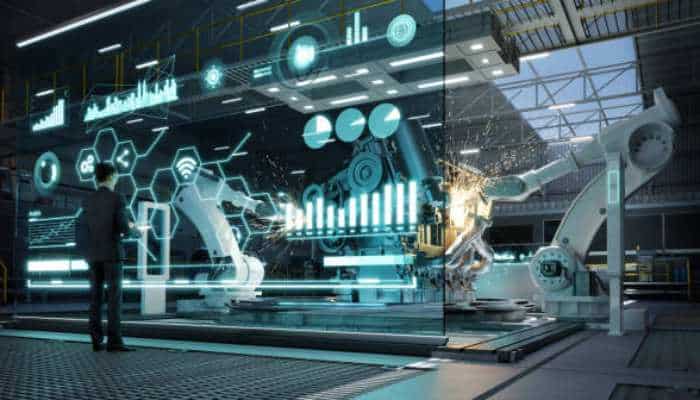

Every conversation about AI-driven manufacturing eventually circles back to the same handful of exciting capabilities: generative design, predictive quality, and automated documentation. What almost never comes up in those conversations, at least not until a project is already underway, is the far less glamorous question of how these capabilities actually connect to the systems that already run the plant. The model is rarely the problem. The pipe connecting the model to twenty-year-old enterprise infrastructure usually is.
This is the integration problem, and it’s a strange kind of open secret — everyone who has actually deployed AI in a manufacturing environment has run into it, but it rarely makes it into the pitch decks, conference talks, or vendor demos that shape how these projects get planned.
Why It Gets Skipped in Planning
The integration problem gets overlooked for a fairly understandable set of reasons, none of which make it less costly when it eventually surfaces.
It’s not visually exciting. A generative design tool producing an impressive new part geometry is compelling in a demo. The data pipeline synchronizing that tool with the PLM system’s revision history is not — but the second thing is what makes the first thing trustworthy and usable in an actual engineering workflow.
Vendors have less incentive to dwell on it. A vendor selling an AI capability is naturally inclined to emphasize what their tool can do, not the surrounding integration work a customer will need to invest in separately to make that capability useful in a specific environment.
It looks like an implementation detail rather than a strategic decision. Early project scoping tends to treat integration as something the IT team will “handle” during rollout, rather than a decision that should shape the entire technical approach from the outset.
Where the Problem Actually Shows Up

Generative AI in Manufacturing applications make the integration problem especially visible, because these tools are only as useful as their access to accurate, current engineering data. A generative design system needs live access to CAD history, simulation results, and material constraints. An automated engineering change order drafting tool needs to read from and write back to the same PLM system that governs formal approval workflows. Neither works well if that data access is stale, incomplete, or requires manual export and import between systems.
The pattern repeats across nearly every serious AI use case in manufacturing: a defect classification model needs a continuous feed of inspection data; a predictive maintenance system needs real-time sensor data correlated with maintenance history stored in an ERP; a natural language search tool needs indexed access to documentation scattered across PLM, quality, and file-share systems that were never designed to be queried together. In every case, the AI capability itself is the easier half of the project. Building or fixing the data plumbing underneath it is the harder, longer half — and it’s the half almost nobody budgets adequately for at the start.
Why This Is Especially Acute in Manufacturing
A few characteristics of manufacturing environments make this integration challenge sharper than in industries where AI adoption has moved faster.
Enterprise systems are often genuinely old. Many manufacturers run ERP and PLM systems implemented over a decade ago, sometimes heavily customized in ways that make standard API integrations more complicated than a vendor’s documentation assumes.
Data lives in more places than most other industries. ERP, MES, PLM, quality systems, and historian databases each hold a distinct piece of the picture, and few manufacturers have invested in the kind of unified data layer that makes cross-system AI applications straightforward to build.
The cost of getting it wrong is higher. A recommendation engine failure in retail is an inconvenience. An AI system operating on stale or incorrect engineering data in a manufacturing context can produce a design or quality decision with real safety and cost consequences.
Getting Ahead of the Problem
Manufacturers who avoid the worst version of this problem tend to treat integration as a first-order planning question rather than an implementation afterthought.
Auditing existing systems before selecting an AI vendor, to understand realistically what data can be accessed, at what latency, and in what format, before committing to a specific technical approach that assumes better connectivity than actually exists.
Scoping the data integration work as its own project phase, with its own budget and timeline, rather than assuming it will be absorbed into the AI vendor’s implementation services without additional cost or delay.
Bringing in dedicated systems expertise early. This is precisely the gap that specialized ERP Consulting for Manufacturers is built to close — assessing whether existing enterprise architecture can actually support the real-time, cross-system data flow that modern AI applications require, and designing the necessary integration work before AI investments get locked in around assumptions the underlying systems can’t support.
Sequencing pilots to test integration, not just model accuracy. A pilot that only validates a model’s technical performance, without also testing whether it can reliably pull from and write back to production systems, hasn’t actually tested the hardest part of the eventual deployment.
The Bottom Line
The integration problem doesn’t get talked about much because it’s unglamorous, vendor-agnostic, and specific to each organization’s own messy systems history — none of which makes for a compelling case study. But it’s consistently the difference between an AI capability that looks impressive in a demo and one that actually delivers reliable value inside a real manufacturing environment. Manufacturers who treat the connective tissue between AI tools and enterprise systems as a strategic priority, rather than a technical afterthought, are the ones who end up capturing the value that AI-driven manufacturing actually promises.
About the Contributor
Nishkam Batta Editor-in-Chief, HonestAI Magazine | AI Consultant, GrayCyan AI Solutions
Nish leads an applied AI company that helps manufacturing and related companies automate operations with human-in-the-loop AI that integrates into ERPs, WMS, CRMs, and other enterprise tools, with an emphasis on no black box AI (explainable AI), clear audit trails, driving efficiency, and measurable outcomes. His team builds agentic ERP systems that execute multi-step tasks inside approved guardrails so humans keep accountability, approvals, and override control.
Book a Consultation | LinkedIn
