




In global real estate development and construction projects, cost control, delivery schedules, and consistent product quality are critical to project success.
As fragmented furniture procurement creates increasing coordination risks, more developers are moving away from multi-supplier OEM sourcing toward turnkey furniture solutions that integrate design, manufacturing, logistics, and installation under one accountable partner.
This article examines the risks of multi-OEM sourcing, explains how to choose a one-stop supplier, and shows how SNIMAY enables efficient, reliable project delivery.
Drawbacks of Partnering with Multiple OEM Factories
Dividing furniture procurement among multiple OEM factories creates additional coordination and delivery risks for real estate developments.
1. Dimensional and Interface Mismatches
Different OEM factories follow their own manufacturing tolerances, production processes, and drilling standards.
When kitchen cabinets, wardrobes, bathroom vanities, interior doors, and wall panels are produced separately, dimensional mismatches can easily arise duringon-site assembly.
Deviations at edge details, corners, or built-in appliance openings may result in excessive gaps or installation difficulties, requiring extensiveon-site cutting and adjustment.
2. Inconsistent Styles, Colors, and Materials
A cohesive interior depends on close coordination between materials and colors.
Sourcing and processing wood veneers, lacquers, and laminates through different vendors can produce noticeable color variations and sheen discrepancies—even when identical color codes are specified.
Variations in substrate batches and finishing techniques can compromise the overall visual consistency of furnished apartments or hotel projects.
3. Interdependent Production and Delivery Schedules
Real estate construction involves a closely connected sequence of activities and is highly time-sensitive.
Under a multi-supplier model, the overall schedule is often constrained by the weakest link. A capacity bottleneck, raw material delay, or logistics disruption at any OEM factory can affect the installation sequence, cause scheduling conflicts and labor downtime, and ultimately delay project handover.
4. Fragmented Compliance and Certification Documentation
In global sourcing, products may be subject to destination-specific requirements on formaldehyde emissions and timber sourcing.
Collecting and consolidating compliance documents from multiple suppliers can therefore be time-consuming. If one factory fails to meet certification or inspection requirements, the project may face compliance risks and contractual penalties.
5. Inefficient Change Order Management
Design revisions following site reassessments are routine during construction. Managing drawing modifications across several suppliers increases administrative complexity and raises the probability of version mismatches, resulting in miscommunication, delayed responses, and expensiveon-site rework.
6. Unclear Accountability and Disputed Responsibilities
When product defects or installation mismatches occur, suppliers may shift responsibility to one another. Determining whether an issue stems from incorrect panel dimensions, incompatible hardware, or improper installation sequencing can be contentious and time-consuming.
This lack of clarity can prolong issue resolution and directly affect customer satisfaction. A single turnkey manufacturer provides clearer accountability throughout the supply process.
7. Higher Hidden Project Costs
Administering multiple supplier contracts requires dedicated procurement, quality control, and logistics personnel, significantly expanding project management overhead.
Furthermore, fragmented order schedules hinder optimal container loading, driving up ocean freight expenditures. Ultimately, these additional administrative, travel, and shipping costs can erode overall project margins.
Criteria for Selecting a Turnkey Furniture Supplier
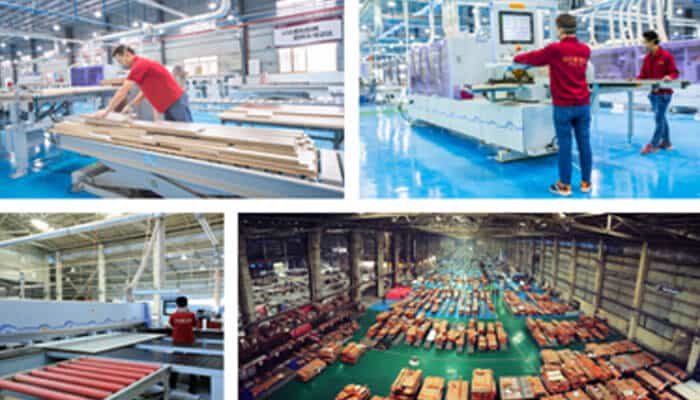
1. Factory Scale, Technology, and Production Capacity
Developers should look beyond product catalogs and evaluate a supplier’s actual manufacturing infrastructure.
Capacity assessments must extend beyond annual output to account for peak-period volume, unit mix flexibility, phased delivery schedules, and contingency production capabilities. This evaluation establishes whether a manufacturer can support large-scale real estate developments while maintaining consistent quality standards and meeting lead times during mass production.
2. Environmental Compliance and Material Certification
A qualified custom furniture supplier must maintain robust quality management systems and provide verifiable compliance documentation throughout the supply chain.
Critical evaluations should focus on relevant quality and environmental credentials, such as ISO 9001 certification and, for U.S.-bound products, TSCA Title VI compliance or documentation supporting applicable NAF exemptions.
This verification helps ensure that materials meet relevant health, environmental, and market-entry requirements.
3. Track Record and Project Delivery
When evaluating a supplier, developers should review whether its previous projects match the current development in scale, product scope, and delivery complexity.
Priority should be given to suppliers with experience delivering complete whole-house furniture packages for apartments, villas, hotels, or large commercial projects across international markets. These suppliers are generally more familiar with the design coordination, production planning, and delivery requirements of cross-regional developments.
4. Design Integration and Modular Systems
A capable turnkey manufacturer typically has its own in-house R&D and design teams, enabling it to integrate kitchens, bathrooms, living areas, bedrooms, and interior doors into a coordinated design system.
In addition, the product system should be highly modular and standardized, allowing rapid production of common components while retaining enough flexibility to meet complex customization requirements across different floor plans and building structures.
5. Packaging, Logistics, and Site Installation Support
Large-scale developments place rigorous demands on logistics and site management. Suppliers must provide mature flat-pack packaging solutions that maximize container utilization, reduce ocean freight costs, and minimize transit damage.
Furthermore, the products should feature practical assembly designs that simplifyon-site distribution and installation and reduce reliance on highly skilled local labor.
Why Choose SNIMAY
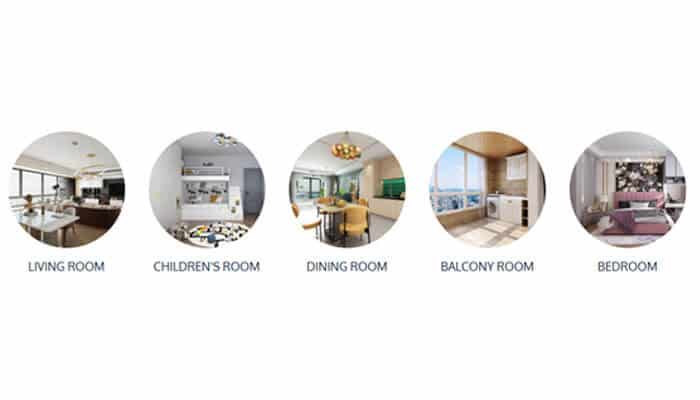
SNIMAY combines whole-house manufacturing capabilities with comprehensive project support for commercial and residential developments.
1. Global Project and Delivery Experience
Founded in 2003, SNIMAY has more than two decades of experience in whole-house customization and project delivery. Its project portfolio spans Asia, Europe, Africa, Australia, the Middle East, and North America, covering apartments, villas, hotels, and commercial developments. This experience enables the company to manage cross-regional project requirements and delivery coordination efficiently.
2. Digital Manufacturing and Scalable Capacity
SNIMAY operates large-scale manufacturing facilities equipped for digital, automated, and standardized production.
Its Stock Modular Cabinet system standardizes functional modules to simplify design, shorten delivery times, reduce rework, and facilitate on-site installation.
3. R&D Capability and Intellectual Property
Backed by a dedicated R&D team and more than 170 patents, SNIMAY continues to improve cabinet structures, hardware integration, and material applications. This technical foundation enables the company to develop practical and adaptable products for different layouts, functions, and project requirements.
4. Full-Category System Integration.
As a comprehensive turnkey manufacturer, SNIMAY provides an integrated product portfolio covering kitchen cabinets, wardrobes, bookcases, TV units, shoe cabinets, bathroom vanities, interior doors, and loose furniture. Its integrated product offering helps maintain consistent finishes, reduce interface mismatches, and simplify furniture procurement for real estate developers.
Conclusion
Moving from fragmented OEM sourcing to a single accountable partner gives developers greater control over quality, schedules, and overall project costs. With scalable manufacturing, modular product systems, and full-category integration, SNIMAY delivers reliable turnkey furniture solutions that simplify furniture procurement for residential and commercial developments. Contact SNIMAY today to discuss project requirements and request a tailored furniture proposal.
