


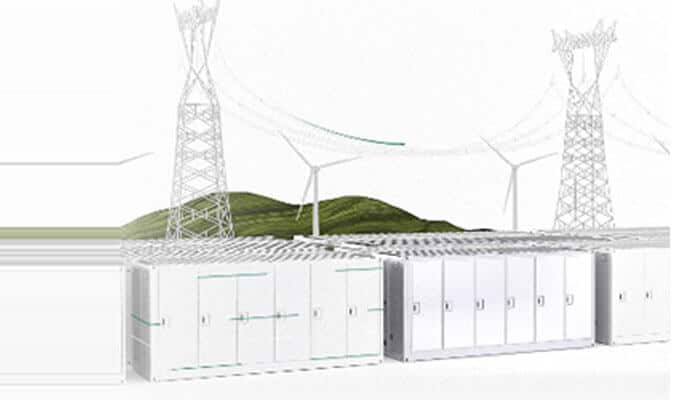

Traditional energy solutions are inadequate to counter such systemic, multi-dimensional power challenges, making the construction of a resilient energy system with proactive tolerance capabilities essential. Advanced grid-forming battery energy storage technology is now playing a central role in addressing this imperative.
Grid-following vs. Grid-forming Energy Storage
To appreciate the superiority of grid-forming energy storage, it is essential to distinguish it from conventional grid-following systems:
Conventional grid-following energy storage essentially operates as a controlled current source, which relies on voltage and frequency reference signals provided by the external power grid to function. If grid voltage or frequency stability is lost, traditional systems cannot sustain independent operation and typically disconnect to protect themselves.
In contrast, grid-forming battery energy storage systems are capable of autonomously establishing and regulating voltage and frequency without relying on external grid references. They utilize advanced control algorithms to emulate the physical characteristics of traditional synchronous generators, thereby actively supporting the grid rather than merely responding to it.
Core Advantages of Grid-forming Energy Storage
Grid-forming technology empowers C&I users with comprehensive control over their power supply:
1. Active Support and Virtual Inertia
In industrial and commercial facilities with significant photovoltaic integration, grid-forming energy storage can smooth out second-scale fluctuations in PV output, suppressing voltage flicker and frequency deviations.
Through rapid reactive power compensation, it stabilizes bus voltage in real time, addressing issues of overvoltage or undervoltage at line ends and ensuring all sensitive loads operate under high-quality voltage conditions.
2. Millisecond Seamless Switching and Black Start
In the event of a sudden utility grid failure, the system achieves ultra-fast switching. This guarantees that critical loads, such as precision instruments and core data storage, experience no perceptible power interruption. Furthermore, its black start capability allows the system to establish a microgrid from a complete blackout state independently.
3. Constructing High-quality Microgrids
In weak-grid scenarios like remote oilfields, mines, or islands, grid-forming energy storage serves as the core voltage source. It coordinates with distributed photovoltaics, EV charging stations, and other assets to build independently operating, high-quality microgrids.
4. Tiered Power Supply for Critical Loads
During islanded operation, power can be supplied in tiers and stages based on load priority, ensuring that the most critical loads, such as production control centers, cooling systems, and safety lighting, receive electricity first. This extends the overall backup duration and avoids the massive losses caused by a one-size-fits-all power outage.
5. Multi-dimensional Value Release
Beyond ensuring power security, enterprises can leverage the system’s high flexibility to participate in grid frequency regulation, demand response, and spot electricity trading. This transforms energy storage assets into profit centers.
6. Hedging Against Extreme Weather and Market Risks
Facing public grid paralysis caused by disasters, grid-forming energy storage enables enterprises to maintain core operations under extreme conditions, preventing production interruptions.
Amid periods of extremely high prices or tight supply in the electricity market, it grants companies strong bargaining power and supply chain autonomy, allowing them to avoid purchasing electricity at exorbitant prices or being forced to halt production.
Selection Guide for Grid-forming Energy Storage
With so many grid-forming claims in the market, how can you discern their true value?
1. Dynamic Response and Stability
The core value of grid-forming technology is active support for the grid. Prioritize performance in islanded or microgrid mode, specifically millisecond-level charge/discharge transition times and precision in voltage and frequency regulation.
2. Safety and Resilience
Beyond passive protection, a reliable grid-forming system must achieve active resilience against grid disturbances, ensuring operational continuity even under grid instability.
3. Full Lifecycle ROI
A superior solution should maximize the asset’s lifetime value. Evaluation should focus on how the technical design extends cycle life and optimizes round-trip efficiency (RTE) to drive long-term profitability.
4. Adaptability and Future-proofing
True grid-forming energy storage should demonstrate versatility across all scenarios (grid-connected, off-grid, and microgrid). Furthermore, the architecture must align with global standards and support modular scalability to accommodate the grid’s technological evolution.
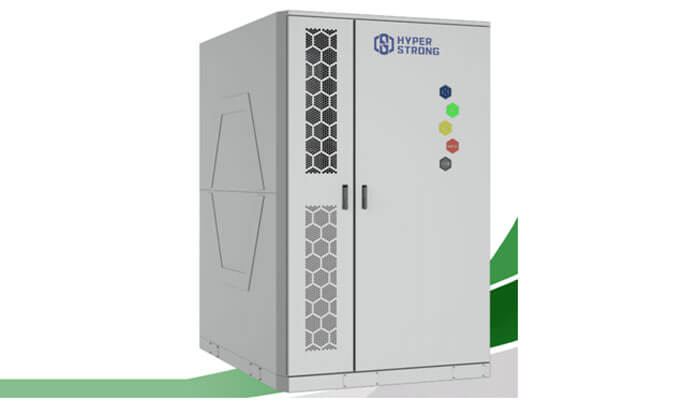
HyperStrong HyperCubeC&I II Max
The HyperCubeC&I II Max is engineered to meet and exceed each criterion above. Its unique “Prediction-Decision-Evolution-Self-Healing” intelligent architecture delivers all-around excellence, guaranteeing operational resilience, asset safety, and superior investment return.
1. Grid-forming Capability
Equipped with a proprietary, full-power grid-forming PCS, it can autonomously establish and regulate voltage and frequency without relying on external grid signals (enabling ≤20ms seamless switching). This means that even under extreme conditions of a complete main grid failure, it can act as an independent voltage source, instantly taking over critical loads.
2. Full-stack AI Safety and Ultimate Reliability
The AI-powered intelligent early-warning function can identify early indicators of thermal runaway risks up to 7 days in advance, controlling safety at the source.
Integrating a cell-level intelligent balancing algorithm with the ‘Absolute Zero’ cooling standard, this grid-forming energy storage system showcases uncompromised performance across extreme temperatures (-25°C to +55°C), with a system cycle life of ≥6,000 cycles.
3. High Capacity and Flexible Scalability
Featuring a single-unit energy capacity of up to 836 kWh and rated power of up to 430kW, the system supports parallel expansion from 1 to 20 units, allowing energy capacity to scale seamlessly with your business. It perfectly adapts to hierarchical load protection and peak-valley arbitrage strategies across all scenarios, from data centers to advanced manufacturing facilities.
Conclusion
As power systems become increasingly decentralized, volatile, and exposed to both technical and market uncertainties, energy resilience has evolved from a contingency measure to a core operational requirement.
In this context, HyperStrong provides more than just backup power; the company’s C&I ESS solutions help optimize the entire energy lifecycle, enhance operational efficiency, and safeguard your operations to remain resilient, efficient, and future-ready.
