


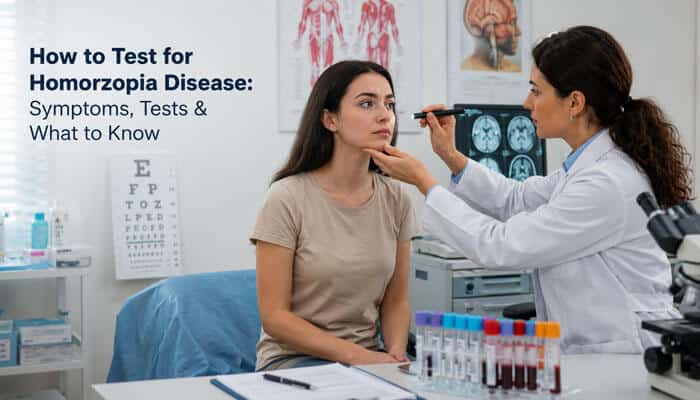

If you are searching for how to test for homorzopia disease, the most important fact to understand is that there is currently no established medical test, validated biomarker, recognized diagnostic guideline, or universally accepted clinical definition specifically for a condition called “Homorzopia disease.”
The term appears on several websites, but descriptions are inconsistent. Some pages associate Homorzopia with neurological, muscular, visual, balance, or movement-related symptoms, while other material describes it more like a movement or core-stability concept than a clearly recognized medical disease.
This distinction is critical for anyone researching how to test for homorzopia disease. Symptoms such as weakness, numbness, tingling, tremors, dizziness, balance problems, vision changes, muscle twitching, fatigue, or cognitive difficulties can be medically significant, but they should be investigated according to established medical practice rather than automatically linked to an unverified diagnosis.
This guide explains how to test for homorzopia disease safely, what symptoms have been associated with the term online, how doctors investigate unexplained neurological symptoms, what EMG, NCS, MRI, EEG, blood tests, and genetic tests actually evaluate, and when symptoms may require urgent medical attention.
Quick Answer: How to Test for Homorzopia Disease
The short answer to how to test for homorzopia disease is that no validated Homorzopia-specific diagnostic test has been established.
When someone has symptoms that online sources associate with Homorzopia, a legitimate medical evaluation may involve:
- detailed symptom history
- medical history
- physical examination
- neurological examination
- blood or urine testing
- electromyography (EMG)
- nerve-conduction studies (NCS)
- MRI or other imaging
- eye and vision testing
- EEG in selected situations
- cerebrospinal-fluid analysis when medically justified
- genetic testing when an inherited disorder is suspected
These are genuine medical tests, but none should currently be presented as a test that specifically confirms Homorzopia. Therefore, the practical approach to how to test for homorzopia disease is to investigate the person’s actual symptoms and determine whether a recognized medical condition explains them.
Key Takeaways
- There is no established Homorzopia-specific blood test, MRI marker, EMG pattern, genetic marker, or diagnostic criterion.
- Anyone searching for how to test for homorzopia disease should focus on symptom-based medical evaluation rather than an unverified test.
- Online explanations of Homorzopia are inconsistent.
- EMG evaluates electrical activity in muscles.
- Nerve-conduction studies measure electrical signal transmission through peripheral nerves.
- MRI can identify certain structural abnormalities when clinically appropriate.
- Blood and urine testing may investigate metabolic, infectious, autoimmune, toxic, nutritional, or systemic causes.
- EEG records electrical activity in the brain.
- Genetic testing can help diagnose recognized inherited neurological disorders.
- A neurological examination helps determine which tests are actually necessary.
- Sudden, severe, or rapidly worsening neurological symptoms require appropriate medical evaluation regardless of the disease name found online.
What Is Homorzopia Disease?
Before deciding how to test for homorzopia disease, it is important to understand what the term actually means. That is difficult because online sources do not define Homorzopia consistently.
Some webpages present Homorzopia as though it were a neurological or neuromuscular condition involving symptoms such as:
- weakness
- altered sensation
- movement changes
- balance problems
- visual symptoms
Some pages also discuss medical tests such as:
- EMG
- nerve-conduction studies
- blood testing
- MRI
- neurological examinations
Other Homorzopia-related material presents the term more as a movement framework involving:
- core stability
- mobility
- movement capacity
- physical performance
These descriptions do not clearly describe the same medical condition
Recognized diseases generally have some combination of:
- a consistent clinical definition
- characteristic signs or symptoms
- peer-reviewed medical evidence
- accepted diagnostic criteria where applicable
- known biological mechanisms
- validated biomarkers where relevant
- recognized diagnostic or treatment guidance
A standardized medical definition of Homorzopia has not been established in the authoritative neurological information reviewed for this guide.
Is Homorzopia Medically Recognized?
This is one of the most important questions for people researching how to test for homorzopia disease. Based on the authoritative medical information reviewed for this article, Homorzopia could not be verified as an established neurological diagnosis. That does not mean symptoms are imaginary or unimportant.
It means symptoms should not automatically be attributed to Homorzopia.
Instead of asking only:
“Do I have Homorzopia?”
a more useful medical question is:
“What recognized medical condition could explain my symptoms?”
That approach allows a healthcare professional to investigate the underlying problem using established diagnostic methods.
Could Homorzopia Be a Misspelling or Internet-Created Term?
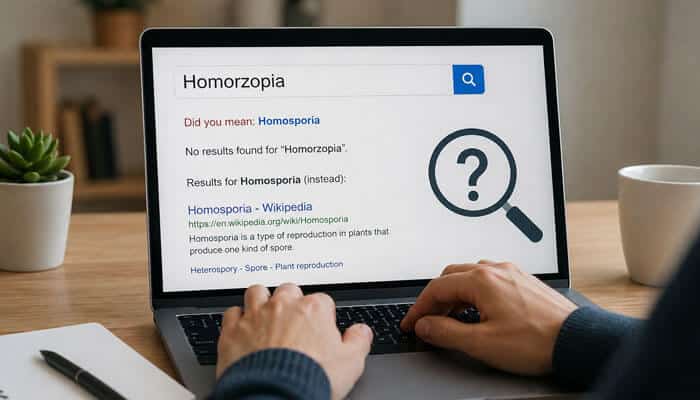
Because Homorzopia does not have a standardized medical diagnostic framework, consider whether the term could represent:
- a misspelled medical term
- proprietary wellness terminology
- a fitness or movement concept
- newly coined terminology
- a misunderstanding of another disease name
- an inaccurate health label
- information copied from an unverified source
If you saw the word in a:
- medical report
- health website
- forum
- video
- social-media post
- online discussion
save the exact spelling and original context. A healthcare professional may be able to determine whether the source was referring to another recognized condition. For anyone wondering how to test for homorzopia disease, confirming what the word actually refers to should come before pursuing diagnostic tests.
What Symptoms Are Associated With Homorzopia Online?
There is no authoritative symptom list because Homorzopia does not have a standardized clinical definition.
Nevertheless, online pages have associated the term with symptoms such as:
- muscle weakness
- numbness
- tingling
- tremors
- muscle twitching
- fatigue
- dizziness
- balance problems
- coordination problems
- vision changes
- pain
- cognitive difficulties
- altered movement patterns
These symptoms should not be treated as a diagnostic checklist for Homorzopia. Many are nonspecific and may occur in numerous unrelated conditions.
The important question is not simply whether someone has symptoms appearing on an online Homorzopia list. The important question is what is actually causing those symptoms.
Symptoms and Possible Initial Evaluation
| Symptom | Possible Initial Evaluation |
|---|---|
| Muscle weakness | Physical and neurological examination |
| Numbness or tingling | Neurological examination; sometimes nerve testing |
| Tremor | Neurological assessment |
| Balance problems | Neurological, vestibular, visual, or musculoskeletal assessment |
| Blurred or altered vision | Eye and/or neurological evaluation |
| Muscle twitching | Medical and neurological assessment |
| Cognitive changes | General medical and neurological evaluation |
| Persistent fatigue | General medical evaluation and targeted laboratory tests |
| Coordination problems | Neurological examination |
| Persistent unexplained pain | Assessment based on location and associated findings |
The principle behind how to test for homorzopia disease should therefore be:
Testing follows symptoms and examination findings—not an internet diagnosis.
How to Test for Homorzopia Disease Safely: Step-by-Step
Because no Homorzopia-specific diagnostic test has been established, an evidence-based evaluation should begin with the symptoms themselves.
Step 1: Document Your Symptoms
Before seeing a healthcare professional, record:
- when symptoms started
- whether onset was sudden or gradual
- how frequently they happen
- how long episodes last
- which body areas are affected
- whether one or both sides are involved
- whether symptoms are becoming worse
- possible triggers
- recent illnesses
- recent injuries
- medications and supplements
- sleep changes
- effects on walking, speaking, seeing, eating, working, or daily activities.
A symptom diary can help reveal patterns.
However, it is not a diagnostic test.
Anyone researching how to test for homorzopia disease at home should understand that documenting symptoms may help a doctor, but it cannot confirm the condition.
Step 2: Review Your Medical History
A clinician will usually ask about:
- previous illnesses
- surgeries
- family medical history
- medications
- infections
- injuries
- nutritional issues
- occupational exposure
- environmental exposure
- alcohol or substance use
- timing and progression of symptoms
This information may provide important clues about the underlying cause.
Step 3: Have a Physical and Neurological Examination
A neurological examination may be appropriate when symptoms suggest a nervous-system problem.
Depending on the symptoms, a clinician may evaluate:
- mental status
- cranial nerves
- muscle strength
- muscle tone
- reflexes
- sensation
- coordination
- balance
- walking pattern
- eye movements
- facial movement
- speech
- autonomic functions
For readers asking how to test for homorzopia disease, this examination is important because it may determine whether tests such as EMG, imaging, laboratory work, or specialist referral are justified.
What Is a Differential Diagnosis?
A differential diagnosis is a list of recognized conditions that could reasonably explain a person’s symptoms.
Healthcare professionals narrow that list using:
- symptom patterns
- medical history
- physical findings
- neurological findings
- laboratory testing
- imaging
- specialist tests
For example, numbness or tingling might potentially be related to:
- peripheral nerve problems
- nerve compression
- nutritional deficiencies
- metabolic abnormalities
- medication effects
- injuries
- neurological disorders
- systemic illnesses
Even “weakness” can mean different things.
One person may have objectively reduced muscle strength.
Another may actually be describing extreme fatigue.
Someone else may be experiencing instability or poor balance.
These distinctions matter because different problems require different tests.
That is why how to test for homorzopia disease cannot responsibly be answered with one universal laboratory test or scan.
Step 4: Blood and Laboratory Testing
There is currently no validated Homorzopia blood test.
Blood testing may nevertheless be helpful when doctors investigate unexplained symptoms.
Depending on the clinical picture, laboratory testing may evaluate:
- nutritional deficiencies
- metabolic abnormalities
- infections
- inflammation
- autoimmune conditions
- toxins
- clotting abnormalities
- medication effects
- systemic illnesses
Urine testing may also be useful in selected situations.
A person searching how to test for homorzopia disease with a blood test should therefore know that laboratory testing is intended to identify recognized abnormalities—not confirm Homorzopia specifically.
Step 5: Electromyography (EMG)
EMG frequently appears in online discussions about how to test for homorzopia disease, but its actual clinical purpose is more specific.
Electromyography evaluates electrical activity in muscles.
During an EMG:
- a fine needle electrode is inserted into selected muscles;
- electrical activity is recorded;
- activity is assessed while the muscle is relaxed;
- the patient contracts the muscle;
- the resulting patterns are interpreted by a trained healthcare professional.
EMG can help clinicians investigate recognized muscle and nerve disorders. An abnormal EMG may indicate nerve or muscle dysfunction. It does not automatically diagnose Homorzopia.
Step 6: Nerve-Conduction Studies
Nerve-conduction studies, often abbreviated NCS, are commonly performed alongside EMG. NCS evaluates how electrical signals travel through peripheral nerves.
The test generally involves:
- placing electrodes on the skin;
- stimulating a nerve with a small electrical pulse;
- recording the response;
- measuring the speed and strength of the signal.
Nerve-conduction studies may help identify certain types of nerve damage or dysfunction. When EMG and NCS are used together, they can help determine whether symptoms may arise primarily from nerves, muscles, or another source.
For anyone researching how to test for homorzopia disease using EMG or NCS, neither procedure is currently a validated Homorzopia-specific test.
Step 7: MRI and Other Imaging
MRI produces detailed images of structures such as the brain and spinal cord.
Depending on symptoms and examination findings, doctors may use MRI to investigate recognized problems involving:
- stroke;
- traumatic injury
- brain tumors
- spinal tumors
- inflammation
- infection
- vascular abnormalities
- multiple sclerosis
- selected neurodegenerative conditions
Other imaging methods may include:
- CT scans;
- ultrasound;
- PET scans;
- SPECT imaging;
- vascular imaging.
The appropriate scan depends on the clinical question. There is currently no established Homorzopia MRI marker, so MRI should not be presented as a specific answer to how to test for homorzopia disease. Instead, imaging helps doctors look for recognized structural causes of symptoms.
Step 8: Eye and Vision Testing
Some online discussions of Homorzopia include visual symptoms or altered spatial perception.
If vision is the main concern, evaluation may include:
- visual acuity testing
- visual-field assessment
- eye alignment
- eye-movement testing
- pupil responses
- optic-nerve examination
Depending on the symptoms, evaluation may involve an:
- ophthalmologist
- neurologist
- optometrist
- other appropriate specialist
Visual symptoms should be investigated according to their actual presentation rather than automatically attributed to Homorzopia.
Step 9: EEG
An electroencephalogram, or EEG, records electrical activity in the brain. EEG is commonly used when healthcare professionals investigate conditions involving seizures or certain other abnormalities of brain electrical activity.
It may be appropriate when symptoms include:
- suspected seizures
- unexplained altered consciousness
- certain abnormal movements
- selected sleep-related events
EEG is not routinely required for everyone with dizziness, fatigue, numbness, tingling, or weakness. There is no established Homorzopia-specific EEG pattern.
Step 10: Cerebrospinal-Fluid Testing
A lumbar puncture allows a clinician to collect cerebrospinal fluid surrounding the brain and spinal cord.
CSF analysis can be useful when investigating selected conditions involving:
- meningitis
- encephalitis
- infections
- inflammation
- multiple sclerosis
- certain neurological disorders
Because a lumbar puncture is invasive, it is generally performed only when there is a specific medical reason. It should not be treated as a routine answer to how to test for homorzopia disease.
Step 11: Genetic Testing
Some online claims suggest that Homorzopia may have a genetic cause. However, no validated Homorzopia-specific gene or diagnostic genetic test has been established in the medical information reviewed for this guide. Genetic testing is extremely valuable for many recognized inherited neurological conditions.
Depending on the suspected disorder, doctors may examine:
- a single gene
- a multi-gene panel
- the exome
- the genome
Genetic counseling can also help patients understand why a test is being recommended and what different results may mean.
When Might Genetic Testing Be Appropriate?
Genetic testing may be considered when there is:
- unusually early symptom onset
- a strong family history
- several relatives with similar symptoms
- a recognizable inherited disease pattern
- progressive neurological abnormalities
- specialist findings suggesting a genetic condition
- a known disorder associated with particular genetic variants
For readers researching how to test for homorzopia disease genetically, be cautious about commercial services claiming to diagnose Homorzopia unless they can identify a medically validated gene, variant, diagnostic method, and supporting clinical evidence.
Diagnostic Pathway for Unexplained Neurological Symptoms
| Stage | What Happens | Possible Next Step |
|---|---|---|
| 1. Symptom history | Onset, duration, triggers, and progression are reviewed | Physical examination |
| 2. Neurological examination | Strength, reflexes, sensation, coordination, and balance may be assessed | Targeted testing |
| 3. Laboratory evaluation | Selected blood or urine tests investigate suspected causes | Additional investigation |
| 4. Imaging | MRI, CT, or other imaging may be ordered when appropriate | Specialist interpretation |
| 5. Nerve/muscle testing | EMG and NCS investigate nerve or muscle dysfunction | Diagnosis or more testing |
| 6. Specialized testing | EEG, CSF, or genetic testing may be considered | Disease-specific evaluation |
Understanding how to test for homorzopia disease safely means allowing clinical findings to determine what happens next rather than requesting every neurological test at once.
What Do Different Medical Tests Actually Evaluate?
| Test | Main Purpose | Homorzopia-Specific? |
|---|---|---|
| Physical examination | General physical health and function | No |
| Neurological examination | Nervous-system function | No |
| EMG | Electrical activity in muscles | No |
| Nerve-conduction study | Peripheral nerve signal transmission | No |
| Blood testing | Selected metabolic, infectious, immune, or systemic abnormalities | No |
| MRI | Structural abnormalities | No |
| CT scan | Structural imaging | No |
| Eye examination | Eye and visual function | No |
| EEG | Brain electrical activity | No |
| Lumbar puncture | Cerebrospinal fluid abnormalities | No |
| Genetic testing | Recognized inherited disorders and variants | No |
The key point is:
A medical test can be legitimate without being a test for Homorzopia.
What If All Your Tests Are Normal?
People researching how to test for homorzopia disease may worry when medical tests return normal results despite ongoing symptoms. A normal result does not necessarily mean symptoms are imaginary or insignificant. It means the particular test did not identify the abnormality it was designed to detect.
For example:
- EMG evaluates selected muscles
- NCS evaluates selected peripheral nerves
- MRI evaluates anatomical structures in the scanned area
- EEG evaluates electrical brain activity
- Blood tests measure selected substances or markers
- genetic tests look for particular variants
A normal MRI cannot rule out every neurological condition
Likewise, a normal EMG cannot exclude every possible cause of:
- dizziness
- fatigue
- visual changes
- pain
- cognitive problems
- balance difficulties
If symptoms continue, a healthcare professional may:
- reconsider the differential diagnosis
- repeat an examination
- monitor symptoms
- investigate another body system
- order a different targeted test
- refer the patient to another specialist
Which Doctor Should You See?
People searching how to test for homorzopia disease often also want to know which specialist to contact.
The answer depends on the symptoms.
| Main Concern | Specialist Who May Be Appropriate |
|---|---|
| Weakness, numbness, or tremor | Neurologist |
| Suspected nerve or muscle disorder | Neurologist or neuromuscular specialist |
| Persistent visual changes | Ophthalmologist |
| Dizziness or balance problems | Neurologist, ENT, or vestibular specialist depending on findings |
| Suspected inherited neurological disorder | Neurologist and/or genetics specialist |
| General unexplained symptoms | Primary-care clinician |
| Musculoskeletal movement problems | Appropriate musculoskeletal specialist |
Primary care is often a practical starting point because a general clinician can evaluate the overall symptom pattern and decide whether specialist referral is required.
Can You Test for Homorzopia at Home?
No validated home test currently confirms Homorzopia disease. Online symptom quizzes also cannot establish the diagnosis.
However, people wondering how to test for homorzopia disease at home can safely track useful information such as:
- symptom frequency
- symptom severity
- duration
- possible triggers
- affected body areas
- numbness
- weakness
- headaches
- dizziness
- visual changes
- medication timing
- impact on daily life
Bring this information to a healthcare professional. Do not intentionally trigger weakness, dizziness, fainting, pain, or other neurological symptoms as a home experiment.
How to Prepare for Neurological Testing
Neurological Examination
A standard neurological examination usually requires little preparation.
Bring:
- medication and supplement list
- symptom timeline
- medical history
- previous test results
- family medical history
- information about recent injuries or illnesses
EMG and Nerve-Conduction Studies
Follow your testing facility’s instructions.
Tell the clinician about:
- medications
- blood-thinning medicines
- bleeding disorders
- pacemakers
- implanted electronic devices
- other important medical conditions
MRI
Tell imaging staff about:
- implanted devices
- metal implants
- possible metal fragments
- previous operations
- pregnancy when relevant
- claustrophobia
- previous concerns involving contrast agents
Blood Testing
Some tests require fasting while others do not. Follow the instructions supplied for the specific laboratory tests ordered.
Tests You Should Not Automatically Request
Researching how to test for homorzopia disease does not mean every available neurological test should be performed.
More testing does not automatically produce a better diagnosis.
Do not assume unexplained symptoms require:
- MRI
- CT
- EMG
- nerve-conduction studies
- EEG
- lumbar puncture
- broad autoimmune panels
- whole-genome sequencing
- commercial wellness panels
- repeated nutritional testing
Every test should ideally answer a clinical question
For example:
“Is there evidence of peripheral nerve damage?”
may justify nerve-conduction testing.
The better question is not:
“Which tests can I request for Homorzopia?”
Instead ask:
“Which tests are appropriate for my symptoms and examination findings?”
How to Test for Homorzopia Disease: Online Claims Fact-Checked
| Online Claim | What Current Evidence Supports |
|---|---|
| “EMG diagnoses Homorzopia” | Unsupported. EMG evaluates muscle electrical activity and nerve-muscle function. |
| “NCS confirms Homorzopia” | Unsupported. NCS evaluates peripheral nerve conduction. |
| “MRI shows Homorzopia” | No validated Homorzopia-specific imaging marker has been established. |
| “A blood test detects Homorzopia” | No validated Homorzopia-specific blood biomarker has been established. |
| “Homorzopia has a genetic test” | No validated Homorzopia-specific genetic test has been established. |
| “A symptom checklist confirms Homorzopia” | No standardized diagnostic criteria have been established. |
| “Neurological testing can investigate the symptoms” | Yes, when clinically appropriate. |
| “Persistent neurological symptoms deserve evaluation” | Yes. Numerous recognized conditions can cause these symptoms. |
This is one of the most important distinctions when understanding how to test for homorzopia disease: real neurological tests exist, but that does not mean those tests diagnose Homorzopia.
Why Self-Diagnosis Can Be Misleading
A combination such as:
fatigue + dizziness + weakness + brain fog
may appear to describe one disease when viewed online.
Medical diagnosis is more complex.
Doctors consider factors such as:
- age;
- symptom onset
- progression
- physical findings
- neurological findings
- medications
- medical history
- family history
- blood-test results
- imaging
- environmental exposures
- lifestyle factors
Two people searching how to test for homorzopia disease could have very different underlying causes even if they report similar symptoms.
What Not to Do When Investigating Homorzopia
Avoid these common mistakes:
- Do not diagnose yourself from an online symptom list.
- Do not assume an abnormal EMG confirms Homorzopia.
- Do not assume a normal MRI rules out every possible disorder.
- Do not purchase expensive genetic testing solely because a website recommends it.
- Do not stop prescribed medication without medical guidance.
- Do not deliberately trigger neurological symptoms.
- Do not request every available neurological test without a clinical reason.
- Do not delay urgent medical attention while researching an unfamiliar disease name.
Online information should help you ask better questions—not replace medical assessment.
When to Seek Urgent Medical Attention
Someone researching how to test for homorzopia disease should not delay emergency care while trying to identify the disease name.
| Symptom | Appropriate Response |
|---|---|
| Sudden major weakness or paralysis | Emergency medical assessment |
| Sudden difficulty speaking or understanding speech | Emergency medical assessment |
| Sudden major vision loss | Emergency medical assessment |
| New seizure | Prompt or emergency medical assessment |
| Loss of consciousness | Emergency medical assessment |
| Severe breathing difficulty | Emergency medical assessment |
| Severe swallowing difficulty | Emergency medical assessment |
| Rapidly worsening neurological symptoms | Urgent medical assessment |
| Gradual mild tingling without red flags | Arrange routine medical evaluation |
| Persistent stable fatigue | Discuss with a healthcare professional |
| Ongoing balance problems | Clinical evaluation is appropriate |
Sudden, severe, or rapidly progressing neurological symptoms should be evaluated based on the symptoms themselves rather than delayed while trying to determine whether they fit Homorzopia.
Questions to Ask Your Doctor
If your research into how to test for homorzopia disease began because you are experiencing unexplained symptoms, consider asking:
- What recognized conditions could explain my symptoms?
- Does my examination suggest a neurological problem?
- Which tests are necessary?
- What does each test evaluate?
- Could medications be contributing?
- Could nutritional or metabolic conditions be involved?
- Should I see a neurologist?
- Should I see another specialist?
- Which conditions should be ruled out first?
- What does a normal result mean?
- What should happen if symptoms continue?
- Which symptoms require emergency treatment?
These questions help keep the diagnostic process focused on medical evidence.
How to Evaluate Online Homorzopia Information
People looking up how to test for homorzopia disease should evaluate online claims carefully.
Check the Medical Sources
Reliable medical information should ideally rely on:
- government health agencies
- recognized medical institutions
- professional medical organizations
- peer-reviewed research
- established clinical guidance
Look for Validated Diagnostic Criteria
If a website says MRI, EMG, blood work, or genetic testing “confirms” Homorzopia, ask:
- What does the test measure?
- What result is considered diagnostic?
- Where was the method clinically validated?
- Which recognized medical organization supports it?
If those questions cannot be answered, treat the claim cautiously.
Check Whether Different Sources Agree
Conflicting definitions are a warning sign.
If one website presents Homorzopia as a neurological disease while another describes it as a movement or stability concept, readers should not assume either represents an established diagnosis.
Be Cautious With Commercial Testing
Be skeptical when an unfamiliar disease can supposedly be diagnosed only through:
- a proprietary test
- paid online assessment
- private laboratory panel
- supplement program
- commercial genetic test
- wellness package
A legitimate diagnostic test should have a clearly established medical purpose.
Conclusion: How to Test for Homorzopia Disease
If you are researching how to test for homorzopia disease, remember that there is currently no validated Homorzopia-specific blood test, genetic test, EMG pattern, MRI marker, EEG finding, or universally recognized diagnostic criterion. That does not mean unexplained symptoms should be ignored. Weakness, numbness, tingling, tremors, balance problems, vision changes, fatigue, pain, muscle twitching, cognitive changes, or coordination difficulties can have recognized medical causes that deserve appropriate evaluation.
The safest approach to how to test for homorzopia disease is to focus on the symptoms themselves. Document when they began, how they progress, what triggers them, and how they affect everyday activities. A qualified healthcare professional can then perform an appropriate physical or neurological examination and decide whether targeted testing is necessary.
Tests such as EMG, nerve-conduction studies, MRI, blood work, EEG, vision testing, cerebrospinal-fluid analysis, and genetic testing can all be medically useful, but they investigate specific nerves, muscles, structures, electrical activity, biological abnormalities, or recognized genetic conditions. They should not currently be presented as tests that specifically confirm Homorzopia.
Ultimately, understanding how to test for homorzopia disease means avoiding unverified diagnostic claims and using evidence-based medical evaluation to determine what recognized condition, if any, could explain the symptoms. Sudden weakness, major vision loss, seizures, loss of consciousness, severe breathing or swallowing difficulty, or rapidly worsening neurological symptoms should receive urgent medical assessment rather than waiting for an online diagnosis.
How to Test for Homorzopia Disease FAQs
1. How to test for Homorzopia disease?
The safest approach to how to test for homorzopia disease is to evaluate the actual symptoms rather than rely on a single test. A healthcare professional may use a physical or neurological examination and, when appropriate, blood tests, EMG, nerve-conduction studies, MRI, EEG, vision testing, or other targeted tests. No validated Homorzopia-specific diagnostic test has been established.
2. Is there a specific test for Homorzopia disease?
No. Anyone researching how to test for homorzopia disease should know that there is currently no recognized blood biomarker, MRI marker, EMG pattern, EEG finding, genetic test, or standardized diagnostic criterion that specifically confirms Homorzopia disease.
3. Can a blood test or MRI diagnose Homorzopia disease?
A blood test or MRI is not currently a validated method for how to test for homorzopia disease specifically. However, these tests can help doctors investigate recognized causes of symptoms such as weakness, numbness, balance problems, vision changes, fatigue, or other neurological concerns.
4. Can you test for Homorzopia disease at home?
There is no validated home method for how to test for homorzopia disease. You can track the onset, duration, frequency, severity, and triggers of your symptoms, but an online checklist or home test cannot confirm Homorzopia. Persistent or concerning symptoms should be discussed with a qualified healthcare professional.
5. Which doctor should I see to test for Homorzopia disease?
If you are unsure how to test for homorzopia disease, the appropriate doctor depends on your symptoms. A neurologist may evaluate weakness, numbness, tremors, or coordination problems, while an ophthalmologist may be appropriate for persistent vision changes. A primary-care clinician can also assess unexplained symptoms and recommend the right specialist or tests.
