


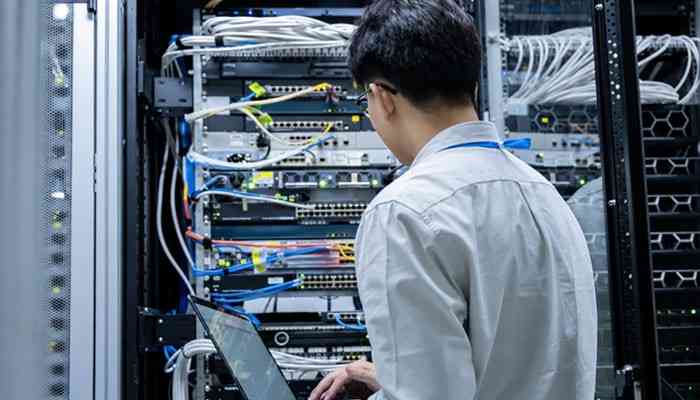

For many businesses, the most important infrastructure is not the equipment employees see every day. It is the network that determines how easily those systems communicate, scale, and remain available as the organization changes. Adding employees, opening another office, adopting cloud applications, or installing more connected devices can quickly expose weaknesses in an aging network. This is why network infrastructure is increasingly being considered during broader business planning rather than treated as a one time IT expense.
The right investment can provide room for growth, simplify future upgrades, and help an organization avoid costly infrastructure changes when its technology requirements expand.
The Network Behind Daily Operations
Network infrastructure now touches nearly every part of a business. Employees access cloud platforms, communicate through video calls, transfer files, use VoIP systems, and connect to shared applications throughout the day. Many businesses also operate wireless access points, IP cameras, printers, access control systems, and other connected equipment.
This makes the network more than a technical utility. It becomes part of the infrastructure that allows employees and business systems to function.
When connectivity problems occur repeatedly, the cost can extend beyond an IT repair. Employees may lose productive time, customers may experience service delays, and technical teams may have to investigate problems that could have been avoided through better planning.
Build for More Than Today
One of the biggest mistakes in network planning is designing only for the current number of users and devices. A small office might have twenty employees today and twice as many a few years later. Additional conference rooms, cameras, wireless access points, and networked equipment can increase demand even faster.
Structured cabling provides an opportunity to plan for these changes. During installation, businesses can account for additional connections, equipment locations, cable pathways, and network closets.
That does not mean installing unnecessary infrastructure everywhere. It means considering foreseeable growth before walls are closed and workspaces are occupied.
Cable Quality Affects the Foundation
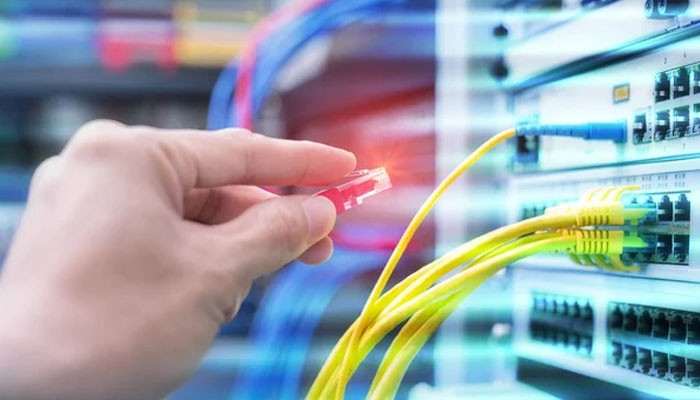
Network infrastructure is only as dependable as its individual components. Permanent cabling deserves particular attention because replacing it can be considerably more disruptive than replacing an endpoint device.
For example, Ethernet cables used in structured installations should be selected according to the required category, environment, conductor construction, distance, and applicable installation requirements.
Copper quality also matters. Solid bare copper conductors are commonly used for permanent structured cabling because their electrical characteristics are suitable for Ethernet transmission and Power over Ethernet applications. Cable category should then be matched with the intended network performance.
A cable upgrade alone cannot turn a slow switch or network interface into a faster system. The complete channel must support the desired application.
PoE Expands What Networks Can Do
Power over Ethernet has changed how businesses deploy many connected devices. Instead of requiring separate data and electrical connections, compatible equipment can receive power and data through the same Ethernet connection.
Wireless access points, IP cameras, VoIP phones, intercoms, and certain building automation devices can all benefit from this approach. It can simplify deployment and provide greater flexibility when deciding where equipment should be installed.
There is also a practical advantage for maintenance. A centralized network can make it easier for IT personnel to manage compatible devices from a common infrastructure rather than dealing with separate local power arrangements.
Security Starts with Good Design
Network security is often discussed in terms of firewalls, authentication, software, and monitoring. Physical infrastructure deserves attention too.
A structured network makes it easier to organize connections and control where equipment is physically located. Properly labeled patch panels and cables can help technicians identify connections without repeatedly tracing wires through a crowded cabinet.
Segmentation can also separate different types of traffic. Guest Wi Fi, employee systems, surveillance equipment, and other connected devices may require different network policies depending on the organization’s requirements.
Good cabling does not provide cybersecurity by itself. It simply gives the security architecture a more organized physical foundation.
Infrastructure Can Reduce Future Disruption
Network upgrades become harder when cables are poorly documented, inaccessible, or installed without consideration for future changes. A business may then face unnecessary downtime simply because technicians cannot easily determine where a connection runs.
This is where professional installation experience becomes valuable. Technicians have to think beyond whether a cable works immediately. Cable pathways, labeling, termination, rack organization, bend limits, and testing all affect how easily the network can be maintained later.
A useful installation record should identify cable routes and endpoints. That documentation can become especially valuable when another technician needs to troubleshoot or expand the system years after the original installation.
Measure the Investment Differently
The financial value of network infrastructure is not always visible on a balance sheet. Part of its value comes from what it helps a business avoid.
A stable infrastructure can reduce repeated troubleshooting, make technology deployments easier, and provide capacity for new systems. It can also prevent businesses from making rushed infrastructure decisions when expansion becomes urgent.
For organizations planning higher bandwidth applications, Cat6a plenum cable can be considered where the installation environment and performance requirements justify it. Cat6A supports frequencies up to 750 MHz and is designed for 10 Gigabit Ethernet over appropriate channel lengths.
The important point is not to choose the most expensive cable available. It is to select infrastructure that matches the business’s current requirements and reasonable future plans.
A Foundation for Business Growth
Network infrastructure has gradually moved from the background of IT operations toward the center of business planning. Cloud services, connected devices, workplace collaboration, security systems, and wireless connectivity all depend on the physical network beneath them.
A strategic approach does not mean overspending on every component. It means planning the cabling, equipment, capacity, documentation, and expansion paths as parts of one system.
When that foundation is designed carefully, future technology upgrades become less disruptive. The network does not need to be rebuilt every time the business changes. Instead, it provides the infrastructure on which those changes can take place.
