


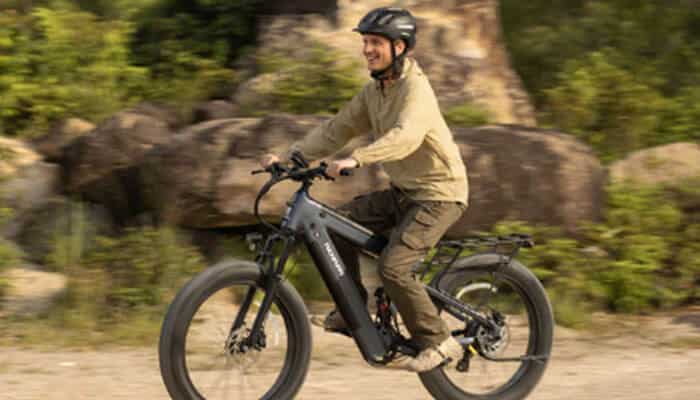

Speed is one of the first specifications buyers notice when comparing a fast e-bike with other electric bike models. A higher top speed can shorten longer journeys, make open-road riding feel more capable, and provide extra assistance when conditions allow. It can also make a fast e-bike appear more advanced than a slower model with a similar price.
However, speed alone does not determine whether an electric bike is a good purchase. Faster riding places greater demands on the brakes, tires, frame, battery and rider. It may also reduce range and limit where the bike can legally be used.
The smarter approach is to decide how much speed the intended routes actually require, then evaluate the complete system supporting it. A useful fast e-bike should remain stable, predictable and practical rather than simply producing an impressive number on a product page.
What Is Considered a Fast E-Bike?
A fast e-bike generally provides assisted speeds near the upper end of the categories permitted in its intended market.
In much of the United States, electric bicycle regulations use a three-class framework. Class 1 and Class 2 models are commonly limited to 20 mph, while Class 3 pedal-assist bikes may provide assistance up to 28 mph. The exact definitions, permitted riding locations and equipment requirements vary by state and local authority.
Buyers should therefore separate a bike’s technical capability from where that capability can be used. A model capable of 28 mph may be appropriate on certain roads but restricted on some trails, shared paths or public land.
There is also a difference between throttle speed and pedal-assist speed. Some bikes limit throttle operation to 20 mph while allowing higher speeds when the rider pedals. Buyers should understand both figures rather than relying on one advertised maximum.
Does More Motor Power Always Mean More Speed?
No. Motor power affects acceleration, hill climbing and the ability to maintain momentum, but it does not determine top speed by itself.
Battery voltage, controller programming, gearing, wheel size, rider weight and terrain all influence performance. Two bikes with similar wattage figures can feel very different if one delivers power abruptly while the other uses a more responsive sensor.
Peak output also differs from rated or continuous output. Peak power describes what the motor can deliver during demanding moments, such as acceleration or climbing. It should not be interpreted as the power the bike maintains throughout every ride.
For buyers, the quality of power delivery often matters more than the largest number. A torque sensor can make assistance feel more natural by responding to how much pressure the rider applies to the pedals. Cadence-based systems respond mainly to whether the pedals are turning. Some bikes combine both approaches to balance smoothness with consistent assistance.
Why Do Brakes Matter More at Higher Speeds?
As speed increases, the bike needs more distance and braking force to stop safely.
Electric bikes are already heavier than conventional bicycles because of the motor, battery and reinforced frame. A rider may then add bags, racks or other equipment. That total mass affects how quickly the bike can slow down, particularly on wet roads, loose gravel or long descents.
Hydraulic disc brakes are often a valuable feature on faster and heavier models. They typically provide strong braking with less hand pressure than basic mechanical systems. Rotor size, tire grip and brake maintenance are also important.
Buyers should not assume that a powerful motor automatically comes with an equally capable braking system. They should check the brake type, inspect how the levers feel and allow additional stopping distance while becoming familiar with a new bike.
How Do Tires and Suspension Affect Fast Riding?
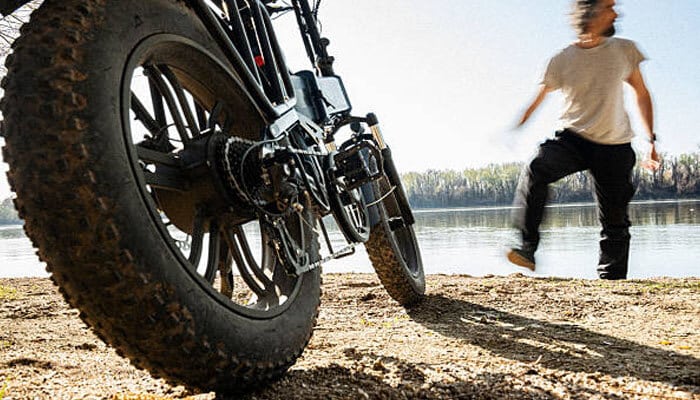
Tires influence stability, cornering, braking and the amount of feedback the rider feels from the road.
A fat tire electric bike may provide a planted feel on gravel, grass, rough pavement and uneven outdoor routes. Wider tires can also improve confidence when the bike is carrying additional weight.
The tradeoffs are greater rolling resistance and additional bike weight. Riders who remain on smooth city streets may prefer narrower tires and a lighter frame, while those covering mixed surfaces may value the added stability of a wider setup.
Suspension should also match the intended terrain. Front suspension can reduce impacts at the handlebar, while full suspension adds comfort and control at both ends of the bike. It is especially useful when longer rides include broken pavement, forest roads or irregular trails.
Suspension does not remove the need to slow down. Even a well-equipped bike can lose traction if the rider enters a corner or obstacle too quickly.
Does Higher Speed Reduce Battery Range?
It usually can. Riding faster requires more energy, especially when the motor is frequently accelerating the bike or maintaining speed against wind resistance.
Published range figures are normally estimates based on particular riding conditions. Hills, cargo, low tire pressure, cold temperatures, loose terrain and high assistance levels can all reduce the distance available from a charge.
This means buyers should consider speed and range together. A rider who frequently uses the highest assistance level may not achieve the maximum advertised distance.
A long range electric bike can reduce charging concerns by carrying more battery capacity, but larger batteries add weight and cost. The best option is not automatically the bike with the longest possible range. It is the one that covers the rider’s longest realistic route with a comfortable reserve.
Buyers should calculate a full round trip, including detours and additional stops, rather than choosing a battery around the shortest daily journey.
What Should Buyers Know About Battery Safety?
Battery quality should be treated as a core purchasing consideration, not a secondary specification.
Buyers should look for information about the battery cells, electrical system, charger and independent safety certification. The U.S. Consumer Product Safety Commission has encouraged manufacturers to demonstrate compliance with applicable safety standards through accredited testing and certification.
Charging habits matter as well. The CPSC recommends using the supplied charger, following the manufacturer’s instructions, remaining present while charging and avoiding charging while asleep. Replacement batteries and chargers should be approved for the specific bike.
A removable battery may be convenient for indoor charging and storage, but it should lock securely into the frame. Buyers should also consider how easy it will be to purchase a replacement battery several years later.
Is the Puckipuppy Bulldog Pro a Practical Fast E-Bike?
For riders who want higher assisted speed, extended range and mixed-terrain capability in one bike, the Puckipuppy Bulldog Pro provides a useful example of how those features can work together.
The Bulldog Pro uses a 750W motor with up to 1,350W of peak output. Its throttle reaches up to 20 mph, while pedal assistance can reach up to 28 mph. A combined torque-and-cadence sensor adjusts assistance according to the rider’s pedaling input, rather than delivering power solely according to whether the cranks are moving.
Its defining feature is a dual-battery system consisting of two removable 48V 15Ah batteries. Puckipuppy states a range of 80 to 130 miles, although the distance achieved will depend on speed, rider weight, cargo, terrain and assistance level. This capacity positions the Bulldog Pro for long recreational routes, outdoor access roads and riders who prefer to charge less frequently.
The bike pairs 26-by-4-inch fat tires with full suspension, Shimano eight-speed gearing and 180mm hydraulic disc brakes. It also has a stated maximum load capacity of 400 pounds. These features support its role as a heavier-duty bike for gravel roads, rough pavement, campsites and moderate outdoor routes rather than a lightweight urban commuter.
There are practical tradeoffs. At 94.1 pounds, the Bulldog Pro may be difficult to carry upstairs or lift onto an unsuitable vehicle rack. Its power and speed also mean buyers must confirm whether it is allowed on the roads, trails and public land they plan to use. The model is currently listed at $1,999.99 with free shipping, a 15-day return period and a two-year warranty, although prices and promotions can change.
The Bulldog Pro is therefore most relevant to buyers who will make real use of the dual batteries, full suspension and mixed-surface stability. Someone riding only a few miles on smooth city streets may be better served by a lighter and less expensive model.
What Additional Costs Should Buyers Consider?
The purchase price is only part of the total cost of owning a fast e-bike.
A suitable helmet, strong lock, mirrors, lights, storage accessories and an e-bike-rated vehicle rack can add to the initial budget. Wider tires and heavier brake use may also affect maintenance costs.
Buyers should check warranty coverage, replacement battery pricing and whether local shops are willing to service the electrical and mechanical components. A lower-priced bike can become expensive if proprietary parts are difficult to obtain.
Storage also has financial and practical value. A bike that cannot be safely stored at home or work may require additional security equipment or a different transportation solution.
How Should Buyers Make the Final Decision?
Buyers should begin with their routes, not the highest available speed.
Consider how far the bike will travel, where it will be ridden, how often hills or rough surfaces appear and whether it must be lifted or transported. Then compare the motor, battery, sensor, brakes, tires, suspension and total weight as one system.
A fast e-bike can be a worthwhile purchase when the speed is supported by dependable braking, stable handling, sufficient range and a frame suited to the rider. It becomes less valuable when the headline performance exceeds what the owner can legally or comfortably use.
The best choice is not the bike that reaches the largest number. It is the one that delivers the right balance of speed, control, range and long-term value for the journeys the buyer actually plans to take.
